

Introduction
“Success is not final, failure is not fatal. It is the courage to continue that counts.” — Winston Churchill
Digital transformation in SMEs means redesigning how small and mid-sized companies create value using digital tools, data, and new ways of working. It is not a software install; it is a shift in strategy, leadership, and skills that touches every team. In this article, we walk through a proven framework that turns digital transformation in SMEs from a vague idea into a concrete, staged plan for growth.
The real tension is clear. Pressure to adopt AI, automation, and analytics keeps rising, while budgets, time, and digital skills often feel too thin. Many leaders have lived through tool rollouts that changed very little, so trust is low and fatigue is high.
We use the DASAT framework to connect strategy, people, and technology in a way that works for resource-constrained organizations. Along the way, we show how iAvva AI combines AI coaching, human facilitation, and consulting to turn digital strategy into daily leadership behavior. If digital change has felt fuzzy or out of reach, the next sections give a practical path forward.
Key Takeaways
Key takeaways help time-poor leaders scan the article before going deeper. Each point below previews a theme that we unpack later with examples, research, and practical moves.
Digital transformation in SMEs is a capability program, not a one-time project. It asks leaders to build skills in strategy, data, and change, then keep refreshing those skills as markets evolve. Technology choices still matter, but they only pay off when people are ready and supported.
DASAT gives SMEs a practical, repeatable framework for digital transformation. The four pillars move from awareness to strategy, then to adoption and continuous improvement. That rhythm keeps projects aligned with business goals instead of becoming random software purchases.
Leadership behavior, culture, and digital literacy drive return on investment more than the specific tools. Research from McKinsey shows organizations that invest in capability building are about two and a half times more likely to hit transformation goals. That points straight at HR, L&D, and People Ops.
AI-powered coaching platforms such as iAvva AI Coach turn high-level digital plans into daily leadership habits. Five minutes of guided reflection per day helps managers practice decision-making, communication, and change leadership that match the transformation roadmap. That scale is hard to reach with workshops alone.
The most effective SME programs start small, measure carefully, and treat transformation as continuous. Short pilots, clear success metrics, and regular reviews reduce risk and build confidence. With that mindset, each cycle of work improves both your technology and your capabilities.
What Is Digital Transformation In SMEs And Why Does It Matter Now?
Digital transformation in SMEs describes how smaller firms redesign business models, processes, and roles with digital technology at the center, a process comprehensively explored in the academic literature, including Reviewing and Mapping the digital transformation process of SMEs, which synthesises findings across hundreds of studies to identify the most common pathways and barriers. For people leaders across HR, IT, L&D, and the C-suite, it links strategy, skills, and systems in one line of sight. This section defines what that actually means and why the timing now is so sharp.
From Digitization To Transformation: Clear Definitions For SME Leaders
Digital transformation in SMEs builds on two related but different steps:
- Digitization is the simple act of turning analog information into digital form, like scanning paper invoices into PDFs or moving physical employee files into a basic HR system.
- Digitalization goes further by using digital tools to improve existing tasks, such as online ordering, e‑invoicing, or a cloud-based CRM.
Digital transformation is a bigger move, as confirmed by research published in the Journal of the Knowledge Economy, where Digital Transformation of Small and medium-sized enterprises frames it as a holistic innovation process that reshapes strategy, operations, and value creation simultaneously. It changes how the business creates value for customers and owners, not just how it stores data. For example:
- A manufacturing SME might shift from selling machines once to selling uptime as a service with remote monitoring and subscriptions.
- A professional services firm might add online advisory products, digital courses, and global delivery supported by collaboration tools.
This shift touches both external relationships and internal design. Customers expect fast responses, clear digital communication, and personalized offers. Inside the company, roles, performance expectations, and workflows change as data flows more freely. For HR, L&D, and IT, that means the real task is building culture and capability, not just buying software.
Why Digital Transformation Is Now A Survival Issue For SMEs
Digital transformation in SMEs has moved from “nice to have” to a survival topic in a volatile economy. According to IDC, global investment in digital transformation is on track to reach about 3.4 trillion dollars by 2026. At the same time, Harvard Business Review reports that between 56 and 70 percent of these initiatives fail to meet their goals.
The gap between firms that act and those that delay is widening fast. During recent shocks, digitally mature SMEs were able to move to remote work, open online channels, and adjust supply chains far faster than peers. Research from the OECD shows that smaller firms already lag larger ones in advanced tools such as integrated ERPs, analytics, and AI, which deepens risk during crises.
There is also a people side. The World Economic Forum estimates that about half of employees worldwide will need reskilling in the next few years. For leaders, that means people-first digital strategies are no longer optional. Without a clear plan for skills, culture, and change, investments in tools become expensive shelfware.
Peter Drucker famously said, “Culture eats strategy for breakfast.” For SMEs, digital strategy only works when culture and skills are fed just as carefully as the tech stack.
What Are The Real Benefits Of Digital Transformation In SMEs?
Digital transformation in SMEs rewards the effort when leaders connect technology with clear outcomes. The advantages spread across operations, finance, customer experience, people, and resilience. This section gives language you can use with boards, owners, and finance teams.
Operational Efficiency, Cost Structure, And Productivity Gains
Digital transformation in SMEs often starts with daily operations:
- Automation of routine work such as invoicing, payroll, and scheduling reduces manual data entry and cuts down on errors that eat cash and time.
- Connecting order-to-cash steps inside a simple ERP or workflow tool shortens cycle times and improves inventory accuracy.
- Digital document management makes audits, compliance checks, and vendor interactions faster and more transparent.
Cloud services help shift parts of the cost base from fixed to variable. Instead of owning servers and paying large up-front license fees, SMEs can pay monthly for capacity, scaling up or down with demand. The U.S. Small Business Administration notes that small firms create most net new jobs in the United States, which means any productivity gain translates into real economic impact.
Good data visibility is another benefit. Dashboards that show sales, margins, backlog, and workforce deployment in near real time help managers act early instead of reacting late. HR and IT teams can partner to build basic process thinking and data literacy into training so employees understand how their work rolls up into these metrics, not just which buttons to click.
Innovation, Customer Experience, And Growth
Digital transformation in SMEs also opens new ways to grow:
- Companies can add digital services, self-service portals, or subscription-based support on top of core products.
- A traditional retailer might introduce e‑commerce with local delivery.
- A B2B services firm could launch online diagnostics and paid virtual workshops.
Digital channels widen reach without major physical expansion. Platforms such as Shopify, Amazon, and Etsy let smaller firms test new markets fast. Research from Deloitte links higher levels of digital adoption in small businesses with stronger revenue growth and export activity.
Customer experience improves when data and tools line up:
- CRM systems let teams remember preferences and histories instead of relying on one person’s memory.
- Chat, email, and social channels can feed into one view so responses are faster and more consistent.
- Simple automation can send helpful reminders, status updates, and follow-ups without losing the human tone.
Over time, this strengthens brand trust, loyalty, and word of mouth in both local and global markets.
Why Do So Many SME Digital Transformations Fail?
Digital transformation in SMEs fails most often for people and strategy reasons, not because a cloud product was “bad.” This section surfaces the main patterns that stall progress so leaders can design around them. The goal is not fear, but clear-eyed planning.
Structural And Behavioral Barriers In SMEs
Many SMEs face real financial limits. Cash flow is tight, access to credit can be limited, and it is hard to justify multi-year payback when near-term survival feels pressing. Concerns about vendor lock-in and integration costs add to the hesitation, especially when leaders have seen software projects run late in the past.
Skills gaps create another layer of friction. Employees and managers may lack digital literacy, feel overwhelmed by jargon, or fear data and automation will replace them. OECD studies of small firms highlight that lack of awareness about digital possibilities is a major blocker, not just lack of money. Without a shared picture of why change helps, every new tool looks like extra work.
Infrastructure and security worries are common as well:
- Some organizations still wrestle with poor connectivity or aging devices, especially outside major cities.
- Cybersecurity threats such as phishing and ransomware feel scary when there is no full-time security specialist.
- That fear often leads to postponing digitization of sensitive processes, even when the paper-based version is also risky.
Tip: Start cybersecurity habit-building early. Short awareness sessions and simple policies (strong passwords, multi-factor authentication, phishing drills) can significantly reduce risk without huge spend.
Leadership, Culture, And Strategy Gaps Behind High Failure Rates
Research from Harvard Business Review points out that most digital programs miss their goals due to misalignment, weak adoption, and poor change management. The tools may work as designed, but the organization is not ready to use them in the way the business case assumed. That is a leadership and culture gap.
Managerial education plays a strong role. Studies of European SMEs show that companies led by managers with university education and modern management training adopt digital tools more widely and use them more strategically. International exposure builds similar awareness, because it forces leaders to interact with more advanced partners and customers.
A missing or fuzzy digital strategy is another frequent pattern, and The Seventy Percent: Why IT transformation has remained statistically difficult for twelve years shows this trend has persisted across industries for over a decade, pointing to a systemic leadership and strategy deficit rather than a temporary challenge. When tools are bought reactively, each department ends up with its own app stack and data silos. Middle managers then face conflicting requests and are rarely given time or training to act as translators between strategy and frontline reality. Without clear narratives, reskilling plans, and support for this layer, transformation stalls quietly.
The DASAT Framework: A Proven Strategic Blueprint For Digital Transformation In SMEs
Digital transformation in SMEs becomes far more manageable when leaders follow a clear sequence. The DASAT framework brings that sequence into four linked pillars that connect awareness, strategy, execution, and continuous improvement. At iAvva AI, we use DASAT as a backbone for our work with clients across sectors.
Overview Of DASAT: The Four Interlocking Pillars
DASAT stands for:
- Digital Awareness
- Digital Strategy And Roadmap
- Digital Adoption And Implementation
- Digital Transformation Continuous Improvement
Together, these four parts form a cycle that keeps technology, people, and process work in sync. Instead of treating transformation as a one-off project, DASAT treats it as an ongoing capability.
Each pillar answers a different question:
- Digital Awareness asks what technologies and trends matter and how they relate to the business.
- Digital Strategy And Roadmap asks where to focus first and how to sequence work.
- Digital Adoption And Implementation asks how to bring people, processes, and systems together in daily work.
- Digital Transformation Continuous Improvement asks what we are learning and how to adjust.
You can map main owners across the organization. C‑suite leaders guard overall direction and resource choices. HR, L&D, and People Ops own skills, culture, and behavioral change. IT leads on architecture, security, and integration. The table below gives a simple view.
| DASAT Pillar | Key Question | Primary Owners |
|---|---|---|
| Digital Awareness | What is possible and relevant? | C‑suite, HR, L&D |
| Digital Strategy And Roadmap | Where will we focus and in what order? | C‑suite, Finance, IT |
| Digital Adoption And Implementation | How will people use the new ways? | IT, HR, Middle Managers |
| Digital Transformation Continuous Improvement | What should we change next? | C‑suite, HR, IT, Business Unit Leaders |
DASAT also matches the “sense, seize, transform” pattern from dynamic capabilities research by David Teece and others. Awareness sharpens sensing, strategy and adoption support seizing, and continuous improvement powers ongoing transformation.
How DASAT Aligns Technology, People, And Strategy In SMEs
DASAT helps digital transformation in SMEs feel less random by connecting each decision back to business outcomes. For a founder or CEO, it offers a checklist for where attention should sit at different moments instead of chasing every new tool. For HR and L&D, it clarifies how learning and leadership development map directly to each stage.
For example:
- During Digital Awareness, HR can lead digital literacy programs while IT shares simple overviews of current systems and options.
- In the Strategy And Roadmap stage, finance, HR, and IT can sit with business leaders to match use cases with cost, revenue, risk, and people impact. This stops the pattern of buying software that has no training budget.
- During Adoption And Implementation, middle managers become the bridge between slides and reality. That is where daily micro-coaching from platforms like iAvva AI Coach helps them translate strategy into conversations, priorities, and feedback.
- In Continuous Improvement, learning analytics and system data feed back into the next cycle, so each wave of work becomes smarter and smoother.
How Do You Build Digital Awareness And A Shared Mindset In SMEs? (DASAT: Digital Awareness)
Digital transformation in SMEs starts with shared awareness of what digital change means for the specific business, not just a few tech champions reading blogs. This stage is about literacy, inclusion, and psychological safety. Without it, later stages feel forced and confusing.
Foundations: Digital Literacy, Inclusion, And Psychological Safety
Digital literacy has levels, and recent research Exploring Digital Transformation Journey among micro, small-, and medium-sized enterprises confirms that progressing through these levels is one of the strongest predictors of successful transformation outcomes for resource-constrained firms:
- At the base, digital competence means people can use core tools such as email, chat, document sharing, and basic dashboards safely and with confidence.
- Next comes digital usage, where employees apply these skills in real workflows, such as sales teams using CRM data to plan outreach or operations teams reading live production metrics.
- The highest level is digital transformation capability. At this point, people start suggesting new ways to structure work, products, and services using digital options. They might spot chances to automate repetitive steps, combine data sources, or add digital value to existing offers.
Inclusion and safety hold everything together. Every segment of the workforce needs access to devices, connectivity, and content formats that work for them. That includes frontline staff, older workers, and distributed teams. Psychological safety means people feel able to ask “basic” questions, admit confusion, and experiment without ridicule or punishment.
Amy Edmondson, a leading researcher on psychological safety, notes that “the absence of psychological safety explains why smart people do dumb things at work.” For digital programs, that absence often shows up as quiet resistance and minimal experimentation.
Practical Steps To Raise Digital Awareness Across The Workforce
Leaders can start with a light diagnostic:
- Short surveys
- Simple skills assessments
- Listening sessions and focus groups
These reveal where confidence is low and where enthusiasm already exists. According to the World Economic Forum, rapid tech change makes structured reskilling a top priority across industries, which supports the case for this groundwork.
Next, move from one-off seminars to role-based microlearning:
- Sales staff might receive short modules on digital prospecting and CRM hygiene.
- Operations teams might focus on workflow tools and basic automation.
- HR professionals might learn people analytics, virtual facilitation, and digital policy basics.
Each piece should connect to real workflows and upcoming initiatives so learning feels useful rather than abstract.
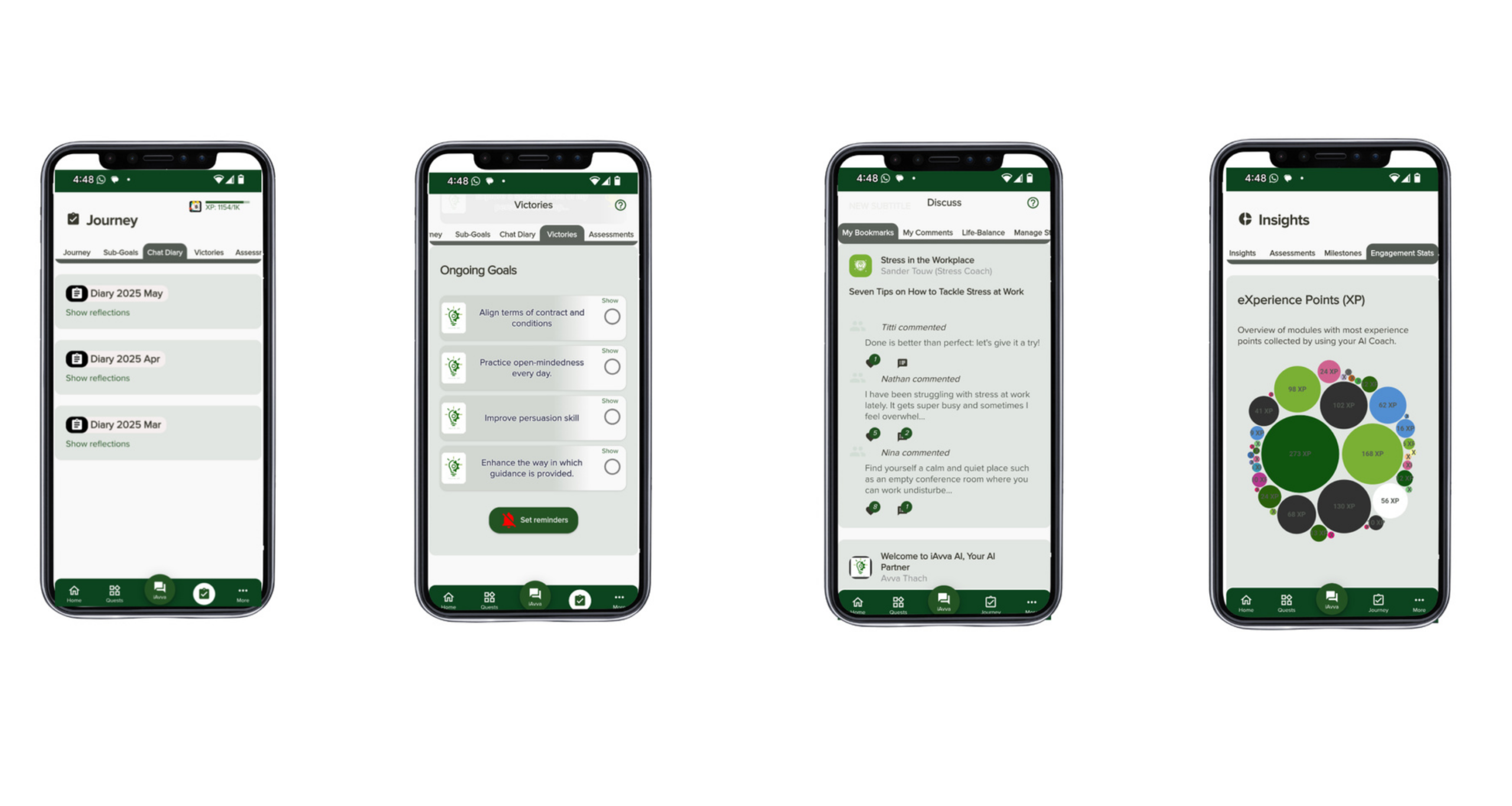
AI-powered platforms such as iAvva AI Coach add daily practice. Five-minute prompts, available in 19 languages on web and mobile, help employees reflect on how they are using digital tools, how they handle change, and where they feel stuck. Stories, case examples, and peer sharing sessions reinforce that digital transformation in SMEs is a shared effort, not an IT side project.
How Do You Design A Digital Strategy And Roadmap That SMEs Can Actually Execute? (DASAT: Digital Strategy & Roadmap)
Digital transformation in SMEs only moves forward when awareness turns into clear choices. A digital strategy and roadmap explain why you are changing, where you will focus first, and how you will manage trade-offs. This section turns that idea into practical steps for people leaders and executives.
Linking Digital Initiatives To Business Outcomes And Capabilities
A helpful starting point is to frame digital goals in four buckets. Cost, revenue, risk, and people outcomes cover most reasons to change. For each bucket, leaders can name one or two target metrics, such as:
- Days sales outstanding
- Recurring revenue mix
- Customer satisfaction scores
- Internal mobility or retention rates
From there, specific use cases become easier to pick. For example:
- An SME that wants revenue growth might prioritize e‑commerce, digital marketing, or self-service portals.
- One that wants resilience might invest in remote-ready operations and supply-chain visibility.
- A firm seeking better cash control could focus on online invoicing, digital payment options, and integrated accounting.
According to OECD, small firms that export and adopt digital tools tend to perform better, which supports these moves.
Each use case comes with needed capabilities. That includes technology, but also process skills, data skills, and leadership behaviors. Dynamic capabilities thinking helps here. Leaders ask how teams will sense opportunities, seize them through projects, and keep transforming processes afterward. HR and IT can then build these skills into learning plans and hiring profiles.
Building A Phased, Realistic Roadmap For SMEs
A good roadmap respects SME constraints. Rather than running many big projects at once, leaders can design a sequence that starts with quick wins while laying some shared foundations. For micro firms, this might mean starting with cloud accounting and a basic CRM. For medium-sized organizations, it might involve an ERP light implementation with carefully scoped modules.
To keep the roadmap realistic:
- Set 1–3 clear priorities per year instead of dozens of scattered initiatives.
- Balance “plumbing” projects (infrastructure, security, data) with visible customer-facing changes.
- Align technology projects with seasonal cycles in your business to avoid peak overload.
Governance keeps the roadmap real. A simple steering group of business, HR, IT, and finance leaders can meet regularly to set priorities, approve budgets, and review progress. Clear KPIs for each initiative help everyone know what success looks like and when to stop, pivot, or scale.
Workforce upskilling must sit on the same timeline as tool rollouts. Training managers in data-driven decision-making before analytics dashboards go live avoids confusion later. iAvva AI supports this stage through scenario-based micro-coaching that helps leaders think through prioritization, OKR alignment, and trade-offs week by week, not once a year.
How Do You Drive Adoption And Implementation Without Burning Out Your Teams? (DASAT: Digital Adoption & Implementation)
Digital transformation in SMEs often stumbles during execution, and with the AI Project Failure Rate reaching 80% in 2026, ensuring strong adoption practices is more critical than ever for organizations investing in AI-driven tools. People are busy, legacy habits are strong, and projects can feel like extra work. This section focuses on change management, engagement, and embedding new tools into daily work in a humane way.
Change Management, Engagement, And Middle-Manager Enablement
Any major change affects different groups in different ways. Stakeholder mapping helps leaders see:
- Who gains
- Who loses
- Who has influence
- Who can champion progress
Open conversations about why changes are happening build trust. People need to hear how digital shifts connect to customer needs, business health, and their own growth. Avoid only talking about cost savings; also discuss skills development, safety, quality, and career paths.
Middle managers sit at the heart of adoption. They translate strategy into daily tasks, adjust workloads, and answer tough questions from their teams. Yet they are often the least supported group in transformation programs. Research from McKinsey found that organizations that invest in leadership capability are far more likely to succeed with digital programs.
Here is where iAvva AI Coach makes a practical difference. Daily micro-coaching nudges help managers practice:
- Clear, empathetic communication
- Emotional intelligence under pressure
- Prioritization and boundary setting
- Feedback and coaching conversations
Over time, these small reflections build habits that support cross-functional work, honest feedback, and constructive problem solving, which are exactly what digital adoption needs.
Recommendation: Treat middle managers as “mini change architects.” Give them context early, invite input on rollout plans, and provide coaching so they can support their teams instead of just relaying messages.
Embedding New Tools Into Daily Workflows
New systems only create value when they are built into real workflows. Before automating, teams should simplify existing processes and remove steps that no longer serve customers or staff. This prevents “paving the cow path,” where messy old processes are preserved in digital form.
Training works best when it is role-based and just in time:
- Sales reps might practice entering opportunities into a sandbox CRM during pipeline meetings.
- Finance staff might reconcile sample transactions in a test accounting system.
- Operations teams might run mock shifts or simulated production runs using the new system.
Peer support networks and digital champions help colleagues solve everyday questions without waiting for formal support tickets. Short “how we do it here” guides, recorded screen demos, and quick-reference checklists keep knowledge accessible.
Data and analytics can quietly watch adoption. Usage dashboards, error rates, processing times, and user feedback show where people are thriving or struggling. According to Gartner, many organizations underuse this data, even though it often predicts project success. Combining system metrics with learning data from platforms like iAvva AI lets HR and IT trigger targeted support before frustration grows.
How Do You Sustain Momentum With Continuous Improvement? (DASAT: Digital Transformation Continuous Improvement)
Digital transformation in SMEs does not end when a big project goes live, and infrastructure investment will only intensify in the years ahead as the Dell’Oro report projects 6G RAN capital expenditure to reach $0.5 trillion by 2034, signalling a new wave of connectivity that SMEs will need to plan for continuously. Markets keep moving, tools keep changing, and people keep learning. This section explains how to build continuous measurement, learning, and innovation into normal operations.
Measuring Impact: From Project KPIs To Capability Metrics
Measurement starts with basic project KPIs. Examples include:
- Cycle times
- Error rates
- On-time delivery
- Customer satisfaction
- Process cost per transaction
These numbers help show whether a new system or workflow is doing its job. According to Deloitte, manufacturers that adopt digital tools often see notable gains in quality and speed when they track results closely.
Capability metrics go one level deeper. Leaders can track digital skills growth, leadership behaviors, and engagement alongside project outcomes. For instance, they might link:
- Learning completion and assessment scores
- Reflection quality or coaching activity
- Participation in pilots and innovation challenges
to adoption metrics and performance indicators.
iAvva AI supports this with real-time analytics dashboards. HR and L&D teams can see participation levels, self-rated growth, and topic trends across the company. When combined with operational data, these views help leaders see how people development connects to OKRs and transformation impact.
Creating A Continuous Learning And Innovation Loop
Continuous improvement relies on regular reflection. Simple practices such as retrospectives, after-action reviews, and learning huddles help teams discuss what worked, what did not, and what to change next. These sessions work best when they focus on behaviors and system design rather than blame.
Employee-led ideas are a rich source of innovation. Frontline staff often see where digital tools are clunky or where small tweaks could remove friction. Giving them channels to:
- Suggest changes
- Test improvements
- Share results
keeps energy high. According to Gallup, employees who feel their voice counts are far more engaged and productive.
Hybrid human plus AI coaching keeps the loop spinning. As markets or tools shift, prompts and programs in iAvva AI Coach can adapt, reinforcing resilience, learning agility, and ethical decision-making. As Satya Nadella of Microsoft likes to say, “We want to move from a group of people who know it all to a group of people who learn it all.” Continuous learning is the real engine of sustained transformation.
How iAvva AI Helps SMEs Turn Digital Strategy Into Daily Leadership Behavior
Digital transformation in SMEs often fails in the “last mile,” where high-level plans need to translate into consistent behavior across hundreds or thousands of people. iAvva AI was built to close that gap. It combines an AI coaching platform with human consulting and training to support every stage of the DASAT cycle.
iAvva AI Coach: Always-On, Neuroscience-Backed Leadership Development At SME Scale
iAvva AI Coach is a five-minute micro-coaching app available on web, iOS, and Android in 19 languages. It guides leaders and employees through short, science-backed reflections tied to real work situations. The design draws on neuroscience, positive psychology, and ICF coaching standards so prompts support clear thinking, emotional regulation, and ethical choices in high-change environments.
The platform offers two modes:
- Coach mode, where individuals explore personal goals, strengths, and habits.
- Mentor mode, where prompts and reflections align with organizational priorities such as digital adoption, collaboration, or customer focus.
That dual design helps support both individual growth and company-wide behavior shifts.
Strategic alignment is built in. People can link their reflections and actions to OKRs or other goal frameworks, so daily choices support the same outcomes leaders track in dashboards. Real-time analytics give HR and L&D visibility into engagement, topic trends, and growth signals, all with enterprise-grade security and GDPR-compliant encryption. For SMEs, this means leadership development that scales without relying solely on workshops.
“Little and often” beats “big and rare” when it comes to behavior change. Short, frequent coaching moments help leaders integrate new habits into their routine rather than treating development as something extra.
Consulting, Certification, And Hybrid Human+AI Support For End-To-End Transformation
The iAvva AI Coach platform is one piece of how we support digital transformation in SMEs. iAvva AI also provides AI strategy and automation consulting that bridges the gap between business objectives and IT plans. Work ranges from revenue cycle optimization in healthcare to operational improvement in renewable energy, always grounded in the realities of mid-sized organizations.
iAvva AI offers AI-defined IT project management certification and training so business and technology leaders share a common method for planning and running AI-heavy projects. This helps reduce misunderstandings and project drift. Over 1,400 hours of one-to-one and group coaching with leaders across more than 68 enterprises have shaped these programs, giving a strong view of what real managers face.
The founder’s experience contributing to a 22 billion dollar digital transformation program at Accenture informs the frameworks now applied for smaller firms. Flexible subscription tiers, starting around the cost of a team lunch each month, make this experience accessible without huge up-front fees. Across all these services, iAvva AI supports every DASAT stage, from awareness education to strategy design, adoption coaching, and continuous improvement analytics.
In Summary
Digital transformation in SMEs is, at its heart, a people and capability story. Tools matter, but they only create real value when leaders, managers, and frontline staff have the skills and confidence to use them with purpose. Treating transformation as an ongoing capability rather than a one-time project changes how choices are made and how success is measured.
The DASAT framework gives a simple yet powerful structure for this work:
- Digital Awareness builds shared understanding.
- Digital Strategy And Roadmap align priorities with real constraints.
- Digital Adoption And Implementation bring change into daily workflows.
- Digital Transformation Continuous Improvement keeps learning and results linked over time.
Throughout, digital literacy, dynamic capabilities, and people-centered change serve as main levers. Platforms like iAvva AI Coach and the broader iAvva AI consulting services exist to turn strategy slides into daily leadership behavior, backed by data and science. A practical next step is to assess current digital awareness and leadership readiness, then pilot a small DASAT-informed initiative, supported by AI coaching, to build momentum with visible results.
Frequently Asked Questions
Question: What Is The First Step SMEs Should Take To Start Digital Transformation Without Overwhelming The Organization?
The first step is a light digital awareness and maturity assessment across leadership and key teams. This reveals current strengths, gaps, and pain points without heavy consulting costs. Leaders can then agree on one or two priority business outcomes, such as cost reduction or customer experience. From there, map a few quick-win use cases and related skills, and use tools like iAvva AI to prepare leaders’ mindsets early.
Question: How Much Should SMEs Budget For Digital Transformation And Leadership Development?
SMEs should think in percentages rather than fixed numbers, often starting with a small share of annual revenue or project budgets. Early phases usually focus on cloud infrastructure, core systems, and baseline security, followed by skills and leadership programs. Subscription-based platforms such as iAvva AI Coach help spread costs over time instead of large up-front spends. Clear KPIs and regular reviews keep investment tied to visible results.
Question: How Can HR And L&D Teams Prove The ROI Of Digital Skills And Leadership Programs?
HR and L&D teams can connect learning data with business metrics. That might mean linking:
- Course completion
- Reflection depth
- Coaching activity
to adoption rates, error reductions, or cycle-time improvements. Pilot groups and control groups help show comparison effects. Analytics dashboards from platforms like iAvva AI make this easier by visualizing trends and correlations. Stories from managers and teams add rich context alongside the numbers.
Question: What Digital Skills Should SME Leaders Focus On Developing First?
Leaders should start with:
- Broad digital literacy
- Basic data and AI understanding
- Remote collaboration skills
- Cybersecurity awareness, so leaders model good habits
On the strategic side, they need comfort with digital business models, experimentation, and dynamic capabilities such as sensing and seizing opportunities. People skills like change leadership, coaching, and emotional intelligence round out the mix and help teams handle uncertainty.
Question: How Can IT And HR/L&D Collaborate More Effectively On Digital Transformation?
IT and HR or L&D can form joint steering groups for each major digital initiative, sharing goals and KPIs. Together they design training, communications, and change support as core parts of project plans, not add-ons. Shared data from system usage and learning platforms shows where adoption is strong or weak. Using a common backbone like iAvva AI Coach builds a shared language for leadership and capability growth.
Question: Is Digital Transformation Relevant For Relationship-Driven Or Craft-Based SMEs?
Digital transformation is very relevant for relationship-driven or craft-based SMEs when applied with care. The point is to support human relationships, not replace them. Examples include:
- Online booking and digital reminders
- Simple CRM tools to remember preferences
- Photo-rich catalogs or portfolios to showcase craft work
while keeping the core service personal. Frameworks like DASAT help leaders choose where digital adds value and where the human touch should stay at the center.
Question: How Can Individual Professionals In SMEs Future-Proof Their Careers During Digital Transformation?
Individual professionals can future-proof their careers by growing:
- Digital literacy
- Data skills
- Comfort working with AI and automation tools
Building adaptability, curiosity, and learning habits is just as important as any specific platform. Volunteering for digital projects or pilot teams creates visibility and experience. AI-powered coaching tools such as iAvva AI Coach provide daily reflection and guidance so people can align personal growth with emerging roles.













Leave a Reply