




Introduction
“Success is not final, failure is not fatal; it is the courage to continue that counts.” — Winston Churchill
Many of us lead digital transformation leadership efforts while quietly wondering if we are doing it right. The pressure, the pace, and the noise around AI can make even seasoned executives second‑guess their choices.
Underneath the buzzwords, AI transformation leadership means guiding people, processes, and technology so they work together to create value. It is not just about new platforms or automation. It is about how we as leaders set direction, shape culture, and help teams use AI safely and confidently every day.
In this guide, we explore what digital transformation leadership looks like in an AI‑first era, which skills and mindsets matter most, why so many programs fail, and how tools like iAvva AI turn lofty strategies into daily habits. If leading AI change feels heavy right now, stay with me as we turn it into clear next steps.
Key Takeaways
The New Definition Of Digital Transformation Leadership
Digital transformation leadership now covers strategy, culture, data, AI, and daily behavior, not just technology rollouts. It spreads across the C‑suite, HR, IT, and People Operations rather than sitting with one owner. When we treat it as a shared, ongoing responsibility, we avoid “IT project” thinking and start to redesign how the whole organization creates value.The Mindsets And Skills AI Ready Leaders Need Now
AI ready leaders mix strategic thinking, data and AI literacy, people skills, and clear communication. They use models from Prosci and insights from firms like McKinsey and Deloitte to guide behavior change, not only system go lives. When we train for these blended skills, we give our leaders language and tools to lead with calm and clarity.Why Change Management And Coaching Are Non Negotiable
Research from Prosci shows projects with excellent change management are up to seven times more likely to meet goals. That pattern holds for AI programs at Accenture, Salesforce, and public agencies as much as for smaller firms. When we add ongoing coaching to formal change plans, people actually adopt new ways of working instead of slipping back.How AI Tools Like iAvva AI Turn Strategy Into Daily Leadership Habits
Strategy decks from Harvard Business Review or IDC do not change behavior on their own. Leaders need short, frequent prompts that help them think, decide, and communicate differently in real time. iAvva AI provides five‑minute, science‑based micro‑coaching in 19 languages so HR, CLOs, and IT leaders can support thousands of managers without adding thousands of trainers.Building A Scalable, Human Centered Transformation Engine
Sustainable AI transformation links roadmaps, responsible AI rules, culture, and learning into one coherent engine. Platforms such as iAvva AI give People Operations and L&D live data on engagement, habits, and growth across countries and business units. With that view, we can adjust support quickly and keep digital change humane, inclusive, and measurable.
What Is Digital Transformation Leadership In The Age Of AI?
Digital transformation leadership in the age of AI means guiding an organization through deep, technology‑enabled change while keeping people at the center. It links AI, cloud, automation, and data with strategy, culture, and everyday decisions instead of treating them as separate topics.
For HR Directors, CLOs, CIOs, and SMB CEOs, this leadership focus shows up in clear choices. We decide which AI use cases matter, how work will change, and how to support employees as roles shift. We also accept that transformation is not a one‑time project. It is a steady way of running the business.
According to IDC, organizations expect to invest around 3.4 trillion dollars in digital programs by 2026, a figure consistent with the Digital Transformation Global Market Report 2026 which tracks accelerating enterprise spending worldwide. At the same time, Harvard Business Review has reported that 56 to 70 percent of these efforts fall short of their goals — a pattern explored in depth in The Seventy Percent: Why IT Transformation Has Remained Statistically Difficult for Twelve Years. The gap is rarely about tools. It is about leadership, trust, and adoption.
Digital transformation leadership is no longer limited to a CDO, CIO, or CTO. The CHRO, CLO, COO, business unit heads, and IT managers all carry part of the load. People Operations teams in distributed companies also play a key role by knitting together global and local needs. In iAvva AI client work, we see the best results when this group acts as one team instead of separate silos.
Core Pillars Of Modern Digital Transformation Leadership
Modern digital transformation leadership rests on a small set of connected pillars that we can explain in plain language. When we work across all of them instead of just one, AI projects start to feel coherent and less chaotic.
The first pillar is technology and AI integration. Leaders decide where cloud, data platforms, automation, and generative AI like OpenAI or Microsoft Copilot genuinely help the business. We do not chase every new tool. We pick a few high‑value use cases, such as AI‑assisted customer support or AI‑driven business process management, and build from there.
The second pillar is process redesign. It is not enough to plug AI into old workflows at Salesforce, SAP, or home‑grown systems. We step back and ask how work should flow end to end when robots, analytics, and humans work together. This is where Lean and Six Sigma help us simplify steps before we automate them.
The third pillar is business model and experience innovation. Think of subscription services, data as a service, or AI‑enabled advisory offers used by firms such as Accenture or Deloitte. Digital leaders explore new revenue streams while also raising the bar on customer and employee experience through personalization and consistent service across channels.
The final pillar is culture and capability. Without digital literacy, AI literacy, and basic data skills, employees feel left out or threatened. HR, L&D, and People Ops teams build these skills through blended learning, micro‑coaching, and projects tied to real work. iAvva AI supports this pillar by giving every leader simple ways to reflect, practice, and grow each day.
“Culture eats strategy for breakfast.” — Peter Drucker
In AI programs, this quote shows up when great platforms stall because people were not prepared or supported.
Why AI Has Changed The Stakes For Transformation Leaders
AI has changed the stakes for transformation leaders because speed, impact, and risk are all higher now. Tools like ChatGPT, Google Gemini, and Anthropic Claude spread across teams in weeks, not years, often before formal policies exist.
Recent studies from McKinsey show that a majority of companies already use some form of generative AI in at least one function, and C-Suite Digital Transformation Statistics for 2026 further reveal how executive priorities and spending are rapidly shifting in response. Yet many boards and executives admit they lack confidence in their own AI literacy and workforce readiness. That tension increases the chance of rushed decisions, shadow AI use, and missed benefits.
AI also brings new duties around ethics, privacy, and job design. Leaders must decide where automation will replace tasks, where it will support humans, and where human judgment stays in full control. We must set clear principles for bias, transparency, and data use, then model them daily.
For HR and CLOs, this means tying AI plans to reskilling paths, fair access to learning, and mental health support. For IT leaders, it means building secure, governed platforms that still leave room for experiments. For SMB CEOs, it means picking two or three use cases that truly move revenue or cost, then investing enough in change support to give them a real chance of success.
Which Competencies And Mindsets Define Effective Digital Transformation Leaders?
Effective digital transformation leaders combine strategic, technical, and human‑centered strengths in one profile. They do not need to be data scientists, but they must be comfortable with AI, numbers, and people at the same time.
For HR Directors and CLOs, this mix becomes the basis for leadership frameworks and programs. We can map our current curricula against these skills to see where gaps exist. L&D teams at iAvva AI clients often find they cover general leadership well yet spend far less time on AI literacy or structured change management.
Research from Deloitte notes that organizations with strong leadership and learning cultures adapt to disruption far faster than peers, a finding echoed by a peer-reviewed study on Strategic Digital Leadership for Sustainable Transformation that links organizational agility and digitalization culture to superior performance outcomes. When we teach the right skills and mindsets together, we boost that adaptive capacity and reduce fear around AI.
Core Competencies For Digital Transformation Leadership
Core competencies for digital transformation leadership fall into a few practical buckets. Each one connects directly to behavior leaders show during AI and digital programs.
Visionary And Strategic Leadership
Leaders form a clear picture of how AI, cloud, and data help the mission, whether the mission is better patient care, smoother retail experiences, or more efficient public services. They tie that picture to specific outcomes such as cycle time, quality, equity, or revenue.Systems Thinking
Instead of viewing a CRM like Salesforce, an HRIS like Workday, and a learning platform like iAvva AI as separate projects, leaders see how they interact. They ask how new tools change roles, incentives, and customer journeys so they can avoid hidden friction.Data And AI Literacy
Leaders understand basic AI concepts, from supervised learning to large language models, and common risks around bias and privacy. They can listen to experts from Google Cloud or AWS and ask grounded, practical questions.Change Leadership And Communication
Leaders sponsor programs in visible ways, follow Prosci‑style guidance such as ADKAR, and communicate a simple “why, what, and how” at each stage. They adjust the message for executives, managers, unions, and frontline staff without losing the core story.Collaboration And Coalition Building
Strong digital transformation leadership brings CIOs, CHROs, CFOs, and line leaders together around one roadmap. In our iAvva AI work, we often see People Ops teams act as glue here, connecting data from HR systems, learning platforms, and engagement tools so that decisions rest on shared facts.
To make these competencies practical, many organizations create a short leadership competency matrix and link it to hiring, promotion, and development plans.
Mindsets That Differentiate High-Impact Transformation Leaders
Mindsets shape how leaders show up under pressure. Two people can share the same skills on paper yet lead very differently during AI disruption.
Asset Mindedness
Leaders with this view see diversity in culture, language, neurotype, and learning style as a source of strength. When they roll out AI, they check that underrepresented groups get the same access to tools, coaching, and stretch projects as everyone else.Learner And Customer Centered Focus
These leaders start with the employee or customer experience and work backward, much like design teams at Apple or Airbnb. They use feedback, sentiment data, and usability tests to refine AI‑powered workflows rather than forcing people to adapt to clumsy tools.Advocacy For Access And Digital Equity
Leaders push for reliable devices, bandwidth, and training for all regions, including lower‑resourced sites. This mirrors work by public agencies and school districts that treat digital access as basic infrastructure.Adaptability With Reflective Practice
Leaders accept that AI programs will have surprises and setbacks. Short, daily reflection, supported by micro‑coaching inside iAvva AI, helps them notice patterns in their own reactions and choices. Over time, this practice builds resilience and better judgment, even when conditions are messy.
Tip: After any major AI‑related meeting, take two minutes to jot down what went well, what felt off, and one thing you will try differently next time. This tiny ritual compounds quickly.
Why Do So Many Digital And AI Transformations Fail?
Many digital and AI transformations fail because the people side, culture, and governance are weak, not because the code is wrong. Technology partners such as Microsoft, AWS, or ServiceNow usually deliver platforms that work as designed. The problems appear when humans try to use them in real life.
Studies summarized by Prosci show that projects with excellent change management are up to seven times more likely to meet or exceed objectives than those with poor change support — and Fortune’s analysis of We found the real reason 70% of transformations fail points to behavioral science as the missing ingredient most organizations overlook. The same research notes that strong change capabilities make organizations 4.6 times more likely to stay on or ahead of schedule. These numbers are hard to ignore.
We also know from Harvard Business Review, McKinsey, and Accenture cases that culture change often takes five to seven years to settle, and research on 70% of Strategic Plans Fail confirms that rushed timelines and misaligned execution remain leading causes of strategic disappointment in 2026. When boards expect instant AI payoff, leaders feel pushed toward surface‑level launches instead of deeper behavior shifts. That gap feeds cynicism and “flavor of the month” complaints.
Digital transformation leadership must face these patterns with honesty. HR, L&D, IT, and business leaders need to line up incentives, roles, and support in a way that matches the size of the change, or failure is almost guaranteed.
Common Challenges Facing Digital Transformation Leaders
Digital transformation leaders run into a familiar cluster of challenges, whether they work in healthcare, finance, manufacturing, or government. Knowing these patterns helps us prepare responses in advance.
Credibility And Trust
If earlier ERP or CRM efforts from vendors like Oracle or SAP failed, employees may doubt new AI plans. They wonder whether executive sponsors will stay engaged when the next priority appears.Resource Pressure
Budgets often pay for licenses and infrastructure but leave thin funding for training, coaching, and dedicated change roles. HR and L&D leaders then scramble to support thousands of employees with very small teams.Time Pressure And Unrealistic Expectations
Boards ask for quick wins in quarters, yet culture and behavior shifts require years. This leads to rushed rollouts, minimal user testing, and limited involvement from frontline experts.Overlapping Roles And Unclear Governance
CIOs, CDOs, CTOs, CHROs, and business unit heads may all feel responsible yet lack clear decision rules. Without a shared steering group, teams argue over priorities, and projects stall.Employee Resistance And AI Anxiety
Workers worry about job loss, surveillance, bias in algorithms, and the loss of human contact. People Operations teams at global companies tell us through iAvva AI analytics that change fatigue now appears as a top concern across many regions.
The Critical Role Of Change Management And Reinforcement
Structured change management gives leaders a repeatable way to handle these risks. It brings discipline to the soft side of digital and AI work.
Prosci’s ADKAR model helps us think through what each person needs: awareness, desire, knowledge, ability, and reinforcement. When HR, IT, and project managers plan communications, training, coaching, and reinforcement for each part of ADKAR, adoption rises. Prosci’s global research suggests that projects with strong change plans are far more likely to hit targets and stay on schedule.
Reinforcement deserves special attention. Many organizations declare victory at go live and then jump to the next program. Without follow‑up, recognition, and updates to policies and performance goals, people slide back to old habits. That slide shows up later as underused tools and weak ROI.
At iAvva AI, we use micro‑coaching and analytics dashboards so HR Directors, CLOs, and L&D teams can see where habits are sticking and where more support is needed. When leaders view reinforcement as part of the core project, not an extra, transformation results become far more stable.
“Change is a process, not an event.” — Prosci
Treating reinforcement as a core workstream, not an afterthought, is one of the strongest predictors of success.
How Can Leaders Design A Human-Centered AI And Digital Transformation Strategy?
A human‑centered AI and digital transformation strategy connects technology choices directly to business outcomes and human experience. It balances efficiency, innovation, and ethics instead of chasing automation at any cost.
For the C‑suite and SMB owners, this means that AI plans start with questions like “Which customer or employee pain points matter most?” and “How will we support people whose work changes?” IT, HR, L&D, and People Ops then co‑design the roadmap rather than working in sequence.
Recent guidance from Harvard Business Review and McKinsey recommends framing AI and digital programs as multi‑year portfolios, and the latest Digital Transformation Market Size, Share & Trends report through 2034 underscores why sustained strategic investment outperforms short-cycle spending. Quick wins show value early, while larger shifts in culture, data infrastructure, and business models play out over several years. Human‑centered leaders plan for both.
Building A Shared Vision And Roadmap For AI-Driven Transformation
Building a shared vision for AI‑driven transformation starts with broad, structured listening. We invite executives, HR, IT, Finance, frontline staff, and underrepresented groups to voice hopes and fears about digital change. These sessions can mirror design sprints at companies like Google or workshops in public sector innovation labs.
From that input, leaders shape a short, clear vision statement that links AI and digital tools to mission and values. For example:
- A healthcare system might pledge to use AI from Microsoft or Epic only in ways that expand time with patients, not reduce it.
- A retailer might focus on fair personalization that respects privacy.
- A public agency might commit to using AI to simplify services for citizens rather than make them more opaque.
Next, we turn the vision into a dynamic roadmap. This roadmap includes:
- Technical tracks such as cloud migration or data platform upgrades
- AI use case pilots and scale‑up plans
- Workforce enablement milestones and communications points
HR and L&D mark when skills mapping, learning campaigns, and leadership programs must be ready. People Ops teams add regional needs for language, schedules, and access.
We also plan a mix of quick wins and deeper shifts:
- Quick wins: chatbots for FAQs, AI‑assisted document drafting, smarter routing for support tickets
- Deeper shifts: moving to data‑informed decision habits, revising job architectures, or reshaping customer experience across channels
By setting both kinds of goals, leaders keep momentum without pretending that culture can change over a weekend.
Governance, Risk, And Responsible AI In Digital Transformation
Strong governance keeps AI and digital transformation safe, fair, and aligned with law and values. It turns abstract ethics into concrete rules and routines.
Most organizations benefit from a cross‑functional steering committee that includes the CIO, CDO or CAIO, CHRO, business leaders, Legal, Compliance, and sometimes union or worker representatives. This group agrees on decision rights, escalation paths, and shared metrics across projects.
Within that structure, leaders define responsible AI principles that cover:
- Acceptable and unacceptable use cases
- Human‑in‑the‑loop requirements for high‑impact decisions
- Explainability and audit trails
- Data privacy, retention, and security baselines
They draw on guidance from groups such as the OECD, NIST, or industry regulators. These principles then shape use case reviews, vendor choices, and design standards.
ESG goals also belong in this space. AI can help reduce energy loads, optimize transport routes, or highlight social risks in supply chains. At the same time, AI itself uses compute power that has climate impact. Boards and sustainability officers need data from platforms like Microsoft, AWS, and internal dashboards to weigh these trade‑offs and set targets.
Finally, governance must track both technical and human metrics. Uptime, latency, and cycle time matter. So do adoption, engagement, inclusion, and trust. iAvva AI analytics let HR and L&D teams view engagement and behavior change across demographics and regions, so leaders can act early if certain groups lag or feel left behind.
How Do We Build An AI-Ready Culture And Workforce?
An AI ready culture and workforce grow through steady habits, not one‑time events. Leaders align values, norms, and systems so experimentation with AI feels safe and learning never stops.
For HR, CLOs, and People Operations, this shift becomes a daily practice. We move from isolated “digital skills” courses to an environment where feedback, improvement, and coaching are part of regular work. IT and business leaders support this by sharing their own learning curves and by inviting employees into pilots.
According to research cited by Deloitte, organizations with strong learning cultures are more likely to meet transformation targets and adjust to shocks, a conclusion reinforced by a Nature-published study on Promoting firm sustainable growth through digital leadership and platform capabilities in disruptive eras. iAvva AI clients see similar patterns: teams that reflect daily, share stories, and ask questions adopt new tools faster than teams that do not.
Embedding Innovation, Learning, And Digital Equity Into Culture
An AI ready culture starts with a shared, practical definition of innovation. Instead of vague slogans, we describe innovation as changes that create value for customers, employees, and communities while upholding fairness and safety. This keeps experiments grounded.
Leaders then create room for safe experimentation. That can mean:
- Limited pilots with clear success criteria
- Sandbox environments with test data
- Hack days or challenges focused on specific problems
Failure inside these spaces becomes data, not blame, as long as teams follow guardrails on data security and ethics.
Digital equity forms the third leg of this stool. We check:
- Who has access to devices and secure logins
- Which locations have weak bandwidth or shared terminals
- Whether shift workers and part‑time staff can attend training
People Ops teams may partner with telecom providers, public agencies, or NGOs to address gaps, similar to digital inclusion programs in cities like New York or Toronto.
Continuous improvement mechanisms hold everything together:
- Regular retrospectives after each AI pilot
- Learning circles where peers share tips and concerns
- Feedback loops between frontline staff, HR, IT, and product teams
Inside iAvva AI, we see leaders use weekly reflection prompts to gather insight from teams, then adjust processes and training in response.
Designing Scalable Learning And Upskilling Programs For AI Transformation
Scalable learning programs for AI transformation combine broad literacy with role‑specific depth. They meet employees where they are and link learning to real projects.
Key design principles include:
Digital And AI Literacy For All
Everyone should understand what AI is, where it works well, where it struggles, and how data is collected and used. Short, mobile‑friendly modules, town halls, and simple explainers help here. L&D teams can pull material from Microsoft Learn, Coursera, or internal experts.Role-Specific Journeys
- Executives learn about AI strategy, risk, sponsorship, and board expectations.
- HR and CLOs learn how to use AI for skills mapping, learning design, and people analytics.
- IT managers go deeper on AI‑driven BPM, automation, integration, and security.
- People managers focus on coaching, communication, and resistance patterns in their teams.
Project-Based Learning
When participants apply new skills to live use cases—such as redesigning a claims process or building a GenAI knowledge helper—they feel the relevance immediately. This mirrors leading programs at Accenture, IBM, and public sector academies.Measurement That Goes Beyond Completions
Instead of only tracking course completions, we track adoption, proficiency, and performance changes. Tools like iAvva AI help by tying leadership behaviors and reflection habits to business OKRs so HR Directors and CLOs can show leaders how learning connects to real outcomes.
Tip: Start with a pilot cohort for your AI learning journey, measure adoption and impact, and then iterate before scaling company‑wide. This keeps costs down and lessons grounded.
How Can Leaders Turn Strategy Into Daily Behavior Change With AI-Powered Coaching?
Leaders turn strategy into daily behavior change when they receive small, steady nudges that match real moments at work. Slide decks, workshops, and town halls set direction, but they do not carry people through hard days.
Neuroscience research shared by institutions like Stanford and the University of Pennsylvania points out that habits form through repetition, reflection, and small rewards. Short, context‑aware prompts help the brain wire new responses, especially under stress. This is where AI‑powered coaching is particularly useful.
For HR, CLOs, and SMB founders, the challenge is scale — a complexity unpacked in the Springer research on From Stimuli to Strategy: Decoding the Complexities of Modern Digital Transformation, which examines how organizations can bridge the gap between strategic intent and operational adoption. Traditional executive coaching from firms such as BetterUp or CoachHub helps a limited number of leaders. With AI‑supported tools like iAvva AI, we can keep the human touch while offering guidance to hundreds or thousands of managers across time zones.
The Case For Micro-Coaching And Reflective Practice In Transformation
Micro‑coaching gives leaders five‑minute pockets of focused thought in busy days. Instead of waiting for the next offsite, they pause for a guided question before a tough conversation or major decision.
This rhythm supports emotional regulation. When a leader notices fear, anger, or doubt before reacting, they are more likely to respond thoughtfully. Over time, this reduces conflict and decision regret, a pattern seen in coaching programs studied by Harvard Business Review.
Reflective practice also boosts learning speed. After a town hall about AI, a micro‑prompt might ask, “What questions did your team raise, and how will you follow up?” That simple reflection strengthens ADKAR elements like awareness, desire, and reinforcement without extra meetings.
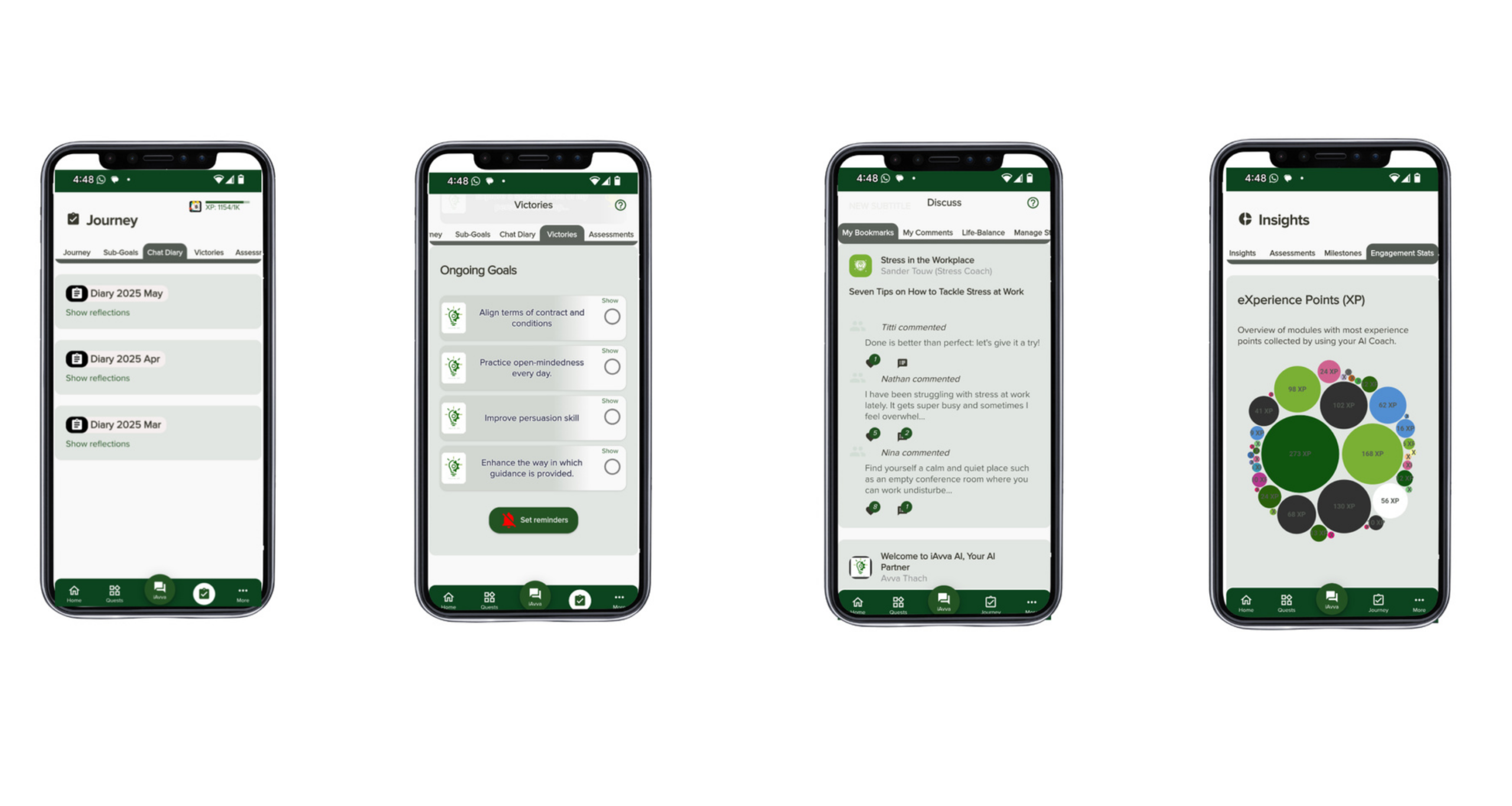
Busy leaders do not need more long workshops. They need frequent, gentle prompts rooted in neuroscience and positive psychology. The iAvva AI Coach App was built around this insight, combining ICF‑aligned coaching methods with quick, mobile experiences that fit real workdays.
“We do not learn from experience; we learn from reflecting on experience.” — John Dewey
Micro‑coaching makes that reflection simple enough to happen every day.
How iAvva AI Supports Digital Transformation Leadership At Scale
iAvva AI supports digital transformation leadership by blending human expertise with AI‑powered micro‑coaching in one integrated environment. This mix helps organizations move from strategy slides to measurable behavior change.
Core elements include:
iAvva AI Coach App
A five‑minute reflection platform available in 19 languages. Leaders receive daily prompts tailored to their goals, role, and current transformation focus. Two modes, Coach and Mentor, support both inner growth and practical guidance on AI projects. This makes habit building around AI leadership realistic for busy managers.Strategic Alignment Engine
The app connects to a Strategic Alignment Engine that links personal leadership goals to business OKRs. When a manager works on clear communication, for example, iAvva AI can tie that focus to metrics such as adoption of a new CRM, customer satisfaction, or feedback from employee surveys.Real-Time Analytics Dashboards
HR Directors, CLOs, and L&D teams gain dashboards that show engagement levels, reflection themes, and growth trends across departments and regions. This helps them target support where it matters most instead of guessing. Enterprise‑grade privacy, GDPR compliance, and encryption keep sensitive data safe.Expert Coaching And Advisory Services
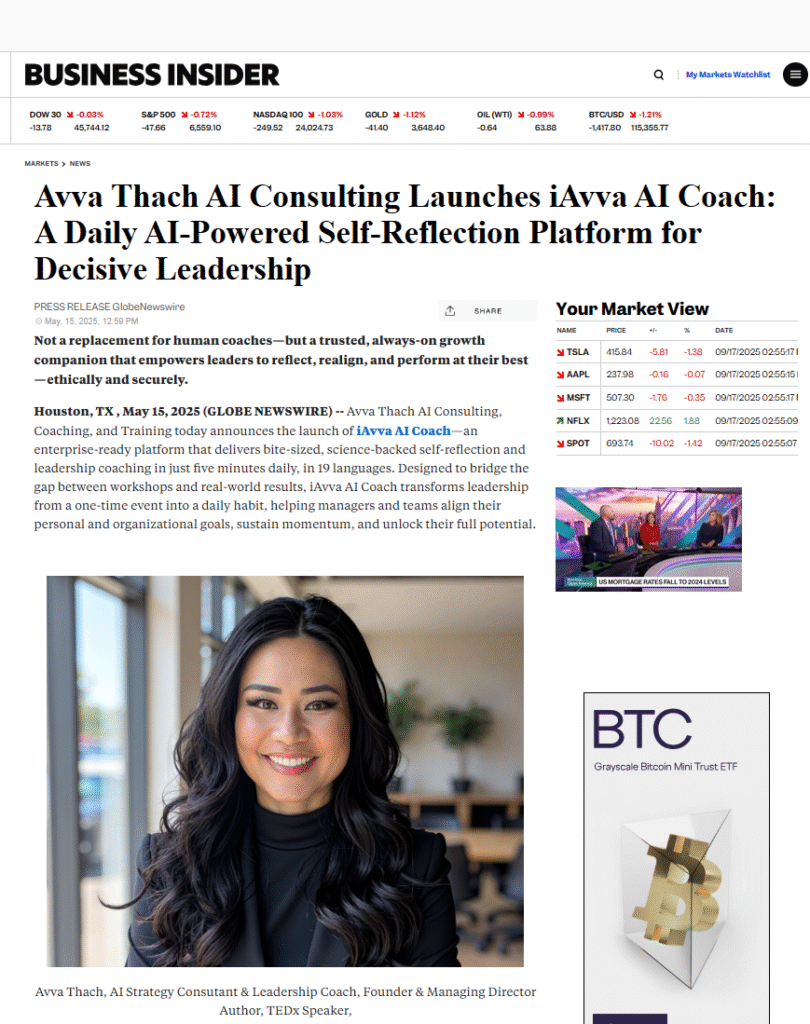
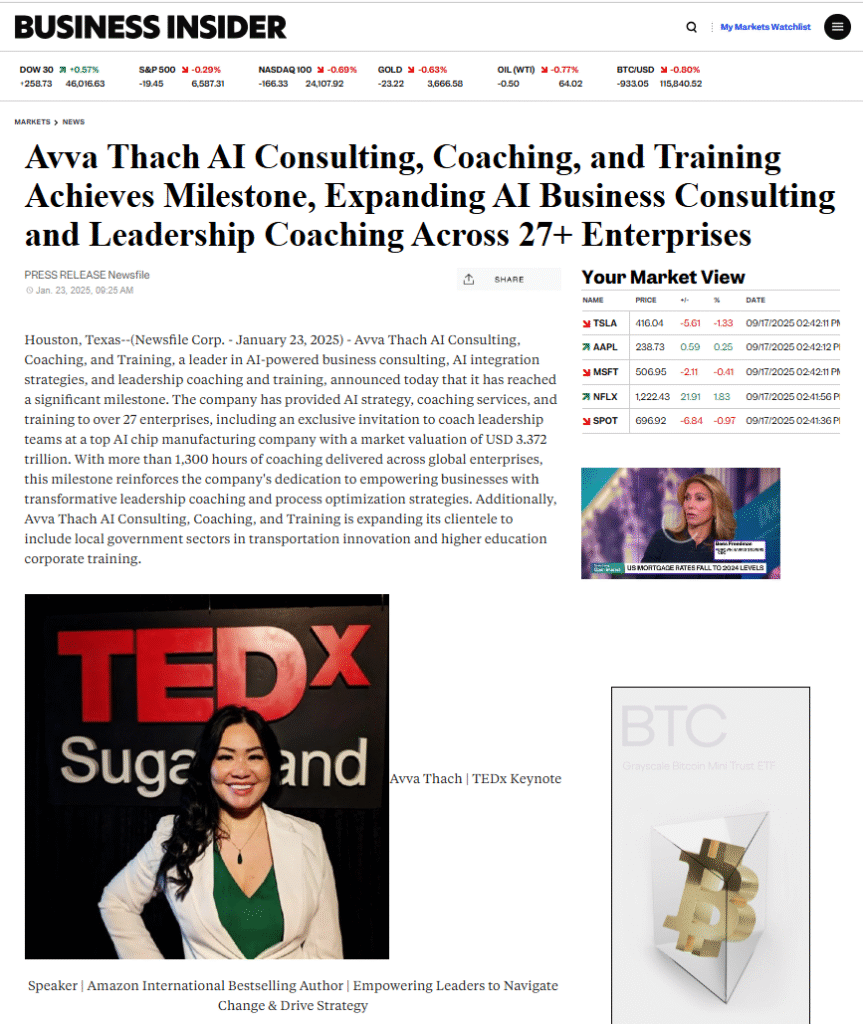
Beyond the app, iAvva AI offers 1:1 and group coaching, AI‑defined IT project management certification, and AI strategy and automation consulting. These services draw on founder Avva Thach’s experience with 22‑billion‑dollar transformation programs at Accenture, plus work with leaders at PayPal and Canadian government agencies.
Together, the platform and services give organizations a clear path from AI vision to daily leadership habits and measurable impact.
What Practical Steps Should Different Stakeholder Groups Take Next?
Different stakeholder groups hold different levers in digital and AI transformation, yet success depends on them moving together. Clear, role‑specific next steps help each group act without waiting for perfect conditions.
In our iAvva AI work with SMBs and enterprises, the most successful organizations treat the next 90 days as a focused experiment. They pick a small set of priorities, align on support, and use data to refine. This approach reduces fear and builds confidence.
The following action playbooks can help HR Directors, C‑suite leaders, IT managers, L&D professionals, and individual contributors turn ideas into motion.
Action Playbooks By Role (HR, C-Suite, IT, L&D, Individuals)
For HR Directors And CLOs
- Update leadership frameworks to include AI literacy, data comfort, change sponsorship, and coaching skills.
- Partner with the CIO and business leaders to align programs with the AI and digital roadmap, so learning supports real use cases.
- Add platforms like iAvva AI to deliver daily micro‑coaching and track growth, giving evidence of impact instead of only attendance data.
For C-Suite And SMB Business Leaders
- Meet as an executive team to clarify AI ambition, risk appetite, and guardrails, drawing on guidance from IDC and Deloitte.
- Select a few high‑impact use cases, such as AI‑supported customer service or finance automation, and sponsor them visibly.
- Invest in change management, communication, and coaching support through internal teams and partners like iAvva AI rather than assuming tools alone will deliver results.
For IT Managers And Directors
- Treat change management as a standard workstream in every AI or digital project plan instead of an optional extra.
- Use AI‑driven BPM tools to map current workflows, identify pain points with business and HR partners, and redesign processes that combine automation with human judgment.
- Work with L&D and People Ops to monitor adoption metrics and feedback, adjusting training and support where usage or satisfaction lags.
For L&D Professionals And People Operations Teams
- Design role‑based, microlearning journeys that track alongside live projects rather than sitting apart from them.
- Using AI‑powered tools like iAvva AI, personalize prompts and content based on role, goals, and behavior data, helping each leader focus on the next small improvement.
- Build dashboards that connect learning activity to adoption, performance, and engagement so you can show executives how development supports transformation outcomes.
For Individual Professionals And Early Adopters
- Build personal AI literacy by exploring resources from Microsoft, Google, or Coursera and trying safe tools in your own work.
- Volunteer for pilots, document contributions to process improvements, and share both wins and lessons with peers.
- With micro‑coaching from iAvva AI or similar tools, reflect daily on your reactions, choices, and influence so you can stay resilient and credible as change accelerates.
Tip: Choose one “signature behavior” you want to be known for in AI projects—such as clear communication or inclusive decision‑making—and practice it deliberately for 30 days.
Putting It All Together
Digital transformation leadership in the age of AI is a shared, ongoing practice that blends strategy, technology, and human care. It reaches from the boardroom through HR, IT, L&D, and People Operations to every manager who guides a team.
The leaders who succeed do not rely on tools alone. They build competencies in vision, systems thinking, AI literacy, and change leadership. They hold mindsets of equity, curiosity, and resilience, and they back those mindsets with structures for governance, learning, and reinforcement.
Hybrid human‑plus‑AI approaches help this work scale. iAvva AI shows how a five‑minute daily practice, tied to business OKRs and supported by expert coaches, can shift thousands of small choices across a company. Those small choices, repeated over time, change how people adopt AI, how they treat each other, and how value is created.
From here, the next step is simple:
- Decide which role you play.
- Pick one or two moves from the action playbooks.
- Commit to steady practice for the next 60–90 days.
Confidence in AI transformation leadership grows from consistent action, not from waiting until every variable is known.
Frequently Asked Questions
Question: What Is The Difference Between Digital Transformation Leadership And Traditional Change Management?
Digital transformation leadership sets long‑term direction for how AI, data, and technology reshape the business. Traditional change management focuses on guiding people through specific projects or releases. Strong transformation leadership uses structured change management methods like Prosci’s ADKAR and 3‑Phase Process as core tools, instead of treating them as separate activities.
Question: How Can Small And Mid-Sized Businesses Practice Effective Digital Transformation Leadership With Limited Resources?
Small and mid‑sized businesses can focus on a few high‑value AI or digital use cases that touch revenue or cost. They form a simple shared vision, build basic AI literacy, and create a small steering group to guide choices. Instead of large consulting programs, they lean on AI‑powered platforms and micro‑coaching, such as iAvva AI, to build habits and track progress.
Question: Which Metrics Should We Track To Measure The Success Of Our Digital Transformation Leadership Efforts?
Useful metrics span adoption, performance, experience, and capability. Leaders can track:
- Active usage of new tools and features
- Time and error rates on key processes
- Engagement and trust scores from surveys or pulse checks
- Participation in learning or coaching programs
Platforms like iAvva AI add leadership behavior and reflection data, helping HR and CLOs link growth in skills to business and people outcomes.
Question: How Do We Handle Employee Anxiety About AI Replacing Jobs During Transformation?
We address anxiety by treating it as normal and speaking about it directly. Leaders share clear plans about where automation will and will not change roles, along with principles for responsible AI. HR, managers, and L&D provide reskilling paths, coaching, and regular team conversations, so employees see real options rather than only threats.
Question: Can AI Tools Like iAvva AI Replace Human Coaches And Change Leaders?
AI tools like iAvva AI support and extend human coaches and change leaders rather than replace them. The AI side handles scale, timely prompts, and pattern insights across large groups. Human coaches and sponsors still guide complex emotions, ethics, and strategy, building trust and context that algorithms alone cannot provide.
Question: How Quickly Can We Expect To See Results From Investing In Digital Transformation Leadership?
Short‑term wins such as higher tool adoption, faster cycle times, or better meeting quality can appear within three to six months. Deeper shifts in culture, trust, and leadership behavior usually take several years, especially in large organizations. Results depend on sponsorship quality, change capacity, and how well coaching and reinforcement support day‑to‑day work.













Leave a Reply