





AI Business Coaching for Leaders: Practical Use Cases to Improve Decision‑Making
Leaders are navigating rapid digital transformation, where decision speed and quality determine outcomes. ai business coaching blends AI-enabled insights with human judgment to sharpen decision-making without sacrificing accountability. In this post you’ll see six practical, battle-tested use cases with data requirements, implementation steps, and measurable outcomes, grounded in iAvva’s 3-pillar framework of Customized Consulting, Coaching and Facilitation, and Training & Development.
1. AI-Driven Scenario Planning for Leaders
AI-driven scenario planning accelerates strategic sanity checks by running dozens of what-if outcomes in hours instead of weeks. It surfaces probability distributions, highlights leverage points, and forces explicit trade-offs before you lock in a course of action. Leaders who treat this as an integrated decision-support tool reduce bias by exposing scenarios that a human planner might overlook.
Setups should be SMB-friendly and decision-centric. Use Monte Carlo style risk analysis with Oracle Crystal Ball and Excel, or a capable equivalent, to model key levers: demand volatility, supplier lead times, production capacity, and macro shocks. Feed clean historical data, define plausible distributions, and let the model generate outcome ranges with confidence intervals. The output should feed a decision log and a short, action-oriented plan. Trade-off: more granularity and more simulations improve insight but require data quality and governance to stay credible.
Real-world example: a mid-market manufacturing firm used AI-driven scenario planning to stress test supply disruptions across three suppliers. They modeled demand, inventory turns, and capacity constraints under a supplier outage, then used the results to re-negotiate lead times and adjust production calendars, reducing risk of stockouts by 15% and improving service levels in a peak quarter.
- Define decision levers and outcomes: Determine which levers (demand, supply, capacity) drive outcomes and what success looks like.
- Assemble data sources and ensure data quality: Align sources, clean gaps, and document provenance to keep simulations credible.
- Build a baseline model with 1000+ simulations: Create a lean core model focused on core risk drivers and iterate with observable data.
- Run scenarios for plausible extremes: Include best/worst/moderate cases; adjust input distributions to test resilience.
- Establish decision triggers and governance: Define thresholds for action and set cadence for model updates and reviews.
- Integrate with dashboards for executive reviews: Channel outputs into a concise, decision-focused dashboard for speed.
End-to-end governance matters as much as the model. Link scenario planning to your data stewardship and decision rights, so outputs translate into concrete actions rather than opaque recommendations. Next, embed this approach into your broader coaching and transformation playbook to sustain pace and accountability.
2. AI-Powered Decision Journaling and Reflection
Decision journaling is a practical lever within ai business coaching. It creates a data trail of decisions, the context around them, and the outcomes, turning sloppy recollections into analyzable patterns. When used consistently, it reduces cognitive biases by documenting the reasoning steps leaders actually took and the results that followed. It also feeds coaching conversations with concrete instances rather than abstract anecdotes, making feedback faster and more actionable.
Practical setup and data you capture
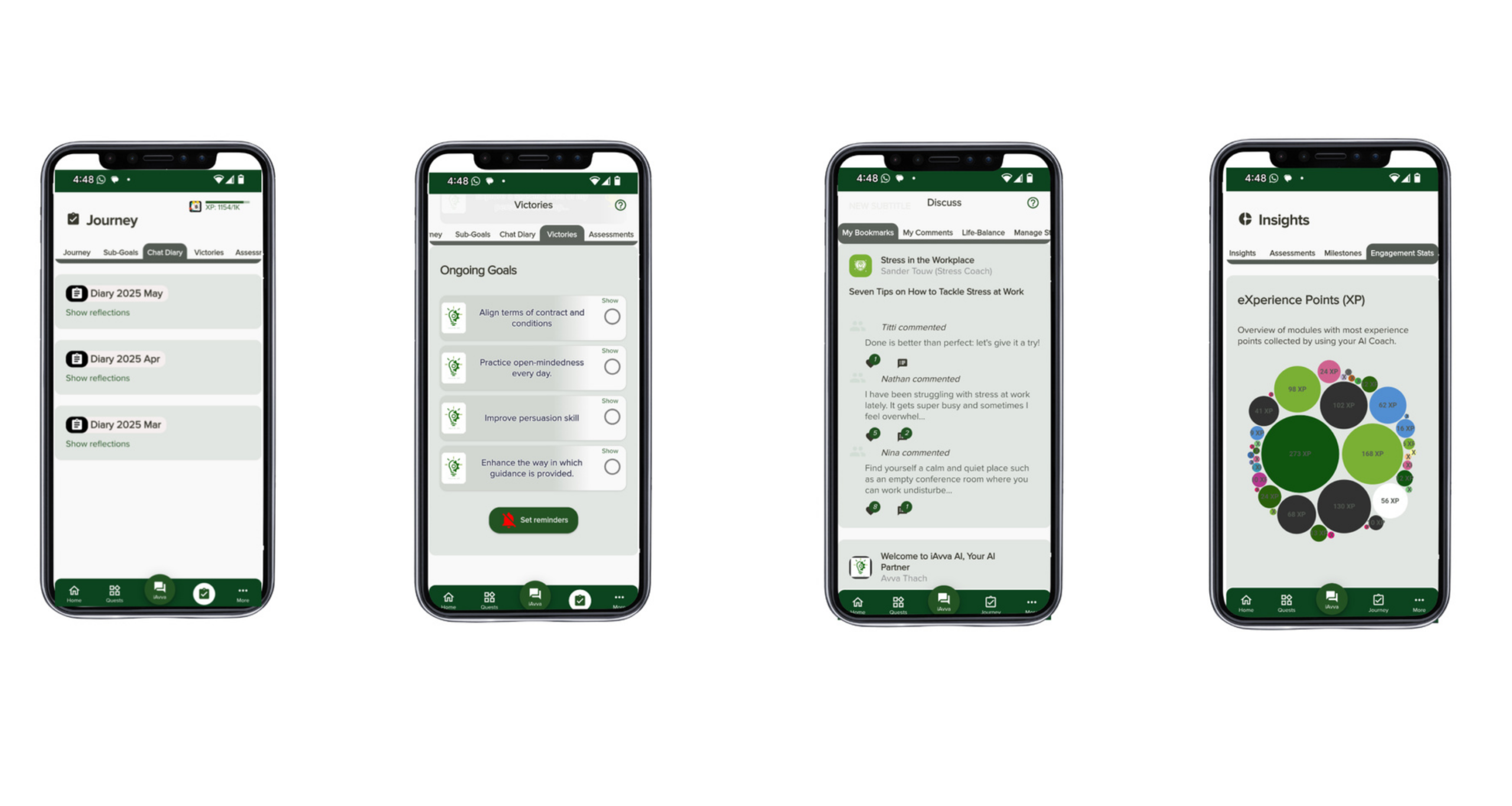
Choose a lightweight tool and a simple taxonomy. Capture fields like decision domain, objective, key assumptions, alternatives considered, bias to watch, outcome, time-to-decision, and learning. Use AI prompts to tag patterns across entries and surface insights such as recurring overconfidence or reliance on a single data source. Integrate with existing coaching workflows via the iAvva AI app to keep journaling aligned with coaching cycles.
- Week 1 – Setup: Define templates, prompts, and tagging rules, and import a small batch of past decisions to seed the system.
- Week 2 – Pilot decisions: Log 2-3 significant decisions and run prompts that surface bias signals and decision quality notes.
- Week 3 – Pattern mining: Run AI summaries across entries to identify recurring themes and trigger coaching conversations.
- Week 4 – Governance and adoption: Review data governance, adjust prompts, and scale journaling to the leadership cohort.
A practical example is a fast-growing manufacturing line where a VP logs a major capacity expansion decision. The journaling prompts surface that the team over-relied on a single supplier and underestimated ramp time, prompting a coaching session to rework the supplier risk plan and a revised scenario in the dashboard.
Limitations and tradeoffs matter. Journaling adds cognitive load and can become perfunctory if coaches assign it as busywork. Without governance, data may drift toward cherry-picked entries, biasing insights. Pair journaling with guardrails, data retention rules, and a clear governance owner to keep it honest.
Takeaway: treat AI-powered decision journaling as an ongoing feedback loop rather than a one-off task. Regular reflection inputs fuel better coaching outcomes and faster improvement in decision quality.
3. iAvva AI Coaching Framework in Action
The iAvva AI Coaching Framework translates coaching into measurable business impact through three pillars: Customized Consulting, Coaching and Facilitation, and Training & Development. Each pillar anchors a different capability, but together they create a repeatable, scalable program that pairs AI-enabled insights with human leadership.
In practice, the three pillars map to outcomes: Customized Consulting aligns AI strategy with core business priorities and data readiness; Coaching and Facilitation builds decision discipline and decision support behaviors; Training & Development codifies new skills into daily work and governance rituals. When you connect strategy, behavior, and capability, decision quality improves without turning leadership into data technicians. See how the three pillars align in iAvva’s framework.
90-Day Roadmap Preview
- Day 0–14: Establish sponsorship, define target outcomes, and inventory data sources; Owner: Chief People Officer with CIO.
- Day 15–30: Co-create Customized Consulting plan and coaching cadence; Owner: iAvva Engagement Lead and Head of L&D.
- Day 31–60: Run a pilot in two functional areas, collect adoption signals and decision metrics; Owner: BU Leaders with Coach.
- Day 61–75: Gather feedback, tune coaching prompts, tighten data governance, adjust AI tooling; Owner: Change Lead and Data Steward.
- Day 76–90: Scale to additional teams, formalize governance, and publish a dashboard of outcomes; Owner: CIO and VP of Ops.
A practical constraint to expect: you’ll trade speed for governance early. Rushing data integration or coaching content without alignment to business metrics often yields noisy adoption and dubious ROI. The three pillars mitigate that by requiring explicit ownership and cross-functional reviews at key milestones.
To make this stick, expect to track these cross-pillar metrics: adoption rate, decision quality score, and time to insight. The metrics feed a simple dashboard that shows progress by pillar and highlights where leadership is underperforming on governance or participation.
Takeaway: Start with a tightly scoped 90-day pilot that binds each pillar to explicit business outcomes, with defined owners and a governance cadence to prevent drift.
4. AI-Driven Decision Dashboards for Executives
Dashboards designed for executives should act as decision rails, not data dumps. When AI is embedded into the dashboard, leaders get context-aware signals: predictive hints about outcomes, anomaly alerts, and suggested next steps. The goal is to shorten cognitive load and raise decision quality by surfacing the right insight at the right moment. In practice, that means aligning visuals with a defined decision moment, not a broad data panorama.
Design around decision moments. Keep the surface area tight—3 to 5 core metrics per role, with a primary KPI and just enough supporting drill-downs to diagnose outliers. Build in guardrails so AI-generated nudges point toward action rather than overwhelm with options. This is not about showcasing data literacy; it’s about speeding the right choice at the right time.
Tech stacks matter, but integration discipline matters more. A common fit is Microsoft Power BI or Tableau paired with cloud AI services (for example, Power BI with Azure AI) to surface AI-driven signals. Source data from ERP, CRM, MES, and HRIS, and decide in advance on refresh cadence and data provenance. Design for near real-time visibility where it matters, and batch updates where it does not.
Implementation steps ensure the dashboard serves decisions, not just data:
- 1) Define decision moments for each executive role (e.g., S&OP meetings, capital allocation).
- 2) Catalog data sources and establish a single source of truth with clear provenance.
- 3) Choose KPIs and AI prompts that directly influence decisions, not vanity metrics.
- 4) Build AI-assisted visualizations with anomaly detection and scenario nudges.
- 5) Set guardrails and governance for data quality, bias checks, and access control.
- 6) Roll out with a pilot and feedback loop to refine metrics and prompts.
Concrete use case: a mid-market manufacturing firm integrated a dashboard via Power BI and Azure AI to monitor forecast accuracy, on-time delivery, and capacity. The AI layer suggests scenario outcomes under different demand shifts and flags when forecasts diverge beyond a threshold. After a 90-day pilot, the team cut decision time in operations reviews by roughly 30% and improved forecast accuracy by several points, enabling more aggressive yet safer procurement.
ROI and governance go hand in hand. Track time-to-decision, decision quality scores, and revenue impact, while enforcing data provenance, model cards, and access controls. Be explicit about what AI is advising versus what a human must validate, and keep a quarterly audit cycle to recalibrate prompts and data feeds.
5. AI-Enabled Leadership Coaching Platforms and Personalization
AI-enabled leadership coaching platforms are not gadgets; they are orchestration layers that connect assessment data, learning paths, and coaching conversations to produce faster, more consistent development. The real value comes from pairing personalization with clear guardrails so coaching remains human-led where it matters.
Real platforms to study include BetterUp and CoachHub, two scalable coaching ecosystems that blend AI-driven recommendations with live coaching and development tracks. For a tangible reference, see Transform your leadership—how executive coaching elevates performance and innovation. In practice, a mid-market services firm used such a platform to tailor learning paths to strategic priorities based on 360 feedback and performance data; within three months, teams reported tighter alignment in cross-functional decision-making.
- Data hygiene and privacy: Establish clear data inputs, consent, and access controls before any coaching nudges are sent.
- Governance overlay: Implement ongoing bias checks, model explainability, and human oversight on coaching recommendations.
- Personalization rules: Let AI surface recommended tracks but require the human coach to approve and contextualize changes.
- Pilot metrics: Define adoption rate, time-to-insight, and decision-quality improvements as primary metrics.
- System integration: Connect the coaching platform to HRIS, LMS, and performance systems to ensure data continuity.
Concrete pilot plan for an SMB: Run a 90-day pilot in two functions with a single sponsor, then scale. Phase 1 Discover and align: map two strategic priorities to learning tracks and ensure data access. Phase 2 Pilot execution: roll out to 8-12 managers, with weekly coaching nudges and monthly coaching sessions. Phase 3 Review and scale: evaluate outcomes, adjust personalization rules, and prepare governance brief for broader rollout.
A key trade-off many teams underestimate is the tension between personalization depth and governance overhead. Deep personalization accelerates skill adoption but adds governance friction and potential bias risks if data inputs are not diverse enough. The practical path is to start with a narrow, high-impact learning track, pair AI recommendations with experienced coaches, and progressively widen scope as you calibrate rules and guardrails.
Plan to connect this approach to the iAvva 3-pillar model: customize coaching paths to strategic priorities, facilitate ongoing coaching conversations around decisions, and build development programs that scale with the organization’s AI maturity. The next step is to couple the pilot with a governance charter and a transparent ROI framework to track adoption, decision quality, and business impact over time.
6. Governance, Ethics, and Risk in AI Coaching
Governance is the operating system of AI coaching. Without explicit governance, you invite data leakage, biased recommendations, and misaligned incentives as soon as you scale from pilot to program across teams. A disciplined governance model locks in accountability, defines who controls data, who can access coaching outputs, and how decisions get audited. In practice, governance isn’t a policy document; it’s the day-to-day discipline that keeps AI coaching aligned with business goals and risk tolerance.
- Data governance and access control: who can view coaching outputs, and how data is anonymized or pseudonymized.
- Model governance and versioning: track training data, prompts, and model updates.
- Ethics, bias monitoring, transparency: regular bias audits and decision traceability.
- Privacy, consent, retention: explicit consent, data retention windows, and deletion rights.
- Operational governance: escalation paths, audit trails, and accountability for coaching decisions.
Beyond policy, the practicalities matter: define who owns the governance risk, set a cadence for audits, and embed governance into your coaching workflow so it scales without grinding progress to a halt.
Concrete example: A mid-market manufacturing firm piloted AI coaching with strict data access controls, consent workflows, and quarterly bias reviews. Within 90 days, coaching adoption rose 28% and leadership group decision speed improved, while no coaching data left unauthorized reach. This was possible because governance activities were built into the rollout, not attached afterward.
One trade-off to acknowledge: governance slows time-to-value and introduces friction. The win is sustainable risk posture that prevents costly missteps and protects trust in the AI coaching program.
Takeaway: start with a lightweight governance baseline and a 90‑day pilot to surface gaps, calibrate controls, and prove value before scaling.















Leave a Reply