






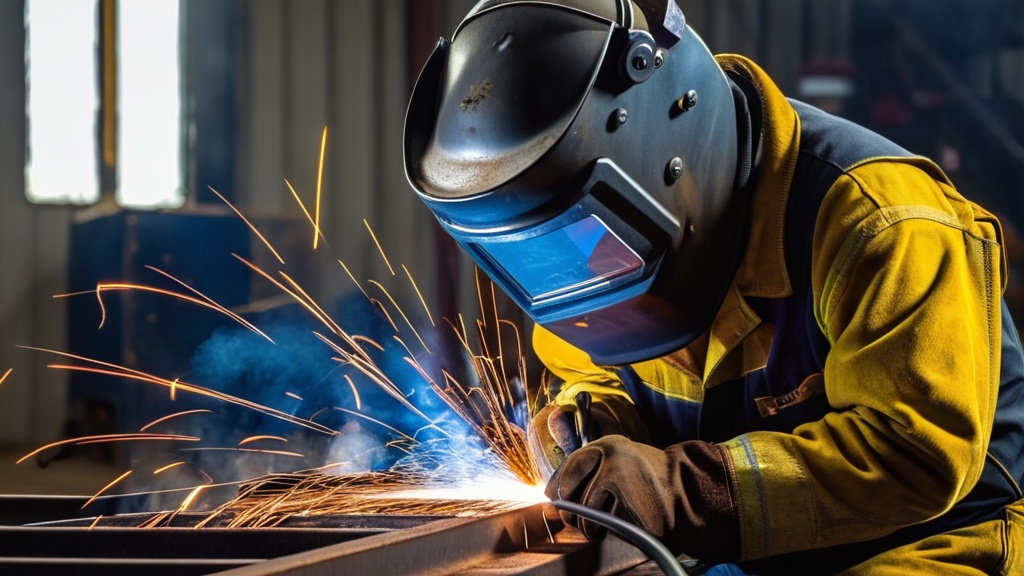
Welding specifications are critical documents that outline the requirements and standards for welding processes in construction projects. These specifications serve as a blueprint for welders, engineers, and project managers, ensuring that everyone involved in the project is on the same page regarding the quality and performance expectations of welded joints. Understanding these specifications is essential for achieving the desired structural integrity and safety of the final product. They encompass various aspects, including the type of materials to be used, the welding techniques to be employed, and the necessary qualifications for welders.
Moreover, welding specifications also detail the testing and inspection protocols that must be followed to verify the quality of welds. This includes guidelines for non-destructive testing methods, such as ultrasonic or radiographic testing, which help identify any defects that may compromise the integrity of the weld. By adhering to these specifications, construction teams can ensure that their work meets both industry standards and client expectations, ultimately leading to successful project outcomes.
For those interested in understanding the broader implications of technology in various industries, including welding, a related article on AI implementation strategies can provide valuable insights. This article discusses how artificial intelligence can transform operational processes and enhance efficiency in manufacturing sectors. You can read more about it here: effective leadership coaching, which highlights strategies that can be beneficial for those managing welding teams and projects. Understanding these dynamics can lead to improved outcomes in welding operations and overall project success.
Achieving Consistency and Quality in Welded Joints
| Welding Specification | Parameter | Value/Range | Unit | Notes |
|---|---|---|---|---|
| AWS D1.1 | Preheat Temperature | 50 – 150 | °C | Depends on base metal thickness and type |
| AWS D1.1 | Interpass Temperature | 150 – 250 | °C | Maximum temperature between passes |
| ASME Section IX | Welding Current | 100 – 300 | Amps | Varies by electrode and material |
| ISO 15614-1 | Welding Speed | 20 – 60 | cm/min | Depends on welding process and thickness |
| API 1104 | Heat Input | 5 – 15 | kJ/cm | Critical for pipeline welding |
| EN 1011-2 | Shielding Gas Composition | Ar 80% / CO2 20% | Volume % | Common for MIG welding of steel |
| ISO 5817 | Acceptable Porosity | Max 2% | Area | Quality level B for structural welds |
Consistency is a hallmark of quality in welding, and achieving uniformity across welded joints is essential for ensuring structural integrity. Welding specifications provide clear guidelines on parameters such as heat input, filler material selection, and joint design, which help maintain consistency throughout the welding process. By adhering to these specifications, construction teams can produce welded joints that meet or exceed quality expectations.
Quality control measures play a vital role in achieving consistency in welded joints. Regular inspections and testing can identify any deviations from established specifications, allowing teams to address issues before they escalate into larger problems. By fostering a culture of quality assurance within the welding team, construction firms can ensure that every weld meets the required standards, ultimately leading to a more reliable and durable final product.
Enhancing Project Planning and Management
Effective project planning is essential for successful construction outcomes, and understanding welding specifications is a key component of this process. By incorporating welding requirements into project plans, teams can allocate resources more efficiently and establish realistic timelines for completion. This foresight helps prevent delays caused by unforeseen welding issues or re-work due to non-compliance with specifications.
Moreover, integrating welding specifications into project management practices allows for better communication among team members. When everyone understands the welding requirements from the outset, it fosters collaboration between engineers, welders, and project managers. This alignment ensures that all stakeholders are aware of their responsibilities regarding welding tasks, ultimately leading to smoother project execution and enhanced overall performance.
Facilitating Communication Among Stakeholders
Effective communication is vital in any construction project, particularly when it comes to complex tasks like welding. Welding specifications serve as a common language among stakeholders, providing a clear framework for discussing expectations and requirements. When engineers, welders, and project managers are all familiar with these specifications, it fosters an environment of collaboration where everyone can contribute their expertise.
Furthermore, clear communication regarding welding specifications helps prevent misunderstandings that could lead to costly mistakes. When all parties are on the same page regarding the requirements for welded joints, it reduces the likelihood of errors during execution. This collaborative approach not only enhances project efficiency but also builds trust among stakeholders, ultimately contributing to a more successful construction process.
Minimizing Material Waste and Resource Usage
In an era where sustainability is increasingly important, minimizing material waste is a critical consideration in construction projects.
Understanding welding specifications can help reduce waste by ensuring that materials are used efficiently and effectively.
By following established guidelines for joint design and filler material selection, construction teams can optimize their use of resources while still achieving high-quality welds.
Additionally, reducing material waste has financial benefits for construction firms. By minimizing excess material usage, companies can lower their overall project costs while also contributing to environmental sustainability efforts. This dual benefit makes adherence to welding specifications not only a best practice but also a strategic advantage in today’s competitive construction landscape.
Supporting Quality Control and Inspection Processes
Quality control is an integral part of any construction project, particularly when it comes to welding. Welding specifications provide a foundation for quality assurance processes by outlining the criteria that must be met for welded joints to be considered acceptable. By establishing clear guidelines for inspection and testing, these specifications help ensure that any defects are identified early in the process.
Moreover, implementing robust quality control measures based on welding specifications can enhance overall project outcomes. Regular inspections allow teams to monitor compliance with established standards, ensuring that any deviations are addressed promptly. This proactive approach not only improves the quality of welded joints but also contributes to greater confidence among stakeholders regarding the integrity of the final product.
Adhering to Project Timeline and Deadlines
Timely project completion is a critical factor in construction success, and understanding welding specifications plays a significant role in meeting deadlines. By incorporating welding requirements into project schedules from the outset, teams can allocate resources effectively and establish realistic timelines for completion. This foresight helps prevent delays caused by unforeseen issues related to welding.
Additionally, adhering to established welding specifications can streamline workflows by reducing the likelihood of errors or re-work. When welders are trained to follow these guidelines consistently, it minimizes disruptions to the project timeline caused by corrective actions. Ultimately, this focus on adherence to welding specifications contributes to more efficient project execution and helps ensure that deadlines are met.
Promoting Professionalism and Accountability in Welding Practices
Professionalism is essential in any field, but it holds particular significance in construction where safety and quality are paramount. Understanding welding specifications promotes professionalism among welders by providing them with clear guidelines on best practices. When welders are trained to adhere to these specifications consistently, it fosters a culture of accountability where individuals take pride in their work.
Moreover, promoting professionalism in welding practices enhances the overall reputation of construction firms. Clients are more likely to trust companies that demonstrate a commitment to quality and adherence to industry standards. By prioritizing professionalism through adherence to welding specifications, construction teams can build strong relationships with clients while also contributing to safer and more reliable structures in their projects.
FAQs
What is a welding spec?
A welding spec, or welding specification, is a detailed document that outlines the requirements, procedures, and standards for performing welding operations. It ensures consistency, quality, and safety in welding projects.
Why are welding specs important?
Welding specs are important because they provide clear guidelines for welders to follow, ensuring that welds meet the necessary strength, durability, and safety standards. They help prevent defects and ensure compliance with industry codes.
What information is typically included in a welding spec?
A welding spec usually includes details such as the type of welding process, materials to be welded, joint design, welding parameters (e.g., current, voltage, speed), filler materials, preheat and post-weld heat treatment requirements, inspection methods, and acceptance criteria.
Who creates welding specifications?
Welding specifications are typically created by engineers, welding specialists, or quality control professionals based on industry standards, project requirements, and applicable codes such as those from the American Welding Society (AWS) or the American Society of Mechanical Engineers (ASME).
How can welders ensure compliance with welding specs?
Welders can ensure compliance by thoroughly reviewing the welding spec before starting work, following the specified procedures and parameters, using approved materials and equipment, and participating in required inspections and testing to verify weld quality.


















%20and%20the%20International%20Organization%20for%20Standardization%20(ISO),%20which%20provide%20guidelines%20for%20best%20practices%20in%20welding.%20Meeting%20these%20industry%20standards%20is%20essential%20for%20ensuring%20compliance%20with%20legal%20requirements%20and%20maintaining%20a%20competitive%20edge%20in%20the%20market.</p>%0A<p>Adhering%20to%20established%20regulations%20not%20only%20protects%20the%20safety%20of%20workers%20and%20the%20public%20but%20also%20enhances%20the%20reputation%20of%20construction%20firms.%20Clients%20are%20more%20likely%20to%20trust%20companies%20that%20demonstrate%20a%20commitment%20to%20quality%20and%20compliance%20with%20industry%20standards.%20Furthermore,%20meeting%20these%20regulations%20can%20prevent%20costly%20legal%20issues%20and%20fines%20that%20may%20arise%20from%20non-compliance.%20By%20prioritizing%20adherence%20to%20welding%20specifications%20and%20industry%20standards,%20construction%20teams%20can%20foster%20a%20culture%20of%20excellence%20that%20benefits%20both%20their%20projects%20and%20their%20overall%20business%20operations.</p>%0A<h2>%20Preventing%20Costly%20Repairs%20and%20Re-work</h2>%0A<p><img%20decoding=%22async%22%20src=%22https://iavva.ai/wp-content/uploads/2026/02/image-21.jpg%22%20alt=%22Photo%20welding%20spec%22%20id=%222%22%20style=%22max-width:100%;display:block;margin-left:auto;margin-right:auto;width:90%;%22></p>%0A<p>One%20of%20the%20most%20significant%20challenges%20in%20construction%20is%20managing%20costs%20effectively.%20Poorly%20executed%20welds%20can%20lead%20to%20defects%20that%20necessitate%20repairs%20or%20re-work,%20resulting%20in%20increased%20project%20expenses%20and%20delays.%20Understanding%20welding%20specifications%20is%20crucial%20for%20preventing%20these%20costly%20issues%20from%20arising%20in%20the%20first%20place.%20By%20following%20established%20guidelines,%20construction%20teams%20can%20minimize%20the%20risk%20of%20defects%20and%20ensure%20that%20welds%20are%20performed%20correctly%20from%20the%20outset.</p>%0A<p>Additionally,%20investing%20time%20in%20training%20welders%20to%20understand%20and%20adhere%20to%20welding%20specifications%20can%20yield%20substantial%20long-term%20savings.%20When%20welders%20are%20equipped%20with%20the%20knowledge%20and%20skills%20necessary%20to%20produce%20high-quality%20welds,%20the%20likelihood%20of%20errors%20decreases%20significantly.%20This%20proactive%20approach%20not%20only%20reduces%20the%20need%20for%20repairs%20but%20also%20enhances%20overall%20project%20efficiency.%20Ultimately,%20preventing%20costly%20repairs%20and%20re-work%20through%20adherence%20to%20welding%20specifications%20contributes%20to%20a%20more%20streamlined%20construction%20process%20and%20improved%20profitability.</p>%0A<p>When%20exploring%20the%20intricacies%20of%20welding%20specifications,%20it%E2%80%99s%20essential%20to%20consider%20how%20effective%20leadership%20can%20enhance%20team%20performance%20in%20technical%20fields.%20A%20related%20article%20discusses%20the%20science%20behind%20effective%20leadership%20coaching%20and%20what%20truly%20works%20in%20fostering%20a%20productive%20environment.%20You%20can%20read%20more%20about%20this%20topic%20in%20the%20article%20on%20<a%20href=)
Leave a Reply