





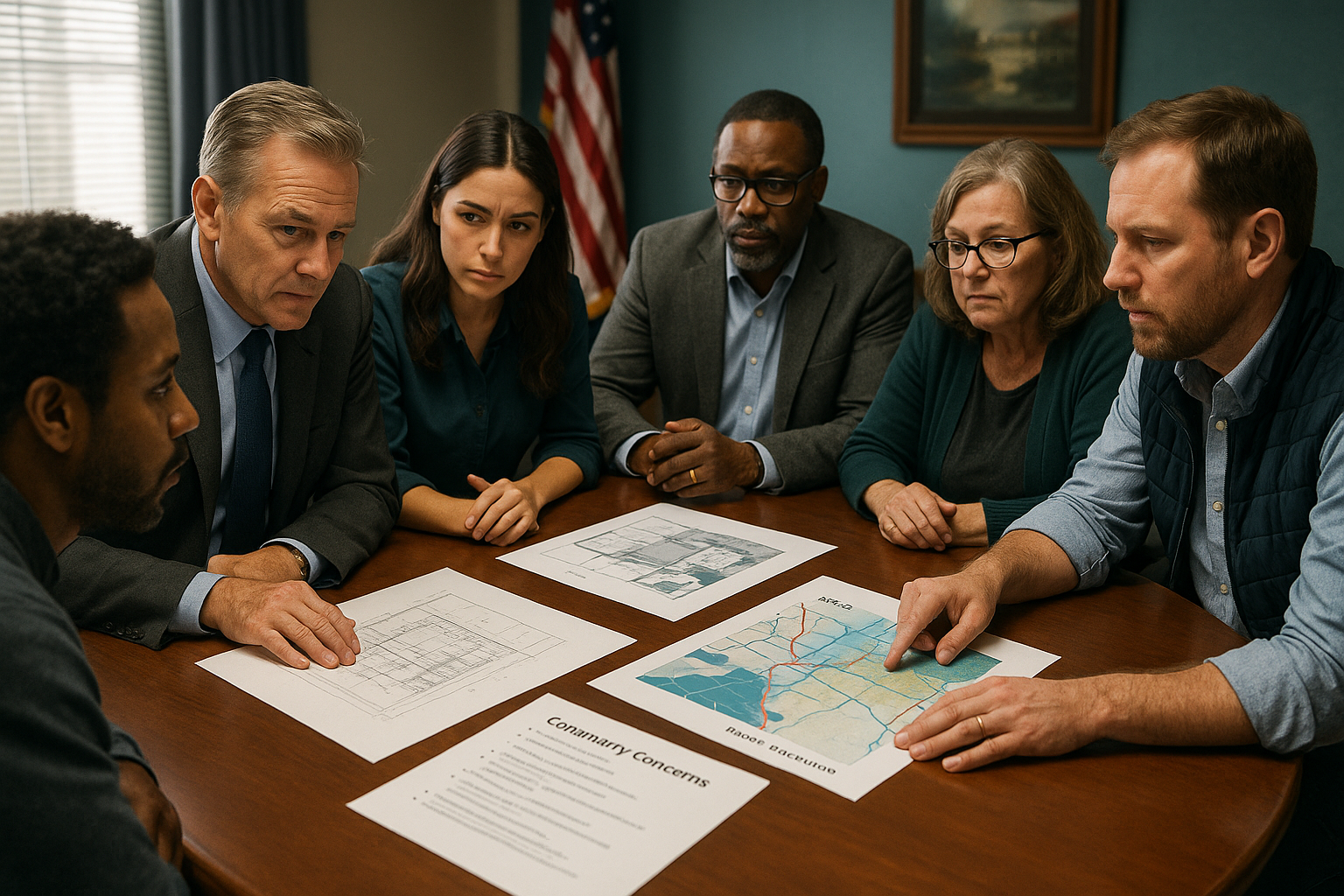
The 300-Plus Bans and Moratoriums Threatening the U.S. Data Center Boom Show AI Infrastructure Has a Local Politics Problem
Introduction
The AI infrastructure race is usually framed as a battle over chips, energy, capital, and model scale. But a growing wave of local bans and moratoriums across the United States is making something else clear: the next bottleneck may be political permission.
According to reporting from The Information, more than 300 temporary or permanent bans on new data center development have been passed across the U.S. since 2023, with the overwhelming majority enacted this year. More than 275 have passed since Jan. 1, and over 150 since the start of May alone. That is not a fringe reaction. It is a broad signal that public resistance to AI infrastructure is becoming a serious force.
At iAvva AI Consulting, we see this as a structural issue, not a temporary public-relations problem. AI infrastructure is colliding with community politics, resource anxiety, and distrust around the broader impact of artificial intelligence itself.
The next phase of the AI buildout will not be constrained only by chips and power. It will also be constrained by local legitimacy.
Key Takeaways
- More than 300 local bans or moratoriums on data center development have been enacted across the U.S. since 2023.
- The majority were passed this year, showing how quickly opposition has intensified.
- Resistance is strongest in the Midwest and South, where many large AI data center projects are being pursued.
- Public concern is not just about land use. It is tied to water, electricity, jobs, aesthetics, and unease about AI itself.
- For AI builders and enterprise leaders, infrastructure strategy now has to include local politics and community trust.
Why This Matters Now
For a long time, the assumption was that if AI demand was strong enough, infrastructure would eventually follow. That assumption is weakening. The U.S. now has a visible and growing pattern of local governments pausing or blocking new data center construction because residents and officials are worried about environmental strain, higher electricity costs, visual blight, and the broader consequences of AI expansion.
That changes the strategic landscape. The infrastructure question is no longer just whether companies can finance and supply the next wave of facilities. It is also whether they can secure durable social and political permission to build them.
Why Resistance Is Spreading So Quickly
The speed of the backlash matters almost as much as the scale. When hundreds of communities adopt moratoriums and bans in a relatively short period, it suggests a pattern that others can easily copy. Once one locality pauses development, nearby areas often take notice and consider similar actions.
That appears especially true around high-profile AI projects. In Michigan, more than 20 towns within a 50-mile radius of OpenAI and Oracle’s Stargate complex reportedly passed bans. Nearby governments watched the controversy, saw the legal and political friction, and decided to hit pause themselves.
This creates a network effect of opposition, where one major project can trigger a much wider ring of defensive policy responses.
| Source of Resistance | Why Communities Care | Strategic Impact |
|---|---|---|
| Power consumption | Fear of higher electricity costs and grid strain | More scrutiny on energy-intensive projects |
| Water use | Concern about local resource depletion | More environmental opposition |
| Land and aesthetics | Worry about industrial footprint and blight | Rezoning fights and local delays |
| AI distrust | Anxiety over jobs, safety, and societal impact | Infrastructure opposition becomes ideological too |
Temporary Moratoriums Still Matter
Most of these measures are temporary rather than permanent, but that does not make them minor. A temporary moratorium can still stall planning, complicate financing, alter timelines, and change the economics of a project. In infrastructure markets, time itself is a major variable.
Even when a project eventually moves forward, delays can shift power contracts, land costs, equipment timing, and political risk assumptions. That is especially important in AI, where companies are racing to build capacity before competitors lock in scarce resources.
In other words, a short-term local pause can still produce long-term strategic consequences.
Why States Are Sending Mixed Signals
The story is not one-dimensional. Some states are trying to slow data center growth through moratoriums, paused tax incentives, or subsidy reviews. Others continue to see data centers as critical economic development assets and are offering major benefits to attract them.
Michigan is a useful example of that contradiction. The state has supported large data center development with tax relief and welcomed high-profile projects such as OpenAI and Oracle’s Stargate. Yet local resistance in the surrounding region has also grown sharply. That tension is likely to repeat elsewhere. State leaders may want the jobs and investment, while local governments and residents bear the immediate infrastructure and land-use impacts.
This is why the politics of AI infrastructure may become more fragmented, with pro-growth state policy colliding with anti-expansion local policy.
What This Means for AI Builders and Enterprise Leaders
For builders, the lesson is clear: data center strategy can no longer be treated as a pure engineering and capital exercise. Community engagement, legal risk, land politics, utility coordination, and regional trust are becoming strategic inputs.
For enterprise leaders, the implications are broader. If the next phase of compute expansion gets delayed or geographically constrained, it may affect capacity pricing, deployment timelines, vendor concentration, and infrastructure resilience across the AI market.
This ties directly to other shifts we have been tracking, including the rise of alternative regional AI infrastructure models, competitive moves in inference infrastructure, and how AI scale pressure is reshaping strategic decisions.
Why This Is About Trust, Not Just Zoning
It would be a mistake to view these moratoriums as just routine zoning disputes. They also reflect a deeper trust problem. Many communities do not believe the benefits of AI infrastructure will clearly outweigh the costs. They see rising electricity demand, uncertain job creation, opaque corporate commitments, and a technology wave they do not fully trust.
That means companies cannot solve this purely with technical arguments. They will need stronger public narratives, more tangible local benefits, and more credible answers about long-term impact.
Conclusion
The U.S. data center boom is running into a new kind of constraint. It is not just about power, land, or hardware supply. It is about whether communities believe the AI buildout is being done with them or to them.
More than 300 bans and moratoriums should be read as a warning. AI infrastructure is now a political issue at the local level, and companies that underestimate that reality may find their biggest delays coming not from the supply chain, but from the town hall.
FAQs
Why are communities opposing data centers?
Because they are worried about electricity use, water demand, land impact, local aesthetics, and the broader consequences of AI expansion.
Are most of the bans permanent?
No. Most are temporary moratoriums, but even temporary pauses can significantly affect project timing and economics.
Why is resistance strongest in the Midwest and South?
Because those regions are seeing many of the largest proposed data center builds, especially those tied to next-generation AI infrastructure.
Why should enterprise leaders care?
Because infrastructure delays can influence AI capacity availability, pricing, vendor concentration, and long-term deployment strategy.
Related reading: Firmus and Nvidia’s Indonesia Project, SambaNova’s $10 Billion Valuation Push, DeepSeek’s $7.4 Billion Fundraise, and The Information.


















Leave a Reply