



Top Leadership Coaching Courses for Senior Leaders — What to Look For and Why They Work
Article Overview
Article Type: Listicle
Primary Goal: Help senior HR and learning leaders identify the top leadership coaching courses for senior leaders, evaluate them against a practical selection framework, and choose programs that deliver measurable impact during digital and AI-driven transformations.
Who is the reader: Senior Vice President of Human Resources, Vice President of Learning and Development, Head of Organizational Development, or Vice President of AI Transformation at SMB or mid-market enterprise actively planning leadership development investments for senior executives and C-suite leaders.
What they know: Familiar with executive education and leadership coaching at a conceptual level, aware of common vendors and credentials, and experienced running internal L&D procurement. They want to learn which courses deliver measurable behavior change for senior leaders, how each course aligns to AI and digital transformation objectives, cost and delivery tradeoffs, and how to evaluate ROI.
What are their challenges: Selecting programs that move the needle on alignment, culture, and capability during digital transformation; proving ROI to the executive team and board; integrating coaching with AI strategy and implementation; balancing budget and time constraints for busy senior leaders; ensuring post-program sustainment and scaling.
Why the brand is credible on the topic:
Tone of voice: Professional, evidence-driven, and practical. Use precise industry language without jargon overload. Present comparative analysis objectively, reference credible sources, and emphasize use-case fit for senior leaders driving AI and digital transformation.
Sources:
- International Coach Federation Global Coaching Study 2020 and ICF resources on coaching outcomes https://coachingfederation.org/research/global-coaching-study
- Harvard Business Review articles on leadership development and coaching effectiveness, including Why Leadership Development Programs Fail https://hbr.org/2015/10/why-leadership-development-programs-fail
- Center for Creative Leadership research on leadership development ROI and program design https://www.ccl.org/articles/white-papers/
- NeuroLeadership Institute resources on brain-based coaching and behavior change https://neuroleadership.com
- Columbia Coaching Certification Program and Harvard Executive Education program pages for curricula and credential details https://execed.business.columbia.edu/programs/columbia-coaching-certification-program and https://www.exed.hbs.edu/programs/alp/
- PwC and IDC studies referenced by the business on digital transformation and training: PwC findings on training importance and IDC digital transformation statistics https://www.pwc.com and https://www.idc.com
Key findings:
- Executive coaching and structured leadership programs produce measurable improvements in leadership behaviors and business outcomes when paired with stakeholder involvement and sustained practice, according to ICF and CCL research.
- Programs that combine coaching with real-world assignments, 360 feedback, and stakeholder engagement have higher transfer to workplace and sustained behavior change.
- AI and digital transformation increase the need for leadership programs that cover strategic decision-making with data, change leadership, and cross-functional influence; purely technical training is insufficient.
- Cohort composition, facilitator credibility, and post-program reinforcement (peer networks, follow-up coaching, measurable KPIs) are strong predictors of long-term program ROI.
Key points:
- Provide a concise selection framework with non-negotiable evaluation criteria for senior leaders seeking coaching courses, including credentialing, evidence of outcomes, stakeholder integration, and alignment to AI transformation.
- Profile eight real, high-quality leadership coaching courses or certifications with specific details: curriculum highlights, delivery format, duration, credential, evidence of impact, price range, ideal use cases, and how each supports AI-driven change.
- Include iAvva AI Consulting offering as one of the entries with objective placement and clear rationale for fit with SMBs undergoing AI transformation.
- Explain how to compare options and build a short RFP checklist and pilot measurement plan to assess candidate programs before scale-up.
- Provide concise, practical FAQs that address procurement, measurement, and integration concerns for senior L&D buyers.
Anything to avoid:
- Avoid vague or unverified claims about guaranteed outcomes or specific ROI percentages without citation.
- Avoid promotional or salesy language; present iAvva content objectively and fairly within the list.
- Avoid high-level platitudes about leadership without linking to concrete program features and evidence.
- Avoid listing only elite university programs without options that address SMB constraints and practical AI integration.
External links:
- https://coachingfederation.org/research/global-coaching-study
- https://hbr.org/2015/10/why-leadership-development-programs-fail
- https://www.ccl.org/articles/white-papers/
- https://neuroleadership.com
- https://execed.business.columbia.edu/programs/columbia-coaching-certification-program
Internal links:
- AI for Strategic Advantage: A Guide for Forward-Looking Executives
- Bridging the Distance: Embracing Connection and Collaboration Through Welo at EAU
- Agile Coaching 101: Understanding Key Concepts and Practices
- 5 Ways Digital Transformation Can Improve Your Business
- Mastering Business Agility: Adapt and Thrive in a Dynamic Market – iAvva AI
Content Brief
Overview and writing guidance: This article combines a curated list of top leadership coaching courses for senior leaders with a practical selection framework tailored to organizations undergoing digital and AI transformation. The writing approach should be concise, evidence-based, and procurement-friendly. Do not write a sales pitch; instead, objectively compare each program across the same evaluation dimensions so readers can make apples-to-apples decisions. Key points to cover: program summary, curriculum highlights, delivery format and duration, credential or certification, evidence and outcomes including published research or client case examples where available, price range or cost band, best-fit scenarios and any limitations, and a short note on how the program supports AI-informed leadership or decision-making. Tone should be professional, neutral, and action-oriented. Use bullet lists for clarity and include at least one concrete example or named case where a program influenced measurable change. Close by directing readers to a short RFP checklist in the decision framework and to internal resources for piloting a program. Avoid unsubstantiated ROI claims and promotional language.
Center for Creative Leadership Leadership Development Program
- Program snapshot and target audience: Center for Creative Leadership Leadership Development Program (LDP) aimed at senior and rising senior leaders.
- Curriculum highlights: 360 assessments, behavioral simulations, stakeholder feedback, action planning, systems leadership modules.
- Delivery format and duration: in-person cohort and virtual blended options; typical duration 6 to 12 months with follow-ups.
- Credential and evidence: Research-based curriculum with published CCL studies on leader effectiveness and transfer rates.
- Why it works: strong experiential learning, repeated practice cycles, and stakeholder integration drive sustained behavior change.
- Price band and logistics: typically premium-priced; expect multi-thousand to tens-of-thousands per participant depending on cohort and customization.
- Best-fit use cases: large enterprise or scaled SMBs focused on building cross-functional senior leadership capability and succession pipelines.
- AI integration note: effective when paired with modules on data-driven decision-making and change leadership; requires custom content for AI strategy alignment.
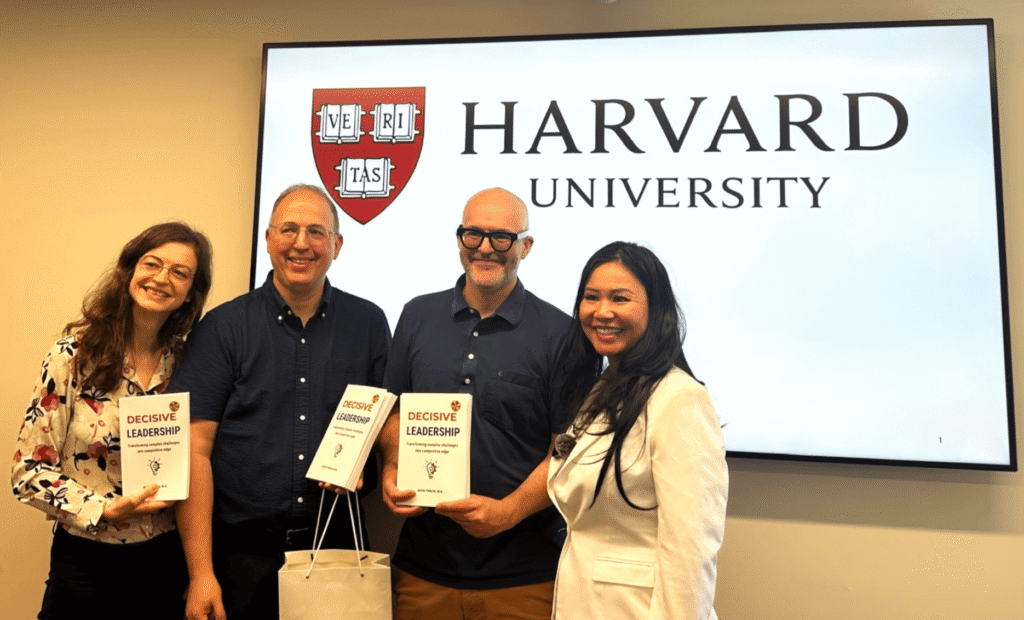
Harvard Business School Authentic Leadership Development
- Program snapshot and target audience: Harvard Executive Education Authentic Leadership Development for senior leaders seeking reflective, evidence-based coaching.
- Curriculum highlights: executive coaching, 360 feedback, case-based learning, peer coaching, reflective practice and authentic leadership frameworks.
- Delivery format and duration: short intensive modules and longer immersion options; typically multi-day residencies plus follow-up coaching.
- Credential and evidence: Harvard Executive Education certificate; program faculty and research draw on HBS leadership literature.
- Why it works: combines rigorous frameworks with executive coaching and peer networks to accelerate mindset shifts and leader presence.
- Price band and logistics: premium pricing per participant; schedule flexibility but higher time intensity.
- Best-fit use cases: senior leaders at organizations investing in thought leadership, strategic influence, and board-level readiness.
- AI integration note: strong foundation for leadership mindset; recommend pairing with AI strategy workshops to translate mindset into data-led decisions.
INSEAD Coaching for Leadership
- Program snapshot and target audience: INSEAD Coaching for Leadership targets senior leaders and internal coaches wanting to coach high-potential leaders and teams.
- Curriculum highlights: coaching frameworks, feedback techniques, team coaching, psychometrics, and cultural intelligence modules.
- Delivery format and duration: modular executive education with blended online and on-campus options; runs over weeks to months.
- Credential and evidence: INSEAD certificate with faculty experienced in coaching and leadership development research.
- Why it works: emphasis on coach-as-leader and team dynamics enables scalable internal coaching capability.
- Price band and logistics: mid-to-high price range; suitable for organizations investing in internal coach development.
- Best-fit use cases: organizations building internal coaching ecosystems to support sustained development across transformation initiatives.
- AI integration note: program supports coaching behavioral change; add custom modules on leading cross-functional AI teams and human+AI collaboration.
Marshall Goldsmith Stakeholder Centered Coaching
- Program snapshot and target audience: Marshall Goldsmith Stakeholder Centered Coaching Certification for executive coaches and senior leaders using stakeholder feedback for change.
- Curriculum highlights: stakeholder-centered process, measurable behavior change plans, repeated feedback loops, and global coaching methodology.
- Delivery format and duration: certification cohorts, virtual and in-person formats with follow-up accountability cycles.
- Credential and evidence: recognized methodology with published client success stories and measurable behavior change data.
- Why it works: tight stakeholder involvement and clear, measurable behavior goals produce higher accountability and observable outcomes.
- Price band and logistics: varies by provider and cohort; costs reflect certification and coaching hours.
- Best-fit use cases: organizations needing targeted leadership behavior change tied to stakeholder expectations and measurable KPIs.
- AI integration note: particularly effective for leaders accountable for AI initiatives because stakeholder feedback keeps technical and ethical concerns visible.
iAvva AI Consulting Executive Leadership Coaching with AI Integration
- Program snapshot and target audience: Tailored executive coaching and cohort programs from iAvva AI Consulting designed for senior leaders at SMBs and mid-market companies driving AI-enabled transformation.
- Curriculum highlights: executive coaching, AI strategy alignment, Lean Six Sigma and process optimization modules, stakeholder alignment sessions, and hands-on use case workshops.
- Delivery format and duration: blended offering with short executive workshops, 1:1 coaching blocks over 3 to 6 months, and optional implementation sprints.
- Credential and evidence: led by Avva Thach with documented client success stories across healthcare, product, and agile transformations and measurable improvements in efficiency and alignment.
- Why it works: directly integrates leadership coaching with practical AI strategy and implementation, ensuring leaders can translate strategic intent into operational change.
- Price band and logistics: positioned for SMB and mid-market budgets with modular pricing; scalable from single executive coaching to cohort programs paired with consulting engagements.
- Best-fit use cases: SMBs and growth-stage organizations that need coaching tied to executable AI roadmaps and measurable productivity gains.
- AI integration note: core strength; program includes practical AI governance, data-driven decision modules, and change management to operationalize AI investments.
Columbia Coaching Certification Program
- Program snapshot and target audience: Columbia Business School Columbia Coaching Certification Program for leaders and internal coaches who want a robust coaching credential.
- Curriculum highlights: coaching competencies, supervision, applied practice, and ethics with executive-level coaching scenarios.
- Delivery format and duration: cohort-based executive education with in-person and virtual options; multi-week schedule with practice hours.
- Credential and evidence: recognized certification from Columbia University with rigorous assessment and mentoring.
- Why it works: strong academic rigor combined with supervised practice produces credible, workplace-ready coaching capability.
- Price band and logistics: premium tuition consistent with Ivy League executive programs; appropriate for organizations prioritizing credentialed internal coaches.
- Best-fit use cases: organizations building a formal internal coaching practice with academic credibility and clinical supervision.
- AI integration note: useful for developing coaching capability; customize content to include coaching leaders on AI decision frameworks and model accountability.
NeuroLeadership Institute Brain-Based Coaching
- Program snapshot and target audience: NeuroLeadership Institute brain-based coaching and leadership programs for senior leaders focused on neural principles that support behavior change.
- Curriculum highlights: brain-based frameworks for decision-making, habit formation, stress response, and practical coaching tools to promote change.
- Delivery format and duration: modular courses, certifications, and custom corporate programs delivered virtually or in-person.
- Credential and evidence: backed by neuroscience research and applied case studies showing improved leader habits and resilience.
- Why it works: translates neuroscience into practical coaching tactics that accelerate adoption of new behaviors under stress, making it valuable during rapid transformation.
- Price band and logistics: mid-to-high depending on customization and certification path.
- Best-fit use cases: leaders managing high-stakes change, complex organizational stressors, or needing resilience coaching during AI adoption.
- AI integration note: helps leaders manage cognitive load and decision biases when interpreting AI outputs and leading data-driven teams.
Co-Active Training Institute Co-Active Leadership Program
- Program snapshot and target audience: Co-Active Training Institute Co-Active Leadership Program focused on relational coaching skills for leaders and internal coaches.
- Curriculum highlights: Co-Active coaching framework, presence, powerful questions, designing action and accountability, and group coaching techniques.
- Delivery format and duration: multi-module cohort programs with virtual and in-person options and practical practice labs.
- Credential and evidence: widely adopted coaching model with established global network and measurable practitioner outcomes.
- Why it works: emphasizes relational intelligence and dialogue skills that enhance influence, stakeholder relationships, and team cohesion.
- Price band and logistics: moderate to premium depending on certification and cohort choices.
- Best-fit use cases: leaders needing to improve influence, stakeholder alignment, and team coaching capability during transformation.
- AI integration note: strengthens human-centered leadership skills required to interpret AI outputs and maintain psychological safety in data-driven teams.
Frequently Asked Questions
How should I prioritize program features when buying leadership coaching for senior leaders?
Prioritize measurable outcomes, stakeholder integration, coach quality and accreditation, alignment to strategic objectives such as AI transformation, and post-program reinforcement mechanisms.
Can academic executive programs be adapted to SMB budgets and timelines?
Yes; many providers offer modular or cohort-based formats, sliding scale pricing for bundled cohorts, or virtual options that reduce cost while preserving core content.
What metrics should we use to measure program effectiveness within 6 to 12 months?
Use a mix of behavior metrics from 360 feedback, business KPIs tied to the leader role such as time-to-decision or project velocity, and qualitative stakeholder feedback.
How do we ensure coaching programs support AI and digital transformation specifically?
Select programs that include modules on data-driven decision-making, change leadership, and cross-functional influence or plan to add bespoke AI alignment workshops and implementation sprints.
Is it better to build internal coaching capability or hire external coaches?
A blended approach often works best: build internal coaches for scale and cultural fit while engaging external experts for senior leader development and specialized topics like AI strategy.
What is a low-risk way to pilot a leadership coaching program before wider rollout?
Run a 3-6 month pilot with a small cohort of senior leaders, define clear success metrics and a control group, and include stakeholder feedback loops to evaluate transfer before scaling.
Top Leadership Coaching Courses for Senior Leaders — What to Look For and Why They Work
Article Overview
Article Type: Listicle
Primary Goal: Help senior HR and learning leaders identify the top leadership coaching courses for senior leaders, evaluate them against a practical selection framework, and choose programs that deliver measurable impact during digital and AI-driven transformations.
Who is the reader: Senior Vice President of Human Resources, Vice President of Learning and Development, Head of Organizational Development, or Vice President of AI Transformation at SMB or mid-market enterprise actively planning leadership development investments for senior executives and C-suite leaders.
“, “keywords”: [“Leadership Coaching”, “Senior Leaders”, “AI Transformation”, “Corporate Training”], “@id”: “#blogposting” }, { “@type”: [“FAQPage”], “@id”: “#faqpage”, “mainEntityOfPage”: { “@type”: [“WebPage”], “@id”:”https://iavva.ai/leadership-coaching-courses-senior-leaders” }, “mainEntity”:[ { “@type”:”Question”, “name”:”How should I prioritize program features when buying leadership coaching for senior leaders?”, “acceptedAnswer”:{ “@type”:”Answer”, “text”:”Prioritize measurable outcomes, stakeholder integration, coach quality and accreditation, alignment to strategic objectives such as AI transformation, and post-program reinforcement mechanisms.” } }, { “@type”:”Question”, “name”:”Can academic executive programs be adapted to SMB budgets and timelines?”, “acceptedAnswer”:{ “@type”:”Answer”, “text”:”Yes; many providers offer modular or cohort-based formats, sliding scale pricing for bundled cohorts, or virtual options that reduce cost while preserving core content.” } }, { “@type”:”Question”, “name”:”What metrics should we use to measure program effectiveness within 6 to 12 months?”, “acceptedAnswer”:{ “@type”:”Answer”, “text”:”Use a mix of behavior metrics from 360 feedback, business KPIs tied to the leader role such as time-to-decision or project velocity, and qualitative stakeholder feedback.” } }, { “@type”:”Question”, “name”:”How do we ensure coaching programs support AI and digital transformation specifically?”, “acceptedAnswer”:{ “@type”:”Answer”, “text”:”Select programs that include modules on data-driven decision-making, change leadership, and cross-functional influence or plan to add bespoke AI alignment workshops and implementation sprints.” } }, { “@type”:”Question”, “name”:”Is it better to build internal coaching capability or hire external coaches?”, “acceptedAnswer”:{ “@type”:”Answer”, “text”:”A blended approach often works best: build internal coaches for scale and cultural fit while engaging external experts for senior leader development and specialized topics like AI strategy.” } }, { “@type”:”Question”, “#faq-question”:””, “#faq-answer”:””, “#faq-answer”:””, “#faq-answer”:””, “#faq-answer”:””, “#faq-answer”:””, “#faq-answer”:””, “#faq-question”:””, “#faq-question”:””, “#faq-question”:””, “#faq-question”:””, “#faq-question”:””, “#faq-question”:””, “#faq-question”:””, “#faq-question”:””, “\”How do we ensure coaching programs support AI and digital transformation specifically?\”\”: \”Select programs that include modules on data-driven decision-making, change leadership, \”cross-functional influence or plan to add bespoke AI alignment workshops \”and implementation sprints.\”}” :”#blogposting”,”@id”: “How do we ensure coaching programs support AI”,”@graph”: “\”@context\”: \”https://schema.org\”,\”@graph\”:[{\”@\”\”FAQPage\”:{\”@id\”:\”#blogposting\”,\”@id\”:\”#\”,\”@id\”:\”#blogposting\”,\”@id\”:\”#blogposting\”,\”@graph\”:[{\”@\”\”FAQPage\”:{\”@id\”:\”#blogposting\”,\”@id\”:\”#blogposting\”,\”mainEntityOfPage\”:{\”@\”WebPage\”:{\”mainEntityOfPage\”:{\”mainEntityOfPage\”:{\”\”FAQPage\”: \”\”FAQPage\”: \”\”FAQPage\”: \”How should I prioritize program features when buying leadership coaching for senior leaders?\”},{\”How do we ensure coaching programs support AI”,”text”:””,”text”:””,”text”:””,”text”:””,”text”:””,”text”:””,”text”:””,”text”:””,”text”:””,”text”:””,”text”:””,”Accepted Answer”:{“Accepted Answer”:{“Accepted Answer”:{“Accepted Answer”:{“Accepted Answer”:{“Accepted Answer”:{“Accepted Answer”:{“Accepted Answer”:{“Accepted Answer”:{“Accepted Answer”:{“Answered Question”:{“Answered Question”:{“Answered Question”:{“Answered Question”:{“Answered Question”:{“Answered Question”:{“Answered Question”:{“Answered Question”:{“Answered Question”:{“Answered Question”: “#answer\”:\”Prioritize measurable outcomes,\”stakeholder integration,\”coach quality”,”alignment to strategic objectives such as AI transformation,” :”and post-program reinforcement mechanisms.”,”alignment to strategic objectives such as AI transformation,” :””}, “” : “”}, “” : “”}, “” : “”}, “” : “”}, “” : “”},”” : “”} }, “alignment to strategic objectives such as AI transformation,” :{“alignment to strategic objectives such as AI transformation,” :”and post-program reinforcement mechanisms.”}, “alignment to strategic objectives such as AI transformation.” : “alignment to strategic objectives such as AI transformation,” } } } }}}}}}}}}]}]}













Leave a Reply