



Designing Leadership Coaching Training That Embeds New Behaviors Across Teams
Designing leadership coaching training that actually sticks across teams is a real challenge for SMBs. This post offers a practical blueprint that ties leadership behaviors to business outcomes, using a three-pillar model and AI-enabled delivery to scale coaching without losing human nuance. You’ll get a step-by-step framework, real-world examples, and simple measurement approaches to embed new behaviors across cross-functional teams.
From Strategy to Everyday Leadership Behavior: Defining the Target Behaviors
You don’t design leadership coaching training by listing aspirational traits; you translate strategy into a tight, observable set of target behaviors that tie directly to business outcomes. Start with four to six core behaviors and map them to metrics your teams actually move.
- Decision ownership and speed — behavior is clear ownership, concise decision briefs, and time-bound commitments. Tie this to cycle time and handoff reduction.
- Psychological safety and feedback — leaders invite candid input and coach with curiosity. Link to engagement scores and cadence of feedback exchanges.
- Result-oriented coaching conversations — managers structure coaching with goals, progress checks, and documented next steps. Measure coaching completion rates and observable improvements in team performance.
- Cross-functional collaboration rituals — routines that force alignment across teams, with shared objectives and transparent decision criteria. Track joint initiatives and time-to-value.
- Clear expectations and visible progress — leaders articulate goals, owners, and success criteria in visible formats (dashboards, briefings). Monitor progress updates and alignment across teams.
Understand the level-specific expectations to avoid ambiguity. Frontline managers should normalize 1:1s and weekly coaching conversations with a crisp structure; mid-level leaders must sponsor cross-team rituals and ensure consistent coaching across their domains; senior leaders protect time, secure sponsorship, and ensure the coaching cadence scales with business priorities.
Concrete Example: In a product-engineering squad, the manager runs a weekly decision ritual. They publish a one-page decision brief with owner, criteria, deadline, and one open risk, then invite input from two cross-functional leads. This simple practice clarified accountability and cut escalation cycles within 90 days.
As Google Project Oxygen showed, manager behaviors have a measurable impact on team performance. For context, see What makes a leader.
A practical trade-off emerges here: chasing too many behaviors dilutes adoption and makes measurement noisy. Favor depth over breadth, anchor behaviors to on-the-job practice, and reinforce them through coaching circles and short, frequent prompts. The risk is that metrics become hollow if the behaviors aren’t observable in everyday work.
Takeaway: define a tight set of 4–6 target behaviors, map them to concrete business metrics, and establish a sustainable cadence with executive sponsorship to embed leadership change at scale.
A Behavior Embedding Framework: 90 Days to Behavioral Change Across Teams
To embed new leadership behaviors across teams, you need a deliberate three-phase cadence: Discovery, Practice, Reinforcement. This isn’t training in isolation; it’s an operating system that ties observable actions to business outcomes and scales with AI-enabled delivery. In leadership coaching training terms, design for behavior you can see and measure, not just intent you hope teams feel.
Discovery sets the baseline: define the target behaviors, map them to metrics that matter at the team level, gather input from leaders across functions, and secure ongoing executive sponsorship. Practice is where behavior becomes habit: create safe coaching circles, team rituals, reflective sessions, and micro-learning prompts that land on the job. Reinforcement cements the change: dashboards, recognition, and HR processes that keep the behaviors visible beyond the initial sprint.
Cross-functional interventions are non-negotiable: coaching circles, short stand-up rituals, and structured reflection sessions keep attention on how a leadership habit translates into team outcomes. Leverage AI-enabled prompts to push bite-sized actions between coaching sessions, so managers act the right way even when the calendar is crowded. For example, an engineering manager might get a 15-minute pre-planning prompt that nudges them to solicit cross-team input before commits.
Measure what matters with a lightweight, living dashboard. Track observable behaviors such as proactive cross-functional updates, timely feedback, and psychological safety indicators, then tie those to delivery outcomes like cycle time and defect rate. The key is to keep the measurement simple enough to sustain, but rigorous enough to justify continued coaching investment.
Practical example: a mid-market software company with 12 managers across four teams ran a 90-day cadence. Discovery clarified five core behaviors, Practice established weekly coaching circles, and Reinforcement used a shared dashboard. After 90 days, velocity rose by ~18%, rework dropped by ~12%, and cross-functional handoffs improved by about 25%—but only after sustained executive sponsorship and alignment with performance reviews.
A crucial trade-off: the more you bake coaching into daily work, the harder it is to shield time for reflection. You’ll need governance to prevent drift and to ensure AI prompts don’t replace human judgment. The payoff is scalable, but only when HR processes, IT data feeds, and leadership sponsorship stay aligned.
Leveraging AI to Personalize Coaching at Scale
Leveraging AI to Personalize Coaching at Scale changes the game when you need consistent coaching across dozens or hundreds of managers without burning through budget. AI-driven insights work best when they surface observable behaviors tied to business outcomes, not abstract improvements. In practice, you set a behavioral blueprint, feed it with real-world data from performance dashboards and manager notes, and let the AI generate bite-sized actions that managers can act on within their existing rhythms. The key is to keep the coaching human-centered: AI suggests, a live coach approves and contextualizes, and a sponsor keeps the pressure on until the behavior sticks.
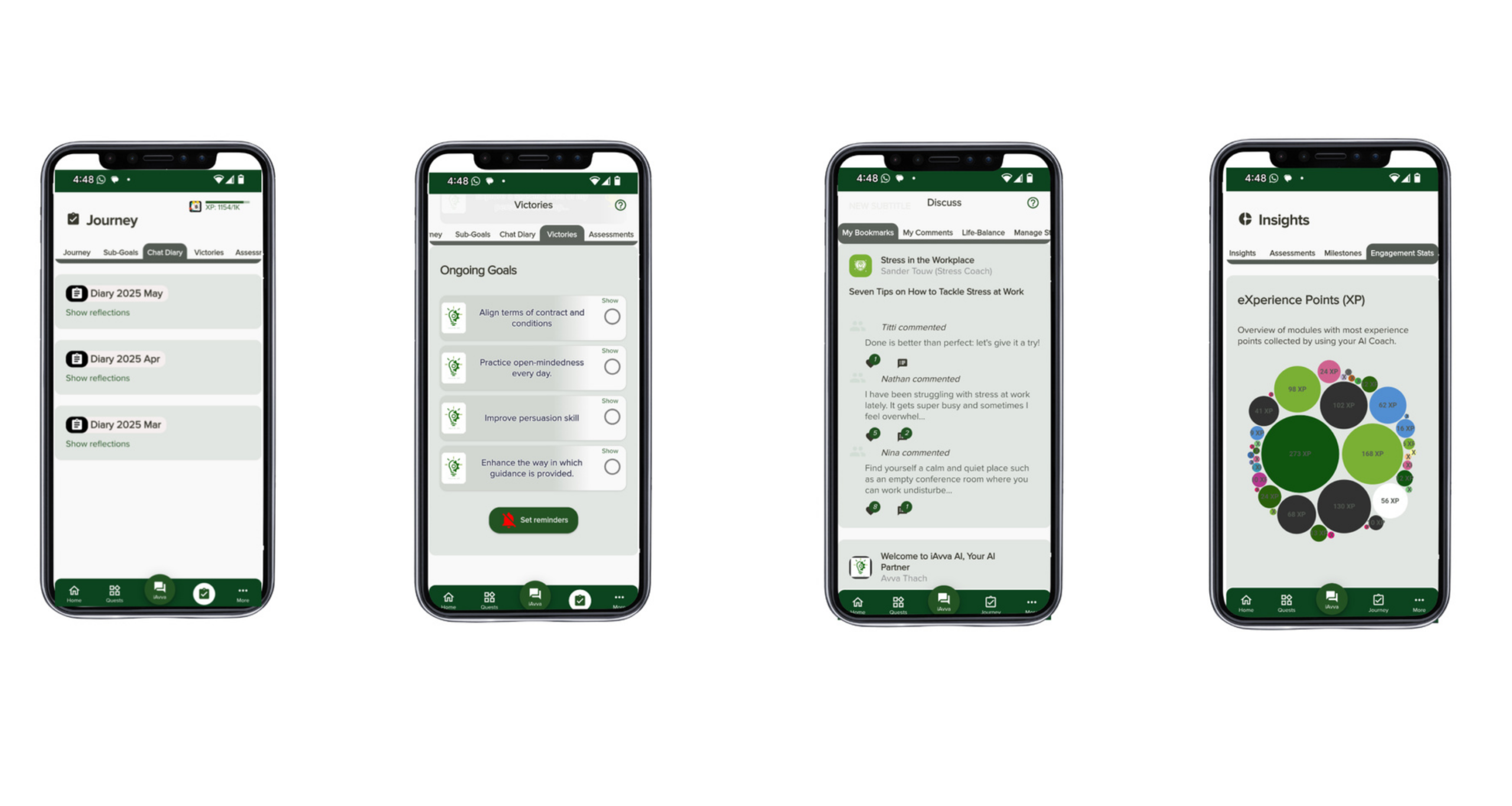
With an AI Coach App, the system delivers personalized prompts at the manager level while guiding peer and on-the-job practice. Signals come from multiple sources: weekly KPI trends, customer feedback, and remarks captured during 1:1s. The app surfaces 2–4 concrete actions per week, tailored to each leader’s gaps, plus recommended reflection questions for the next team meeting. Crucially, governance and ethical guardrails keep data usage transparent, and a human coach audits outcomes to prevent misinterpretation or bias.
- Data signals and constraints: performance metrics, 1:1 notes, and team metrics anchor coaching prompts.
- AI prompts and bite-sized actions: typically 2–4 targeted actions per leader per week, plus quick reflection questions.
- Human coaching for interpretation: weekly check-ins to interpret AI recommendations in context and ensure accountability.
Concrete SMB use case: a 40-store retailer
Consider a 40-store retailer. The AI Coach App analyzes store-level sales velocity, employee engagement scores, and qualitative notes from district managers. It recommends two actions per leader each week, such as a 15-minute feedback ritual and a short team huddle that includes recognition and coaching moments. After three months, managers report more consistent coaching practices and higher team engagement, with trends indicating improved cross-store collaboration.
Trade-offs and guardrails matter: AI can misread nuance or context, so keep human oversight front and center. Start small with a focused behavior like delivering timely feedback, and scale only after you observe reliable adoption across a few cohorts. Factor in the extra costs of data governance, and establish a cross-functional sponsor group to review prompts and outcomes. If governance is weak, you risk biased recommendations or eroded trust.
Takeaway: AI personalization scales leadership coaching training when it anchors to observable behaviors, is governed by human oversight, and ties directly to measurable business outcomes.
Aligning Leadership Coaching with HR and IT Processes
Aligning leadership coaching training with HR and IT processes is not optional. If you skip it, observable change stalls after the program ends. Treat HR and IT as governance partners who define how leadership coaching training outcomes translate into performance expectations, system usage, and talent pipelines. Practically, tie observable behaviors to HR activities like performance reviews and succession planning, and to IT metrics such as change adoption and project velocity. Build data governance into the leadership coaching training design from day one so you can measure impact with credible, auditable signals.
Two-tier sponsorship accelerates adoption: an executive sponsor who clears obstacles and a dedicated HR/IT liaison who translates coaching outcomes into people and tech processes. Draft a lightweight governance charter that spells decision rights, meeting cadences, and escalation paths. Make sure the HRBP or HR Director signs off on learning intents and that the IT leader approves data-sharing boundaries. This isn’t about adding meetings; it’s about ensuring the coaching signals are read by the systems that manage people and projects.
- Governance and sponsor roles: appoint an executive sponsor and an HR/IT liaison; formalize decision rights and cadence.
- Outcomes-to-metrics mapping: translate three to five target behaviors into performance prompts and dashboard indicators.
- HR process integration: embed coaching outcomes into performance reviews, promotion criteria, and learning credits without slowing cycles.
- Dashboards for accountability: create lightweight, visual indicators that executives can review in 15 minutes.
- Pilot with ROI narrative: start with a confined scope and measure pre/post changes in specific teams.
Example: A mid-sized software firm integrated leadership coaching training outcomes into quarterly reviews. They defined three target behaviors linked to measurable outcomes: cross-team collaboration, timely feedback, and clear decision rights. They added prompts to performance reviews to cite observed behaviors and used IT dashboards to track adoption. Within two quarters, cross-functional project velocity improved by 15% and rework dropped by 20%. This shows the power of governance and measurement in practice.
Note: alignment with HR and IT is an ongoing governance responsibility, not a one-off setup.
Trade-off: heavy governance slows momentum; keep it modular and scope-first. A common misstep is treating HR processes as bottlenecks; design for speed by pairing HR and IT touchpoints with clear owners. Also watch data privacy and ensure human oversight; AI can surface signals, but humans decide the actions.
Takeaway: start with a lightweight governance charter that assigns sponsors and measurement owners, then embed HR and IT touchpoints so leadership coaching training signals feed the right processes from day one.
Case Patterns: Lessons from Google, GE and IBM on Leadership Development
Case patterns from Google, GE, and IBM show what it takes to move leadership coaching training from slides to sustained team impact. These programs demonstrate that scale without a clear behavioral blueprint and ongoing sponsor support fails. SMBs can borrow the same logic by defining a compact set of observable leadership behaviors and aligning coaching with tangible business metrics.
Common threads across the patterns
Across Google, GE, and IBM, three elements consistently drive adoption: explicit manager behaviors, executive sponsorship, and measurement anchored in observable actions. Without a shared behavioral blueprint, coaching drifts into generic training. A practical trade-off: start with 4–6 high-leverage behaviors to preserve depth; too many behaviors dilute accountability. With sponsor alignment, teams stay connected to strategy, and with concrete metrics, progress becomes visible to leadership and front-line managers alike.
- Google Project Oxygen distilled manager effectiveness into a compact, observable set of behaviors and linked it to team performance and retention.
- GE’s Leadership at Scale combined structured development programs with cross-functional sponsorship and large-scale deployment across units, emphasizing accountability for business outcomes and leadership accountability.
- IBM’s Continuous Leadership Learning integrated ongoing learning with rotations and client-facing leadership initiatives, creating a culture of perpetual development and knowledge sharing.
For SMBs, the lesson is to scale by choosing a handful of high-leverage behaviors, designate a sponsor who will publicly back the effort, and build coaching routines that tie to real work. Start with a 90-day sprint: define behaviors, train frontline managers, run weekly coaching circles, and set up simple dashboards to track progress. Do not copy large enterprise schedules; adapt cadence to your team’s velocity and budget.
Concrete example: A mid-market software company piloted a Google-like Oxygen pattern by defining 6 behaviors for managers, instituting 1:1s and quarterly reviews, and pairing each manager with a peer coach. Within six months, teams reported higher clarity on priorities and faster delivery cycles, and managers cited stronger team morale.
Takeaway: For SMBs, the path to embedding new leadership behaviors is not about copying complex enterprise programs; it’s about choosing a few high-leverage behaviors, securing cross-functional sponsorship, and building a simple, AI-supported coaching rhythm tied directly to business outcomes. Then scale gradually with governance and transparent measurement.
Measuring Adoption, Impact, and ROI
Adoption and impact require a disciplined measurement frame. Don’t rely on post training feedback alone. You need observable indicators anchored to business outcomes and to the three pillars: behavior, performance, and people metrics.
Begin with baselines and a 6–12 month horizon. Tie each target behavior to a quantifiable outcome and a primary data source so you can track progress with minimal disruption to teams, as outlined in the 3 pillar model iAvva’s 3 pillar approach.
- Observable behaviors directly linked to the Behavior Matrix and coaching notes
- 360 feedback and peer assessments to capture manager behavior shifts
- Team performance metrics such as velocity, cycle time, and quality indicators
- Talent and engagement metrics like retention, attrition, and survey scores
ROI framing should be simple and SMB friendly. Use ROI = (monetary value of improvements minus program cost) divided by program cost. Start with the most defensible levers such as rework reduction, faster decision cycles, and higher utilization, then attach a dollar value to each.
Concrete example: A 50-person SMB piloted the program with 60 leaders across two divisions. Over 9 months, cross-team collaboration improved and rework dropped 18% while on-time delivery rose 5%, adding roughly $180k in annual gross margin. The coaching and AI-enabled delivery cost $60k. ROI ≈ (180k – 60k) / 60k = 2.0, about 200%.
Attribution remains the real limitation. A lot of observed improvements come from concurrent initiatives like AI-enabled transformation and cross-functional sponsorship. Isolate impact with a phased rollout, a short pre-post window, or a simple difference-in-differences approach where feasible.
An Implementation Playbook for SMBs Using iAvva’s 3 Pillars
SMBs need a practical, repeatable playbook that translates strategy into observable leadership behavior. The iAvva 3 Pillars—Customized Consulting, Coaching and Facilitation, and Training and Development—work together with AI-enabled delivery to shorten time-to-impact. This is not a one-off workshop; it’s a design that earns executive sponsorship and scales across teams.
What the iAvva 3 Pillars Deliver in Practice
Customized Consulting translates business goals into a Behavior Matrix and a coaching blueprint tailored to your org. Coaching and Facilitation connects leaders through practical sessions, peer coaching, and governance rituals. Training and Development provides ready-to-run modules, templates, and on-demand learning to sustain habits.
- Week 1: Kickoff with executive sponsor and clarify goals
- Week 2: Baseline behavior mapping and metrics alignment
- Week 3: Coaching circles and cross-functional rituals
- Week 4: On-the-job practice with AI prompts
- Week 5: Midpoint check-in and pivot if needed
- Week 6: Peer coaching labs and cross-team sharing
- Week 7: AI-guided bite-sized actions rolled into team rituals
- Week 8: Review, handoff, and governance setup
Concrete example: In a 120-person SMB delivering a digital transformation, the 8-week playbook was piloted with two product squads and their engineering partners. Within 12 weeks, managers reported clearer feedback loops, and cross-squad delivery improved by 15%. After three months, customer-reported cycle times decreased and engagement metrics rose.
Trade-off: Deep customization accelerates relevance but slows rollout. Start with a lean baseline playbook and reserve customization for sponsor-aligned pilot teams; codify changes into templates before broader scale.
Templates like the Behavior Matrix and Coaching Canvas are available in the iAvva ecosystem; see AI Facilitation & Leadership Development for Business Growth to access the materials and assignments.
Takeaway: Start with a sponsor-aligned, template-driven rollout and keep governance lightweight so teams actually use the playbook.















Leave a Reply