

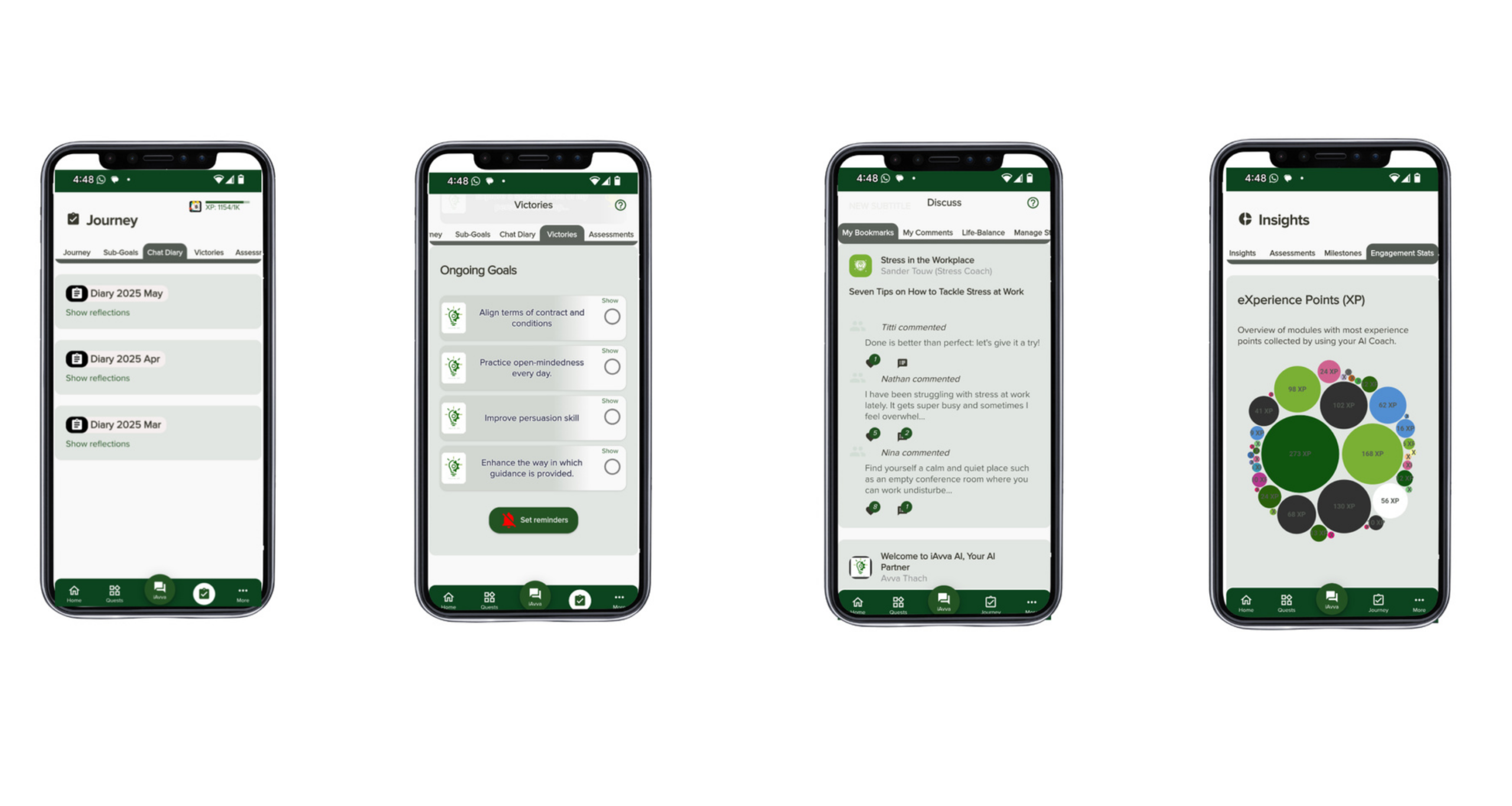





Effective business mentor coaching turns mentoring and executive coaching into a repeatable capability that accelerates leader readiness for AI-enabled transformation. This guide shows HR and L&D leaders how to design, pilot, and scale a mentor coaching program with practical templates, measurable KPIs, platform recommendations, and real company examples tied to AI project outcomes. Expect step-by-step actions you can start within 90 days to link leader development to measurable business impact.
Why Mentor Coaching is Strategic for Leaders Now
Direct business leverage: business mentor coaching converts episodic learning into repeatable capability that leaders can apply inside live projects. When a mentor coach pairs domain expertise with coaching skills, development stops being a workshop and becomes a delivery engine that shortens feedback loops on decisions, improves cross-functional execution, and raises the odds that technical investments — especially AI projects — actually deliver value.
Practical trade-off: this is not low-friction. Building mentor coaching takes governance, selection standards, and time credits for mentors. If you skip those controls you get inconsistent mentor quality and program noise. If you invest up front in training, matching, and sponsor accountability, you get scaled behavior change; if you treat it as a volunteer program, expect high dropout and weak outcomes.
How it closes the adoption gap
Mechanism that matters: mentor coaching sits between mentorship and executive coaching — mentors bring contextual know-how, coaches bring skillful questioning and accountability. That hybrid is what moves people from knowing a concept to reliably using it in decisions and designs. Use people analytics to track on-the-job adoption rather than relying on course completion as a success signal.
- Prioritize pilots where outcomes are measurable: choose AI or process initiatives with clear downstream metrics like model deployment cadence, sprint throughput, or customer response time.
- Balance domain breadth and coaching depth: require mentors to demonstrate both subject matter impact and basic coaching competencies before pairing.
- Protect mentor capacity: cap mentees per mentor and mix 1:1 with group sessions to scale without burning out collaborators.
Concrete example: A regional bank embedded mentor coaches into an AI fraud detection pilot. Mentor coaches paired product owners with data scientists and ran weekly 60-minute problem sessions focused on model iteration criteria and deployment constraints; the teams moved from prototype to production-ready model in an iterative cycle that removed repeated handoffs and clarified acceptance criteria. The program made clear where governance and data access were blocking progress, which allowed the bank to fix process issues in parallel with skills coaching.
What leaders typically miss: many organizations treat mentor coaching as optional development. In practice it must be designed as a strategic lever — tied to project sponsors, sprint cadences, and KPI owners — otherwise it becomes another HR program that lives on a learning platform without influencing delivery. That organizational alignment is the hard but necessary part.
Actionable next step: run a focused 90-day pilot aligned to one AI or digital delivery milestone, instrument outcomes with a small dashboard, and use the pilot to define mentor workload rules and ROI thresholds. If you want a turnkey model to adapt, see iAvva services for templates and mentor training options.
Defining the Mentor Coach Model and Roles
Direct definition: A mentor coach is a role that intentionally combines applied domain expertise with structured coaching skills so leaders learn while delivering. Unlike ad hoc mentoring or retained executive coaching, the mentor coach is chartered to change decision-making in context — clarifying choices on projects, coaching through trade-offs, and ensuring learning converts into measurable project progress.
Role boundaries and operational responsibilities
| Role | Primary contribution | Typical time commitment | How you know it’s working |
|---|---|---|---|
| Mentor coach | Guides project decisions and models coaching behaviors so the leader makes different choices on the job | 4–8 hours/month per mentee; cohort options reduce 1:1 load | Mentee changes acceptance criteria, faster iteration cycles on deliverables |
| Sponsor (business leader) | Clears organizational barriers, funds time credits, sets outcome KPIs | Periodic steering (1–2 hours/month) | Program KPIs tied to an AI or delivery milestone are tracked and reported |
| Peer mentor | Shares tactical, role-specific shortcuts and peer accountability | 2–4 hours/month in small groups | Cross-team handoffs improve; fewer rework cycles |
| Reverse mentor | Provides up-to-date technical or domain fluency to senior leaders | 2–6 hours/month | Faster executive decisions on tooling, governance, or data access |
| Mentee (leader) | Applies coached behaviors on live work and commits to micro-experiments | Varies; weekly check-ins recommended | Observable behavior changes and project metric improvements |
Practical trade-off: Giving mentor coaches decision-adjacent authority speeds results but risks role creep into delivery ownership. Assign a clear charter: mentor coaches advise and coach, sponsors own approvals. Expect friction where governance is weak; that friction signals the program is surfacing real organizational blockers that must be resolved by sponsors.
- Core competency: Domain credibility — demonstrated product or delivery outcomes in similar contexts, not just theoretical knowledge.
- Core competency: Coaching practice — measurable coaching hours or internal mentor training and a basic feedback rubric (SBI-style) used consistently.
- Core competency: Outcome orientation — ability to translate coaching conversations into project-specific acceptance criteria and success metrics.
- Core competency: Inclusion and bias awareness — trained to surface and mitigate common bias in decision-making, especially in data and AI contexts.
Concrete Example: At a mid-size SaaS firm, mentor coaches were assigned to three product squads building an AI recommendation feature. Coaches ran weekly 60-minute sessions combining design critique and coaching prompts; squads reduced feature rework by half and shipped a production model within the pilot window because product trade-offs were decided faster and with clearer acceptance criteria.
If you skip explicit role charters and sponsor accountability, mentor coaching becomes well-meaning advice with no effect on delivery metrics.
Next consideration: use the role table above to write short charters (one paragraph each) and then translate those into selection criteria and time-credit rules before you start pairing.
Designing a Mentor Coaching Program Step by Step
Start with a product mindset: treat the mentor coaching program as a constrained experiment with a clear hypothesis, minimum viable design, and measurable acceptance criteria rather than an open-ended people initiative. This forces early trade-offs on scope, mentor capacity, and which business outcomes you will realistically influence in the pilot window.
Practical sequence to build the program
- Define the hypothesis and success signals: pick one or two delivery milestones tied to an AI or digital outcome and specify how leader behavior change will move those metrics. Capture baseline data sources so you can prove or disprove the hypothesis at the end of the pilot.
- Select participants with project skin in the game: choose mentors who have delivered similar outcomes and mentees who are accountable for the selected milestone. Avoid including only volunteers with no line accountability; they will not produce measurable change.
- Design matching rules, not menus: create a simple matching algorithm that prioritizes project alignment, complementary skills, and availability. Add a manual override step where an L&D lead confirms high-risk pairs to avoid poor chemistry.
- Train mentor coaches to a minimum standard: teach basic coaching tools, feedback frameworks, and how to convert conversations into explicit acceptance criteria and micro-experiments. Include a short module on recognizing structural blockers they cannot remove themselves.
- Run a tight pilot with governance: set sprint-like check-ins between sponsors, coaches, and HR to surface resource and governance blockers. Use these check-ins to escalate decisions that otherwise stall coached teams.
- Plan scale by capacity, not wishlists: quantify mentor effort per mentee and model scenarios for 1:1, small-group, and office-hours formats. Scale by adding group mentoring and peer cohorts before increasing 1:1 ratios.
Trade-off to accept: prioritizing speed to impact reduces breadth. If you want quick influence on an AI deployment, run a narrow, high-touch pilot with fewer mentees; broader reach comes later through group formats and recorded sessions. Trying to do both at once dilutes mentor quality and confuses measurement.
Use case: At a regional healthcare organization, mentor coaches partnered with product owners and data leads on a clinical triage model. Coaches ran structured working sessions focused on deployment constraints and stakeholder acceptance, which tightened decision cycles and surfaced data access issues that sponsors resolved quickly; the result was the model moving from prototype to an operational pilot inside the same fiscal quarter and clearer post-launch ownership.
What works in practice: algorithmic matching without human calibration fails more often than teams expect. The single best investment is a short human review in the first pairing week to confirm chemistry and adjust expectations. That one-step calibration cuts early dropouts and preserves mentor morale.
Next consideration: before scaling, codify three templates — a pilot charter with success metrics, a one-page mentor agreement that sets time budgets and outcomes, and a quick matching checklist — then run one calibrated pilot and use its data to set capacity and ROI thresholds. If you need ready templates, adapt the starter artifacts at iAvva services.
Integrating Mentor Coaching with AI Strategy and Digital Transformation
Start with delivery, not training. Embed mentor coaches into specific stages of AI work — data intake, model validation, deployment gating, and post-launch monitoring — so coaching conversations map to concrete decisions that change timelines and quality, not abstract competence scores.
How mentor coaches attach to the AI lifecycle
- Data intake: mentor coaches ensure product owners and data teams agree on schema, access, and quality thresholds before modeling starts.
- Modeling sprints: coaches translate business acceptance criteria into testable success conditions and help teams run focused micro-experiments.
- Validation and governance: coaches coordinate evidence packs for model review boards so decisions are reproducible and auditable.
- Deployment gating: coaches hold teams to deployment checklists that include monitoring, rollback plans, and handover decisions.
- Post-launch: coaches run short retrospectives that convert operational observations into behavior change plans and measurable owner commitments.
Practical trade-off: embedding coaches in delivery accelerates adoption but increases their exposure to sensitive data and delivery politics. You must define access levels and IP boundaries up front; otherwise mentor coaching becomes a legal and governance headache rather than a capability accelerator.
Operational insight: use people and project analytics to improve matching and detect stalled pairs, but treat any algorithmic suggestion as provisional. Predictive matching improves throughput, yet it also amplifies existing network bias and can surface private performance signals that require HR governance and employee consent.
Concrete example: A mid-market retail company integrated mentor coaches into its personalization pipeline. Coaches ran weekly 45-minute sessions tied to sprint acceptance criteria, insisted on measurable evaluation datasets for each iteration, and required one governance artifact before deployment; the team shortened model iteration time from six weeks to three weeks in the pilot and reduced post-deploy rollback events. The measurement used a simple A/B rollout and sponsor-validated deployment KPIs.
What fails in practice: organizations expect mentor coaches to be system fixers. That expectation erodes coaching quality and builds dependency. Mentor coaches should be accountable for clarifying decision trade-offs and ensuring owner commitments, not for executing engineering fixes — sponsors must keep delivery responsibility with the product and engineering leads.
Link coaching outputs to gating documents and sprint artifacts so every session ends with at least one recorded micro-commitment that can be traced to a delivery KPI.
Measuring Impact: KPIs, Data Sources, and ROI
Bottom line: you must measure mentor coaching the same way you measure any delivery intervention — by linking coach-driven behaviors to precise delivery signals and a sponsor-owned ROI definition. Business mentor coaching is judged not by session counts but by whether coached leaders make different choices that shorten timelines, reduce rework, or increase adoption.
KPI taxonomy that actually informs decisions
Design KPIs in three layers: people change, delivery impact, and financial consequence. Each KPI needs a clear owner, a raw data source, and an attribution window tied to the pilot milestone (usually 60–120 days). Measurement without assigned data owners creates noise, not decisions.
| KPI | Data source | Why it links to ROI |
|---|---|---|
| Leadership competency delta (role-specific) | Baseline and post 360 / LMS skill assessments | Shows behavioral change that should reduce decision rework and speed approvals |
| Participant engagement and fidelity | Session attendance logs, micro-commitment completion | Early warning for pair failure; correlates with downstream delivery gains |
| Mentor capacity and retention | Time credits recorded in HRIS and mentor feedback | Ensures program is scalable without hidden labor costs |
| Deployment lead time (feature-to-production) | Sprint board / Jira timestamps or model registry entries | Direct delivery metric sponsors care about; shortens time-to-value |
| Live model usage or user adoption | Product telemetry, feature opt-ins, A/B test metrics | Translates faster deployment into sustained business value |
Practical trade-off: the more rigorous your attribution (for example, instrumenting Jira and model registries), the slower your first readout will be. If you need early signals, accept proxy metrics (micro-commitment completion, sprint velocity) and treat them as triage signals rather than final proof.
Concrete example: A global insurer attached mentor coaches to a claims automation AI sprint. Baseline lead time from prototype to production was 14 weeks; after a 90-day cohort with mandated micro-commitments and sponsor escalations, lead time fell to 9 weeks and frontline usage of the model rose 18 percent in week six post-launch. Because the sponsor had pre-agreed to reallocate one FTE per successful pilot, the program funded its second cohort from realized savings.
Measurement practice that works: run three checkpoints — baseline, mid-pilot, and 90 days post-launch — and triangulate signals from people data and delivery systems. Automate extraction where you can (HRIS, Jira, product telemetry), but require human validation for attribution decisions. Also, treat any predictive matching or people analytics as HR-governed: these tools surface bias if you do not manage consent and review.
Next consideration: before you start instrumenting every data source, agree with the sponsor on an acceptance threshold — for example a 20 percent reduction in deployment lead time or an X-point increase in a competency score — and commit to a governance review that will convert pilot savings into program funding if the threshold is met.
Case Studies and Real World Examples
What matters in the wild: the programs that move the needle combine sponsor-owned delivery metrics, session outputs that feed sprint artifacts, and mandatory micro-commitments that are visible to the business. When those three elements are present, mentor coaching stops being a nice-to-have and becomes an operational lever that shortens decision cycles and forces governance problems into the open. The downside is obvious: this setup demands sponsor time, clear escalation channels, and willingness to expose messy delivery issues — if you lack those, expect polite conversations with no measurable outcome.
Microsoft reverse-mentoring to speed executive decisions
Real-world result: Microsoft used reverse mentoring to pair senior leaders with technologists so executives could make faster choices about cloud architecture and data governance. The program cut review loops by replacing delayed briefings with standing 30–45 minute mentor-coach sessions tied directly to procurement and governance checkpoints, which materially reduced time-to-approval for several pilots. See relevant practice notes at Harvard Business Review for comparable reverse-mentoring outcomes.
iAvva client pilot: mentor coaching linked to model deployment
Client example: In a 90-day pilot, iAvva paired mentor coaches with product owners and data leads on a customer-service automation model. Coaches enforced a single governance artifact per sprint and required documented micro-commitments; the pilot reduced model deployment lead time by roughly a third and boosted early feature adoption among target users. The difference was not slick facilitation but the insistence that every session produce a testable acceptance criterion and an owner who could be escalated to a sponsor.
Common limitation: scaling 1:1 mentor coaching across an enterprise is expensive and creates mentor fatigue fast. Group formats and office hours extend reach but sacrifice the situational depth needed for complex AI decisions. In practice, run high-touch cohorts on critical milestones, then convert learnings into templates and recorded office-hours for wider distribution.
- Lesson 1: Tie each cohort to one sponsor-owned KPI so outcomes can be funded or stopped transparently.
- Lesson 2: Build a two-step matching process: algorithmic pair followed by a human chemistry check in week one.
- Lesson 3: Require a single documented artifact per deployment gate that coaches validate before sign-off.
Next consideration: pick one delivery milestone with a committed sponsor, instrument two simple KPIs (lead time and micro-commitment fidelity), and run a calibrated 90-day cohort. Use that pilot to convert coaching behaviors into a reproducible gate artifact before you scale.
Common Pitfalls and How to Mitigate Them
Hard truth: most mentor coaching programs fail in predictable, operational ways — not because coaching is ineffective, but because program rules are weak. Fixable execution mistakes create the appearance that mentor coaching does not move the needle; you should treat the program as a delivery intervention with guardrails, not a voluntary development perk.
Pitfall 1 — Program run as a checkbox
Problem: leadership participates to satisfy L&D KPIs while sponsoring leaders remain disengaged, so sessions produce good intentions but no decisions. Mitigation: require a sponsor-signed acceptance criterion linked to a delivery KPI before a pair is confirmed, and gate continued program access on evidence of completed micro-commitments.
Pitfall 2 — Weak confidentiality and data controls
Problem: mentor coaches get privileged access to sensitive project data without clear limits, which raises legal and trust issues. Mitigation: define role-based access for coaches, require a one-page coach charter and a simple data access agreement, and route sensitive artifacts through a sanitized governance pack that preserves decision context without exposing raw PII.
Pitfall 3 — Overly narrow mentor specs that create scarcity
Problem: insisting mentors match 100 percent on domain, tool, and seniority makes the pool tiny and slows pilots. Mitigation: adopt a tiered mentor taxonomy — core domain mentors, coaching specialists, and peer practitioners — and mix 1:1 high-touch coaching with small-group clinics to broaden capacity while keeping depth where it matters.
Pitfall 4 — Treating platforms as a substitute for governance
Problem: vendors or matching algorithms give false assurance that pairs will work. Mitigation: use matching tools for scale but mandate a week-one human chemistry check, a short co-created session plan, and an early feedback loop to reassign pairs quickly if expectations diverge.
Concrete example: A retail team matched with a technically brilliant mentor stalled because the mentor did not agree to the sponsor-approved governance pack and accessed raw customer data; escalation to legal paused the pilot for six weeks. Requiring a signed coach charter and a sanitized evidence pack upfront prevented the delay in follow-up cohorts.
Trade-off to accept: tighter controls (access rules, sponsor KPIs, micro-commitments) slow onboarding but prevent expensive rework and reputational risk. If you prioritize speed over structure, expect higher operational risk and lower attributable ROI.
Judgment: execution discipline matters more than exotic design choices. A modest, well-governed pilot that enforces sponsor ownership and coach boundaries will produce clearer, fundable outcomes than an ambitious program without operational controls.
Practical Tools, Templates, and Session Blueprints
Cut the setup time: equip sponsors, mentors, and mentees with ready artifacts so the pilot starts as delivery work, not another HR program. The templates below are designed to force a single measurable output per session and a traceable owner for every micro-commitment.
Starter artifacts you should copy-and-use
- 90-day cohort charter — fields to complete: sponsor KPI, cohort scope, mentor caseload limit, data owners, and baseline metrics. Use this as the program contract.
- One-page mentor agreement — time budget, confidentiality boundaries, decision-adjacent limits, and escalation ROE. Require signatures before pairing.
- Matching brief (compact) — project tags, required domain skills, preferred coaching style, and scheduling windows. Use to automate first-pass matching and to surface mismatches quickly.
- Session note template — session objective, artifacts reviewed, decisions made, micro-commitments with owners and
Jiraor ticket IDs, and escalation flags. - Measurement survey bank — short pre/post competency items, engagement pulse, and sponsor rating questions you can drop into your LMS or pulse tool.
Practical insight: capture every micro-commitment as a tracked work item (for example a Jira or task in the product backlog). Templates that leave commitments informal are the single biggest cause of follow-up failure.
90-day cohort timeline (blueprint)
- Week 0 — Onboard: distribute the cohort charter, collect baseline metrics, run a 60-minute alignment session with sponsor, mentor, and mentee to set the first sprint acceptance criterion.
- Weeks 1–4 — Iterate: weekly sessions focused on evidence and decisions; require one small deployable outcome or validation artifact by week 4.
- Weeks 5–8 — Scale decisions: shift some pairs to small-group clinics, surface governance blockers in sponsor check-in, and measure mid-pilot competency shifts.
- Weeks 9–12 — Close loop: verify delivery KPI against baseline, collect post-cohort 360 and sponsor ROI signal, and convert working artifacts into templates for the next cohort.
Trade-off to accept: aggressive timelines get results but require high sponsor involvement. If sponsors cannot commit time, extend to 120 days and replace some 1:1s with cohort clinics to preserve quality.
60-minute session blueprint (time-boxed)
- 0–8 min — Quick status and metric snapshot: what moved since last session and which ticket(s) you reviewed.
- 8–20 min — Evidence review: inspect the artifact or dataset that informs the decision (sanitized if needed).
- 20–40 min — Decision-focused problem solving: mentor coach asks clarifying questions, surfaces trade-offs, and helps define acceptance criteria.
- 40–50 min — Micro-learning pause: one short coaching tool or prompt to practice in the next week (SBI, hypothesis framing, or rollback planning).
- 50–58 min — Micro-commitments: convert decisions into 1–3 tracked action items with owners and
JiraIDs or calendar deliverables. - 58–60 min — Escalation check: mark any sponsor-level blockers and confirm sponsor notification path.
Limitation: tightly scripted sessions help scale fidelity but can be gamed into tick-box exercises. Enforce a short human review (week-one chemistry check) and mandate sponsor-visible artifacts to keep the session honest.
Concrete example: At a mid-market logistics company we deployed the 90-day charter and session blueprint, requiring every micro-commitment to be a backlog ticket. That discipline reduced follow-up coordination by roughly 40 percent and pushed three sponsor-resolved blockers to closure within two weeks, turning coaching conversations into delivery actions.
Next consideration: make artifacts auditable. If session outputs are visible to sponsors and linked to delivery systems, mentor coaching converts from anecdote to fundable intervention; without that linkage, it remains soft and easy to cancel.


















Leave a Reply