



Building Internal AI Champions
Introduction
Picture this. A company spends seven figures on new AI tools, runs a few glossy webinars, and then six months later most employees are still working the old way. Dashboards look impressive, yet day‑to‑day work has barely changed. The gap between spend and real impact is not about software. It is about people.
This is where building internal AI champions becomes the real advantage. When a trusted colleague shows how they use AI to cut a report time in half or draft a tricky email in minutes, others lean in. That peer example answers the quiet question on every employee’s mind: How do I use this for my job? No memo from the C‑suite can replace that kind of proof.
We see, over and over, that AI adoption is first a leadership and culture challenge, not a technical rollout. Internal champions act as the human bridge between bold AI strategy and messy frontline reality. They turn AI from a buzzword into a daily habit. When we focus on building internal AI champions, we are also building leaders who bring clarity, courage, and consistency to change.
“Artificial intelligence is the new electricity.” — Andrew Ng
In this article, we walk through a practical framework for finding, growing, and scaling a network of champions. We connect this work to measurable business outcomes and show how leadership growth tools such as the iAvva AI Coach App help champions stay focused and effective. By the end, you will see a clear path to move from buying AI tools to becoming an AI‑powered organization, one internal champion at a time.
Key Takeaways
Internal AI champions are not extra project work; they are the missing human link between AI strategy and real business impact. Investing in them closes the gap between licenses bought and value created, using peer trust rather than top‑down pressure.
Champion networks give three big advantages at once: they speed up adoption, surface new use cases from every team, and make the whole organization more ready to adapt to new AI tools. This turns AI from a one‑off program into a steady improvement engine.
A simple three‑phase approach keeps things manageable: launch and recruit a small core group, focus on enablement and community building, then move into shared leadership and scaling. Each phase has clear, low‑friction actions.
The AI Proficiency Ladder offers a shared language for skill growth. Champions use it to see where their teams are today—from early learning to full process redesign—and then plan realistic next steps that move people one level higher without overwhelm.
Measuring impact is very possible when we combine stories and data. When we track success stories, community activity, time saved, and links to key business metrics, we can show that building internal AI champions is a smart investment, not a nice‑to‑have side project.
Great champions are great leaders in the making. They need clarity, courage, and consistency more than deep technical skills, and those leadership habits can be built at scale with tools such as the iAvva AI Coach App.
Any organization, from a 50‑person company to a global enterprise, can start small and grow. Building internal AI champions is less about money and more about intention, support, and a simple structure that lets motivated people shine.
What Are Internal AI Champions And Why Do They Matter?

Internal AI champions are employees who raise their hand to help others use AI well. They are often the first to try a new tool, but their real power comes from how they share what they learn. They are translators, coaches, and scouts all at once. When we focus on building internal AI champions, we create a group inside the company that turns abstract AI talk into real, local examples that teams can copy.
These champions are different from IT support or formal change managers. IT teams handle access, security, and systems. Traditional change roles design programs and communications. Champions sit closer to the work. They know how sales calls actually run, how product teams really ship features, how HR manages high‑volume requests. Because they live inside these realities, they can show exactly how AI fits into existing workflows without sounding theoretical.
Their role is wide and human. They make AI tangible by sharing real prompts, workflows, and before‑and‑after stories from their own tasks. They onboard peers by answering first questions that people might feel shy asking in public. They keep learning, spotting new features and best practices and then sharing the most useful bits with their teams. They carry feedback back to the central AI team, so leadership hears what is confusing, what breaks, and what genuinely helps. In a strong program they also feed ideas into a wider champion network so one person’s breakthrough becomes everyone’s shortcut.
Peer‑to‑peer advocacy works because trust moves sideways faster than it moves down from the top. When a colleague says “I use this prompt every Monday and it saves me an hour,” most people will try it. When a senior leader says “please use more AI,” many will nod and go back to their old habits. Building internal AI champions makes use of this sideways trust. It turns adoption into a social norm instead of a compliance task.
Many companies fall into a familiar pattern. They buy tools, deliver one training, and then complain that people do not adopt. In most cases the missing layer is a network of internal guides. When we build that network and support it, we are not only driving AI usage. We are also growing a pool of emerging leaders who practice clarity in communication, courage in trying new ways of working, and consistency in helping others stick with change. Those leadership muscles serve the company far beyond AI.
The Strategic Business Case For AI Champion Networks

For HR leaders, L&D teams, and the C‑suite, it is fair to ask why we should put time into building internal AI champions when there are already so many priorities. The answer is simple: a strong champion network makes AI investments pay off faster, bigger, and for longer.
First, champions shorten time to value. Many employees sit in front of an AI tool and freeze. They are not sure what is allowed, they do not know what a good prompt looks like, and they fear looking silly. Champions solve this by showing simple, safe use cases that match real roles. Instead of general training, a sales champion can share a ready prompt for meeting summaries and action items. That one example can spread through a whole region in a week. The central AI team alone cannot create that level of fit at speed.
Second, champion networks discover and spread domain‑specific ideas that leadership would never think of. A finance team might build a prompt to clean messy spreadsheet exports. A customer support champion might design a workflow that sorts tickets by intent before a human sees them. These are small but powerful improvements. When we are serious about building internal AI champions, we create a constant flow of such ideas from the edges of the business toward the center.
Third, champions make the organization more adaptable. AI tools shift quickly. New features arrive every month. Instead of asking one central group to chase every update, we can rely on champions as early testers. They try new features in real work, share what works in the community hub, and then help their teams adopt the best parts. This makes the whole company more responsive without burning out a single central team.
The multiplier effect is where the real business case lives. One champion’s win can turn into a template, which then spreads across ten teams, saving hundreds of hours. That same work pattern can be refined based on feedback and become a standard way of working. Over time, this frees specialists from manual tasks so they can focus on clients, innovation, and strategy. When we connect champion activity to key metrics like developer satisfaction, cycle time, or sales output, the value of the network becomes clear.
In short, building internal AI champions is not a side community plan. It is a way to build human infrastructure that makes every technology dollar go further.
Core Principles For Successful AI Champion Programs
Before we start building internal AI champions, it helps to set a few simple rules for how the program will run. These principles keep the work fast, focused, and aligned with what the business needs. Without them, even the best group of volunteers can stall in meetings and confusion.
You can frame your core principles like this:
Lean, accountable core team
Work with a small core team—often two to four people from HR, L&D, IT, or operations. Give each person clear areas of focus, such as community hub management, training content, or data tracking. When ownership is clear, decisions come faster and champions know whom to ask when they hit a wall.Obsess over data quality
No matter how excited people are about AI, poor data means poor output. Champions can model and spread good habits such as careful tagging, consistent naming, and safe handling of sensitive information. When we bake this into how we are building internal AI champions, we protect trust in both the tools and the people who use them.Move in quick cycles
AI tools change fast and so do business needs. Instead of waiting for perfect designs, we encourage champions to try small experiments, gather feedback, and adjust. The core team supports this by keeping approval paths light and by celebrating learning, even when a test does not give great results. This mindset builds a culture that stays flexible rather than stuck.Speak the language of value
Champions and the core team should be ready to explain how a workflow saves time, reduces risk, or improves customer experience. Regular check‑ins with sponsors—backed by stories and simple numbers—keep support high. These principles mirror leadership habits such as decisiveness, ethical thinking, and strategic focus, so the program is practicing the same skills it wants to spread.
Identifying And Recruiting Your Founding Champions
Finding the right people is the single biggest factor in building internal AI champions that last. We are not looking only for AI experts. We are looking for people others already trust, who are curious about new tools, and who enjoy helping colleagues.
Four traits stand out:
- Curiosity – They are already playing with AI in their own work or asking thoughtful questions in meetings.
- Trust from peers – People across the team ask this person for advice—not just on tech, but on tricky work questions.
- Desire to share – They explain things in simple ways and take time to bring others along.
- Peer influence – Their behavior quietly sets the tone for others, even if they do not hold a big title.
The best way to find people like this is to ask for volunteers. When we invite people into building internal AI champions, we want those who feel a pull toward the work, not those who are pushed into it. A clear call for volunteers also sends a message that the program is open and based on energy, not only rank.
A strong recruitment message explains why AI matters for the company’s future and why the champion role is a growth opportunity. It should speak to leadership growth as much as technical play. For example, you can talk about building skills in coaching, communication, and change leadership. Share that the expected weekly time is light and flexible, and set a clear application deadline to create focus.
You can share this message through company‑wide emails, all‑hands meetings, intranet posts, and popular chat channels. In interviews or short forms, look less at years of experience and more at signs of genuine interest and follow‑through:
- Do they share a personal example of how they tried AI at work?
- Do they talk about how they support peers today?
- Do they light up when they think about helping the company learn faster?
It also helps to aim for a mix of departments, levels, and locations. A sales champion in one region, a frontline manager in operations, an analyst in finance, and an HR partner can all see different chances to apply AI. That mix turns the first cohort into a cross‑company listening post. From day one, they are not just learning AI. They are practicing leadership behaviors that you can support and grow with tools such as the iAvva AI Coach App.
The Three‑Phase Blueprint For Building Your Champion Network

Once we know why we care and who we want, the next step in building internal AI champions is to follow a simple plan. A three‑phase blueprint helps us start small, grow wisely, and avoid getting stuck in endless design debates. The phases are:
- Launch and recruitment
- Enablement and community building
- Operationalizing and scaling
This is not about huge budgets. It is about consistent time, clear rhythms, and a mindset that sees champions as partners, not as an audience. In each phase, the central team creates just enough structure so that champions can act with confidence, while still leaving room for local creativity.
Phase 1: Launch And Recruitment (First 30 Days)
Phase 1 is about lighting the spark. We explain the purpose, invite the right people, and set the tone. The clearer and more energizing this start is, the easier every later step becomes.
We begin by drafting a call to action that speaks to both head and heart. It explains why AI matters for customers, teams, and careers, and how building internal AI champions gives volunteers a chance to be at the front of that change. We keep the message grounded, promising support and space to learn rather than magic fixes. We also state the time expectation, such as around an hour a week, and the rough shape of activities.
Next, we share this message across multiple channels within a short window. A mention in an all‑hands meeting, a follow‑up email, and posts in main Slack or Teams channels work well. Setting a clear deadline, maybe two weeks away, helps people respond rather than putting it off.
Once we select a first cohort, we host a kickoff session. A simple agenda might include:
- A welcome from the executive sponsor
- A short overview of the company’s AI direction
- An open discussion of hopes and fears
- Very practical details about the program rhythm and support
We explain how the community hub will work, what support we will offer, and how champions can choose their own level of activity. We also give room for people to introduce themselves so that the group starts to feel like a team.
Common questions arise right away: Will this affect my performance goals? What if I am new to AI? What happens if I get busy? By answering these openly and with empathy, we begin building the trust that will carry the program through its first months.
Phase 2: Enablement And Community Building (First 90 Days)
In phase 2 we shift from selection to support. The goal now is to help champions make progress in their own work and start building a sense of community. This is where building internal AI champions starts to feel real for the wider company.
The first move is to set up a central hub, most often a private channel in Slack or Microsoft Teams. This is the home for champions. It is where they share wins, ask for help, compare prompts, and post event links. The core team can also post quick tips, new guidelines, and short surveys there. Over time, this space becomes a living library of what works.
We then set a simple rhythm of connection, such as:
- A monthly one‑hour call
- Short asynchronous check‑ins in the hub
Calls can include short demos from champions, small‑group breakouts, and open Q&A. Async prompts in the hub can ask questions such as “What small win did you have with AI this week?” or “What is one blocker you are seeing?”
Quick wins are vital in this phase. We encourage champions to start with small acts: sharing a single useful prompt with their team, sitting beside a colleague to help with a first AI use case, or writing a short post in their local channel about how they saved time on a task. These actions build confidence without needing formal workshops.
Recognition matters as much as training. When we highlight early wins in company newsletters, team meetings, or shout‑outs from leaders, we grow both the status of the champions and interest from others. We also listen closely during this phase. Regular feedback helps us adjust our approach, offer better resources, and spot patterns. By the end of ninety days, the network should feel alive, with people turning to each other for help rather than waiting for a central team.
Phase 3: Operationalizing And Scaling (Day 90 And Beyond)
In phase 3 we move from a pilot circle into an ongoing, shared system. The goal is for the network to stand on its own legs with light guidance from the core team. Building internal AI champions now means building local leaders inside the network itself.
We begin by noticing who leans in. Some champions attend every session, share often in the hub, or naturally help others. These people are strong candidates for community leadership roles. We invite them to take on clear pieces of work such as:
- Hosting a regional meetup
- Leading onboarding for new champions
- Curating a monthly “best prompts” post
Ownership slowly spreads. The core team can hand over tasks like setting agendas, moderating the hub, or collecting success stories. Simple role labels help—such as regional lead, topic lead for marketing or finance, or learning lead who focuses on training formats. The idea is not to add bureaucracy but to make it obvious who is driving what.
To support these new leaders, we provide ready‑to‑use templates, slide decks, email samples, and simple guides for running sessions. We also create chances for them to present to senior leaders or at big internal events. This gives them visibility and keeps energy high.
We watch for signs of strain, too. Active leaders may need to pause or share the load. Rotating responsibilities, adding co‑leads, and making it normal to step back for a while all help keep the network healthy. Over time, the champion program becomes less a project and more a natural part of how the company learns new tools and ways of working.
Creating A Thriving Champion Community Hub
The community hub is the beating heart of any effort to build internal AI champions. Without a shared digital space, champions stay isolated and their wins do not spread. With a well‑run hub, ideas, questions, and support move quickly across teams and time zones.
At its simplest, the hub is one clear channel that everyone knows to use. Champions post screenshots of successful prompts, short clips of workflows, or quick reflections on what they tried. They ask for help when a tool behaves oddly or when a prompt does not give the result they expect. The core team and community leaders use the same space for updates, event invites, and policy reminders. Because everything happens in one main place, champions do not waste time hunting for information.
Over time, the hub becomes a living library of peer‑tested knowledge. Threads capture use cases for sales, marketing, finance, and more. Files hold prompt packs and checklists. Search allows new champions to find older tips. This shared memory means each new idea does not have to start from zero.
To keep the hub active, we can start recurring posts such as weekly “What’s working?” threads where people share one small win, or themed focus weeks on topics such as prompt design for meetings. Leaders can tag others into conversations to invite their views. Small rituals, such as reacting with a specific emoji when someone posts a success story, create a sense of shared identity.
We also need to watch for overload. If every message is long or if dozens of channels appear, people tune out. Clear norms help, such as using short titles, keeping one thread per topic, and moving deep technical debates into side spaces. The aim is to make it easy and safe to join in, even for someone new to AI or new to the company.
Reflection tools can play a quiet but powerful role here. When champions use a daily reflection app such as iAvva AI to process what they learned, they are more likely to write clean, thoughtful posts that others can use. This turns the hub into not only a chat feed, but also a strong record of how the organization is learning to work with AI.
“Knowledge shared is knowledge squared.” — Adapted from a common learning principle
Addressing Common Champion Questions And Building Confidence
When we start building internal AI champions, people often share the same worries. Rather than treating these as problems, we can welcome them as signs that people care about doing the role well. By answering clearly and with empathy, we lower anxiety and build trust.
Two questions show up almost every time. One is about time. People want to help but fear that the role will take over their calendar. The other is about what to do in the very first weeks. Champions want to contribute and sometimes feel lost without a simple starting point.
By preparing thoughtful answers to both questions and sharing them from day one, we send a strong message. We show that the program respects people’s workload and views champions as partners in shaping how the network works.
Question 1: What Is The Expected Time Commitment?
We frame the champion role as a flexible path, not a fixed extra job. A helpful way to explain it is as a “choose your own path,” where people can dial activity up or down based on their season of work. We often suggest around thirty to sixty minutes per week as a healthy average, spread across small actions.
Those actions can vary widely. One week a champion might simply answer two questions in the community hub or share a prompt that worked well. Another week they might host a short demo for their team or join a check‑in call. Both patterns count. What matters is steady presence over time rather than a heavy push and then silence.
We also make it clear that life happens. Big projects, personal events, or role changes can limit availability. Champions can let the core team know when they need to step back for a while, and there is no penalty. This mix of clear guidance and kindness makes it much more likely that people will say yes and stay with the program.
Question 2: What Should We Be Doing Right Now?
At the very start, champions do not need a long task list. They need a clear sense of purpose and a simple first step. We explain that their main early role is to be the eyes and ears of the AI effort inside their teams. That means noticing what is already happening rather than trying to invent new work right away.
We invite them to observe:
- Where colleagues are already testing AI
- Where confusion shows up
- Where obvious pain points might be eased with the right prompt or workflow
Sharing these notes back in the hub or in one‑on‑one chats with the core team gives us rich raw material to design better support.
We also offer short individual or small‑group calls to brainstorm ideas that fit each team’s context. This partnership approach reinforces that building internal AI champions is something we create together, not something pushed from the top. It also helps champions practice strategic thinking as they look at their part of the business through an AI lens.
The AI Proficiency Ladder Guiding Teams From Awareness To Mastery
One challenge in building internal AI champions is talking about skill levels in a way that feels clear and non‑judgmental. The AI Proficiency Ladder helps with that. It gives champions and teams a simple shared map of how AI use tends to grow over time.
Rather than saying some people are “good” and others are “bad” with AI, we talk about levels from early learning to full process redesign. Each level has its own natural activities and risks. Champions can then design support that fits where people really are, instead of pushing everyone through the same training.
The ladder also works as a planning tool. Teams can ask: Where are we now? Where do we need to be for our goals? What is the next step that feels realistic? That focus on the next small step keeps progress moving without overwhelm.
The Four Levels Of AI Proficiency
You can summarize the AI Proficiency Ladder like this:
| Level | Name | Typical Behaviors | Champion Focus |
|---|---|---|---|
| Level 1 | Learning | Trying AI a few times, feeling uncertain or skeptical, mostly personal tasks | Reduce fear, show simple, low‑risk examples |
| Level 2 | Applying | Writing role‑specific prompts, using AI for recurring tasks | Share best prompts, refine individual workflows |
| Level 3 | Scaling | Creating shared libraries, team templates, custom internal tools | Document workflows, spread what works |
| Level 4 | Redesigning | Rethinking whole processes with AI at the core | Partner with leaders on bigger changes |
Level one, Learning, is all about first contact. People at this level may feel nervous or skeptical. They might have tried a tool once or twice and put it aside. Helpful activities here are low risk and personal. Drafting a rough email, summarizing a long document, or asking for ideas for a presentation are all good starts. The aim is to reduce fear and show quick, simple value. When we are building internal AI champions, we want them to model these small, safe experiments.
Level two, Applying, begins when people start to shape AI to fit their own roles. Instead of using generic prompts, they write their own based on recurring tasks. A recruiter might build a prompt to screen resumes for certain patterns. A marketer might design a prompt to draft social posts in the brand voice. At this stage, productivity gains show up and people start to feel that AI is part of their personal toolkit.
Level three, Scaling, shifts focus from individuals to teams. Here, champions and their colleagues build shared prompt libraries, team‑ready templates, or custom tools such as internal GPTs tuned for their context. They document workflows so that others can follow them. The same pattern that helped one person now supports many. Impact grows not through harder work, but through reuse.
Level four, Redesigning, is where teams rethink whole processes with AI at the center. Instead of adding AI to an existing step, they ask, “How would we design this from scratch today?” A support team might rebuild its intake and triage flow. A product team might change how it gathers and analyzes user feedback. Champions at this level often advise leaders on where AI can make the biggest difference and how to handle risks.
How Champions Use The Ladder To Drive Progress
Champions can use the ladder in simple, practical ways:
- Talk with colleagues and watch day‑to‑day behavior to guess which level their team is at.
- Pick one level up as the current focus and design support around that.
- Plan spotlight sessions that show examples from different levels.
- Track progress with simple signals, such as how many shared workflows exist.
If the team is at Learning, the aim is to move more people into Applying by sharing role‑specific prompts and holding short “How I use AI” sessions. If the team is at Applying, the focus might be on collecting the best prompts into a shared library to reach Scaling.
Reflection and goal setting support this movement. Tools like iAvva AI help champions think about questions such as “What did I learn about AI use on my team this week?” and “What is one small step that would move us up the ladder?” In that way, building internal AI champions and using the ladder become part of everyday leadership practice.
Sustaining Momentum Keeping Your Champion Network Energized
The real test of any champion program is not the launch. It is what happens in month six or twelve. By then, the early excitement has faded and daily work pressures are back in full force. If we want building internal AI champions to pay off, we need clear habits that keep the network alive over time.
One habit is to share wins regularly and in concrete terms. Champions can post short stories about how a workflow saved three hours, reduced errors, or helped a team hit a target. The core team can highlight a few of these each month in wider company updates. When people see real, local impact, they are more likely to keep investing their own time.
Another habit is to rotate leadership moments. Instead of the same two people running every call, we can invite different champions to lead demos, host small‑group discussions, or compile a monthly “top five prompts” list. This spreads skill, prevents burnout, and lets more voices be heard.
We can also celebrate collective milestones. The network might set shared goals such as reaching a certain number of reusable workflows or logging a set number of success stories in a quarter. When these are met, leaders can call them out in all‑hands meetings or short video messages. Shared wins build a sense of team, even across departments.
Not every interaction needs to be a big event. Quick, informal spaces help a lot. These can be open AI office hours where anyone can drop in with a question, weekly “What’s working?” threads in the hub, or short show‑and‑tell sessions where one champion shares a five‑minute demo. These light‑touch formats keep the conversation fresh without adding heavy prep work.
Leaders and the core team can model peer‑to‑peer help by asking questions themselves and thanking those who respond. Bringing in new ideas now and then, such as guest sessions from another business unit or an outside expert, can also refresh energy and show that the network is connected to wider trends. When we pair all of this with personal reflection habits, champions are more likely to stay focused, avoid burnout, and keep learning.
Measuring Success Tracking Impact And Demonstrating ROI
To protect and grow support for building internal AI champions, we need to show that the program works. That does not mean perfect measurement from day one. It does mean having a clear view on what stories and numbers matter and how we will collect them.
We can think about impact in three layers:
- Human stories that show real change
- Activity data that shows how alive the network is
- Links to business metrics that leaders already care about
When we bring these together, the case for the program becomes hard to ignore.
Measurement also helps us steer. If we see strong stories but weak activity in the hub, we know to focus on engagement. If we see high activity but few links to business outcomes, we may need better alignment with strategic goals. In this way, measurement is as much a guide for improvement as it is a tool for proving value.
“What gets measured gets managed.” — Often attributed to Peter Drucker
Building Narrative Power With Qualitative Data
Stories are often the first thing that senior leaders remember. A single example of a champion who helped a team save dozens of hours or win a key client often sticks more than a dashboard full of numbers. So we should gather these stories with care.
We can create simple forms or prompts that ask champions to describe:
- The situation
- The AI‑based approach they used
- The result
The best stories name the team involved, the task that changed, and any measurable outcome such as hours saved, faster delivery, or quality gains. Even when we cannot give exact numbers, we can often give a clear sense of scale.
These stories can then appear in many places: internal newsletters, posts in the champion hub, slides in all‑hands meetings, and short video clips. The key is to repeat them, not share once and forget. Over time, we can also group them into themed collections, such as AI in sales operations or AI in people operations, which makes it easier for other teams to see what might work for them.
As champions learn to tell these stories clearly, they also grow in their own leadership. They practice linking their work to business outcomes and explaining complex steps in simple language. That skill set is central to building internal AI champions who are heard and trusted by senior stakeholders.
Tracking Engagement With Quantitative Metrics
Alongside stories, we need leading numbers that show whether the network is healthy. Basic community metrics are a good starting point. We can track:
- How many champions are in the network
- How many post or comment in a given month
- How many resources (prompt packs, workflows, case studies) are shared
We can also track champion‑led activities: the number of workshops, brown‑bag sessions, AI office hours, and mentoring pairs. Attendance and repeat attendance tell us whether people find these useful. Over time, we might aim for steady growth rather than constant spikes.
Program visibility is another helpful lens. Employee surveys can include a few questions about awareness of the champion network and how helpful people find it. References to champion support in performance reviews or feedback forms can also indicate reach. Voluntary sign‑ups for events or new champion cohorts show that interest is still growing.
Network‑level outcomes bridge the gap between activity and business value. We can estimate the total number of reusable workflows in use and the number of teams using them. Simple time‑saved estimates, even if rough, can give a sense of scale. For example, if a workflow saves thirty minutes per week for fifty people, that is a clear line of impact.
As the program matures, we can explore links to wider KPIs. Teams with active champions might show faster project cycles, higher engagement scores, or more experiment proposals. While it can be hard to prove a direct cause, clear patterns help leaders see that building internal AI champions supports the goals they already have. Clean, simple dashboards or one‑page summaries make it easier for busy executives to absorb these insights.
The Five Essential Elements Of A High Impact Champion Network
Not every group of volunteers becomes a strong network. When we look at programs that last and create real value, we see five elements that appear almost every time. When even one is missing, the impact drops. When all five are present, building internal AI champions becomes far more effective.
The right membership
Champions do not need to be the most senior or the most technical people. They do need curiosity, peer respect, and a real wish to help others. When we focus selection on these traits, supported by growth tools, we get a group that will keep moving even when work gets busy.A central space for collaboration
One clear hub, rather than many scattered chats, keeps the network coherent. People know where to go for help, where to share wins, and where to look for examples. This single point of focus makes it easier to onboard new champions and maintain a shared sense of purpose.A steady rhythm of interaction
This does not mean heavy meetings every week. It means predictable touchpoints, such as monthly calls, weekly prompts in the hub, or regular office hours. These small beats keep the network in people’s minds and make it easier to return after a busy period.Outcome focus
Champions enjoy experimenting with tools, but the network should always tilt toward use cases that matter for the business. Sharing workflows that save time, improve quality, or reduce risk builds respect from leaders and peers. It also helps champions frame their work in ways that align with company goals.Active feedback loops
The network must be able to adjust based on what members experience. Simple check‑ins, short surveys, and open space in meetings let champions share what works and what does not. The core team and community leaders can then refine guidelines, resources, and focus areas. This constant tuning keeps the program relevant and effective.
Together, these five elements form a system that is more than the sum of its parts. They align with broader organizational skills such as strategic alignment, learning culture, clear ownership, and adaptability. When we add leadership reflection practices on top, such as those provided by iAvva AI, champions are even more likely to support and strengthen each element over time.
Leadership’s Critical Role In Supporting Champions
Even the most passionate group of champions will struggle if leadership treats the program as a side hobby. When senior leaders show clear support and make time and space for building internal AI champions, the difference is dramatic. Their role is less about running the program and more about clearing the path.
Executive sponsorship is the first signal people look for. When a respected leader speaks about the champion network in all‑hands meetings, joins the kickoff, and asks for updates, employees notice. It tells them that this work matters to the future of the company, not just to a few early adopters.
Leaders also help by tying the network’s work to strategic goals. They can say, for example, that AI should help reduce customer wait times, speed up product launches, or improve employee experience. Champions can then aim their efforts at these outcomes rather than guessing. This direction makes it easier to argue for time and resources.
Practical support matters too. Leaders can make sure champions have access to the right tools, simple templates for internal talks, and small budgets for events or rewards. They can ask managers to allow a slice of time in team meetings for AI sharing. These small moves signal that champion work is part of the job, not something people must squeeze into evenings.
Psychological safety is another area where leadership has real power. When leaders say and show that trying new AI workflows is welcome, even when things do not work perfectly at first, champions and their peers feel freer to experiment. This reduces the silent fear that a failed test will harm their reputation.
Public recognition might be the strongest lever. A short shout‑out from a senior leader for a champion who helped save time or improve service can mean more than any gift card. Featuring champion stories in town halls or offering development opportunities, such as stretch projects, sends a clear message that this role is a path for growth. When leaders pair that with regular review of impact data, they show that building internal AI champions is central to how the organization learns and grows.
“Culture eats strategy for breakfast.” — Peter Drucker
Champion networks are one of the most practical ways for leaders to shape that culture.
From Individual Wins To Collective Impact The Multiplier Effect
One of the most exciting parts of building internal AI champions is watching how single wins spread. What starts as one clever prompt or a neat workflow in a corner of the business can, with a network, become a company‑wide shift in how work gets done.
The process often looks like this. A champion solves a nagging problem for their own role, perhaps by using AI to draft a complex status report. They share the prompt and steps in the community hub. Another champion tweaks it for their own context and posts a variation. Soon, several teams are using some version of that pattern each week. Over time, the workflow may be polished into an official template.
The same thing can happen with custom GPTs or integrated tools. One group builds a small helper to clean data or summarize feedback. Others copy, adjust, and apply the idea in new domains. Each reuse adds small refinements. The end result is a set of internal assets that no single central team could have designed on its own.
Champions also act as connectors of ideas. Someone in marketing might read a success story from operations and realize a similar pattern could work for campaign planning. By tagging each other in posts and raising cross‑functional opportunities in calls, they weave threads between departments that might not usually talk.
This is how the network becomes a living memory for AI practice. New hires, new leaders, and new champions can tap into a deep pool of real examples instead of starting from zero. The effect is not linear growth but something closer to compounding. Every contribution makes the next one easier, faster, and more powerful.
Reflection and alignment keep this multiplier effect pointed in the right direction. When champions use tools like iAvva AI to think about how their work serves bigger goals, they share and build on wins that matter most. Over time, the organization shifts from scattered experiments to an integrated, value‑centered use of AI.
How iAvva AI Empowers Organizations To Build Internal AI Champions

Up to now, we have focused on structures and habits. There is another layer that matters just as much, which is who our champions are becoming as leaders. Building internal AI champions is really about building people who bring clarity, courage, and consistency to change. This is where iAvva AI comes in.
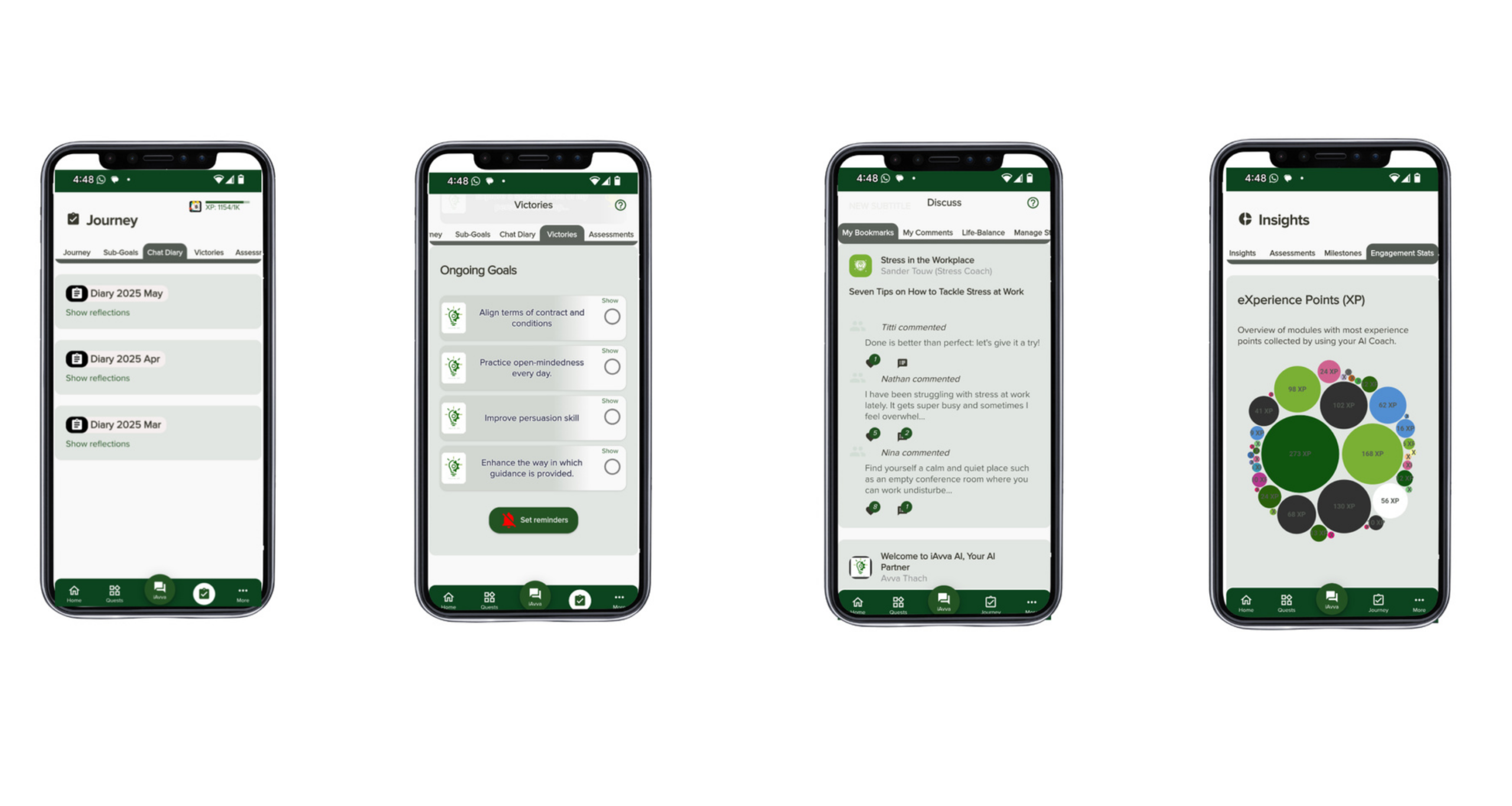
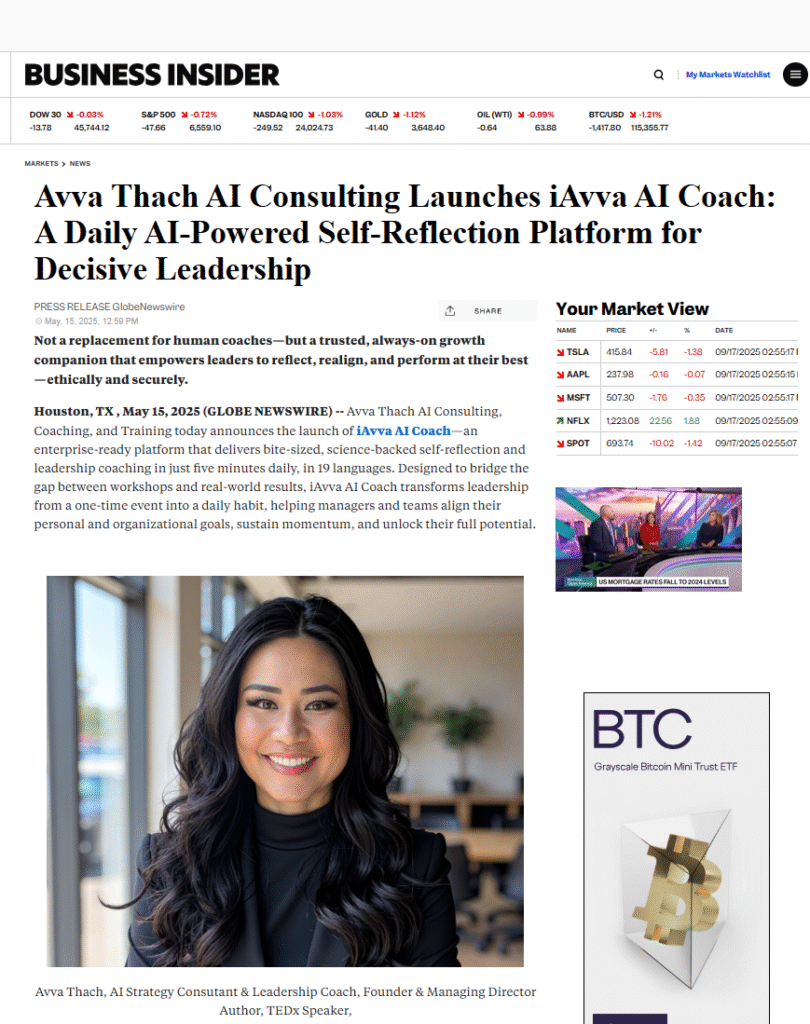
The iAvva AI Coach App is a five‑minute‑a‑day leadership reflection tool that fits easily into busy calendars. Instead of long workshops that people forget, it offers short, science‑based prompts that help champions think about how they show up for their teams. These prompts draw on neuroscience, positive psychology, and coaching principles, and can be answered in text or voice in nineteen languages.
Clarity is one of the first muscles we build. Champions need to explain why a new AI workflow matters, how it links to business goals, and what steps peers should take. Daily reflection on questions about purpose, impact, and communication helps them sharpen that skill. Over time, they learn to speak about AI in ways that make sense to both frontline staff and executives.
Courage is another key theme. Champions often stand at the edge of what is known in the company. They try new tools, challenge old ways of working, and sometimes meet resistance. The app offers gentle prompts that invite them to explore fears, reframe risks, and plan bold yet safe moves. This regular mental practice makes it easier to act with confidence when it counts.
Consistency might be the most underrated trait. A champion who shows up every week, shares small wins, and supports peers quietly does more than one who makes a big splash and then disappears. Because iAvva AI is an always‑on growth companion, it helps champions build routines around reflection, planning, and follow‑through. That steadiness is exactly what long‑term AI adoption needs.
For HR and L&D teams, the platform also offers real‑time analytics dashboards. These show engagement levels, reflection trends, and growth patterns across groups. That makes it easier to spot potential champions, see who might be ready for bigger roles in the network, and offer targeted support where energy is fading.
Accessibility matters too. The app supports nineteen languages, offers audio and text modes, and is designed with neurodiversity in mind. That means organizations can support a wide range of people in building leadership habits, not just those who fit a narrow training format. When we pair this human‑centered development with the structural steps in this guide, building internal AI champions becomes both scalable and deeply personal.
Practical Next Steps For Starting Your Champion Program Today
Reading about building internal AI champions is helpful, but change happens when we act. The good news is that starting a program does not require a perfect plan or a huge budget. It requires a few clear moves, made in order, and a willingness to learn.
A helpful way to begin is to:
Secure a senior sponsor
This could be a CHRO, CIO, or business unit head who already cares about AI and people development. Share the case for a champion network, focusing on how it protects and grows current AI investments. Ask for visible support and a small time commitment for key moments such as the kickoff.Assemble a lean core team
Bring together two to four people from HR, L&D, IT, or operations. Agree on roles such as hub management, training design, and measurement. Then set up your community hub in Slack or Teams and decide on simple norms for use. Having this space ready before recruitment makes the program feel real from day one.Draft and share your call to action
Explain purpose, opportunity, time expectations, and the application process. Link the role to leadership growth, not just tool use. Share this message through company‑wide channels with a clear deadline. Once your first cohort is ready, host a kickoff within about a week to keep momentum.Guide early quick wins and define simple metrics
In the first month, help champions find small wins in their own teams and hold your first check‑in meeting. In that same window, define two or three simple metrics you will track, such as number of champions, hub activity, and success stories gathered. This gives you a baseline for future stories and data.Support champions as leaders, not just power users
Think about how you will grow their leadership skills over time. Tools like the iAvva AI Coach App offer an easy way to give many people access to consistent reflection and growth.
As you test these steps, remember that the program will grow through learning, not through perfection. Each move you make builds both skill and confidence—for you and for your champions.
Conclusion
The gap between investing in AI tools and seeing clear business impact is not a mystery. It is a people gap. Technology can suggest ideas, draft text, and analyze data, but it cannot by itself change how teams work. That shift depends on humans who are willing to try new patterns, help others, and keep going when the first version is messy. Building internal AI champions is one of the strongest ways to support those humans.
Champion networks turn AI from a top‑down initiative into a shared practice. They make adoption faster, uncover fresh use cases from every corner of the company, and build resilience when new tools arrive. The return is not only in hours saved or errors reduced, but in the creation of a self‑sustaining learning engine that keeps the organization ready for what comes next.
We have walked through how to define the role, make the business case, set core principles, recruit the right people, and guide them through a three‑phase growth plan. We have seen how the AI Proficiency Ladder, community hubs, and smart measurement all fit together. We have also seen that strong champions are, at heart, strong leaders who work with clarity, courage, and consistency.
This work is within reach for any organization willing to start. A small core team, a clear message, and a handful of motivated volunteers are enough to begin. From there, steady support and reflection, backed by tools such as the iAvva AI Coach App, can grow a network that changes how work gets done. Companies that invest in building internal AI champions do more than adopt AI. They build an AI‑powered culture that can adapt and thrive through whatever comes next.
FAQs
Question 1: How Many Champions Should We Recruit Initially?
For most mid‑sized organizations, a founding cohort of around ten to twenty champions works well. This gives enough variety of roles and perspectives without making coordination too heavy. A simple rule of thumb is one champion for every fifty to one hundred employees, adjusted for how spread out teams are.
Quality matters more than raw numbers. A smaller group of people who are active and engaged will make more difference than a large list of names who rarely participate. As the program proves value, you can expand by inviting new champions every quarter or so. Starting modestly also makes it easier for the core team to offer real support in the early stages.
Question 2: What If We Do Not Have Budget For This Program?
The core parts of building internal AI champions require more intention than money. Most companies already have chat tools such as Slack or Teams and can use them as the community hub. A small core team can run the program alongside other duties, especially in the early stages, as long as leaders acknowledge this work as part of their role.
The most valuable resource is leadership attention and recognition. Simple actions like shout‑outs in town halls, calendar time for champions to meet, and support from managers can all happen without extra spend. As the network begins to save time and improve workflows, it becomes easier to argue for modest budgets for things like leadership tools, templates, or small rewards. Many programs start nearly cost‑free and grow investment only once they have shown clear benefits.
Question 3: How Do We Prevent Champions From Becoming Overwhelmed Or Burning Out?
The way we frame the role from the start makes a big difference. When we describe champion work as a flexible, “choose your own path” commitment of about thirty to sixty minutes per week, people can fit it into their schedules more easily. We should repeat that this is an average, not a fixed rule, and that life events may cause ups and downs in involvement.
Sharing responsibilities also helps. Rotating who leads meetings, curates content, or runs events keeps any one person from feeling like they must carry the whole program. We can offer different levels of engagement such as core leads, regular contributors, and light‑touch supporters. Regular check‑ins with active champions, focused on how they feel rather than just what they are doing, can surface early signs of strain. When we normalize taking short breaks and adjusting roles, we sustain energy over the long term.
Question 4: How Do We Handle Champions Who Are Not Contributing Or Are Sharing Inaccurate Information?
In any volunteer community, participation levels will vary. When a champion seems quiet, a kind first step is a one‑on‑one conversation to understand what is happening. They may be busy, unclear on expectations, or unsure of their skills. Often, a bit of encouragement or clarification is all that is needed to re‑engage them.
If someone shares inaccurate information, we can correct it gently in public while offering more detailed support in private. Clear community guidelines that encourage checking facts, sharing sources when needed, and asking for review on complex topics help prevent issues. If, after support and time, a person remains disengaged or often shares misleading content, it may be best to invite them to step back from the formal champion role. Keeping a learning mindset, where mistakes are seen as chances to improve, keeps the tone constructive rather than punitive.
Question 5: How Long Does It Take To See Meaningful Results From A Champion Network?
Most organizations see early signs within the first thirty days, often in the form of small success stories from early champions. These might be time saved on a weekly task or a smoother handoff between teams. With consistent support, more visible team‑level impact usually appears within three months, as shared workflows spread and more peers get involved.
Larger culture shifts take longer. It may take six to twelve months before leaders notice that AI use feels normal in many meetings, or that teams bring AI‑based ideas to planning sessions without prompting. The exact timeline depends on company size, current AI maturity, and the steadiness of program support. Tracking both stories and basic metrics from the start helps everyone see the progression and stay motivated through the longer culture work.
Question 6: Can This Approach Work For Organizations With Remote Or Distributed Workforces?
Yes, champion networks fit remote and distributed setups very well. In fact, online‑first collaboration tools make it easier to bring people together across locations. The community hub naturally lives online, so champions can share prompts, workflows, and stories regardless of where they sit.
A few extra design choices help:
- Schedule live sessions at rotating times to respect different time zones and always record them for later viewing.
- Use asynchronous formats such as written case studies, short videos, and threaded discussions so everyone has a chance to contribute.
- Let regional leads host local meetups or language‑specific spaces when needed.
Video calls can be used for connection and trust building, while text‑based channels hold most of the reusable knowledge. With these patterns in place, building internal AI champions can actually strengthen connection and learning across a distributed organization.













Leave a Reply