





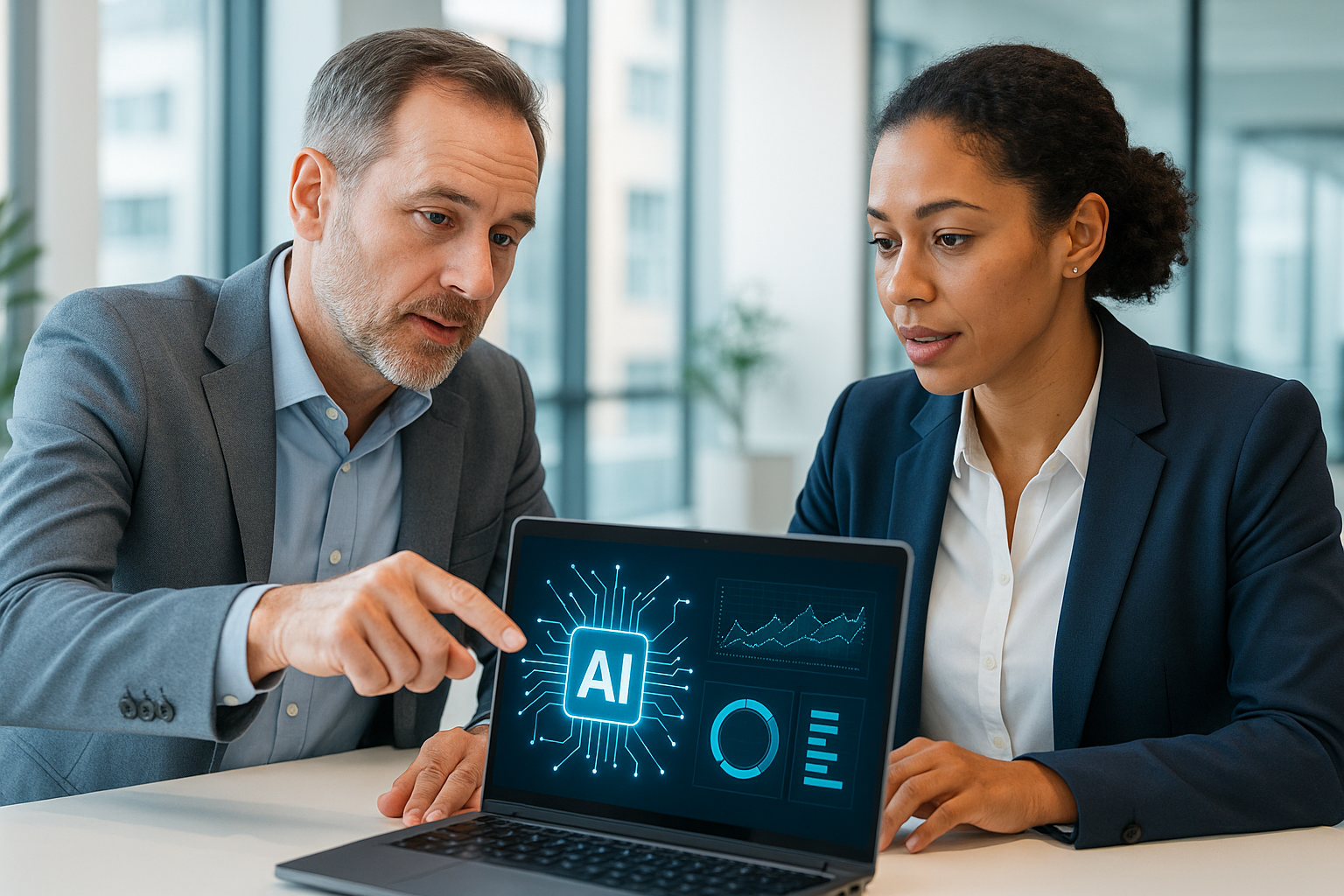
The AI revolution is upon us, reshaping industries and redefining the way we work and live. As a C-suite executive, you are likely aware of the transformative potential of artificial intelligence. It is not merely a tool; it is a catalyst for change that can enhance human capabilities and drive innovation.
The conversation has shifted from fearing job displacement to recognizing the partnership between humans and AI. This partnership is not just about efficiency; it’s about augmenting human intelligence to make better decisions, foster creativity, and improve overall outcomes. In this era of rapid technological advancement, understanding how AI can be integrated into your business strategy is crucial.
The future of leadership will require you to embrace AI as an ally rather than a competitor. By leveraging AI, you can unlock new opportunities, streamline operations, and create value in ways previously unimaginable. The key lies in recognizing that AI is not here to replace you but to empower you and your teams. For the latest tech gadgets, Visit iAvva Store today.
Key Takeaways
- AI is transforming multiple industries by enhancing efficiency, personalization, and decision-making.
- In healthcare, AI improves diagnosis accuracy and treatment plans, leading to better patient outcomes.
- AI-driven automation optimizes manufacturing, finance, transportation, and agriculture processes.
- Ethical considerations are crucial to ensure responsible AI development and deployment.
- The future of AI promises significant societal and industrial impacts, reshaping how we live and work.
AI in Healthcare: Improving Diagnosis and Treatment
In the healthcare sector, AI is revolutionizing diagnosis and treatment protocols. Imagine a world where medical professionals can leverage AI algorithms to analyze vast amounts of patient data in real-time. This capability allows for quicker and more accurate diagnoses, ultimately leading to better patient outcomes.
For instance, AI can identify patterns in medical imaging that may be imperceptible to the human eye, enabling earlier detection of diseases such as cancer. Moreover, AI-driven predictive analytics can personalize treatment plans based on individual patient profiles. By analyzing historical data and current health metrics, AI can suggest tailored therapies that maximize efficacy while minimizing side effects.
As a leader in healthcare, embracing these technologies not only enhances patient care but also positions your organization at the forefront of medical innovation.
AI in Manufacturing: Streamlining Production Processes

Manufacturing is another domain where AI is making significant strides. The integration of AI into production processes can lead to unprecedented levels of efficiency and quality control. Picture a smart factory where machines communicate with each other, optimizing workflows in real-time.
This level of automation reduces downtime and minimizes waste, ultimately driving down costs. Furthermore, AI can enhance predictive maintenance by analyzing equipment performance data to foresee potential failures before they occur. This proactive approach not only extends the lifespan of machinery but also ensures that production schedules remain uninterrupted.
As a manufacturing leader, investing in AI technologies can transform your operations, making them more agile and responsive to market demands.
AI in Finance: Enhancing Risk Management and Fraud Detection
In the finance sector, AI is becoming indispensable for risk management and fraud detection. Financial institutions are inundated with data, and AI algorithms excel at sifting through this information to identify anomalies and potential threats. By employing machine learning models, organizations can detect fraudulent transactions in real-time, significantly reducing financial losses.
Moreover, AI can enhance risk assessment by analyzing market trends and customer behavior patterns. This capability allows financial leaders to make informed decisions regarding lending practices and investment strategies. As you navigate the complexities of the financial landscape, leveraging AI will not only safeguard your organization but also provide a competitive edge in an increasingly data-driven world.
AI in Transportation: Optimizing Logistics and Autonomous Vehicles
| Metric | Value | Description |
|---|---|---|
| Number of AI Patents Filed (2023) | 12,500 | Total AI-related patents filed globally in 2023 |
| AI Research Publications (2023) | 45,000 | Number of AI-focused research papers published worldwide |
| Investment in AI Startups (2023) | 35 Billion | Global venture capital funding for AI startups |
| Top AI Breakthroughs | 5 | Number of major AI innovations recognized in 2023 |
| AI Adoption Rate in Enterprises | 67% | Percentage of enterprises using AI technologies |
| Average AI Model Training Time | 72 hours | Average time to train state-of-the-art AI models |
| AI Ethics Guidelines Published | 15 | Number of new AI ethics frameworks introduced globally |
Transportation is undergoing a transformation fueled by AI technologies. From optimizing logistics to developing autonomous vehicles, the impact of AI is profound.
This level of efficiency reduces fuel consumption and enhances delivery times, ultimately improving customer satisfaction. In the realm of autonomous vehicles, AI is paving the way for safer and more efficient transportation systems. By utilizing advanced sensors and machine learning algorithms, self-driving cars can navigate complex environments with precision.
As a leader in transportation, embracing these innovations will not only streamline operations but also position your organization as a pioneer in the future of mobility.
AI in Retail: Personalizing Customer Experience and Supply Chain Management

The retail industry is experiencing a seismic shift thanks to AI technologies that personalize customer experiences and optimize supply chain management. Picture a shopping experience where recommendations are tailored to individual preferences based on past purchases and browsing behavior. This level of personalization enhances customer engagement and drives sales.
Additionally, AI can streamline supply chain operations by predicting demand fluctuations and optimizing inventory levels. By analyzing historical sales data and market trends, retailers can ensure that products are available when customers want them, reducing excess inventory costs. As a retail leader, harnessing the power of AI will not only enhance customer satisfaction but also improve operational efficiency.
AI in Agriculture: Improving Crop Yield and Sustainability
Agriculture is another sector where AI is making significant contributions to productivity and sustainability. Imagine using AI-driven analytics to monitor soil health, weather patterns, and crop performance in real-time. This data-driven approach allows farmers to make informed decisions about irrigation, fertilization, and pest control, ultimately improving crop yields.
Moreover, AI technologies can promote sustainable farming practices by optimizing resource usage and minimizing waste. For instance, precision agriculture techniques powered by AI can reduce water consumption while maximizing output. As an agricultural leader, embracing these innovations will not only enhance productivity but also contribute to environmental sustainability.
AI in Education: Customizing Learning and Assessment
In education, AI is transforming the way students learn and are assessed. Imagine a classroom where learning experiences are tailored to individual student needs through adaptive learning technologies. These systems analyze student performance data to provide personalized content that addresses specific learning gaps.
Furthermore, AI can streamline administrative tasks such as grading and assessment, allowing educators to focus on teaching rather than paperwork. By leveraging these technologies, educational institutions can enhance student engagement and improve learning outcomes. As a leader in education, embracing AI will position your organization as a forward-thinking institution committed to student success.
AI in Entertainment: Creating Immersive Experiences and Content Recommendation
The entertainment industry is leveraging AI to create immersive experiences and enhance content recommendations for consumers. Imagine streaming platforms that utilize machine learning algorithms to analyze viewing habits and preferences, delivering personalized content suggestions that keep audiences engaged. Additionally, AI is being used to create interactive experiences in gaming and virtual reality environments.
By analyzing player behavior in real-time, developers can tailor experiences that resonate with individual users. As an entertainment leader, embracing these innovations will not only enhance user engagement but also drive revenue growth through targeted content delivery.
Ethical Considerations in AI Innovation
As we embrace the potential of AI across various sectors, ethical considerations must remain at the forefront of our discussions. The deployment of AI technologies raises questions about privacy, bias, and accountability. As a leader, it is your responsibility to ensure that your organization adheres to ethical standards while leveraging these powerful tools.
Transparency in AI decision-making processes is crucial for building trust with stakeholders. Additionally, addressing biases inherent in algorithms is essential for ensuring fair outcomes across diverse populations. By prioritizing ethical considerations in your AI strategy, you can foster a culture of responsibility that resonates with customers and employees alike.
Future Outlook: The Impact of AI on Industries and Society
Looking ahead, the impact of AI on industries and society will be profound. As organizations continue to integrate AI into their operations, we will witness increased efficiency, enhanced decision-making capabilities, and improved customer experiences across sectors. However, this transformation will also require leaders like you to adapt to new challenges.
The future will demand a workforce that is skilled in both technology and human-centric capabilities such as creativity and emotional intelligence. As you navigate this evolving landscape, fostering a culture of continuous learning will be essential for staying competitive. Embracing the partnership between humans and AI will not only drive innovation but also shape a future where technology enhances our lives rather than replaces us.
In conclusion, the augmentation era is here. By recognizing the potential of AI as an ally rather than an adversary, you can position your organization for success in an increasingly complex world.
Innovation in AI is rapidly evolving, and one of the key factors driving this change is the emergence of talent communities that foster collaboration and knowledge sharing. For a deeper understanding of how these communities are redefining innovation in the AI era, you can read the article on AI talent communities [here](https://iavva.ai/ai-transformation/ai-talent-communities-redefining-innovation-in-the-ai-era/). This article explores the dynamics of these communities and their impact on the future of AI development.
FAQs
What is innovation in AI?
Innovation in AI refers to the development and implementation of new techniques, algorithms, and applications that enhance the capabilities, efficiency, and impact of artificial intelligence technologies.
Why is innovation important in AI?
Innovation drives progress in AI by enabling more accurate models, faster processing, improved decision-making, and the creation of novel applications that can solve complex problems across various industries.
What are some recent examples of innovation in AI?
Recent innovations include advancements in natural language processing (like GPT models), reinforcement learning, AI-driven healthcare diagnostics, autonomous vehicles, and AI-powered robotics.
How does AI innovation impact everyday life?
AI innovation improves everyday life by enhancing personalized recommendations, automating routine tasks, improving medical diagnoses, enabling smarter home devices, and advancing communication tools.
What are the challenges associated with innovation in AI?
Challenges include ethical concerns, data privacy issues, bias in AI models, the need for large datasets, computational resource demands, and ensuring AI systems are transparent and explainable.
How can businesses benefit from AI innovation?
Businesses can leverage AI innovation to optimize operations, improve customer experiences, automate processes, gain insights from data, and create new products and services.
What role do researchers play in AI innovation?
Researchers develop new algorithms, improve existing models, explore ethical frameworks, and collaborate across disciplines to push the boundaries of what AI can achieve.
Is AI innovation regulated?
AI innovation is increasingly subject to regulations aimed at ensuring safety, privacy, fairness, and accountability, though regulatory frameworks vary by country and are still evolving.
What future trends are expected in AI innovation?
Future trends include more advanced general AI, improved human-AI collaboration, AI in edge computing, enhanced explainability, and broader adoption across sectors like education, finance, and healthcare.














Leave a Reply