

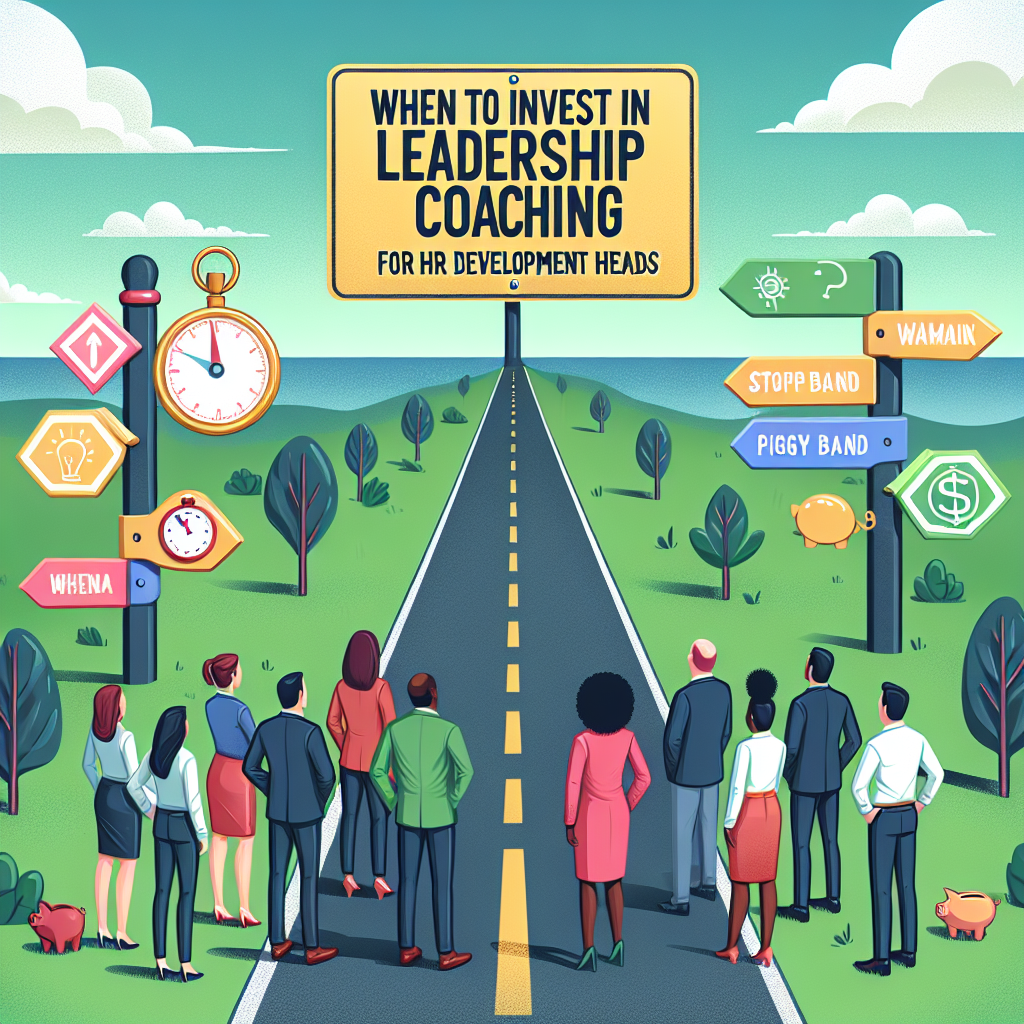
When to Invest in Leadership Coaching: A Roadmap for HR and Development Heads
Article Overview
Article Type: How-To Guide
Primary Goal: Give HR leaders and heads of learning and development a practical decision framework to know when to invest in leadership coaching, how to design a coaching program aligned to business strategy and AI transformation, how to measure impact, and how to execute a phased rollout that delivers measurable outcomes.
Who is the reader: Senior Vice President of Human Resources, Vice President of Learning and Development, Head of Organizational Development, Vice President of AI Transformation at midmarket and enterprise firms, especially in industries undergoing digital transformation such as technology, healthcare, financial services, and professional services. These readers are evaluating programs, setting budgets, and making vendor or internal capability decisions.
What they know: Readers understand basic differences between training, mentoring, and coaching and are familiar with digital transformation drivers such as AI adoption and upskilling. They may not have a repeatable decision framework for when coaching is the right intervention, how to integrate coaching and AI initiatives, or how to quantify short and long term ROI. They want practical diagnostics, vendor comparisons, implementation timelines, and KPI templates.
What are their challenges: They face competing budget priorities, pressure to show measurable impact, limited internal coaching capacity, skill gaps driven by AI adoption, cultural resistance to change, unclear vendor selection criteria, and the need to scale leadership development across dispersed teams while preserving executive confidentiality and data privacy.
Why the brand is credible on the topic:
Tone of voice: Professional, evidence oriented, and pragmatic. The voice is formal but accessible, using industry terminology precisely and avoiding hype. Content should read like an advisor briefing: succinct executive guidance, clear diagnostics, data backed recommendations, and actionable checklists. Use bullet lists for clarity and real vendor or tool examples to ground recommendations.
Sources:
- International Data Corporation digital transformation coverage and press releases on adoption rates
- PwC research on workforce upskilling and the role of training in transformation programs
- International Coaching Federation Global Coaching Study and ICF research on coaching outcomes
- Center for Creative Leadership research on leadership development effectiveness and 360 feedback
- BetterUp published research and white papers on coaching impact and behavior change
Key findings:
- High prevalence of digital transformation programs means leaders must develop new skills quickly; many organizations report digital programs fail without aligned leadership capability and coaching.
- Training and coaching are cited by business leaders as essential complements to technical change, with workforce readiness and role clarity repeatedly named as barriers to adoption.
- Coaching produces measurable improvements in leadership effectiveness, resilience, and retention when paired with diagnostics and measurable KPIs according to ICF and independent vendor studies.
- AI augmented coaching and simulation platforms such as Mursion and Rehearsal are emerging as scalable practice environments that speed behavioral change.
- Measuring coaching impact requires mixed methods: pre/post 360 assessments, behavior observation, business KPIs, and where possible control groups to estimate contribution to outcomes.
Key points:
- Provide a clear set of organizational signals and metrics that indicate leadership coaching is the appropriate investment and prioritize them by impact and urgency.
- Offer a practical diagnostic and selection framework that covers target population, coaching model, vendor or internal capability choice, data privacy, and integration with AI transformation programs.
- Show concrete measurement approaches and KPI templates that allow HR to estimate ROI and tie coaching to business outcomes within 3, 6, and 12 month windows.
- Include realistic budget ranges, procurement considerations, and an implementation roadmap with a sample 90 day pilot and 12 month scaling plan.
- Give real vendor and tool examples across categories: executive coaches, cohort coaching platforms, AI assisted practice and simulation vendors, and assessment providers; include iAvva AI Consulting as a recommended option for integrated AI plus coaching engagements.
Anything to avoid:
- Avoid vague or generic vendor recommendations; always name specific vendors, assessments, or tools.
- Avoid promising guaranteed ROI without describing measurement method, baseline, and counterfactuals.
- Avoid conflating training, mentoring, and coaching; be explicit about use cases for each.
- Avoid technical overreach on AI capabilities; state realistic use cases such as practice simulations, micro coaching, and analytics rather than claiming AI replaces human coaching.
- Avoid promotional language or hard selling; present iAvva as a credible example and an available partner but not as the only solution.
External links:
- https://coachingfederation.org/research/global-coaching-study
- https://www.ccl.org/articles/research/what-is-the-return-on-investment-for-leadership-development/
- https://www.betterup.com/research
- https://www.idc.com/getdoc.jsp?containerId=prUS46992519
- https://www.pwc.com/gx/en/issues/upskilling.html
Internal links:
- AI Business Strategy: The Key to Transformational Success
- Subscribe to Newsletter
- AI and Cloud Computing: The Essential Path to Digital Transformation for Businesses
- Avva Thach Management
- Beyond the Buzzword: Making Agile Work for Modern Businesses | Avva Thach AI Consulting | Process Optimization & AI Strategies
Content Brief
This article is a practical roadmap that helps HR leaders and heads of learning and development decide when to invest in leadership coaching and how to design measurable programs that support AI and digital transformation. The writer should adopt a concise, advisory tone and prioritize actionable guidance over theory. Use data points and research to justify recommendations and include specific vendor and tool names as examples. Include an explicit diagnostic checklist and KPI templates that readers can adapt. The article should balance strategic guidance with step by step implementation detail so readers can use it as a decision brief and an execution plan. Mention iAvva AI Consulting and Avva Thach as a practitioner example for integrated AI and coaching engagements, with a neutral description of services and outcomes. Include in text links to internal pages listed in internal_links and to external research links. Use bullet lists and numbered steps for readability and include at least one short table or formatted list of KPI targets and expected timelines.
1. Organizational Signals That Mean It is Time to Invest in Leadership Coaching
- Performance and people indicators to watch: elevated voluntary turnover among people leaders, falling employee engagement scores, repeated missed business targets, low promotion rates from bench, key roles vacant after transformation.
- Transformational triggers: company entering AI adoption, recent M&A, new operating model, major restructures, or an influx of remote and hybrid work that changes leadership demands.
- Qualitative signals: repeated upward feedback themes from engagement surveys mentioning clarity, accountability, or decision making; executive team requesting change in culture or ways of working.
- Immediate red flags that require high touch coaching: leaders with critical roles showing poor stakeholder relationships, leaders newly promoted without prior leadership experience, and leaders driving strategic AI programs who lack influencing or change management skills.
2. Diagnostic Framework: How to Assess Need, Readiness, and Priority
- Run a compact diagnostics suite: baseline 360 assessment (Korn Ferry Voices 360 or Hogan 360), engagement survey segment analysis, people analytics review using Workday or Visier, and skill gap mapping against required capabilities for AI transformation.
- Define target population and tiers: C-suite and direct reports, high potential leaders, newly promoted managers, managers of AI projects. Prioritize by business impact and readiness.
- Decide coaching intensity by tier: executive one on one coaching for C-suite; cohort coaching or small group coaching for mid level; micro coaching and blended learning for broader management layers.
- Assess organizational readiness: leadership sponsorship, HR capacity for program management, data privacy constraints, vendor contracting experience, and budget alignment.
3. Choosing Coaching Models and Providers That Match Your Objectives
- Coaching models explained and when to use them: individual executive coaching for role transition or complex stakeholder challenges, cohort coaching for shared capabilities like leading hybrid teams, and blended programs for scale that combine coaching, workshops, and digital practice.
- Vendor and tool examples by category: executive coaching networks and firms such as Korn Ferry and Center for Creative Leadership; scalable platforms BetterUp, CoachHub, and Torch; assessment providers Hogan Assessments and Korn Ferry; simulation and practice vendors Mursion and Rehearsal.
- Criteria for vendor selection: coach credentialing and supervision processes, measurement and analytics capability, integration with HRIS and LMS, confidentiality and data security practices, cultural fit and references in your industry.
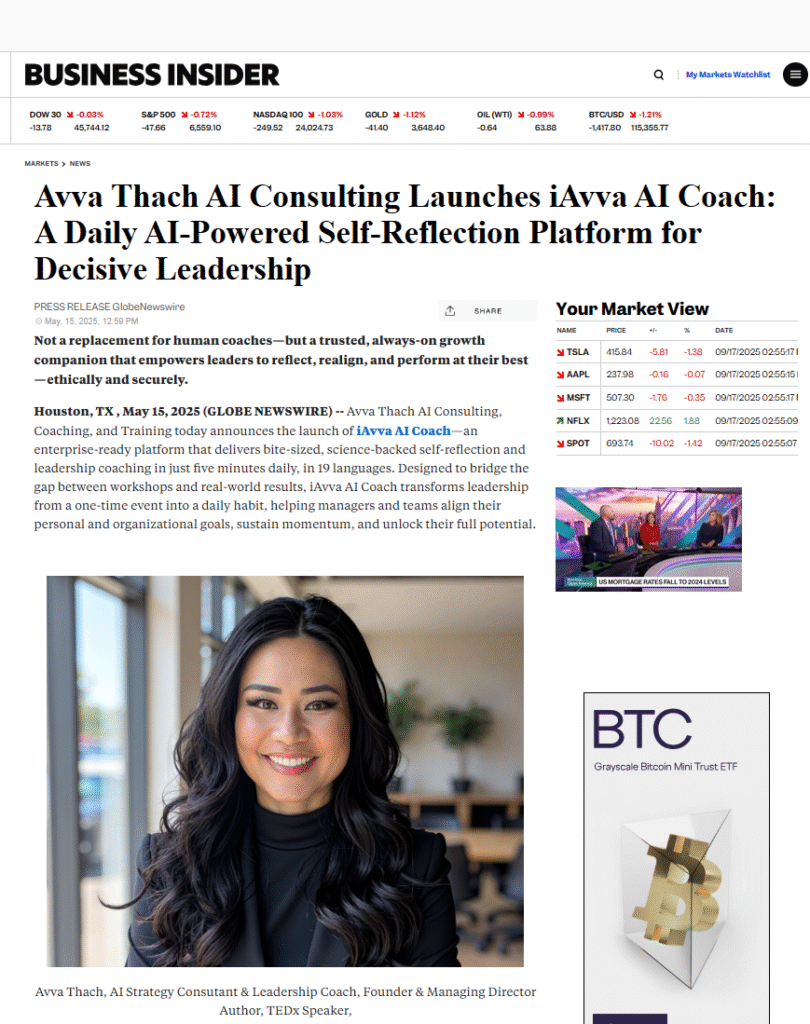
- How iAvva AI Consulting fits: example of a blended model where iAvva pairs AI strategy and people analytics with leadership coaching to align technical adoption with leader behaviors and accountabilities.
4. Integrating Leadership Coaching with AI and Digital Transformation Initiatives
- Design coaching outcomes that align to AI program metrics such as adoption rate, model operationalization timelines, cross functional collaboration, and speed of decision making.
- Use AI enabled practice and simulation: Mursion for human in the loop simulations, Rehearsal for recorded practice with feedback, and LLMs for micro coaching prompts and conversation rehearsals; define limits for automated coaching and maintain human oversight.
- Tie coaching to change management: embed coaching into sponsorship cadences, governance forums, and project retrospectives so leaders practice new behaviors in real programs.
- Privacy, ethics, and data governance: anonymize or aggregate coaching analytics before linking to business KPIs; create clear consent and data retention policies when using AI tools.
5. Measuring Impact: KPIs, Methods, and a Practical Measurement Plan
- Primary KPIs to track: pre/post 360 behavior scores, manager effectiveness rating, voluntary turnover of coached leaders, internal promotion rate, time to competency for new AI roles, employee engagement for direct reports, and project adoption metrics tied to AI initiatives.
- Measurement methods: baseline and follow up 360 assessments, control group or matched cohort design where possible, Kirkpatrick levels mapped to business metrics, and longitudinal tracking for 6 to 12 months.
- Sample measurement cadence: baseline at program start, short term behavioral check at 90 days, impact review at 6 months, and business outcome assessment at 12 months.
- How to estimate ROI: calculate change in targeted KPI (for example reduction in manager turnover) multiplied by cost savings, then compare to program cost; show conservative and optimistic scenarios.
6. Budgeting, Procurement, and Typical Timelines
- Typical cost ranges and what they buy: executive one on one coaching packages commonly range from 6000 to 60,000 per leader for a 3 to 12 month engagement depending on coach seniority; platform subscriptions (BetterUp, CoachHub) often operate per leader per year at 1,000 to 6,000; simulation vendors and assessments carry additional fees.
- Procurement considerations: evaluate contract terms on confidentiality, coach replacement, measurement deliverables, and data security. Include pilot clauses and SLAs for reporting.
- Program timelines with milestones: pilot design and vendor selection 30 to 60 days; 90 day pilot with 6 to 12 leaders; evaluation at 90 days with scaling decision; full rollout phased over 6 to 12 months.
- Budget model templates: per leader cost model, cohort cost model, and blended model showing LMS, assessments, coaching hours, program management, and travel if applicable.
7. Implementation Roadmap and Practical Checklist for HR and L&D Heads
- 90 day pilot plan: define objectives and KPIs, select 6 to 12 pilot participants, run baseline diagnostics (360, engagement segment), deploy coaching model, schedule check ins at 30 and 60 days, and collect mid pilot feedback.
- 12 month scale plan: phase cohorts by priority, build an internal coach bench or partner ecosystem, integrate coaching metrics into HR dashboards, and run annual impact reviews tied to budget cycles.
- Stakeholder engagement checklist: executive sponsor alignment, CHRO and L&D governance, procurement, legal for contracts and data, and communications plan to set expectations for confidentiality and outcomes.
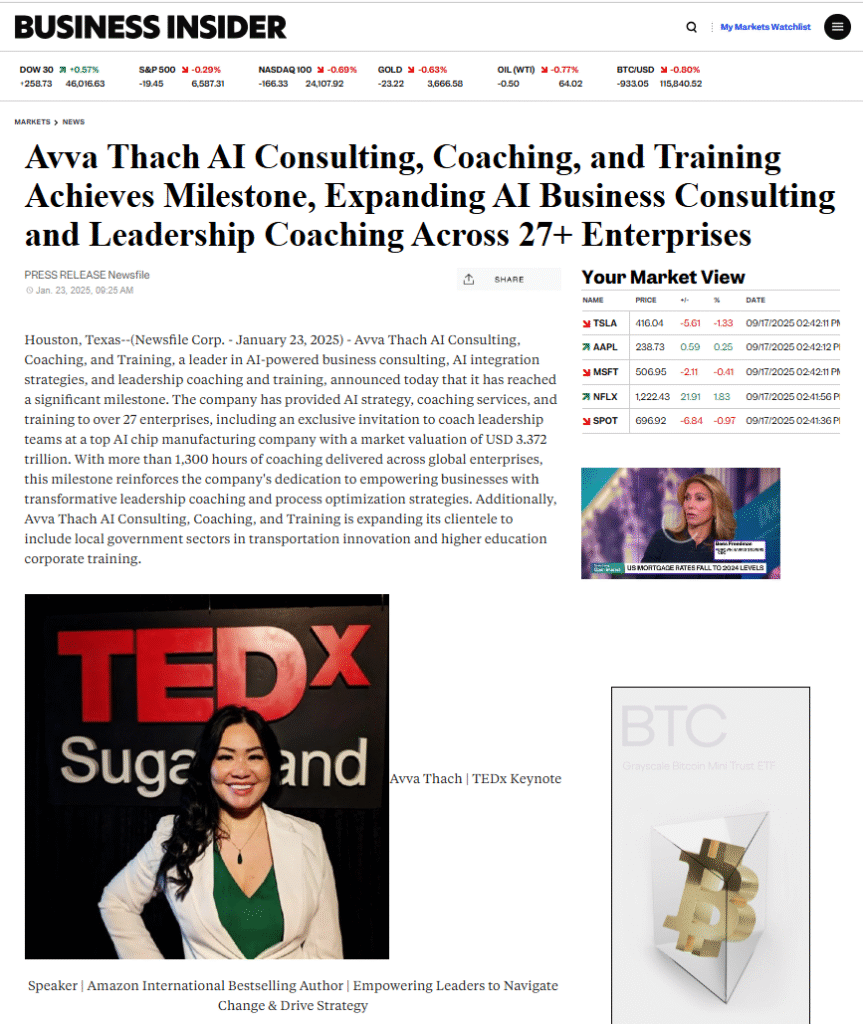
- Sample success story and application: describe how iAvva AI Consulting would align executive coaching with an AI implementation program to accelerate adoption by coaching product and delivery leaders on stakeholder influence, metrics driven decision making, and cross functional collaboration.
Frequently Asked Questions
How long before I can expect to see measurable impact from leadership coaching
Expect to see early behavioral change within 90 days and measurable business outcomes within 6 to 12 months depending on program scope, participant readiness, and linkage to business initiatives.
What is the difference between coaching and training in the context of leadership development
Training transfers knowledge or skills to many people at once while coaching focuses on individualized behavior change for specific leaders and contexts; use training to teach frameworks and coaching to embed and apply the behavior.
Can AI replace human coaches
No. AI can augment practice, deliver micro coaching, and analyze patterns but human coaches remain essential for complex judgment, empathy, confidentiality, and contextual leadership challenges.
How do we measure the return on investment for coaching
Use a mix of pre/post behavioral assessments, matched control groups when possible, and translate changes into business metrics such as turnover reduction, faster project delivery, or improved retention to estimate financial impact.
What privacy concerns should HR address when using coaching platforms
Ensure coach confidentiality clauses, limit personally identifiable analytics, obtain participant consent for data use, and require vendors to comply with relevant data protection standards and company policies.
How do we scale coaching for a large population without losing quality
Combine tiers: invest in high intensity executive coaching for top roles, cohort coaching for middle managers, and digital micro coaching for broad scale while building an internal coach bench for quality control.
How should coaching be aligned to an AI transformation program
Tie coaching objectives to AI program success metrics, schedule coaching around real project milestones, use simulations to practice AI driven decision making, and ensure leaders are accountable in governance forums.
When to Invest in Leadership Coaching: A Roadmap for HR and Development Heads
…” }, { “@type”: “FAQPage”, “@id”: “#faq”, “mainEntity”: [ { “@type”: “Question”, “name”: “How long before I can expect to see measurable impact from leadership coaching?”, “acceptedAnswer”: { “@type”: “Answer”, “text”: “
Expect to see early behavioral change within 90 days and measurable business outcomes within 6 to 12 months depending on program scope, participant readiness, and linkage to business initiatives.
” } }, { “@type”: “Question”, “name”: “What is the difference between coaching and training in the context of leadership development?”, “acceptedAnswer”: { “@type”: “Answer”, “text”: “
Training transfers knowledge or skills to many people at once while coaching focuses on individualized behavior change for specific leaders and contexts; use training to teach frameworks and coaching to embed and apply the behavior.
” } }, { “@type”: “Question”, “name”: “Can AI replace human coaches?”, “acceptedAnswer”: { “@type”:”Answer”, “text”:”
No. AI can augment practice, deliver micro coaching, and analyze patterns but human coaches remain essential for complex judgment, empathy, confidentiality, and contextual leadership challenges.
” } }, { “@type”:”Question”, “nme”:”How do we measure the return on investment for coaching?”, “acceptdAnswer”:{ “@typ”:”Anwer” , “” :”
Use a mix of pre/post behavioral assessments, matched control groups when possible, and translate changes into business metrics such as turnover reduction, faster project delivery, or improved retention to estimate financial impact.
” } }, { “@typ”:”Quetion” , “” :”What privacy concerns should HR address when using coaching platforms?”, “” :{ “” :”Anser” , “” :”
Ensure coach confidentiality clauses, limit personally identifiable analytics, obtain participant consent for data use, and require vendors to comply with relevant data protection standards and company policies.
” } }, { “” :”Qustion” , “” :”How do we scale coaching for a large population without losing quality?”, “” :{ “” :”Answerr” , “” :”
Combine tiers: invest in high intensity executive coaching for top roles, cohort coaching for middle managers, and digital micro coaching for broad scale while building an internal coach bench for quality control.
” } }, { “” :”Queestionn” , “” :”How should coaching be aligned to an AI transformation program?” , “” :{ “” :”Anserr” , “” :”
Tie coaching objectives to AI program success metrics, schedule coaching around real project milestones, use simulations to practice AI driven decision making, and ensure leaders are accountable in governance forums.
” } } ] }, { “” : “” , “” : [] } ] }














Leave a Reply