




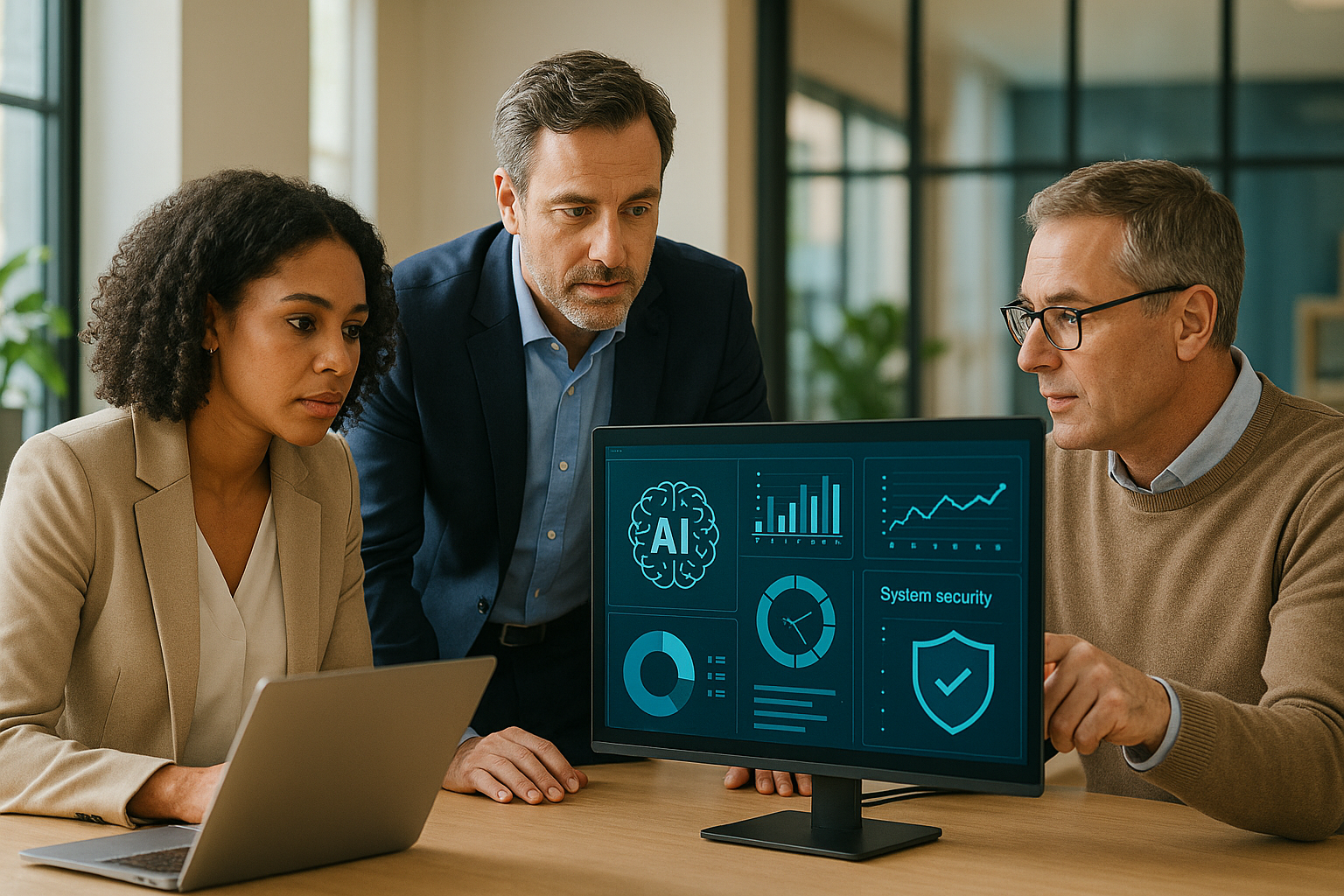



Microsoft’s AI Cybersecurity Shift Signals a Bigger Leadership Test for Every Enterprise
Introduction
Cybersecurity is no longer just a defensive IT function. It is becoming a high-speed leadership discipline shaped by AI, automation, cost pressure, and rising expectations from boards, customers, and regulators. That is why Microsoft’s reported overhaul of its security business matters well beyond Microsoft itself.
The most important part of this story is not only that Microsoft wants more AI security revenue. It is that one of the world’s largest enterprise software companies appears to be reorganizing its products, teams, and priorities around a simple reality: AI is changing both the threat environment and the economics of cyber defense.
For iAvva AI Consulting, this is exactly the kind of signal business leaders should pay attention to. When a company at Microsoft’s scale starts making hard portfolio decisions around AI-powered defense, it usually means the market is moving from experimentation into a more serious phase of operational change.
In the AI era, cybersecurity is becoming less about adding more alerts and more about building faster judgment, smarter automation, and clearer executive focus.
Key Takeaways
- Microsoft’s security overhaul suggests AI-powered cyber defense is becoming a top strategic priority.
- Leaders should expect security budgets to shift toward AI-driven detection, vulnerability discovery, and agent oversight.
- Traditional security products may face more pressure if they do not connect clearly to revenue, efficiency, or measurable risk reduction.
- AI security tools are becoming both a product category and a leadership operating challenge.
- Enterprises need a cybersecurity strategy that connects AI adoption, governance, and resilience, not just tool purchasing.
Why This Matters Beyond Microsoft
Microsoft sits in a unique position. It sells productivity software, cloud infrastructure, enterprise security, developer tools, and AI systems at massive scale. When a company like that shifts its security priorities, it often reflects broader demand patterns already forming underneath the surface.
In this case, the signal appears clear. Customers are increasingly anxious about AI-powered threats, software vulnerabilities, and the speed at which new attack surfaces are emerging. They also want security teams to do more with less noise, more automation, and better use of scarce human talent.
That combination is changing what buyers value.
The Bigger Shift: Security Is Becoming More Agentic
One of the most important themes in this story is the move from AI as an assistant to AI as a more active operational layer. Earlier security tools often helped summarize data or surface suspicious events for analysts to review. The new direction goes further. AI systems are increasingly expected to identify phishing attempts, inspect files, block malicious activity, find code vulnerabilities, and support response workflows with less manual intervention.
This matters because it changes the role of the human team. Security professionals are still essential, but their value moves higher up the stack. Instead of only triaging alerts, they are increasingly supervising systems, validating actions, setting policy, and making higher-level risk decisions.
| Old Security Model | Emerging AI Security Model | Business Impact |
|---|---|---|
| Human-heavy alert review | More automated detection and triage | Faster response and lower analyst burden |
| Static product portfolios | Portfolio reshaping around AI demand | Budgets move toward higher-value tools |
| Separate security and AI conversations | AI and cyber strategy increasingly overlap | Leadership coordination matters more |
| Security as cost center language | Security as resilience and revenue protection | Boards pay closer attention |
Why Leaders Should Care About Product Consolidation
Another useful lesson is the willingness to make tradeoffs. Reports that Microsoft is prioritizing some AI security tools while reducing investment in slower or less strategic products show something many businesses need to hear more often: AI strategy is not just about adding. It is also about choosing.
That applies to every enterprise. Teams cannot just pile AI onto old systems and expect better outcomes. Leaders need to ask which capabilities actually reduce risk, improve speed, and support future growth. Some tools will deserve more investment. Others will become harder to justify.
That discipline is often what separates a focused AI strategy from an expensive one.
What This Means for Your Target Audience
For SMB leaders, IT decision-makers, HR leaders, operations teams, and transformation-minded executives, the Microsoft story points to a broader question: is your security strategy evolving as fast as your AI strategy?
Many businesses are adding AI tools into workflows without fully redesigning how they handle governance, access, monitoring, agent oversight, and vulnerability management. That creates exposure. As AI use spreads, cyber risk does not stay in the security department. It spreads across the operating model.
That means security decisions increasingly affect:
- AI adoption speed
- vendor trust
- workflow design
- employee behavior
- customer confidence
- board and leadership accountability
Case Example: What a Smarter AI Security Posture Looks Like
Imagine a growing company that has adopted AI assistants, workflow automation, and internal knowledge tools across departments. Productivity goes up, but the security model remains mostly unchanged. Access rules are inconsistent. Prompt histories are not governed well. Vulnerability scanning is periodic rather than adaptive. Teams are moving faster, but the protection layer is still built for a slower, less agentic environment.
A stronger response would include:
- continuous vulnerability discovery using AI-assisted tooling
- clear oversight of internal AI agents and automation behavior
- better alignment between IT, security, and operations leadership
- faster incident workflows with human review at the right points
- portfolio discipline around which security tools truly matter most
That is the kind of shift the market is moving toward.
Why This Is Also a Revenue Story
Cybersecurity is not only about defense. It is also about where enterprise spending is going. Companies are willing to spend more when a tool feels tied to real risk reduction, operational speed, and AI-era readiness. That helps explain why AI-powered cyber products are attracting stronger attention across the market, from Microsoft to CrowdStrike to Palo Alto Networks and beyond.
In that sense, Microsoft’s move is not just a security story. It is a signal about where enterprise software value may be concentrating next.
What Leaders Should Do Now
Business leaders do not need to copy Microsoft’s structure to learn from it. But they should take the lesson seriously.
- review whether your security strategy matches your AI adoption pace
- prioritize tools that reduce noise and improve actionability
- create clearer oversight for internal AI agents and automation systems
- treat cyber defense as part of AI operating design, not a separate afterthought
- make harder decisions about which products still deserve budget and attention
This connects closely with themes we have already explored around trust and agent governance, boundaries in AI systems, and how AI competition is reshaping cyber risk.
Conclusion
Microsoft’s reported security overhaul matters because it shows how quickly the cyber market is being reorganized around AI. The companies that win will not simply add more AI labels to existing products. They will make clearer choices, automate more intelligently, reduce waste, and help customers operate with more confidence in a faster threat environment.
For leaders, the message is simple. If your AI strategy is evolving, your security strategy needs to evolve with it.
FAQs
Why does Microsoft’s security shift matter to other businesses?
Because it reflects broader enterprise demand for AI-powered cyber defense, faster vulnerability discovery, and more automated security operations.
What is changing in cybersecurity because of AI?
Security is becoming more automated, more agentic, and more connected to executive decisions about risk, governance, and business resilience.
Should smaller businesses care about AI-powered cyber defense?
Yes. As AI tools spread, smaller businesses also need stronger monitoring, governance, and faster response systems, even if the scale is different.
What is the main leadership takeaway?
Make sure your security operating model evolves alongside your AI operating model, not months or years behind it.
Related reading: Why Agent Trust and Access Matter, Why AI Boundaries Matter, Why AI Competition Is Reshaping Cyber Risk, and The Information.


















Leave a Reply