




Digital Change In SMEs With A Proven Framework For Success
Introduction
A statistic often shared in boardrooms is that more than 70 percent of large digital change programs miss their goals, mostly because of people and leadership issues, not because of bad software. When we talk with founders, HR leaders, and CIOs, the story behind that number feels very real. The tech gets installed, but behavior does not shift, old habits linger, and stressed managers try to drag teams through one more change while already maxed out.
“Change moves at the speed of trust, not at the speed of software.”
At the center of this gap sits leadership. Managers are running hybrid teams for the first time, learning new tools themselves, and facing pressure to deliver results faster. Training budgets are tight, mid-level leaders keep changing jobs, and workshops that sounded great in the slide deck fade from memory a week later. Many leaders tell us they feel stuck between big expectations from the C‑suite and real fatigue in their teams.
This is where leadership coaching changes the game, as research shows that leadership coaching support services can significantly improve organizational outcomes during transformation periods. Instead of one-off classes, leadership coaching gives managers an ongoing thought partner who helps them build self-awareness, test new behaviors, and link personal growth to real business goals. When this kind of coaching is scaled through smart use of AI and data, even small and midsize companies can provide support that once sat only in the C‑suite.
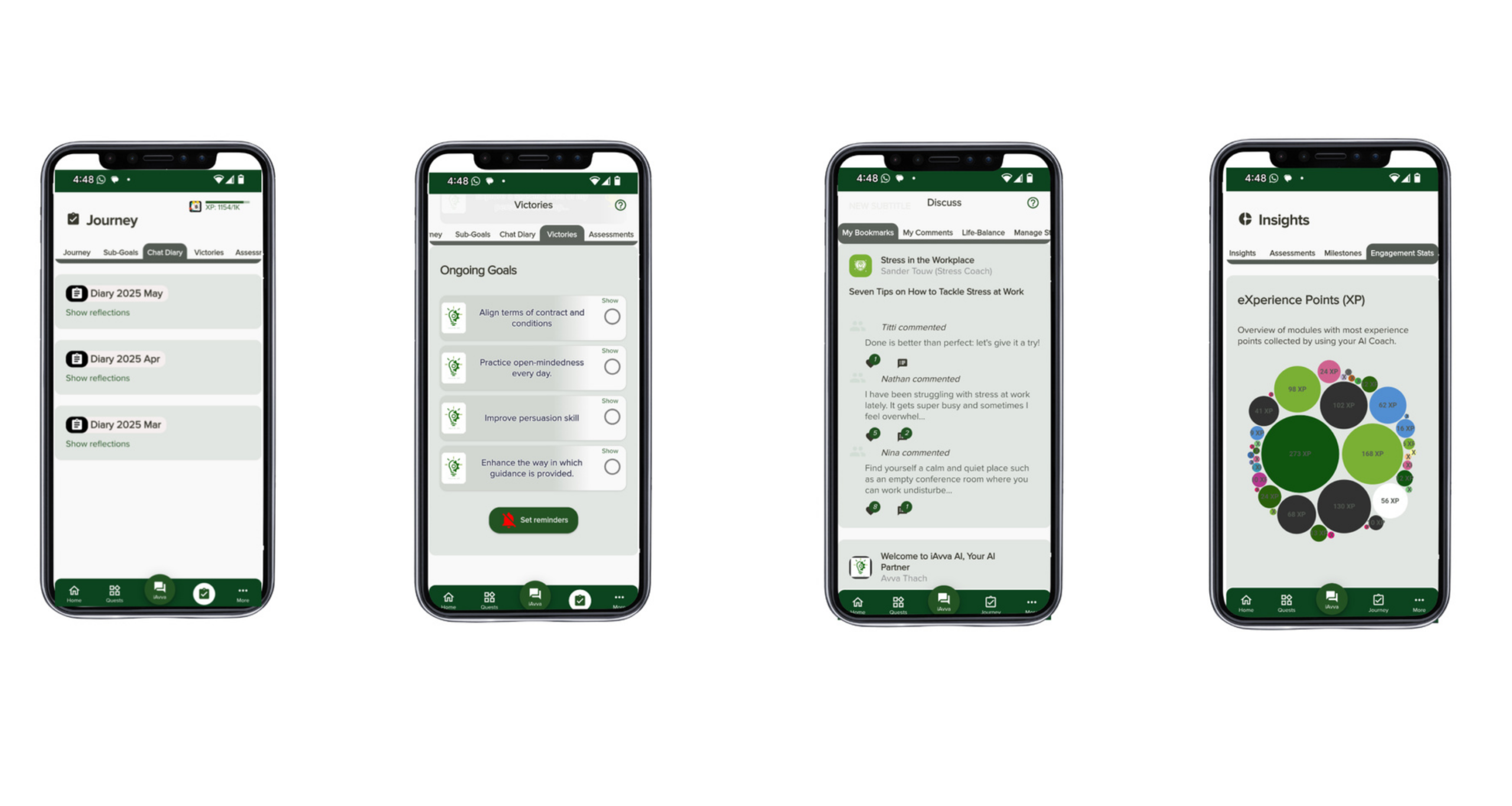
At iAvva AI, we bring together neuroscience, ICF coaching principles, Lean Six Sigma, and OKR alignment into one AI-powered coaching and learning suite. That may sound technical, yet the idea is simple. We use daily micro‑coaching, live group sessions, and clear analytics so that leadership coaching feels personal for each manager and still gives HR and executives the hard numbers they need.
In this article, we walk through a complete framework for using leadership coaching to drive digital change in small and midsize companies. We start with the basics of what coaching is, then go into the six core principles, the ACS™ conversation model, the role of assessments, and how to design programs at scale. By the end, you will see how leadership coaching, supported by AI, can help stressed managers become confident change leaders and turn digital projects into lasting behavior change.
Key Takeaways
Leadership coaching is now a strategic must-have for small and midsize companies going through heavy digital change. When managers have a coach, they move from firefighting to thoughtful action, which dramatically raises the odds that new tools and processes stick instead of sliding back into old ways of working.
The strongest leadership coaching programs combine AI personalization with real human accountability. An AI coach can give daily nudges, track habits, and speak in 19 languages, while live group coaches help leaders practice skills, share real stories, and keep their commitments when work gets messy.
Simple coaching frameworks such as ACS™ (Assessment–Challenge–Support) help any manager hold coaching-style conversations. With a few good questions, leaders can guide their people to think for themselves instead of waiting for orders, which is essential when digital change keeps speeding up.
Measurable outcomes from modern leadership coaching include weekly engagement rates over 60 percent, faster ramp‑up for new managers, better retention of high performers, and visible shifts in behavior on 360 feedback. When OKRs are linked to coaching goals, business impact shows up in the first month.
Technology-enabled coaching platforms give HR and executives real-time dashboards on participation, habits, and progress. This makes it far easier to defend the budget for leadership coaching, compare different cohorts, and adjust programs quickly instead of waiting for year‑end surveys.
Lasting impact does not come only from tools or models. It comes when leaders change how they see their role, moving from being the problem solver to being a coach who builds capability in others. Organizations that build this coaching mindset and culture gain an edge that competitors find hard to copy.
Why Leadership Coaching Is The Critical Catalyst For Digital Change Success

When a company pushes through a major digital change, charts and timelines often focus on systems, vendors, and go‑live dates. Yet the make‑or‑break factor is what happens between people. Leaders need to guide anxious teams, adopt new tools themselves, and keep day‑to‑day work moving while old and new systems overlap. That tension is exactly where leadership coaching earns its place.
Research across industries shows that around two out of three digital change programs fail to meet their goals, and studies on the impact of leadership coaching demonstrate that the main causes sit in the people space, where leadership behaviors directly influence transformation success. Leaders avoid tough conversations about new expectations, middle managers stall on decisions, and teams return to old workarounds as soon as the project team leaves. Technology is ready many months before behavior catches up.
Without leadership coaching, managers in small and midsize businesses often feel overwhelmed and alone. They may cling to command‑and‑control habits, because giving clear orders feels faster than slowing down to coach. This works for a short time, but it does not build the adaptive thinking needed when nobody has all the answers. Under pressure, some leaders shut down, skip feedback, or quietly block change they do not trust.
With leadership coaching, the same leaders start to show a different pattern. They get clear on their own reactions to change, learn to talk openly about fears and trade‑offs, and practice new ways to engage their teams. Instead of saying “just do it,” they ask “what support do you need to try this new tool with confidence” and “what small test can we run this week.” Coaching turns them into guides who can hold uncertainty without freezing.
For small and midsize firms, this matters even more. They have fewer layers, smaller training teams, and less room for long experiments. Leadership coaching gives them a fast way to raise the quality of decisions and communication without hiring a large internal development staff. When this coaching is delivered through an AI‑powered platform such as iAvva AI, every manager can receive daily micro‑coaching and regular group sessions, while HR can still manage cost and measure results.
“The soft stuff is always harder than the hard stuff.” — Roger Enrico, former CEO of PepsiCo
In short, leadership coaching is not a nice side program during digital change. It is the engine that helps leaders keep people aligned, engaged, and moving forward while systems and processes shift under their feet.
Understanding Leadership Coaching Definitions, Distinctions, And Core Components
Before we design big coaching programs, we need a clear picture of what leadership coaching actually is, and resources like the ICF Global Coaching Study provide comprehensive data on coaching definitions and practices worldwide. Leadership coaching is a structured partnership between a leader and a coach that focuses on real work goals, behavior, and mindset. The aim is to help the leader see themselves more clearly, explore options, and choose actions that serve both their growth and the business.
Leadership coaching is different from mentoring. In mentoring, a more experienced person usually shares advice and stories based on their own path. That can be helpful, yet it often keeps the power with the mentor. In leadership coaching, the coach asks questions and listens deeply. The coach may share ideas, but the leader does most of the thinking. This builds long‑term capacity, not just short‑term fixes.
Coaching also differs from day‑to‑day management. Management often centers on tasks, deadlines, and performance ratings. It answers questions such as “what needs to be done” and “by when.” Leadership coaching focuses on “who do I need to be as a leader to guide this change” and “how do I handle this conflict or fear in a better way.” Both roles matter, but when they blur, people can start to feel judged instead of supported.
A key idea in leadership coaching is that it is a learnable skill, not some rare gift. Any manager can build the ability to ask thoughtful questions, listen beyond the surface, and hold a growth‑focused conversation. These skills live in three domains that we will explore next: thinking, being, and doing. Together, they turn coaching from a theory into a daily practice.
Self-awareness sits at the core of all this work. Leaders often come into coaching with blind spots about how their behavior lands on others, especially under stress. Through reflection, feedback, and sometimes assessments, coaching shines a light on patterns that used to run on autopilot. When leaders see those patterns clearly, they can choose different responses that align with their values and with company goals.
It is also important to release the myth that leadership coaching is only for people who are struggling. High‑potential leaders, new managers, and senior executives all gain value from a coach who helps them stretch into the next level. Coaching can happen in formal one‑to‑one sessions, in group settings, and in short check‑ins during normal one‑on‑one meetings. The real power shows up when coaching becomes part of the culture, not a special event.
The Three Essential Domains Of Coaching Competency
When we talk about strong leadership coaching, we are talking about a blend of three kinds of skill. These domains — thinking, being, and doing — work together like three legs of a stool. If one is weak, the whole coaching effort feels shaky.
You can think of them as:
Thinking
- How a coach understands situations and spots patterns
- Ability to reframe stuck views and link topics to strategy
- Skill in asking questions such as “what might you be assuming” or “how would this look from your customer’s side”
Being
- The coach’s presence, mindset, and self-awareness
- Empathy, patience, and genuine care without rescuing
- Capacity to sit with frustration or fear without rushing to advice, building psychological safety
Doing
- The visible tools and techniques
- Active listening, strong questions, summarizing, helpful feedback
- Focus on specific behaviors and impact so that change feels possible
These three domains feed one another:
- Clear thinking guides better questions.
- A caring presence makes tough feedback easier to hear.
- Practical skills give structure to a supportive mindset.
At iAvva AI, we support these domains through daily AI prompts, reflection questions, and progress tracking, so leaders can practice thinking, being, and doing in short bursts during real work, not just in a workshop.
The Six Core Principles Of Effective Leadership Coaching
Behind every strong leadership coaching program sit a few clear principles. These principles act like guardrails. They keep coaching focused on growth, ethics, and real impact, whether it happens in a one‑to‑one session, a team meeting, or a quick hallway chat.
When leaders understand and apply these principles, coaching conversations stop feeling like random “nice talks” and start to drive behavior change. They create the conditions where people feel safe enough to be honest, yet stretched enough to change habits. They also help manager‑coaches separate coaching from performance management and from friendly advice.
These six principles apply across contexts and levels. A senior executive working with an external coach and a frontline manager using AI‑guided questions in a one‑on‑one both benefit from them. The principles are:
- Create a safe and challenging space
- Work within the coachee agenda
- Facilitate and collaborate rather than lecture
- Put self-awareness at the center
- Turn experience into learning
- Model the behavior you expect
In the sections that follow, we walk through each principle in more depth and show how they connect to digital change and leadership coaching at scale.
Principle 1 — Create A Safe Supportive Yet Challenging Environment
Good leadership coaching lives in a space where people can be real. Psychological safety in coaching means a leader feels free to admit “I am scared this project will fail” or “I do not know how to manage remote performance” without fearing shame or career damage. When that level of honesty is present, real change can begin.
If a coach offers only comfort and agreement, growth stalls. The coachee may feel heard, yet stays stuck in old stories. On the other side, if a coach pushes hard without warmth, the leader may shut down or push back. Anxiety rises, and the brain moves into defense mode instead of learning mode. The art of leadership coaching is to hold both care and stretch at the same time.
Skilled coaches read signals such as tone, body language, and the types of stories a leader tells. They might say “it makes sense that you feel tired after these last months” and then ask “what small step are you willing to test this week.” They use a calm, non‑judging voice, reflect emotions accurately, and then gently question stuck views or excuses. This mix helps leaders take smart risks, which is exactly what digital change needs.
When this balance is present across a company, experiments run faster and fear of speaking up drops. That leads directly to better problem solving and more honest reporting of what is really happening on the ground.
Principle 2 — Work Within The Coachee Agenda
In real leadership coaching, the person being coached owns the agenda. They choose the goals, bring the topics, and decide what success looks like. The coach guides the process, but does not secretly drive their own plan. This matters because people are far more committed to goals they helped shape.
Directive management takes the opposite path. A manager might say “your goal is to increase adoption of this tool by twenty percent by June” and then give steps to follow. That may be needed at times, especially when business risk is high. Yet when a manager calls that interaction “coaching,” trust can suffer, because the coachee feels the game is fixed.
For manager‑coaches, the answer is clear role naming. When a performance problem or non‑negotiable target must be addressed, it helps to say “for this conversation, I need to speak as your manager.” Once that part is handled, they can shift back to coaching mode and invite the employee to choose how they want to grow.
This respect for the coachee agenda builds ownership and motivation. In digital change efforts, when leaders pick their own growth edges for leadership coaching, such as “learning to lead remote stand‑ups well,” follow‑through is far more likely.
Principle 3 — Facilitate And Collaborate Do Not Lecture
A common trap for experienced leaders is the urge to jump in with answers. They have seen a lot, and giving advice feels helpful and quick. In leadership coaching, this urge can quietly steal the learning away from the coachee. The leader hears a story, offers a “fix,” and the other person nods but does not truly change their thinking.
Coaching flips that pattern. The coach’s main tool is the question, not the speech. They listen deeply and ask things like “what options have you considered so far” or “how might your team read your silence in that meeting.” The aim is to help the leader think more broadly and take ownership of their choices.
Active listening is the base of this style. Coaches notice pauses, repeated words, and emotional spikes. They paraphrase what they hear to check understanding, and they leave enough silence for new ideas to arise. When they do share a point of view, they frame it as one option, not the truth.
When coaching is done this way across an organization, people learn to think for themselves and seek input early, rather than waiting for top‑down orders. That builds long‑term capability, which is far more valuable than quick advice.
Principle 4 — Advocate Self Awareness As The Foundation

Self-awareness in leadership means knowing one’s strengths, limits, hot buttons, and the impact of one’s behavior on others. It also means seeing how one shows up under stress compared to calmer times. In leadership coaching, this awareness is the starting point for all other change.
A coach acts like a mirror. They might say “I notice your energy drops when you talk about that stakeholder” or ask “how do you think your team reads your short emails on Friday nights.” They offer observations, not labels, and invite leaders to test those views with real feedback from others.
Coaches also work on their own self-awareness, watching how their tone, questions, or facial expressions shape the space. If a coach notices they tense up when money comes up, they can breathe and reopen, instead of letting that tension drive the conversation.
Tools such as 360 feedback and personality or strengths assessments can make this process faster by giving objective data. When leaders see clear patterns on a report and then discuss them with a coach, they can make sharper choices about which habits to keep and which to change. That leads to better hiring, clearer communication, and wiser calls under pressure.
Principle 5 — Promote Learning From Experience
Every leader has a long list of past projects, conflicts, wins, and misses. The question is how much real learning they pulled from those events. Leadership coaching turns day‑to‑day work into a steady lab for growth.
Instead of racing from one meeting to the next, coach and leader pause to ask simple questions such as:
- “What went well in that town hall?”
- “What would you try differently next time?”
- “What did you notice about your own reactions?”
They look at both external results and inner responses. Over time, this habit trains the brain to review and adjust on its own.
Without this reflection, leaders repeat the same patterns in new clothes. They might switch tools or org charts, yet the same issues return. With structured reflection, even hard moments such as a failed pilot or a tough exit conversation become sources of insight.
When leaders model this kind of learning from experience, teams follow. People start to debrief sprints, projects, and customer calls in a calm, honest way. That builds a real learning culture that lasts beyond any formal coaching program.
Principle 6 — Model What You Coach
People watch what leaders do far more than what they say. The most powerful leadership coaching happens when coaches and senior leaders live the behaviors they encourage in others. That might mean admitting mistakes, asking for feedback, or showing how they block time for deep work.
No coach is flawless, and pretending to be perfect undercuts trust. When a coach says “I noticed I interrupted you earlier, and I want to correct that,” they show accountability in action. When a senior leader shares how they worked with a coach to shift their own habits, it normalizes coaching for everyone else.
If a coach runs into a topic outside their skill, such as deep trauma or specialist technical detail, integrity means naming that limit and pointing the leader to someone better suited to help. This protects both parties and keeps coaching focused on what it can do best.
Across an organization, this kind of modeling sends a clear signal. Coaching is not just a program on a slide. It is how leaders behave, especially when things are hard. That consistency makes change messages far more believable.
“Example is not the main thing in influencing others; it is the only thing.” — Albert Schweitzer
A Practical Framework For Coaching Conversations The ACS™ Model

Principles give us a compass, yet leaders also need a map they can use in real time. The ACS™ model — Assessment, Challenge, Support — offers a simple frame for leadership coaching that fits many kinds of conversations, a principle supported by studies of coaching leadership style practice in project environments. It does not lock people into a script. Instead, it gives a clear flow from understanding to insight to action.
In the Assessment stage, coach and leader explore what is happening now. They slow the pace, ask curious questions, and gather facts and feelings. This stops everyone from jumping to quick fixes before the problem is clear.
In the Challenge stage, the coach helps the leader look at the situation from new angles. This is where assumptions get questioned and new options appear. The tone stays respectful, yet the questions stretch thinking, which is vital when old mental maps no longer match current digital change.
In the Support stage, insight turns into action. Leaders leave the conversation with specific steps, timelines, and plans for tracking progress. They also feel backed up, not judged, which raises the chance they will try new behaviors even when work is busy.
Any manager can learn to use ACS in one‑on‑one meetings, project reviews, or even quick chats. At iAvva AI, we build ACS into our AI prompts and group coaching design, so leaders get many chances to practice it with guidance and feedback.
Step 1 — Assessment Where Are They Now
The Assessment step is all about curiosity. Instead of rushing to fix a problem, the coach invites the leader to paint a full picture of the current state. This helps both people align on what is really happening beneath the first complaint.
A coach might start with questions such as:
- “What is working well in this project so far?”
- “Where are you feeling most stuck?”
- “How do you see your role in this challenge?”
- “What impact is this having on your team and on you personally?”
As the leader talks, the coach listens for patterns and gaps. They may gently ask “what have you already tried” or “who else is involved that we have not talked about yet.” This avoids repeating past attempts and surfaces hidden players or risks.
From a brain science point of view, this pause for reflection moves the leader out of fight‑or‑flight mode into a more thoughtful state. Instead of reacting on impulse, they engage parts of the brain linked to planning and creativity. In real digital change, this shift often reveals that the core issue is not the tool at all, but clarity, trust, or skills.
When Assessment is rushed, coaching becomes advice on the wrong problem. When it is done well, both coach and leader feel they are looking at the same picture, which makes the next steps far more effective.
Step 2 — Challenge What Is Possible
Once the current state is clear, the coach moves into thoughtful stretch. Challenge in leadership coaching is not about catching someone out. It is about asking the questions that nudge them beyond their usual thinking.
The coach might ask:
- “What assumptions are you making about your team’s willingness to learn this new system?”
- “If you were not worried about failure, what bold step would you try?”
- “How would someone you admire approach this same problem?”
- “What is the opposite of the story you are telling yourself right now?”
These questions open doors that fear and habit often keep closed.
The art is to match the level of challenge to the leader’s readiness. If the leader is already flooded with emotion, a gentle nudge works better than a sharp push. If they seem stuck in the same loop for months, a stronger question can create the needed break in the pattern.
In digital change work, many limits are self‑imposed, such as “my team will never like this tool” or “finance will always block us.” When a coach helps a leader test those beliefs, fresh options appear. Maybe a pilot with two volunteers is possible. Maybe a different kind of data can win support from finance. Challenge questions make that creative thinking easier.
Done well, this step often leads to “aha” moments where the leader sees both the problem and themselves in a new way. That energy is then ready to move into concrete action.
Step 3 — Support What Is Next
Insight is helpful, yet without action it changes little. The Support step in ACS turns ideas into steps that can be tracked and learned from. It also builds in the accountability many leaders quietly want.
A coach might ask:
- “What is one specific action you will take this week?”
- “Who needs to know about this plan?”
- “What resources or allies do you need?”
- “How will you know you are making progress?”
When obstacles are likely, the coach may ask “what could get in the way, and how will you respond if that happens.”
Clarity matters here. Vague statements such as “I will communicate more” tend to fade fast. A clearer plan might be “I will hold a thirty‑minute Q and A on Thursday with my team about the new tool and collect their top three worries.” This kind of action is easier to do and to review later.
Support also lasts between sessions. Technology helps by sending reminders, logging habits, and prompting reflection. iAvva AI, for example, can nudge leaders with daily prompts tied to their coaching goals and OKRs, so that progress is visible both to them and to their sponsors.
Celebrating wins, even small ones, is part of this stage. When leaders notice that a new behavior led to a better meeting or a calmer reaction, motivation grows. Over time, these repeated small actions build strong habits and visible business results.
The Impact Of Leadership Coaching On Organizations And Leaders
Leaders often ask if leadership coaching is worth the time and money. The answer becomes clear when we look at impact on three levels — the individual, the team, and the whole organization. Across many industries, coaching raises engagement, speeds up skill growth, and improves hard business measures such as retention and project delivery.
On the individual side, managers move from feeling stretched thin and reactive to feeling more centered and in control of their choices. They gain clearer self-awareness, handle conflict better, and align their actions with both personal values and company strategy. This makes their day‑to‑day work feel more meaningful and less draining.
At the team level, coaching has a ripple effect. When a manager changes how they listen, give feedback, and delegate, team members notice and adjust. Trust grows, psychological safety rises, and performance conversations become more honest. Remote and hybrid teams especially benefit when their leaders build skill in coaching across distance.
For the organization, leadership coaching supports a healthier culture and better performance. Companies that invest in coaching see higher engagement scores, smoother change programs, lower turnover of key talent, and a stronger bench of ready leaders. When paired with an AI‑supported platform like iAvva AI, these gains can be tracked in detail, with weekly engagement above 60 percent, real behavior shifts within weeks, and OKR progress connected to coaching activity.
“Leadership and learning are indispensable to each other.” — John F. Kennedy
Individual Leader Benefits From Overwhelmed To Empowered
Before leadership coaching, many leaders describe their work life with words like chaotic, lonely, and draining. They may avoid hard conversations, over‑rely on email, or try to do everything themselves. Executive presence can feel like a mystery, and they often doubt whether they are the “right” person to lead digital change.
Through consistent leadership coaching, this picture shifts. Leaders start to see their own patterns clearly, such as saying yes too often or speaking only at the end of meetings. With a coach, they test new behaviors, like asking more questions or setting boundaries on their time. Over weeks, they notice they feel less reactive and more intentional.
Specific skills grow as well:
- Decision‑making becomes faster and more grounded in facts and values.
- Emotional intelligence improves, so leaders can read the room and adjust their approach.
- Conflict skills strengthen, because they have frameworks for holding tough talks without burning bridges.
- Strategic thinking deepens, as they learn to link daily choices to long‑term goals.
Perhaps the biggest gain is confidence that feels real, not forced. Knowing they have a trusted thought partner and a clear development plan, leaders are more willing to step into bigger roles, present to boards, or lead cross‑functional change efforts. Many report better well‑being and lower burnout, because they no longer carry the weight of leadership alone.
Team Benefits Higher Performance And Engagement
When a leader changes, the team notices. With leadership coaching, managers often begin to:
- Run meetings with clearer purpose and more participation
- Listen with more care instead of jumping straight to answers
- Give regular, useful feedback instead of saving it for review time
- Delegate work in ways that stretch people without setting them up to fail
Team members feel more seen and more involved in decisions that affect their work.
This shift boosts motivation and ownership. People know where they stand, what is expected, and how their work connects to bigger aims. They also feel safer raising concerns or admitting mistakes, because their manager models that behavior. Over time, that safety leads to more honest risk‑taking, which is vital when new tools and processes are being tested.
Teams led by coached managers often show better collaboration and less silo behavior. Leaders learn to ask “who else needs to be part of this conversation” and to create shared goals across functions. Remote and hybrid teams benefit from leaders who use coaching to keep connection strong, even when most contact happens through screens.
All of this has clear impact on retention. People tend to stay longer when they feel their growth matters, their ideas are heard, and their manager supports them. Leadership coaching is one of the fastest ways to create those conditions.
Organizational Benefits Culture Performance And Competitive Advantage
On the organizational level, leadership coaching acts like a flywheel for culture. When many leaders adopt a coaching style, day‑to‑day behavior changes in ways that surveys quickly pick up. Feedback flows more freely, decisions move closer to where the work happens, and experiments are run and reviewed with less drama.
These cultural shifts show up in numbers:
- Higher engagement and pulse survey scores
- Lower unwanted turnover, especially among key talent
- Faster ramp‑up for new hires and new managers
- More projects delivered on time and with better adoption
For companies pushing through digital change, coached leaders handle resistance and fear more skillfully. They communicate context, listen to concerns, and guide teams through messy middle phases when results are not yet visible. This steadiness keeps more projects on track and reduces the hidden cost of half‑finished change efforts.
Platforms like iAvva AI multiply these gains by making leadership coaching accessible to far more leaders at once. Enterprise‑grade analytics show participation rates, habit data, and goal progress, so HR and executives can see return on investment within the first month. With OKRs linked to coaching goals, leadership development stops being a soft side project and becomes a clear driver of business performance.
Developing Your Coaching Mindset The Internal Shift Required For Success
Tools and models matter, yet the heart of leadership coaching is mindset. For many managers, the biggest shift is moving from “my value comes from having answers” to “my value comes from helping others think and grow.” This can feel odd at first, especially for leaders who rose through the ranks as top problem solvers.
A coaching mindset rests on a few simple beliefs:
- People are capable of more than they show today.
- Curiosity about how others think and feel is worth time.
- No single leader sees the full picture, especially during rapid digital change.
Making this shift is not only a mental task. It is emotional. Letting go of the expert role can stir up fear of becoming less relevant. Some leaders worry that if they stop giving direct answers, their teams will see them as weak. Leadership coaching helps them test these worries in a safe space and see the positive impact when they coach more and direct less.
There are practical ways to build this mindset:
- Start one‑on‑ones with two or three open questions before offering advice.
- Reflect each week on moments when you slipped into control mode and what might work better next time.
- Ask your team how “coaching‑like” your style feels and what would help them think more for themselves.
Common blockers include time pressure and cultures that praise fast answers. In digital change efforts, it may seem faster to tell people what to do. Yet over the long run, teams that are used to thinking for themselves move faster and handle surprises better. A coaching mindset is therefore not just a personal preference. It is a practical edge in a world where plans keep shifting.
This inner work never really ends. Even experienced coaches return to these basics again and again. With support from AI prompts and group coaching like we offer at iAvva AI, leaders can keep this mindset alive in small daily actions, not just in yearly retreats.
Strategic Implementation Designing And Launching Leadership Coaching Programs In Your Organization
Knowing that leadership coaching matters is one thing. Building a program that fits your company’s size, budget, and goals is another. For HR leaders and executives in small and midsize firms, the challenge is to move beyond ad‑hoc coaching for a few people toward a scaled, data‑driven approach.
The first step is to see leadership coaching as a strategic lever tied to digital change, talent, and performance, not just as a learning line item. That means connecting coaching goals to business aims such as faster tool adoption, better cross‑team collaboration, or lower turnover among managers.
Implementation works best when tackled in stages. A practical sequence is to:
- Assess needs and objectives
- Choose your coaching mix and partners
- Design the coaching engagements
- Launch with strong support and measurement
Each step can start small and grow as you learn.
For small and midsize companies, cost and speed matter. AI‑supported platforms like iAvva AI help by blending AI coaching, live group sessions, and analytics in one place. This keeps the cost per leader low while still giving a rich coaching experience and clear data on outcomes.
Step 1 — Assess Needs And Define Objectives
Any strong leadership coaching program starts with clear aims. We begin by asking simple questions such as:
- “What business problems are showing up right now?”
- “Where are leaders struggling the most?”
- “How is digital change affecting day‑to‑day work?”
For many firms in digital change, patterns include slow adoption of new tools, confused accountability, and burnout in middle management.
Next, we gather data. This can include:
- Engagement surveys and pulse checks
- Exit interviews and stay interviews
- Performance numbers and project post‑mortems
- Short conversations or focus groups with leaders and employees
The goal is to spot themes rather than one‑off complaints.
From there, we define which groups to focus on first. Some companies start with the layer of managers most touched by digital projects, such as product leads or operations managers. Others focus on high‑potential leaders at risk of leaving. Clear choices help avoid spreading limited resources too thin.
We then set success measures. These might include engagement with coaching, improvement in 360 scores, time to competency for new managers, or business metrics such as feature adoption or error rates. Having these targets up front makes it far easier to show impact later and helps secure senior sponsorship and budget.
Step 2 — Choose Your Coaching Approach And Partners
With needs clear, the next step is to decide how to deliver leadership coaching. Broadly, companies can use internal manager‑coaches, external coaches, AI‑powered platforms, or a mix of all three.
Internal coaching
- Benefits: deep context, lower direct cost, easier integration into daily work
- Risks: role confusion and limited confidentiality, especially when the coach also has performance authority
External coaching
- Benefits: experienced partners, high confidentiality, strong support for senior roles
- Risks: higher cost per person, hard to scale widely
AI‑supported platforms (such as iAvva AI)
- Benefits: reach many leaders at once, daily micro‑coaching, group sessions, clear analytics
- Extras with iAvva AI: support for 19 languages, design that works well for neurodiverse users, courses grounded in neuroscience and ICF standards
When choosing partners, we look for clear methods, strong analytics, proof of high engagement, and the ability to align coaching goals with OKRs. A hybrid model often works best, for example using external coaches for top executives while using iAvva AI to support the wider leadership population with AI and group coaching at scale.
Step 3 — Design The Coaching Engagement
Once the overall approach is chosen, we design the shape of each coaching engagement. This starts with a three‑way conversation between the coach, the coachee, and a sponsor such as a manager or HR partner. Together, they agree on:
- Coaching goals and focus areas
- Boundaries and confidentiality
- How progress and success will be reviewed
A typical one‑to‑one engagement runs from three to twelve months, with sessions every two to four weeks. Sessions often last between forty‑five and ninety minutes, depending on level and context. At the start, assessments such as 360 feedback or strengths profiles give a clear baseline for discussion.
From there, coach and leader co‑create a development plan. This plan links personal goals such as “build confidence in board presentations” with team or business aims such as “lead the roll‑out of the new data platform in region X.” When OKRs are already in place, coaching goals can map directly to them.
Confidentiality is handled with care. The content of coaching talks usually stays between coach and leader, while sponsors receive updates on themes and progress against agreed goals. Platforms like iAvva AI support this structure by giving coachees private spaces for reflection and shared dashboards that show high‑level progress without exposing personal details.
Step 4 — Launch Support And Measure Impact
A well‑designed program still needs a strong launch. We work with clients to craft clear messages about:
- Why leadership coaching matters now
- Who is involved and how they were selected
- What participants can expect from coaches and from the organization
Visible support from senior leaders sends a strong signal that this is a priority, not a side project.
During the program, ongoing support is key. Program managers check in with coaches and coachees, remove blockers, and watch participation data. Feedback loops help spot issues such as low engagement in a certain group, so adjustments can be made quickly.
Measuring impact happens at several levels:
Individual level
- Goal progress and behavior changes
- Repeat assessments such as 360 or engagement scores
- Coachee feedback on the coaching experience
Team level
- Changes in engagement, retention, and team performance
- Qualitative stories of better collaboration and communication
Organizational level
- Links between coaching and KPIs such as system adoption, time to market, or quality indicators
iAvva AI makes this easier by providing enterprise‑grade analytics in real time. Dashboards show weekly engagement rates often above 60 percent, completion of micro‑behaviors, and links between coaching goals and OKR progress. With this evidence, HR and executives can refine the program, celebrate wins, and plan the next wave of leaders to include.
The Strategic Role Of Assessments In Accelerating Leadership Development

Assessments are powerful tools for leadership coaching because they bring objective data into what can otherwise feel like vague conversations. They give leaders a clear mirror on how they see themselves and how others see them, which speeds up self-awareness and focuses coaching on what matters most.
Good assessments do not replace coaching. Instead, they provide raw material for rich dialogue. A 360 report might show that a leader rates themselves high on communication while peers give lower scores. A personality or strengths profile might reveal natural preferences that explain certain patterns in meetings or during change.
When we combine these insights with leadership coaching, progress speeds up. Instead of spending months discovering blind spots through trial and error, leaders can see key patterns in their first few sessions. Coaches then help them interpret the data, choose priorities, and design experiments to test new behaviors.
Different assessments serve different purposes:
| Assessment Type | Main Use |
|---|---|
| 360 Degree Feedback | Shows gaps between self‑view and others’ view across roles |
| Personality Or Style | Explains communication and decision patterns |
| Strengths Profiles | Highlights natural talents to build on |
Platforms like iAvva AI can store these results and use them to shape personalized AI prompts and learning paths. That way, each leader’s coaching experience reflects who they are, not just their job title.
360 Degree Feedback The Power Of Multiple Perspectives
A 360 degree assessment gathers feedback from a leader’s manager, peers, direct reports, and sometimes customers or partners. Each group rates behaviors and may share comments. The leader also rates themselves, which allows for direct comparison.
The special value of this tool lies in the mix of views. Many leaders are surprised to see that one group, such as direct reports, rates them very differently from others. Common themes that appear include unclear communication, weak delegation, or inconsistent follow‑through. These patterns can be hard to see without structured feedback.
Receiving a 360 report is often emotional. Some comments may sting, even when they are fair. This is where leadership coaching is vital. A coach helps the leader pause, breathe, and take in the data without falling into shame or blame. Together they look for themes, not isolated remarks, and link feedback to real situations.
From there, coach and leader choose a small number of focus areas and create specific actions. For example, if scores on listening are low, the leader might commit to three changes in meetings and ask a peer to observe and give quick feedback. Over time, a follow‑up 360 can show progress in numbers and comments, making the impact of leadership coaching very clear.
Personality And Strengths Assessments Using Natural Talents
Personality and strengths tools give leaders language for their natural styles and talents. Instruments such as MBTI, DiSC, the Enneagram, or CliftonStrengths each offer a slightly different lens, yet they all aim to answer questions such as “how do I prefer to work” and “where do I bring the most value.”
In leadership coaching, these insights help in several ways:
- Leaders understand why certain tasks drain them while others energize them.
- They see how their style affects meetings, decisions, and conflict.
- They can plan work and rest in ways that fit their natural patterns.
Second, awareness of styles improves communication. Leaders learn that not everyone thinks or decides the way they do. For example, an analytical leader may learn to give more context to a very action‑oriented team member, while a fast‑moving leader may slow down for someone who needs time to reflect.
Strengths tools point to talents that, when used well, drive high performance. Instead of pouring all energy into fixing weaknesses, leaders can design roles and teams so that strengths are used daily. In digital change, this might mean pairing a leader who excels at relationships with one who shines in structure and planning.
Technology can weave these insights into daily life. iAvva AI can use assessment data to shape coaching prompts, suggest helpful micro‑actions, and even form group coaching cohorts with complementary profiles. At the team level, shared understanding of strengths and styles often leads to less conflict and smoother collaboration.
Overcoming Common Coaching Challenges Practical Approaches For Real World Obstacles
Even with clear principles and good tools, leadership coaching is not always smooth. Coaches and manager‑coaches run into real human challenges such as hard feedback, resistance, missed commitments, and blurred roles. These bumps are not signs that coaching is failing. They are part of the work.
How we respond to these moments often decides how deep the coaching goes. Avoiding tension usually keeps people stuck. Facing it with care can lead to big shifts in behavior and trust. In this section, we look at four frequent challenges and share practical ways to handle them.
The themes include giving tough messages without breaking trust, dealing with skepticism, turning insight into action, and handling the double role of manager and coach. In each case, clear intention, strong questions, and steady presence make a big difference. AI‑supported tools can help with reminders and structure, yet the human choices in the conversation still matter most.
Challenge 1 — Delivering Difficult Feedback Constructively
Sharing hard feedback is one of the most stressful parts of leadership coaching. Coaches may fear harming the relationship or triggering anger. Leaders may fear hearing what others really think. Yet without honest feedback, growth stalls.
A helpful path is to start with intent. The coach can say that the purpose of the feedback is to support the leader’s goals and impact, not to judge them as a person. They then share specific behaviors and examples rather than vague traits. For instance, “several people mentioned feeling rushed in your Monday updates” is far more useful than “people think you are harsh.”
When reviewing 360 reports, starting with strengths helps ground the leader. After that, the coach can point to one or two key themes for growth and invite the leader’s view. Questions such as “what stands out most to you” and “where do you agree or disagree with this feedback” keep the conversation balanced.
If the leader reacts defensively, the coach stays calm and curious. They might say “I can see this is hard to hear” and ask “what part feels most unfair to you.” This gives space for emotion while guiding the talk back toward learning. Over time, leaders who learn to receive and act on hard feedback become far more effective and trusted.
Challenge 2 — Navigating Resistance And Building Buy In
Not every leader walks into coaching eager and open. Some are skeptical about the value, feel pushed into it, or fear that coaching is a sign of weakness. Others nod along in sessions but do little between them. This resistance can slow progress if not named and addressed.
The first step is to understand what sits underneath the resistance. A coach can ask:
- “What thoughts come up when you hear the word coaching?”
- “What concerns do you have about this process?”
- “What would make this time feel worthwhile for you?”
Sometimes the issue is a past bad experience, lack of clarity on purpose, or simple overload.
Once the root is clearer, coaches can link coaching to what the leader cares about. If a leader wants faster promotion, the coach can show how leadership coaching supports the skills needed for that move. Sharing short success stories from similar roles can also help, especially when the stories feel real rather than polished.
Clear agreements at the start about goals, effort, and confidentiality also reduce hidden worries. If, after good‑faith efforts, resistance stays very high, it may be better to pause or stop the coaching. Real change cannot be forced. In many companies, resistance to coaching mirrors resistance to digital change itself, so lessons from handling one often help with the other.
Challenge 3 — Supporting Accountability And Follow Through
A classic pattern in coaching is the powerful conversation that does not lead to action. Leaders feel inspired during the session, yet other demands swallow their time, and agreed steps slip. Without accountability, leadership coaching turns into interesting talk with little real impact.
To address this, coaches help leaders set clear, small, and time‑bound actions. Instead of “I will listen better,” they might agree on “I will ask three open questions before I give my view in Wednesday’s team meeting.” Writing these steps down and revisiting them at the start of the next session keeps them alive.
Between sessions, reminders and progress tracking help. AI tools such as iAvva AI can send daily nudges based on the leader’s actions and goals, invite short reflections, and show trend lines over time. This makes habits visible and gives leaders small hits of progress that feel rewarding.
When commitments are missed, judgment rarely helps. A better move is to ask “what got in the way” and “what support would make this easier next week.” Sometimes the action was too big, the timing wrong, or the goal not truly important to the leader. Adjusting the plan while keeping focus builds stronger habits over time.
Public or semi‑public commitment can also raise follow‑through. When leaders share some of their goals with their teams or peers, gentle social pressure encourages action, and others can notice and recognize progress.
Challenge 4 — Balancing Coaching And Management Roles
Managers who coach their own direct reports face a built‑in tension. Coaching calls for non‑judging curiosity and confidentiality, while management involves setting targets, rating performance, and sometimes giving hard messages that affect pay or role. When these lines blur, people may hold back in coaching conversations.
The key is clarity. Manager‑coaches need to be explicit about which role they are in. They might say “right now, I want to focus on your development, so I am wearing my coach hat” or “for the next part, I need to speak as your manager about performance expectations.” This simple framing helps employees relax and share more openly.
Performance reviews and developmental coaching talks generally work best when kept separate. Using a coaching style during a review can help, yet calling it coaching while also giving ratings can feel confusing. Being honest about what will be shared upward and what stays private is also vital.
Many organizations reduce this tension by offering external coaches or AI‑supported coaching like iAvva AI to employees, especially for sensitive topics. That way, people have at least one space where they can be fully open without worrying about direct performance consequences. Manager‑coaches then reinforce coaching habits day to day without carrying the full load.
Building A Coaching Culture Embedding Development Into Daily Leadership Practice
A few well‑run coaching engagements can change individual lives. A coaching culture changes how a whole company thinks and acts. In such a culture, asking curious questions, giving clear feedback, and reflecting on experience are normal parts of work, not special events.
In a coaching culture, supported by organizations like ConvergenceCoaching that specialize in cultural transformation, leaders at all levels know basic coaching skills and use them regularly. One‑on‑ones are not just status updates. They include time for reflection, feedback, and planning growth. Team meetings include short debriefs of what was learned, not only what was done. People feel safer to speak up and to try new ways of working.
This kind of environment supports digital change very well. When the next tool, process, or market shift arrives, leaders and teams are used to learning, unlearning, and adjusting. They do not expect perfect plans. Instead, they expect to test, review, and improve together. That makes the company faster and more steady at the same time.
Building a coaching culture takes intention and time. It touches hiring, promotion, rewards, and how leaders spend their hours. Technology such as iAvva AI can support this shift by giving everyone access to micro‑coaching, group practice, and shared language. Yet the core drivers are still the daily choices of leaders and HR.
The Business Case For A Coaching Culture
For senior leaders, the question is often not whether coaching is nice, but whether it pays off. Data from many studies and our own clients points in the same direction. Organizations with strong coaching cultures score higher on engagement, show lower unwanted turnover, and bring new ideas to market faster.
When coaching habits spread:
- Problems get surfaced and solved earlier.
- Leaders spend less time putting out fires and more time shaping direction.
- Teams talk openly about risks and lessons, not only about wins.
This shift in how time is used has clear financial value, even if it does not always show up on a single chart.
Top talent is drawn to places where they can grow. A clear coaching culture signals that managers care about development, not only output. That helps attract and keep high performers, who often have other options. It also supports stronger succession, because many more people are growing leadership muscles long before they receive a senior title.
For companies dealing with constant digital change, a coaching culture acts as a kind of shock absorber. It makes it easier to absorb new tools, new org designs, and new ways of working without burning people out. While it takes investment in training, time, and platforms, the payback shows up across cost, revenue, and risk measures.
Practical Steps To Embed Coaching Into Daily Leadership
Moving toward a coaching culture does not require a giant program all at once. A steady series of practical steps can shift behavior over time. The key is to make coaching visible, simple, and expected.
Some concrete moves include:
Train managers in core coaching skills
Short, focused workshops on ACS, active listening, and feedback, followed by practice in real meetings, work better than one‑off long courses.Model coaching from the top
When senior leaders ask questions instead of giving instant answers, share their own learning goals, and talk openly about working with coaches or platforms like iAvva AI, they send a powerful signal.Build coaching into regular rhythms
- One‑on‑ones that always include a few coaching questions
- Project reviews that ask “what did we learn” as well as “what did we deliver”
- Frequent, bite‑sized feedback instead of one big annual review
Align people systems with coaching behavior
HR can add coaching behaviors to leadership competencies, performance reviews, and promotion criteria. Templates and tools can include coaching prompts and questions.
With a platform like iAvva AI, managers receive daily nudges and resources that make coaching feel manageable, even on busy days. Step by step, these moves turn coaching from a program into a way of working.
Conclusion
Digital change in small and midsize companies puts heavy weight on leaders. They must guide people through new tools and structures while keeping the business running. Without support, even talented managers fall back on habits that slow change and wear teams down.
Leadership coaching gives these managers a space to think, learn, and act with more intention. When grounded in clear principles, guided by simple models like ACS, and informed by good assessments, coaching helps leaders grow faster and in ways that matter directly to the business. The impact shows up in calmer, more capable leaders, stronger teams, and cultures that handle change with less drama.
The real challenge has been scale. Traditional one‑to‑one coaching for a few executives cannot carry an entire digital program. This is where platforms like iAvva AI come in. By mixing AI‑driven micro‑coaching, live group sessions, professional courses, and detailed analytics, we help organizations bring high‑quality leadership coaching to many more people at once, while still honoring human nuance.
If raising the quality of leadership and speeding up successful digital change sit on your agenda, now is the time to act. Start with a clear view of your needs, pick an approach that fits your size and budget, and treat leadership coaching as a core business lever, not a side perk. With the right mix of mindset, methods, and technology, your leaders can guide digital change with confidence instead of fear.
FAQs
What Is Leadership Coaching In Simple Terms
Leadership coaching is a series of focused conversations where a trained coach helps a leader think more clearly, see their own patterns, and choose better actions. Instead of giving lots of advice, the coach asks questions, listens deeply, and offers feedback. The goal is to improve both the leader’s personal effectiveness and their impact on the team and business.
How Is Leadership Coaching Different From Training Or Mentoring
Training usually teaches the same content to many people at once, such as a workshop on feedback skills. Mentoring often involves a more experienced person sharing stories and tips from their own career. Leadership coaching is more personal and interactive. It centers on the leader’s real situations, feelings, and decisions, and it uses questions to help them think for themselves. Many organizations use all three approaches together.
Can Small And Midsize Businesses Afford Leadership Coaching
Yes, especially with modern approaches. While one‑to‑one executive coaching for many people can be costly, AI‑supported platforms like iAvva AI make leadership coaching far more accessible. By combining AI micro‑coaching, group sessions, and on‑demand courses, small and midsize firms can support hundreds of leaders at a price that used to cover only a few. Clear analytics also help show return on investment, which supports budget decisions.
How Does iAvva AI Use Technology For Leadership Coaching
iAvva AI uses advanced AI to deliver daily personalized prompts, reflections, and micro‑lessons through text and voice. Leaders receive short nudges matched to their goals, assessments, and OKRs. Every two weeks, they join live group coaching with human coaches who help them apply ideas to real work. The platform tracks habits, engagement, and progress, offering HR and executives a clear view of what is working, all in a design that supports neurodiverse users and 19 languages.
How Soon Can We See Results From Leadership Coaching
Many leaders feel early benefits from leadership coaching within a few weeks, such as clearer thinking, better conversations, or less stress. On a program level, organizations using iAvva AI often see engagement rates above 60 percent in the first month and can link coaching activity to movement on key OKRs. Deeper cultural shifts take longer, yet with steady practice and good support, clear signs of change usually appear within one to three quarters.
















Leave a Reply