





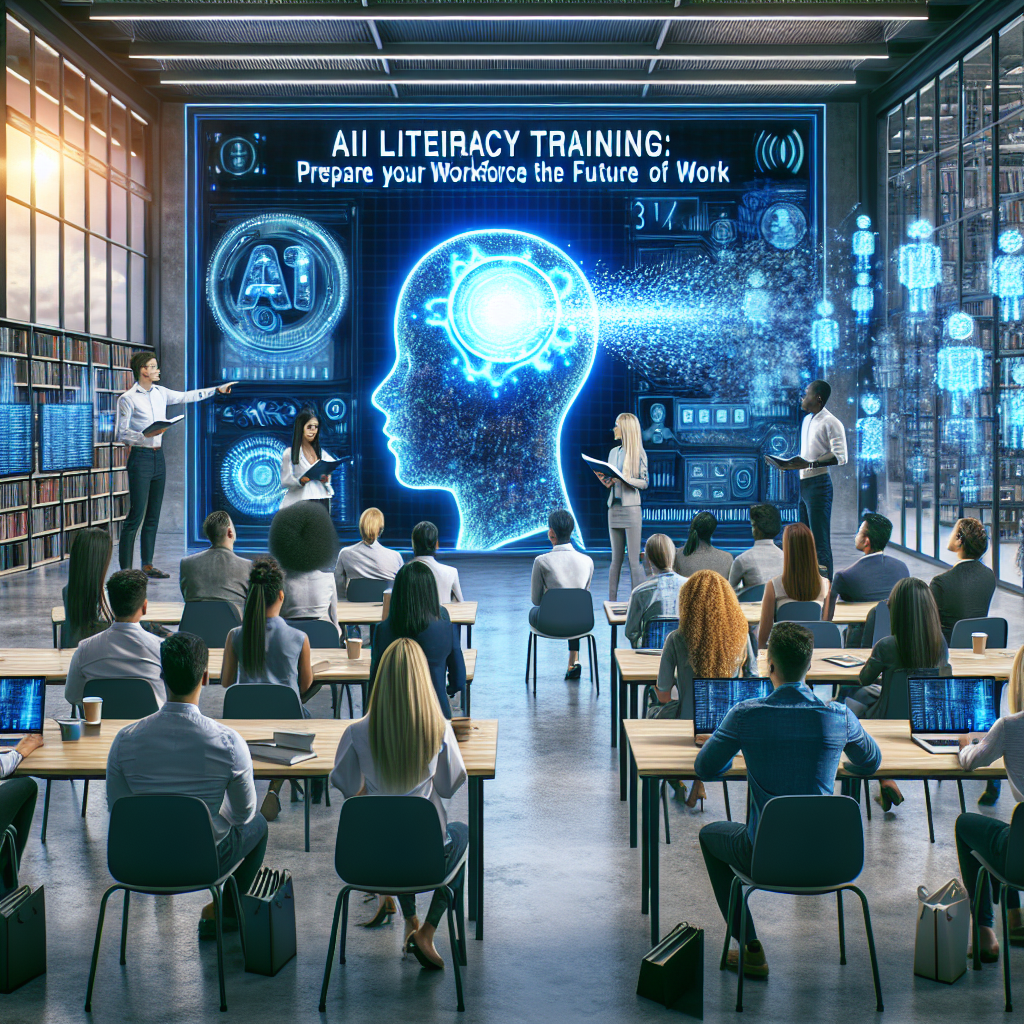
AI Literacy Training: Prepare Your Workforce for the Future of Work
Defining AI Literacy in Organizational Contexts
Imagine a mid-sized marketing agency where the creative team is churning out eye-catching campaigns, but the data analysts are struggling to interpret the AI-generated insights. This disconnect is not just a minor hiccup; it’s a glaring example of why AI literacy training is crucial in today’s workforce.
AI literacy isn’t just about knowing how to use AI tools; it’s about understanding their potential and limitations within your specific organizational context. It means equipping employees with the skills to interpret AI outputs effectively, make informed decisions, and foster collaboration across departments. Without this foundational knowledge, organizations risk falling into the trap of misusing technology or, worse, ignoring valuable insights that could drive growth.
The Multi-Dimensional Nature of AI Literacy
Think of AI literacy as a three-legged stool: technical skills, critical thinking, and ethical understanding. Each leg supports the others, creating a stable foundation for effective AI integration. Let’s break these down:
- Technical Skills: Employees need to understand how to operate AI tools relevant to their roles—whether it’s data analysis software or customer relationship management systems powered by machine learning.
- Critical Thinking: The ability to analyze AI outputs critically is essential. This means asking questions like What biases might be present in this data? or How can we apply these insights creatively?
- Ethical Understanding: As organizations leverage AI for decision-making, employees must grasp the ethical implications—like data privacy and algorithmic bias—to ensure responsible usage.
But here’s the kicker: many organizations mistakenly assume that simply providing access to tools equates to literacy. Spoiler alert: it doesn’t! A lack of structured training can lead teams to misuse these technologies or overlook their full potential.
Real-World Implications of Poor AI Literacy
Let’s not sugarcoat it—failing to prioritize AI literacy can lead to catastrophic results. Take a hypothetical scenario involving a retail chain launching an automated inventory management system without adequate training for its staff. The result? Inventory discrepancies skyrocket, customer satisfaction plummets, and profits take a nosedive—all because employees couldn’t leverage the system correctly.
Conversely, consider an insurance company that invests in robust ai literacy training. Their claims processing team learns not only how to use predictive analytics but also how to interpret results critically. The outcome? Faster claims processing times and improved customer satisfaction scores—all thanks to empowered employees who understand both the technology and its application.
AI literacy training is no longer optional; it’s essential for organizational success.
Frameworks for Effective AI Literacy Training Programs
Training your workforce in AI literacy isn’t just a nice-to-have; it’s a must-have. According to a recent study by PwC, companies that embrace effective training programs see a staggering 75% increase in successful digital transformation. So, how do you build an AI literacy training program that doesn’t just check boxes but actually empowers employees?
The Three Pillars of AI Literacy Training
Think of your training program as a three-legged stool, where each leg represents a critical component: Understanding, Application, and Ethics. Without any one of these pillars, your training program will wobble—and nobody likes a wobbly stool.
- Understanding: Employees must grasp the fundamentals of AI technologies—what they are, how they work, and their potential impact on business processes.
- Application: This is where the magic happens. Employees should learn not just how to use AI tools but also when and why to use them. Real-world scenarios and hands-on practice are key here.
- Ethics: With great power comes great responsibility. Training should cover ethical considerations like data privacy and algorithmic bias to ensure responsible usage.
Tailoring Your Program to Fit Organizational Needs
Every organization is unique, so cookie-cutter solutions won’t cut it. A tech startup might require rapid-fire workshops focused on practical applications of machine learning, while a large healthcare organization may need more comprehensive training on compliance and ethics surrounding patient data.
One-size-fits-all is the enemy here. Instead, consider conducting a needs assessment to identify specific skill gaps within your workforce. This could involve surveys or interviews with team leaders to pinpoint what knowledge is lacking and what challenges employees face.
Customized training can lead to up to a 50% increase in employee confidence when using AI tools.
Learn by Doing Approach
Learning by doing isn’t just an educational buzzword; it’s essential for effective AI literacy training. Imagine this: you’re running a financial services firm that has just implemented an AI-driven customer service chatbot. Instead of merely reading about how chatbots work, employees should engage in role-playing exercises where they interact with the bot in real-time.
Simulations can make or break your training program. They allow employees to experiment without the fear of making costly mistakes in real life—plus, they’re way more engaging than dry lectures!
Incorporating these frameworks into your ai literacy training will not only prepare your workforce for the future but also create an environment where innovation thrives. So ask yourself: Are you ready to invest in empowering your team?
Assessing Skill Gaps and Training Needs
It’s a harsh reality: a staggering 60% of employees feel unprepared to work alongside AI technologies. This isn’t just an issue of tech adoption; it’s a wake-up call for organizations to assess their workforce’s skill gaps and training needs before they get left behind in the AI revolution.
Identifying Skill Gaps
Imagine a customer service team at a retail company where half the staff struggles to use the new AI-driven chat system. Frustration mounts as customers wait longer for responses, and the team feels overwhelmed by technology they don’t fully understand. To prevent this scenario, organizations need to pinpoint exactly where their employees are lacking.
- Conduct Surveys: Start with anonymous surveys to gauge comfort levels with AI tools among employees.
- Analyze Performance Metrics: Look at key performance indicators (KPIs) related to AI usage. Are there consistent bottlenecks?
- Hold Focus Groups: Engage small groups from various departments to discuss specific challenges and needs regarding AI integration.
Tailoring Training Programs
Once you’ve identified skill gaps, it’s time to craft training programs that actually resonate with your workforce. A one-size-fits-all approach is as outdated as dial-up internet. Instead, consider these tailored strategies:
- Role-Specific Workshops: Customize sessions based on department needs—data analysts might need in-depth training on machine learning algorithms, while marketing teams might focus on leveraging AI for customer insights.
- Mentorship Opportunities: Pair less experienced employees with those who have successfully navigated AI tools in their roles. This peer learning can be invaluable.
- Interactive Learning Modules: Use gamification or simulations that allow employees to practice using AI tools in real-world scenarios without the risk of failure.
Evaluating Training Effectiveness
AI Literacy Training: Prepare Your Workforce for the Future of Work
Defining AI Literacy in Organizational Contexts
Imagine a mid-sized marketing agency where the creative team is churning out eye-catching campaigns, but the data analysts are struggling to interpret the AI-generated insights…
” }


















Leave a Reply