



The SME Guide To Digital Transformation: Results-Driven Strategies
Introduction
About seven out of ten digital transformation initiatives fall short of their goals. That number sounds like a technology problem at first, but when we look deeper, a different pattern appears. Projects stall not because the software is weak, but because people are tired, confused, or scared, and employee satisfaction has quietly fallen through the floor.
When small and midsize businesses take on digital transformation, the impact on daily work is huge. New tools change routines, long‑held skills feel less relevant, and teams are asked to move faster with more data. Digital transformation in an SME is not just about adding new platforms. It is a deep shift in culture, processes, and capabilities, and employee satisfaction is the pressure gauge that tells us whether that shift is safe or dangerous.
“Culture eats strategy for breakfast.”
— Peter Drucker
We have seen again and again that technology is rarely the real barrier. When employee satisfaction is high, people experiment, learn, and help one another through the messy middle of change. When it is low, even the best platform sits unused. Research shows that organizations with strong satisfaction and engagement during large change see several times higher success rates and more than twenty percent higher profitability compared with peers that ignore the human side.
In this guide, we walk through a practical, results‑driven approach to digital transformation for SMEs, with employee satisfaction at the center. We look at why satisfaction matters, how it differs from engagement, the five pillars that make a workforce ready for change, and the exact metrics leaders can track month by month. We also show how iAvva AI brings these ideas to life with AI‑powered coaching, human accountability, and analytics that link people development to hard business outcomes. By the end, you will have a clear roadmap for building a satisfied, engaged workforce that can turn digital transformation plans into real results.
Key Takeaways
Employee satisfaction is a leading predictor of transformation success.
When satisfaction is strong and paired with healthy engagement, adoption rates rise, resistance drops, and teams help move the strategy forward instead of fighting it. When it is weak, even well‑funded programs run into slow adoption, talent loss, and stalled returns.Satisfaction and engagement are related but distinct.
Employee satisfaction keeps people from leaving and reduces active pushback, while engagement fuels innovation, problem solving, and peer‑to‑peer support for new tools and ways of working. Treating them as one concept hides risk and can make leadership overconfident about the true state of the workforce.Five pillars appear again and again in SMEs that handle change well:
clear purpose alignment, focused skill development, strong psychological safety, thoughtful recognition systems, and believable growth pathways. When all five are in place, employee satisfaction rises and teams are far more willing to try new methods, share ideas, and stay with the company through hard phases.Human‑centered technology scales people support.
Platforms like iAvva AI combine daily AI coaching, live group sessions, and enterprise‑grade analytics so personal goals and business objectives stay in sync. That mix leads to weekly engagement above sixty percent and lets leaders see early signals in satisfaction and engagement, so they can act before issues turn into turnover or failed initiatives.
Why Employee Satisfaction Is The Cornerstone Of Digital Transformation Success

When we think about digital transformation, it is tempting to start with vendors, feature lists, and timelines. Yet studies from firms like McKinsey and others show that cultural resistance and people issues account for almost half of all failed transformation efforts. Technology problems matter, but low employee satisfaction and weak trust in leadership do far more damage.
In an SME, every person carries a heavy share of the work. When employee satisfaction drops during change, even a handful of frustrated team members can slow adoption across an entire function:
- People drag their feet on learning new systems.
- They cling to old workarounds.
- They quietly warn newer colleagues that the new way is not worth the effort.
Adoption rates fall, and return on investment never appears, no matter how strong the tool is on paper.
High employee satisfaction flips this script. In teams where people feel respected, heard, and supported, staff members are more willing to test new workflows, report issues early, and help one another learn. Many become internal champions who:
- Share tips and shortcuts.
- Give honest feedback on rollouts.
- Spot creative ways to use the new technology to serve customers better.
The same software that sat idle in a low‑satisfaction team can drive major gains when the emotional climate is healthy.
SMEs also face sharper risk than large enterprises. Budgets are tighter, and there is less room for a multi‑year experiment that might or might not work. Losing even a few key people can stall operations. In this setting, employee satisfaction is not a feel‑good metric; it is a leading indicator of transformation return. Research shows that companies that invest in employee experience during change are roughly twice as likely to beat their financial targets as those that treat it as a side project.
We treat employee satisfaction as the starting point for any real digital transformation strategy. When we raise satisfaction and engagement first, skills training sticks, adoption climbs, and leaders get the data they need to adjust plans. Without that base, even the strongest business case and the best tools are at constant risk of quiet resistance and open fatigue.
The Hidden Costs Of Low Satisfaction During Organizational Change
Low employee satisfaction during a major change does not just feel bad; it burns cash in ways that often stay hidden on the surface.
Turnover costs.
During a stressful transformation, people who feel ignored or undervalued are far more likely to leave. Replacing them often costs between one‑half and two times their yearly salary once recruiting, onboarding, and lost productivity are included. When those who leave hold deep process knowledge, the damage is even higher.Silent productivity loss.
Disengaged employees going through change often operate at a fraction of their normal capacity, sometimes near sixty percent. They complete tasks slowly, avoid taking initiative, and need more oversight, which pulls managers away from higher‑value work. That reduced output stretches timelines and makes it harder for the organization to hit key milestones.Customer experience erosion.
Employees who are frustrated by new systems or worried about their jobs often bring that stress into client calls and support interactions. Mistakes increase, response times slip, and service feels inconsistent, which can push customers toward competitors.
Every failed or abandoned initiative also adds to what we can call transformation debt. Each misfire raises cynicism and resistance by a third or more, making staff even less likely to believe the next change will be worth the pain. Leaders then spend more time managing morale and patching half‑finished projects instead of steering the business forward.
The Competitive Advantage Of A Satisfied, Transformation‑Ready Workforce
While the costs of low employee satisfaction are high, the upside of getting it right is just as large. SMEs that manage to keep employee satisfaction and engagement strong during digital transformation often see much faster time‑to‑market for new digital features or services. In some studies and field work, the difference has been around a quarter faster delivery compared with peers that focus only on technology.
When people feel supported, trusted, and fairly treated, they speak up with ideas. Satisfied employees have been shown to submit more improvement suggestions, sometimes more than double the rate seen in low‑satisfaction groups. This steady flow of ideas becomes an innovation multiplier, surfacing smarter ways to:
- Use new tools.
- Cut waste from processes.
- Serve customers better during and after the change.
High employee satisfaction also supports agility. Teams that trust leadership and feel confident in their own growth can pivot when plans must shift, instead of digging in their heels. Companies known for running human‑centered transformations gain a strong hiring edge as well, since skilled candidates often ask existing staff about how past changes were handled.
Over time, employee satisfaction becomes a strategic asset. It builds resilience, helping organizations bounce back faster from setbacks, and it makes each new wave of change easier than the last, because staff remember that previous efforts were handled in a fair and thoughtful way.
Understanding Employee Satisfaction Vs Employee Engagement In Transformation Contexts

Many leaders use the words employee satisfaction and employee engagement as if they mean the same thing. During digital transformation, that shortcut can hide real risk.
We see:
- Employee satisfaction as how content people feel with their work conditions during change, including support, communication, workload, and fairness.
- Employee engagement as how much energy and commitment they put into the change itself.
During a large shift, employee satisfaction acts like a safety net. It covers pay fairness, workload balance, psychological safety, and the basic sense that the organization cares about staff well‑being. When that base is missing, people slip into fear and frustration, and even simple training can feel overwhelming. Employee satisfaction on its own, though, does not guarantee that people will go beyond the minimum needed to keep their job.
Engagement is different. Engaged employees are the ones who take action during digital transformation. They log into learning platforms without being chased, test new workflows, teach peers what they have learned, and send suggestions when something could work better. Engagement is the fuel that drives:
- Adoption speed.
- Problem solving.
- Ongoing improvement.
In this context, satisfaction is a hygiene factor and engagement is a motivator. Employee satisfaction keeps people from quitting or fighting the change. Engagement makes them active partners in shaping and improving it.
There is also a danger zone we pay close attention to, where employees are satisfied but not engaged. They are comfortable, like their managers, and appreciate the perks, yet they do the bare minimum on transformation tasks. On paper, morale looks fine, but the change stalls because no one is pushing it forward.
We often visualize this with a simple matrix that maps satisfaction on one axis and engagement on the other. Each combination shows a different pattern of behavior and risk. Research from Gallup and similar firms shows that teams with high engagement during change reach about fourteen percent higher productivity and more than twenty percent higher profitability than low-engagement peers, with studies exploring the relationship between job satisfaction and employee performance demonstrating these clear performance correlations. The picture is strongest when satisfaction and engagement are both high. That is why we design transformation plans that measure and support both dimensions at every phase.
Satisfaction Vs Engagement: Quick Comparison
| Dimension | Employee Satisfaction | Employee Engagement |
|---|---|---|
| Core Question | “How do I feel about my job and conditions?” | “How much energy do I put into this work and change?” |
| Focus | Fairness, support, safety, workload | Discretionary effort, initiative, innovation |
| Risk If Missing | Turnover, resistance, low trust | Slow adoption, minimal ownership, weak problem solving |
| Role In Transformation | Stabilizes the workforce and reduces pushback | Drives adoption, learning, and continuous improvement |
The Four Employee Archetypes During Digital Transformation
During digital transformation, we usually see four common employee types. Understanding these archetypes helps us choose the right support for each person instead of guessing.
- 1. Transformation champions – High satisfaction, high engagement.
- 2. Content bystanders – High satisfaction, low engagement.
- 3. Disgruntled innovators – Low satisfaction, high engagement.
- 4. Transformation resisters – Low satisfaction, low engagement.
The first group is the transformation champions, who combine high employee satisfaction with high engagement. They trust leadership, believe the change matters, and actively help others. We involve them early in pilots, ask for feedback, and give them platforms to share what is working so their energy spreads.
Next are the content bystanders, who have high employee satisfaction but low engagement. They like the company and feel safe, yet they do not see why they should invest energy in the change. They attend training but rarely apply it, and they seldom speak up about what could improve. With this group, we focus on linking the transformation to their personal goals and showing how new skills protect and grow their careers, so they have a reason to move from passive to active.
The third group is what we call disgruntled innovators. They show high engagement with the work but low employee satisfaction with how the change is run. They care deeply about doing great work and often have strong ideas, yet they feel ignored or frustrated by process or pace. If we dismiss their complaints, they can become vocal critics. If we listen, bring them into design discussions, and act on reasonable input, they often become some of our best change partners.
The final group is the transformation resisters, with both low employee satisfaction and low engagement. They may fear loss of status, doubt leadership, or simply dislike change. Some can shift when we offer clear communication, skill support, and honest discussion about their worries. Others may decide the organization is no longer a fit. Our role is to diagnose where each person sits through behavior, feedback, and simple metrics, then offer support or hard choices that match their situation.
Measuring What Matters: Metrics For Both Dimensions
To manage employee satisfaction and engagement during digital transformation, we need clear numbers instead of guesswork, which is why organizations are increasingly turning to the best employee survey tools that can track both dimensions effectively.
Key tools include:
Transformation Satisfaction Score (TSS).
A short survey focused on change‑related factors such as clarity of vision, support from managers, training quality, and psychological safety. By asking the same questions every month, we can see whether employee satisfaction is rising or slipping as each phase unfolds.Change‑period eNPS (employee Net Promoter Score).
We ask a direct question such as how likely someone is to recommend working at the company during this change on a scale from zero to ten. High scores suggest that both employee satisfaction and trust in leadership remain strong even under stress, while low scores warn that people may be close to checking out or leaving.Engagement activity metrics.
We look at learning platform logins, completion of key modules, attendance in group coaching, use of collaboration tools, and how often employees share resources or tips with peers. These are leading indicators that show whether people are putting effort into the new way of working before productivity numbers reveal the full impact.
We combine these data points into a simple transformation readiness index, which blends satisfaction, engagement, and capabilities into one view. iAvva AI supports this with built‑in analytics and dashboards, so leaders can watch trends in real time and respond before problems grow.
The Five Foundational Pillars Of Transformation‑Ready Employee Satisfaction

Across many SMEs we have supported, a clear pattern appears in the teams that handle digital transformation well. Employee satisfaction is not just about one program or policy. It rests on five connected pillars that support both well‑being and performance when change hits:
- Purpose alignment.
- Focused skill development.
- Psychological safety.
- Thoughtful recognition systems.
- Believable growth pathways.
When even one of these is missing, resistance and fear grow much faster.
The first pillar is purpose alignment, where people can see how their work and their own goals connect to the transformation vision. The second is focused skill development, so employees feel able to work with new tools instead of feeling left behind. The third pillar is psychological safety, which gives staff permission to speak up, try, and learn without fear of unfair blame. The fourth is a clear recognition system that celebrates effort and progress during change, not only end results. The fifth pillar is believable growth pathways, which answer the quiet question many people hold during change about whether they still have a future in the company.
These pillars work together. Clear purpose without skills leads to anxiety. Skill development without psychological safety leads to burnout. Recognition without growth feels shallow. That is why we design transformation strategies that address all five at once. iAvva AI builds these into its platform through AI coaching, group support, and analytics that keep leaders focused on the right levers.
Pillar 1 – Purpose Alignment: Connecting Individual Why To Transformation Vision
Digital transformation often fails when employees see it as something done to them instead of something that serves a real purpose. If people think a new system exists only to cut headcount or please investors, employee satisfaction drops fast. To avoid this, we work to uncover each person’s deeper motives, such as desire for stability, interest in solving complex problems, or wish for more creative work, and we connect those motives to the change.
We use simple frameworks to map how each initiative supports both business goals and personal growth. For example, a shift to a new data platform can be framed as a way to offer faster service to customers while also giving analysts more interesting work with advanced tools. Neuroscience research shows that when people understand the “why” behind hard work, the brain releases more motivation‑related chemicals, which lowers anxiety and raises focus.
OKR alignment is a powerful method here. By linking personal objectives to team and company goals, we help people see a straight line between their daily actions and the bigger picture. iAvva AI supports this with daily AI‑powered prompts that remind employees of their priorities and ask short reflection questions about how their work that day tied back to the transformation path. Over time, this steady reinforcement builds stronger purpose alignment and higher employee satisfaction.
Pillar 2 – Skill Development: Closing Transformation Capability Gaps
Most employees feel more satisfied when they are stretched just beyond their comfort zone, not when they are bored or overwhelmed. During digital transformation, that sweet spot depends on targeted skill development. Many studies report that more than eighty percent of companies see skill gaps as a serious risk to their change plans, yet training often arrives late or in formats that do not stick.
We focus on just‑in‑time learning, which delivers the right skill at the moment it is needed:
- Short modules tied to upcoming tasks or milestones.
- Coaching nudges that help people apply new ideas immediately.
- Follow‑up prompts that reinforce key behaviors.
Multimodal learning matters here, since teams include people who learn best by reading, others by listening, and others by doing. Text, voice, video, and practice tasks all play a part, and this mix is especially helpful for neurodivergent employees who may struggle with one standard format.
Learning in the flow of work is another key idea. Employees should not have to step away for a full day to acquire every new skill. iAvva AI uses AI‑driven paths that adjust to each person’s role, level, and pace, along with bi‑weekly human‑led group coaching for accountability. We track progress through short assessments and by watching how new skills show up in performance data. Because the platform runs in nineteen languages and across time zones, employees in different regions receive consistent support, which strengthens both capability and employee satisfaction.
Pillar 3 – Psychological Safety: Creating Space For Transformation Experimentation
Psychological safety means employees believe they can ask questions, raise concerns, and try new methods without being punished for honest mistakes, with studies examining the perceived level of job satisfaction showing that safety perceptions directly influence both satisfaction and willingness to engage with change. During digital transformation, psychological safety is one of the strongest predictors of whether people will engage with new tools. Research shows that teams with high psychological safety are far more likely to adopt new technology and keep improving it over time.
“Psychological safety is not about being nice; it’s about giving candid feedback, openly admitting mistakes, and learning from each other.”
— Amy C. Edmondson
From a brain science view, this makes sense. When people feel threatened, the amygdala takes over, and learning shuts down. Even clear training cannot sink in if a person is stuck in fight‑or‑flight mode. Leaders who want higher employee satisfaction during change must model behaviors that lower this threat response. That includes:
- Admitting when they do not have all the answers.
- Asking for input and listening carefully.
- Responding calmly when someone reports a problem or admits a mistake.
We also design safe‑to‑fail experiments, where teams test new workflows on a small scale with clear limits on risk. Feedback loops are built in so employees can share what worked and what did not, and leaders respond in visible ways. Inclusive decision making is another piece. When employees who will live with the outcome have a voice in how a new tool is rolled out, they feel more ownership and less fear.
iAvva AI’s coaching approach reinforces this by normalizing struggle, encouraging honest reflection, and celebrating small wins, all of which raise both psychological safety and employee satisfaction.
Pillar 4 – Recognition Systems: Celebrating Transformation Progress And Effort
During digital transformation, leaders often focus so much on problems that they forget to notice progress. This creates a recognition gap that quietly drains employee satisfaction. People may be working late to clean data, test features, or support peers, yet hear only about what went wrong. Over time, they start to wonder why they should keep putting in the extra effort.
A healthy recognition system fixes this by shining a light on both outcome and effort:
- Outcome recognition celebrates big wins such as hitting a go‑live date or meeting adoption targets.
- Effort recognition calls out the many small acts that made those wins possible, such as mentoring new users, documenting a process, or spotting a bug early.
Neuroscience research shows that sincere recognition triggers reward signals in the brain, which encourages people to repeat helpful behaviors.
Peer recognition is especially powerful during change, because coworkers see effort that managers often miss. We help teams set up simple ways for employees to thank and nominate one another for helpful actions tied to the transformation. Personalization matters too, since some people enjoy public praise while others prefer a quiet note or a small, meaningful reward.
iAvva AI adds to this with prompts that remind managers to notice progress and with analytics that highlight “hidden heroes” whose actions support the change but may not show up in classic performance metrics. This approach keeps employee satisfaction higher even when work is tough.
Pillar 5 – Growth Pathways: Demonstrating Career Opportunity Beyond Transformation
One of the deepest fears during digital transformation is the worry that a person’s role might disappear. Many employees think “If this system automates parts of my job, will there still be a place for me here?” If leaders do not address this head‑on, employee satisfaction falls and resistance grows, especially among long‑tenured staff who have seen tools replace tasks before.
We tackle this by making growth pathways visible. That starts with honest career mapping, which shows how roles can evolve as new tools arrive. We highlight how transformation often creates new positions in data, customer success, automation oversight, and more. Instead of saying “do not worry,” we show specific paths where new skills lead to broader responsibility or more interesting work. Studies of younger workers, now a large share of the workforce, show that more than two thirds rank career progression as a top driver of engagement, so this clarity matters.
Skills passports can help make this concrete. As employees pick up new skills during transformation, we document them in a way that managers and HR can see when planning promotions or internal moves. Mentor programs pair experienced staff with people building transformation‑related skills, helping both sides grow. iAvva AI links personal career goals to transformation milestones through OKR alignment, so employees can see how each step in the change supports their long‑term path. SMEs actually have an advantage here, because smaller organizations can offer faster role changes and broader responsibilities when they handle growth pathways thoughtfully, which in turn raises employee satisfaction.
Implementing AI‑Powered Solutions: The iAvva AI Approach To Transformation‑Ready Satisfaction

Traditional learning and development methods struggle to support digital transformation. Long workshops and static e‑learning often reach only a small fraction of employees, with engagement rates near fifteen to twenty percent. That is not enough when every person needs timely support. SMEs need a way to boost employee satisfaction and skills while keeping costs and admin work under control.
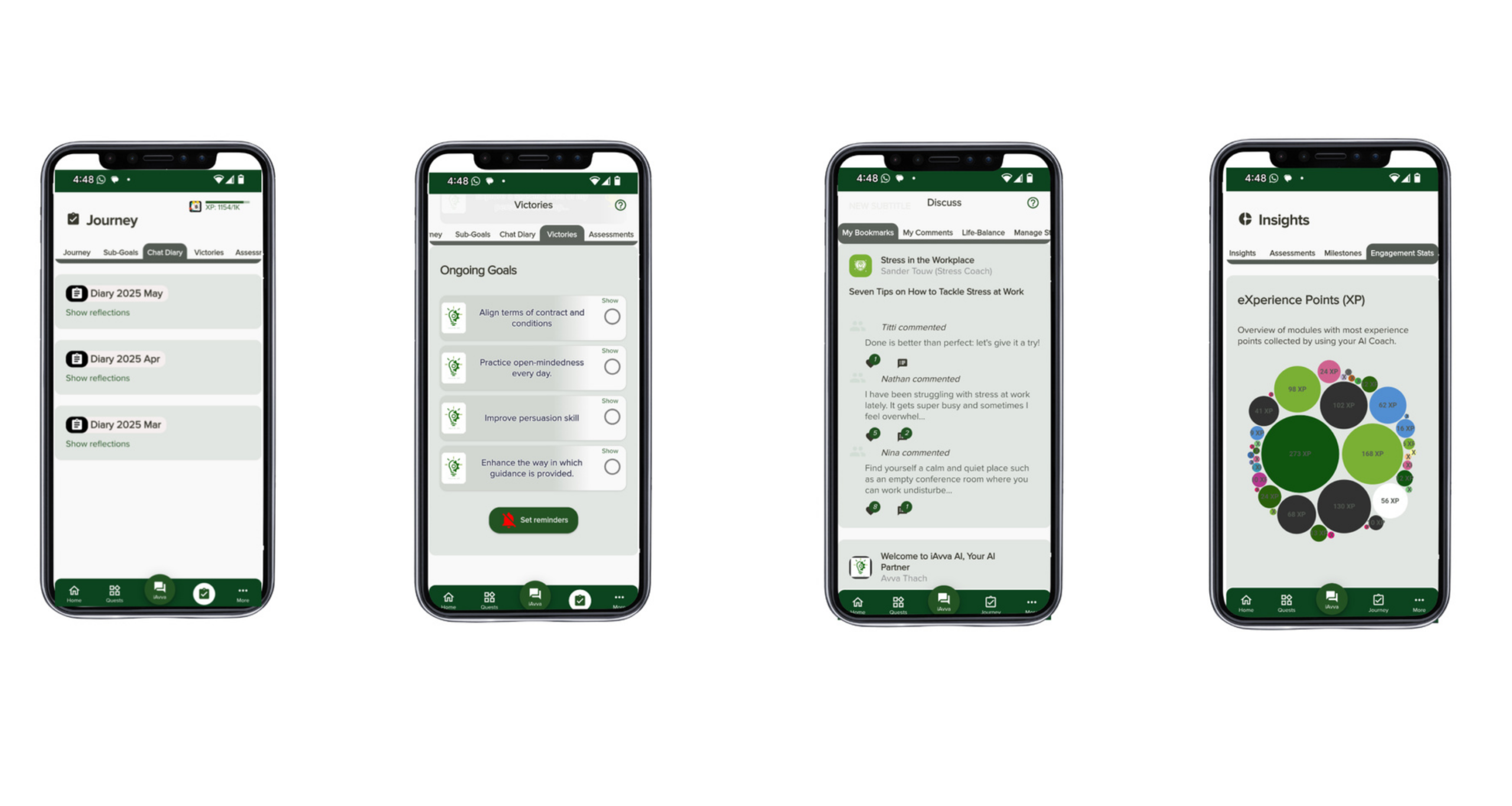
This is where we see strong value in a blended approach that combines AI, human coaching, and clear analytics. iAvva AI was built for exactly this context. The platform brings together:
- Daily AI‑powered coaching prompts.
- Bi‑weekly group coaching sessions.
- A rich set of professional development courses.
- Enterprise‑grade analytics grounded in neuroscience, ICF coaching principles, and Lean Six Sigma methods.
All of these elements point back to business objectives through OKR alignment.
For SMEs with fifty to five thousand employees, the result is a practical way to support transformation without adding layers of internal trainers or consultants. Engagement rates regularly reach more than sixty percent of employees logging in each week, which is several times higher than many legacy platforms. Most important, the system ties employee satisfaction, engagement, and skill growth directly to business outcomes such as adoption rates, retention, and productivity, so leaders see clear results in the first month instead of waiting a year.
Daily AI‑Powered Coaching: Embedding Transformation Support Into Workflow
Daily AI‑powered coaching is the heartbeat of iAvva AI. Each workday, employees receive short, personalized prompts by text or voice in any of nineteen languages. These prompts might ask them to:
- Reflect on a recent win.
- Practice a small leadership behavior.
- Plan how to apply a new tool in that day’s tasks.
The aim is not to flood them with content but to weave support into the flow of regular work.
The design draws on neuroscience concepts such as spaced repetition and microlearning. Rather than long sessions that people soon forget, frequent small interactions help new ideas stick. The AI adjusts prompts based on role, goals, past responses, and engagement level, so a new manager in customer service receives very different guidance from a senior engineer working on automation. This level of fit boosts both relevance and employee satisfaction, because people feel the support was made for their real challenges.
The system also respects neurodiversity by offering both text and voice options. Some employees prefer reading and writing, while others process better by listening and speaking. Under the hood, the coaching logic follows ICF‑aligned methods, asking questions that help employees think for themselves instead of giving orders. Participation data from our clients show weekly engagement well above sixty percent, far more than traditional courses. People appreciate that they can reflect and practice in private, without fear of judgment, while leaders value the fact that thousands of staff can receive this type of support at a cost far below one‑to‑one coaching.
Human Accountability Through Group Coaching: The Essential Connection
Even the smartest AI cannot replace the power of human connection during hard change. That is why iAvva AI pairs daily digital coaching with live group coaching every two weeks. In these sessions, small cohorts meet with a trained coach to talk through real transformation experiences. They share what is working, where they feel stuck, and what support they need next.
This group setting offers several benefits for employee satisfaction:
- Reduced isolation. People discover that others across departments or regions share similar worries, which makes struggles feel more normal and less personal.
- Gentle accountability. At the end of each session, members choose specific actions they will take before the next meeting. Knowing they will report back to peers often increases follow‑through more than manager pressure alone.
- Applied learning. Coaches use short segments from professional development courses, then guide the group to apply those ideas to current projects.
Sessions usually follow a simple flow with check‑ins, a focused practice or exercise, time for problem solving, and clear commitments at the end. Because meetings run virtually, employees from different time zones and offices can join without travel. Coaches are trained both in ICF methods and in organizational change, so conversations stay grounded in real transformation needs. This blend of AI and human touch raises employee satisfaction by creating a sense of community and shared purpose around the change.
Enterprise‑Grade Analytics: Demonstrating ROI And Guiding Strategy
For C‑suite leaders and HR directors, one of the hardest parts of any development investment is proving that it works. iAvva AI tackles this through detailed yet clear analytics that move employee satisfaction and engagement from fuzzy ideas to solid metrics. A central dashboard shows real‑time data on:
- Participation and activity.
- Skill progress and course completion.
- Satisfaction and engagement trends.
- Links to business indicators such as retention and performance.
OKR alignment tracking lets leaders see how individual and team objectives connect to wider transformation goals. For example, they can view what percentage of managers have aligned personal growth plans with specific digital initiatives and how that relates to adoption rates in their units. Predictive analytics scan engagement and satisfaction data to flag potential risk areas, such as teams with dropping scores or low coaching activity, so leaders can act before resignations rise.
We also provide a transformation readiness index for each team, which blends satisfaction, engagement, and skill indicators into a single score. Reports can be viewed at company, department, and team levels, with privacy safeguards that keep individual responses confidential. This lets HR and business leaders adjust content, coaching focus, or recognition efforts exactly where needed. By tying changes in employee satisfaction to shifts in productivity, turnover, and customer metrics, the platform helps position learning and development as a strategic investment instead of a cost center.
Overcoming The Top 5 Digital Transformation Satisfaction Challenges In SMEs
SMEs face many of the same pressures as large enterprises during digital transformation, but with less margin for error. Budgets are tighter, teams are smaller, and leaders often wear several hats at once. These conditions can make it harder to keep employee satisfaction high while pushing through major change, yet it is still possible with targeted strategies.
We often see five recurring challenges that hit employee satisfaction hardest:
- Limited budgets for development.
- Resistance from long‑tenured employees.
- Difficulty engaging distributed workforces.
- Unclear direction and milestones.
- Weak measurement of how change is affecting people.
The good news is that each challenge has practical, proven responses. iAvva AI was designed with these exact barriers in mind, giving SMEs tools that large firms use without the same overhead.
Challenge 1 – Limited Budget For Comprehensive Development Programs
Many SMEs simply cannot match the learning and development spend of large enterprises. Where a big company might invest far more per employee each year, an SME may have much less to cover all training, coaching, and tools. This can make leaders feel that high employee satisfaction during transformation is out of reach, but focus and smart design make a big difference.
We start by:
- Prioritizing development that directly supports transformation goals instead of funding broad, generic courses.
- Using AI‑powered platforms like iAvva AI to deliver personalized coaching and learning at scale for a fraction of the cost of traditional workshops or external coaching.
- Supporting peer learning through mentorship and internal communities so experienced staff can share knowledge without major extra cost.
- Applying just‑in‑time learning so people train on what they need right now rather than sitting through long programs they may never apply.
With this mix, SMEs can raise employee satisfaction and skills at a price point that fits their reality, often seeing early business gains in the first month.
Challenge 2 – Cultural Resistance From Long‑Tenured Employees
Long‑tenured employees often hold deep knowledge and strong relationships with customers, yet they can also be the most wary of digital transformation. Many are comfortable with current systems and fear that new tools will make their hard‑won expertise less valuable. If leaders push change on this group without respect, employee satisfaction drops and pockets of quiet resistance appear.
We find it far more effective to:
- Bring these employees into the design process for workflows, testing plans, and training content.
- Publicly recognize their history and contributions while explaining how the transformation builds on that base.
- Offer chances to act as mentors or super‑users for new tools, which restores status and gives them a clear role in the future state.
- Provide personalized coaching through iAvva AI, giving them space to voice concerns, process emotions, and build confidence in new skills.
Handled this way, skeptics often become steady supporters and credible advocates among their peers.
Challenge 3 – Maintaining Engagement Across Distributed Workforces
Many SMEs now have remote or hybrid teams across cities or even countries, which makes selecting from the top 10 employee survey platforms that work across distributed environments especially critical for maintaining consistent measurement. This spread can make it harder to keep everyone aligned and satisfied during digital transformation. Remote employees may miss informal updates, feel less involved in decisions, or worry that on‑site colleagues will be favored for promotions as new roles appear.
Addressing this requires more structured communication and inclusive design:
- Share transformation updates across multiple channels and time slots so remote staff do not feel like an afterthought.
- Use collaboration and coaching platforms that work smoothly across time zones and devices, with options for both live and asynchronous participation.
- Form virtual cohorts and recognition activities that mix locations to build a sense of one team.
iAvva AI helps by offering daily AI coaching that fits each person’s schedule, group coaching sessions that bring people together virtually, and content available in nineteen languages. This combination supports both engagement and overall employee satisfaction in distributed teams.
Challenge 4 – Lack Of Clear Transformation Direction And Milestones
Many SMEs start digital transformation in response to a threat or a sudden opportunity rather than as part of a long‑planned roadmap. That urgency can lead to action without a clear end state or timeline. When employees cannot see where the organization is headed or how progress is measured, confusion and anxiety rise, and employee satisfaction falls.
We address this by helping leaders:
- Break transformation into clear stages with visible milestones, often using quarterly objectives.
- Define a simple statement of what success looks like for each stage.
- Run regular town halls, manager updates, and visual roadmaps on intranet pages so everyone knows where the company stands and what comes next.
- Use OKR methods to link high‑level goals to team and individual targets, so people can see their specific part in the plan.
iAvva AI supports this with tools that sync personal goals with business milestones and with coaching prompts that refer back to those shared targets. This clarity eases fear and gives employees a reason to stay committed during hard phases.
Challenge 5 – Measuring Transformation Impact On Employee Satisfaction
Only a minority of SMEs actively track how digital transformation affects employee satisfaction. Without data, leaders often do not realize there is a problem until they see rising turnover, missed deadlines, or negative customer feedback. By that time, damage is already done, and winning back trust takes much longer.
A simple monthly pulse survey can change this pattern. We recommend five short questions that cover:
- Overall satisfaction during the change.
- Engagement with transformation activities.
- Clarity about the transformation goals.
- Confidence in needed skills.
- Willingness to recommend the company as a place to work during the change.
Short listening sessions with small groups add stories and context behind the numbers. Leading indicators such as training participation, tool usage, and peer recognition activity offer early hints about how people are coping. iAvva AI automates most of this measurement and links trends to business metrics like productivity and retention, giving SMEs insight without needing a full analytics team.
Building A Results‑Driven Transformation Roadmap From Strategy To Implementation
Concepts are helpful, but leaders also need a clear path from idea to action. For SMEs, that path must be practical, time‑bound, and closely linked to both employee satisfaction and business outcomes. We use a three‑phase roadmap that covers the first twelve months of a major transformation effort, with each phase building on the last.
This roadmap is designed for organizations with fifty to five thousand employees and limited internal change resources. It blends assessments, communication, development, and analytics so leaders can steer with data instead of guesswork. At every stage, we keep the five pillars in view, asking how purpose, skills, safety, recognition, and growth are being supported. iAvva AI fits naturally into this plan as the engine that delivers daily coaching, group support, and real‑time measurement.
Phase 1 (Months 1‑2) Assess Current State And Establish Baselines
Phase one is about understanding where the organization stands before making big moves.
Key steps include:
Run a combined satisfaction and engagement survey.
Ask about purpose alignment, manager support, psychological safety, work‑life balance, and readiness for change. Short questions help build a clear picture without creating survey fatigue.Conduct a transformation readiness audit.
Review current tools, skills, and past change experiences to identify likely risks and pockets of strength.Map stakeholders using the four archetypes.
Leaders and HR teams look at behavior and data to spot potential champions, content bystanders, disgruntled innovators, and resisters. This mapping guides where to focus early communication and support.
We capture all this in simple visuals that show current satisfaction, engagement, and capability levels across teams. Clear goals are then set for both business outcomes and people outcomes, such as target adoption rates and desired shifts in employee satisfaction. During this phase, iAvva AI is configured, cohorts are created, and baseline analytics are loaded so that phase two starts with the right structure in place.
Phase 2 (Months 3‑6) Launch Integrated Development And Establish Momentum
In phase two, we move from planning to visible action. We often start with a pilot group made up of transformation champions and a mix of roles from different functions. These employees are onboarded first to iAvva AI, group coaching, and any new tools, giving us a smaller setting to refine messaging and support. Their feedback helps shape wider rollout and often surfaces quick wins that can be shared company‑wide.
During this phase, we:
- Keep communication intensity high, with leaders explaining the transformation story clearly, repeating it often, and inviting direct questions.
- Celebrate quick wins such as a faster process or a better customer experience to build confidence and show progress.
- Train managers with simple coaching and recognition frameworks so they can support their teams day to day.
- Target skill development at immediate blockers first, such as basic use of key systems, so people feel progress early.
Weekly pulse checks and platform analytics highlight teams that may be struggling so we can adjust training, add coaching, or clarify expectations. iAvva AI’s daily prompts and first waves of group sessions go live here, setting new rhythms that support both engagement and employee satisfaction.
Phase 3 (Months 7‑12) Scale, Optimize, And Demonstrate ROI
By phase three, the transformation should be moving beyond pilots into full operations. Development programs are scaled to all relevant employees, with adjustments based on what worked best in earlier months. Skill building shifts from basic usage to higher‑level abilities like data‑driven decision making, process improvement, and cross‑functional collaboration, which support long‑term growth.
Culture work deepens in this phase. Transformation behaviors such as experimentation, peer recognition, and continuous learning are woven into performance expectations, feedback, and reward systems. Leaders use analytics from iAvva AI to measure how employee satisfaction and engagement have shifted, and they connect those trends to hard numbers like reduced turnover, improved customer ratings, and increased productivity.
These results are shared openly with staff to show that their effort has paid off. At the same time, leaders plan how to keep these practices alive beyond the first year, treating digital transformation as an ongoing way of working instead of a one‑time project. The platform continues to support this by keeping coaching rhythms steady, updating content, and flagging new growth opportunities.
The Future Of Work: AI, Human Connection, And Sustained Employee Satisfaction
Digital transformation is not a one‑off event. It is part of a wider shift in how work is organized, how teams connect, and how people build careers. Employee satisfaction will stay at the center of this shift, because people are the ones who must learn, adapt, and create value with new tools. The mix of AI and human connection will shape how well organizations handle that reality.
In the years ahead, employees will expect that development and support feel more personal, not less, even as AI takes on more tasks. They will also expect that flexibility in where and when they work does not come at the cost of fair opportunity or access to leaders.
“The only thing worse than training your employees and having them leave is not training them and having them stay.”
— Henry Ford
Organizations that can meet these expectations with clear plans, thoughtful tools, and steady communication will not only protect employee satisfaction but turn it into a lasting edge. iAvva AI’s model of combining AI coaching, human groups, and strong analytics is one example of how this can work in practice.
The Hybrid Work Evolution And Its Satisfaction Implications
Hybrid work is no longer a short‑term experiment. Surveys show that most employees choose flexible arrangements when they can, which means many SMEs will operate with a mix of office and remote work for the long term. This shift changes the drivers of employee satisfaction in important ways. Many remote workers report better work‑life balance, yet they also speak about feeling less visible and more worried about their growth prospects.
To keep employee satisfaction high in hybrid settings, leaders must be deliberate about fairness:
- Remote and in‑office staff need equal access to information, feedback, and development.
- Meetings should include clear norms so people calling in are not treated as background noise.
- Culture building must include regular virtual touchpoints, shared rituals, and cross‑location projects.
Technology plays a big part too, since tools must support smooth collaboration no matter where people sit.
Managers also need new skills. Leading a team that they seldom see in person requires strong communication habits, skill in coaching over video or chat, and comfort judging performance by outcomes rather than presence. iAvva AI helps by giving hybrid teams a shared coaching and learning space that works across locations, along with analytics that show engagement and satisfaction patterns for remote and on‑site staff alike. When done well, hybrid work can become a major source of employee satisfaction rather than a risk, because flexibility is highly valued across age groups.
Personalization At Scale: The AI Advantage For Employee Experience
One of the strongest trends in employee experience is the push for personalization. Research among employee experience professionals shows that a large majority believe personalization has a strong positive effect on employee satisfaction. In the past, true personalization was limited to senior leaders who could access one‑to‑one coaching and custom programs. Everyone else received generic content that often missed their real needs.
AI is changing that balance. With a platform like iAvva AI, every employee can receive daily prompts, learning paths, and reflection questions tuned to their goals, role, and current challenges. The system learns from engagement patterns, survey data, and progress to adjust over time, offering more support where needed and introducing new topics when someone is ready. This level of responsiveness helps employees feel seen as individuals rather than as job titles.
There is also a strong brain science reason personalization works. When information is presented in a format and at a pace that fits a person’s learning style, retention and application both rise. Some employees absorb ideas best through reading, others through listening, and others through repeated practice. AI makes it possible to send the right mix to each person at scale. At the same time, careful design keeps personal data private and uses aggregate trends for decision making. The net effect is higher employee satisfaction, because people experience development as something designed with them, not just for an abstract average worker.
Conclusion
Digital transformation efforts rarely fail because of software alone. They fail when organizations overlook the human element, especially employee satisfaction, that determines whether new tools take root or remain side projects. When people feel respected, informed, supported, and hopeful about their future, they are far more willing to learn, experiment, and help change succeed.
Throughout this guide, we have drawn a clear line between employee satisfaction and employee engagement. Satisfaction keeps people from leaving and lowers resistance; engagement drives action, innovation, and peer support. Digital transformation needs both, and both rest on the five pillars we explored. Purpose alignment connects personal motives to the larger vision. Skill development closes capability gaps. Psychological safety gives people room to test and speak up. Recognition systems keep effort visible. Growth pathways answer hard questions about career security and opportunity.
These ideas are not just about culture. They tie directly to measurable outcomes such as adoption speed, productivity, retention, customer experience, and profit. When satisfaction and engagement remain strong during transformation, research shows meaningful gains in each of these areas. The reverse is also true when they are ignored. For SME leaders, this means employee satisfaction is one of the most important levers you can pull to improve digital transformation results.
Modern tools now make it realistic to act on this insight at scale. iAvva AI brings together AI‑driven daily coaching, human group sessions, and deep analytics grounded in sound methods. This mix supports employees through change, keeps managers engaged as coaches, and gives executives the data they need to steer. Organizations that adopt these approaches often see engagement rates above sixty percent, noticeable drops in unwanted turnover, and double‑digit gains in productivity and profitability within the first year.
The future favors organizations that treat employees as partners in digital transformation, not as obstacles to push aside. When you invest in their satisfaction, skills, and growth, they respond with higher effort, better ideas, and stronger commitment. That is more than a nice workplace story; it is a smart, results‑driven business strategy. If you are ready to shift how your organization handles digital transformation, iAvva AI can help you build a satisfied, engaged workforce and see measurable progress in as little as thirty days.
Frequently Asked Questions (FAQs)
Question 1: What Is The Difference Between Employee Satisfaction And Employee Engagement, And Why Does It Matter For Digital Transformation?
Employee satisfaction describes how content people feel with their job, pay, workload, and treatment. A satisfied employee usually feels their work situation is fair and manageable, which lowers the chance that they will leave or push back strongly against change. Satisfaction is the emotional baseline that keeps the workforce stable during digital transformation.
Employee engagement is about energy and commitment. An engaged employee cares about the organization’s goals and is willing to go beyond the minimum. During digital transformation, engaged people try new tools, share ideas, and help peers learn.
An employee can be satisfied but not engaged, which means they may stay but will not drive change. That is why we measure and build both. High employee satisfaction keeps the floor from collapsing, and high engagement pulls the transformation forward.
Question 2: How Can We Measure Employee Satisfaction During Digital Transformation Without Overwhelming Staff With Surveys?
Measuring employee satisfaction does not require long, complex questionnaires. During digital transformation, we recommend short monthly pulse surveys with about five focused questions. These can ask:
- How satisfied employees feel with communication about the change.
- How confident they are in their ability to use new tools.
- How supported they feel by managers.
- How clear the transformation goals are.
- How likely they are to recommend the company as a place to work during this period.
Keeping the survey brief respects people’s time and usually increases response rates.
Numbers alone are not enough, so we add light‑touch listening methods. Small group discussions, anonymous comment boxes, or quick check‑ins during team meetings give context behind the scores. Platforms like iAvva AI can automate survey delivery, compile results, and link satisfaction trends to metrics such as adoption and retention. This means leaders can see patterns without having someone spend hours building spreadsheets, and employees can see that their input leads to visible adjustments.
Question 3: How Does iAvva AI Support Employee Satisfaction Differently From Traditional Training Platforms?
Traditional training platforms mostly focus on content delivery. They host courses, track completion, and sometimes add quizzes, but they rarely touch the daily behaviors and feelings that shape employee satisfaction. iAvva AI takes a broader, more human approach. It provides:
- Daily AI‑driven coaching prompts that nudge reflection and action.
- Bi‑weekly live group coaching where people can share and problem solve.
- Analytics that tie learning, satisfaction, and engagement to business goals.
This design matters for employee satisfaction because it meets people where they are instead of expecting them to fit around the platform. Daily prompts are short and personalized, so employees can apply them within their real context. Group coaching builds community and psychological safety during tough phases of change. The analytics piece helps leaders respond quickly when satisfaction dips in a team or function, rather than waiting for issues to show up as resignations.
In short, iAvva AI moves development from a one‑time event to a steady support system that makes digital transformation feel more guided and less stressful, which is exactly what most employees need to stay satisfied and engaged.













Leave a Reply