

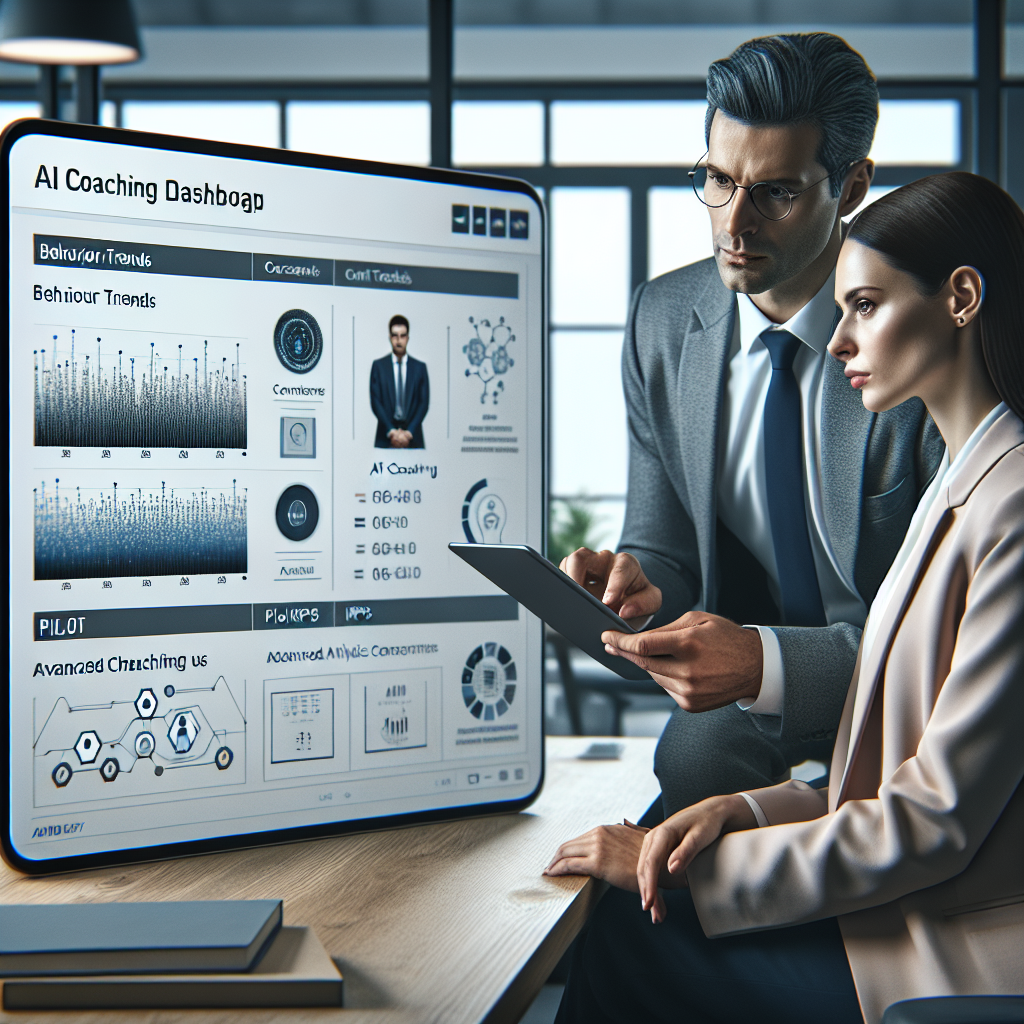
ai leadership coaching can scale personalized development for executives and surface behavioral signals HR rarely captures between annual reviews. This guide gives HR leaders a practical roadmap to evaluate vendors, run a 90-day pilot, measure ROI, and put governance and bias controls in place so coaching programs measurably improve executive performance and retention. It includes checklists, KPI frameworks, and contract language HR can use immediately.
1. How AI-Enabled Leadership Coaching Changes the Coaching Equation for HR
Key shift: AI-enabled coaching turns coaching from an episodic intervention into a continuous, measurable development system. Where traditional executive coaching centers on scheduled sessions and impression-based progress notes, AI layers in repeatable data streams, automated micro-practice, and scalable personalization so HR can manage leadership development the way it manages other talent systems.
What changes for HR operations: Scalability means more leaders can get frequent touchpoints at lower marginal cost. Continuous signals let HR detect behavior patterns mid-cycle rather than waiting for annual 360 reviews. Personalization moves from one-size-fits-most curricula to adaptive learning paths tied to leader behaviors and role context. Measurement moves from qualitative anecdotes to quantitative improvement funnels HR can report to the executive committee.
How AI capabilities map to leadership outcomes
- Strategic decision making: AI synthesizes scenario practice and predictive analytics so leaders get rapid feedback on trade-off framing and decision cadence.
- Stakeholder influence: Conversation analytics and micro-coaching simulate tough stakeholder dialogues and surface tone, balance of airtime, and framing patterns.
- Change leadership: Adaptive learning nudges and pulse diagnostics track adoption behaviors across teams and identify pockets of resistance earlier.
- Cross functional collaboration: Meeting pattern analysis and network signals reveal collaboration blockers and coaching can prescribe concrete behavioral experiments.
- Resilience: Personalized micro-practices and reflective prompts build consistent recovery routines and surface burnout risk from objective signals like calendar load.
Practical trade-off: Increased frequency and automation create scale, but not all signals are equally meaningful. Calendar metadata and sentiment scores can generate false positives; they are useful for prompting human inspection, not for making high-stakes personnel decisions. HR must insist on explainability and human-in-the-loop reviews before acting on automated recommendations.
Concrete example: A commercial VP used meeting transcript analytics to reduce monologue time and improve direct report engagement. Over eight weeks the VP followed AI prompts to ask two more open questions per meeting and delegated one agenda item per week, which translated into measurable improvements in team engagement scores and faster cross-team approvals. The implementation used meeting capture plus coaching nudges integrated into the leader’s calendar and LMS.
Judgment HR needs to make: Prioritize signal quality over feature gloss. In procurement conversations, value vendors that can explain data lineage, show concrete behavior-to-outcome mappings, and provide fallback human coaching when AI recommendations are ambiguous. Vendors that push predictive claims without validation are selling convenience, not proven impact.
Executive summary HR can paste into a briefing memo: AI leadership coaching scales personalized development by replacing episodic sessions with continuous, data informed micro-coaching; HR should pilot with clear consent, require explainable signals tied to specific leadership outcomes, and pair AI outputs with human coach oversight to turn higher coaching frequency into measurable behaviour change and business impact.
Frequently Asked Questions
Can AI leadership coaching replace human executive coaches?
Short answer: No. AI leadership coaching scales practice, offers continuous nudges, and surfaces patterns faster than humans alone, but it does not replace the judgment, contextual interpretation, and psychological safety a skilled human coach provides. Use AI to increase rehearsal frequency and diagnose behavior; keep humans for strategic synthesis, high stakes interventions, and sponsor relationships.
What data do you actually need and what should you avoid collecting?
Practical point: Focus on a small set of high signal data sources rather than hoarding everything. Typical effective inputs are structured 360 items, calibrated performance ratings, calendar metadata, and consenting meeting transcripts or reflective journals. Avoid passive scraping of private chat without clear consent and retention limits because noisy or unauthorized data creates legal and cultural risk.
How should HR judge pilot success in the first 90 days?
Measurement advice: Define one behavioral KPI tied to a business outcome plus two engagement metrics. For example, measure change in a single competency on calibrated 360 scores, leader adoption rate of micro-practices, and direct report engagement. Use a small control or staggered cohort to reduce attribution risk and expect early behavior signals within 8 to 12 weeks.
What are the biggest privacy and compliance traps HR misses?
Common trap: Treating analytics as innocuous because inputs are nonfinancial. In reality, voice and text analytics can reveal sensitive health, legal, or performance information. Require explicit consent flows, narrow retention windows, encryption in transit and at rest, and contractual audit rights. Insist on vendor transparency around model inputs and decision logic.
How long before leaders and the business see value?
Realistic timeline: Expect perceptible changes in leader behavior within two to three months for a focused cohort. Meaningful changes to promotion patterns, retention, or strategic program delivery usually take six to twelve months after you scale beyond the pilot. Short pilots can underdetect potential because behavior change lags organizational adoption.
Concrete example: A midmarket product company deployed an AI micro-coach for 12 product leaders, integrated with their LMS and meeting capture. After ten weeks the cohort showed a measurable uptick in cross-functional alignment behaviors on calibrated 360 items and reduced review cycle time for product decisions; the HR team used those early signals to justify a broader rollout and allocate budget for human coach pairing.
- Immediate actions: Select one competency to target in your pilot, define the measurement window, and demand vendor proof of signal explainability.
- Risk control: Add explicit consent and a 90 day data retention policy for transcripts during the pilot, with an option to extend only after review.
- Procurement tactic: Score vendors on their ability to deliver human-in-the-loop workflows and provide three case studies with comparable cohort sizes.















Leave a Reply