


Introduction
Eighty percent of knowledge worker roles will change because of generative AI. That is not a prediction from a futurist book; it is research from the University of Pennsylvania. At the same time, Deloitte reports that ninety four percent of executives see AI as vital for business success in the next five years, yet more than half of technology leaders rate their teams’ AI skills as low.
So we sit in a strange place. AI can be a growth engine or an existential threat. Many teams already use tools like ChatGPT or Copilot in pockets, often without guidance. Some leaders talk about AI at board meetings, while frontline managers quietly worry about job loss and confusion. Without a clear plan, the gap between ambition and reality grows, and AI becomes noise instead of value.
That is where structured AI corporate training comes in. When we treat AI training as a core business program, not a side course, we protect our people and our business. We give executives a shared vision, builders real projects, and everyday employees simple ways to save time and make better decisions. We also address the human side of change, which decides whether AI sticks or stalls.
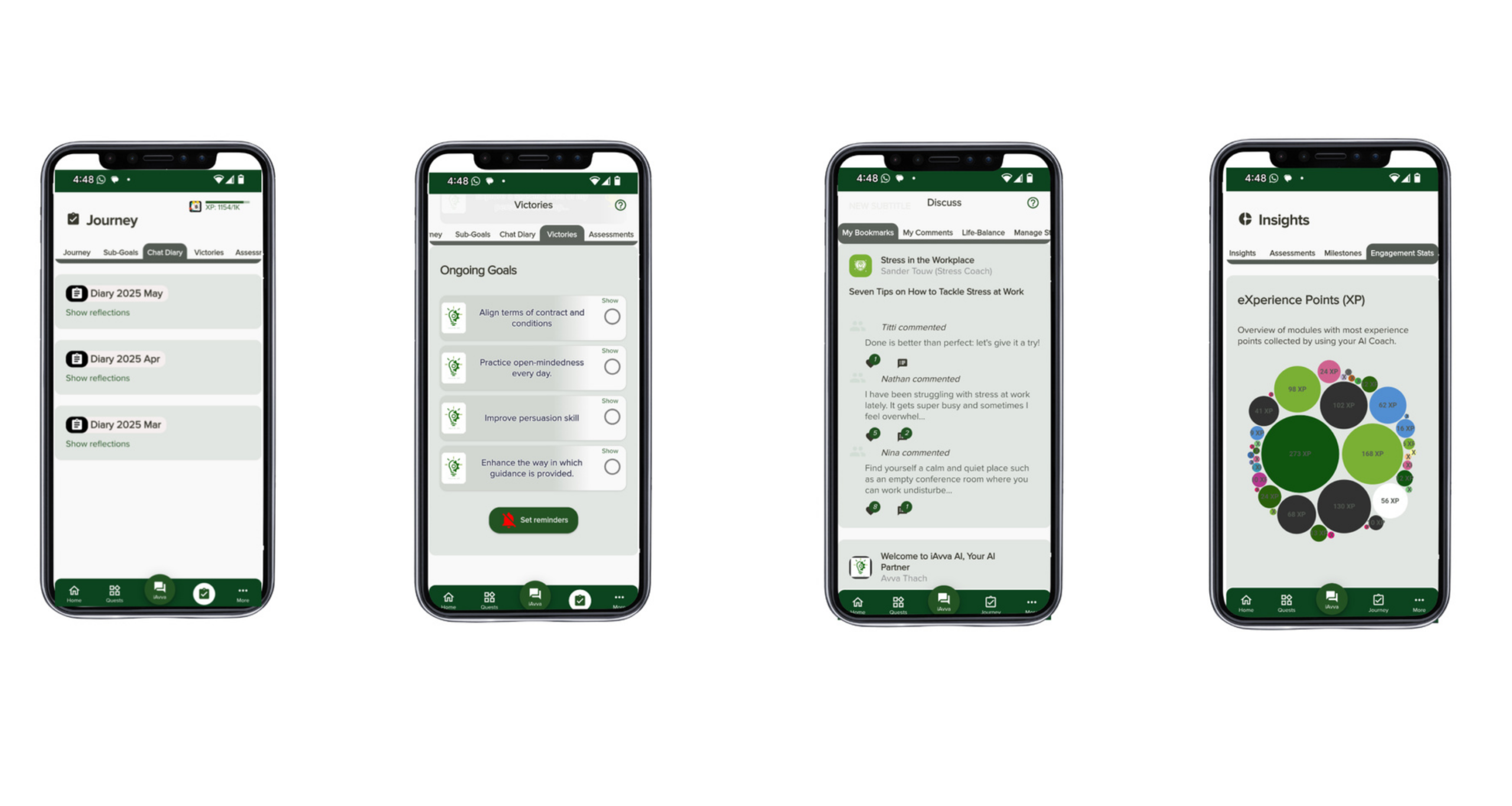
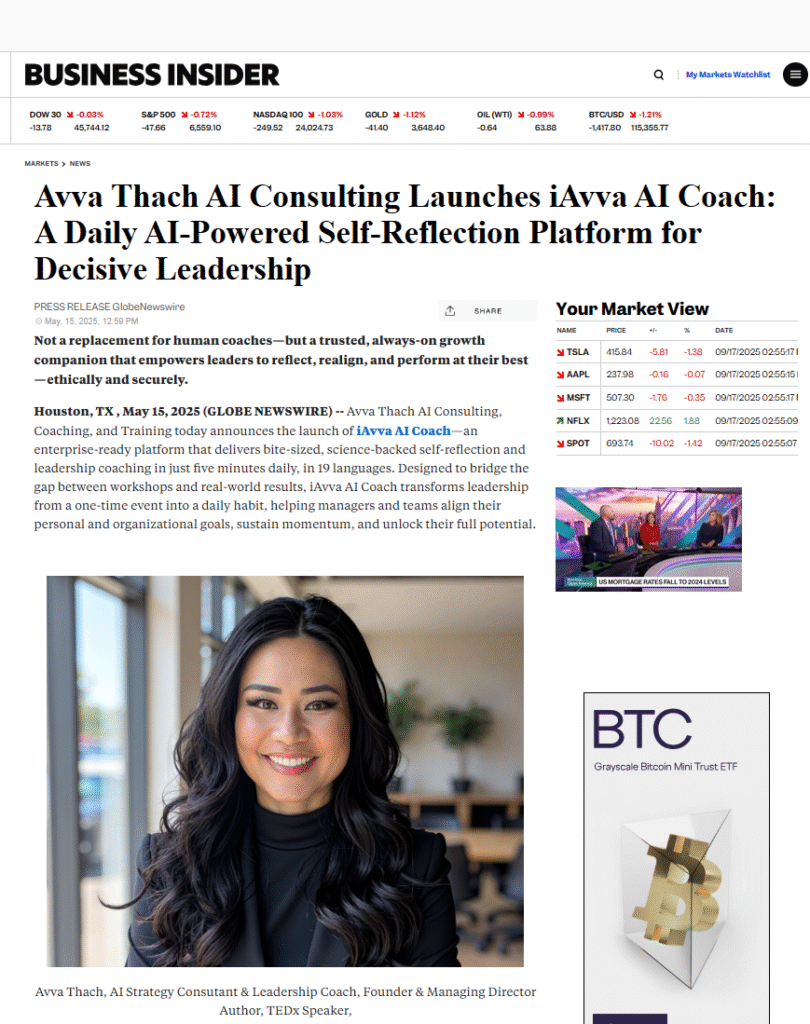
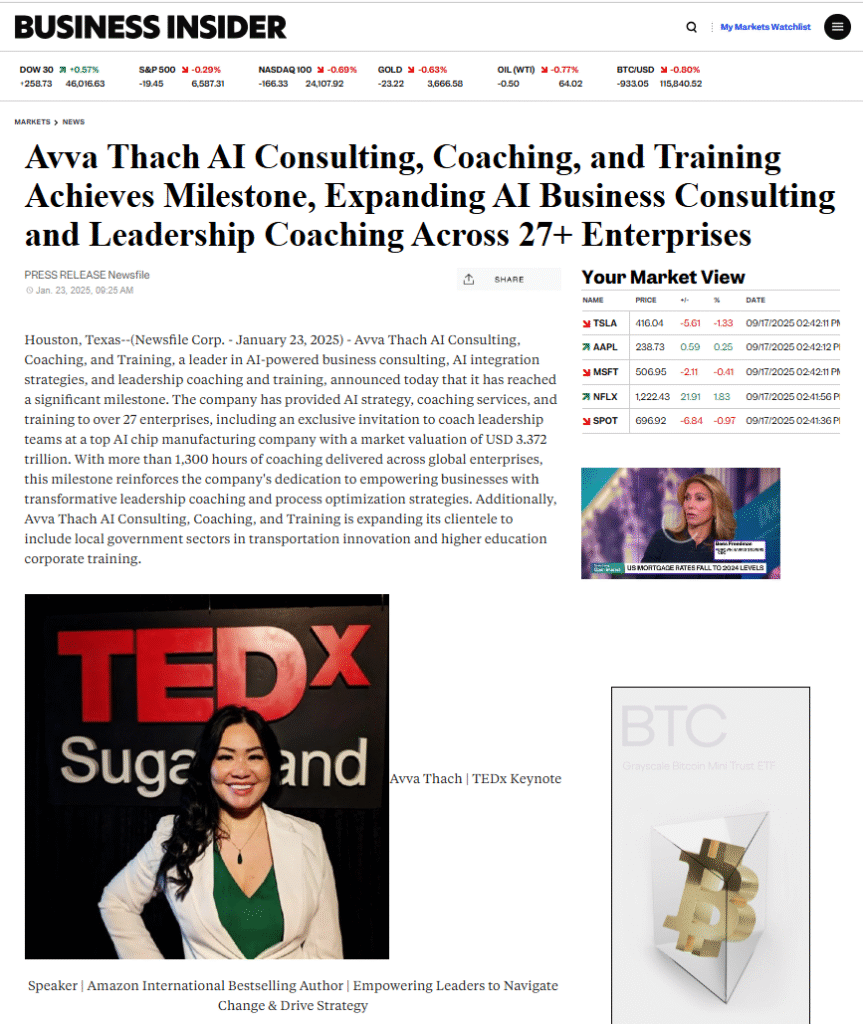
At iAvva AI, we see this every day. Our work combines AI strategy consulting with the iAvva AI Coach app, a five minute a day leadership companion grounded in neuroscience and ICF coaching principles. We connect training, daily leadership behavior, and business outcomes through OKR alignment and analytics that HR and L&D teams can see in real time.
“AI is the new electricity.” — Andrew Ng
The scale of AI’s impact demands the same level of planning and skill-building that earlier industrial shifts required.
As we walk through this guide, we will build a full roadmap. We start with the AI skills gap, move into readiness and executive alignment, then design persona based AI corporate training, hands on projects, internal champions, responsible AI, measurement, and change management. By the end, we will have a clear, practical model to turn AI anxiety into focused, measurable progress.
Key Takeaways
Before we dive into the details, it helps to see the big picture. These points summarize what we will build step by step together.
- Segment the workforce. AI corporate training works best when the whole workforce is segmented into leaders, builders, and users. This structure keeps learning relevant, avoids overload, and speeds up practical results in day to day work. It also gives employees a clear path to grow from one level to the next.
- Start with readiness and alignment. Every strong program begins with an AI readiness assessment and executive alignment. We measure skills, culture, data, and infrastructure before picking tools or courses so training supports real business goals instead of scattered experiments that fade away.
- Prioritize hands-on projects. Project based learning beats theory every time. Capstone projects tied to real workflows show quick wins, such as automated reports or smarter lead scoring, proving value early and helping to reduce resistance.
- Develop internal AI champions. Internal AI champions keep momentum long after the first workshop ends. With focused support and a clear role, they mentor peers, run experiments, and carry the AI agenda across departments. This turns training from a one time event into an ongoing practice.
- Teach responsible AI as a core skill. Responsible AI is not only a compliance topic. Clear policies, guardrails, and ethics training protect the brand and build trust with employees and customers. Everyone learns how to use AI safely, not just data teams or lawyers.
- Measure ROI with real numbers. Measuring ROI from AI corporate training is both possible and expected. We track time saved, error reduction, new revenue, and tool adoption, then link these to business OKRs. iAvva AI adds real time dashboards so HR and L&D leaders can see the impact as it grows.
- Treat AI skills as ongoing practice. AI skills need constant care, not a single class. With tools and models changing at high speed, organizations need ongoing refreshers, coaching, and experiments. The iAvva AI Coach app supports this with daily reflection prompts that turn learning into habits.
Understanding The AI Skills Gap Crisis
The buzz around AI can hide a simple fact: many organizations are far less ready than they sound in board presentations. Executives talk about AI strategy, but teams lack shared language, hands on practice, and clear guidelines on what is allowed. That gap is where risk and waste appear.
Research shows how wide this gap already is, with studies revealing significant challenges in artificial intelligence adoption and the varying levels of employee preparedness across organizations. We see leaders who believe AI is key for their future and at the same time admit that their teams have low AI capability. We meet employees who quietly use AI on personal accounts, often pasting in sensitive data because nobody has told them what is safe. We see managers who try to write AI policies on their own, without training, and then wonder why nobody reads them.
Different industries feel this pressure in different ways. In manufacturing and construction, AI promises gains in maintenance and safety but people fear it will remove hands on roles. In services and healthcare, AI can speed up documentation and analysis, yet trust and ethics questions rise fast. Technology firms risk falling behind new AI native competitors if they do not move fast enough.
Across all these cases, one pattern shows up. Organizations build what we might call AI debt. They delay structured training, so informal habits grow in random directions. Later they must fix bad prompts, rework flawed experiments, and soothe damaged trust. AI corporate training, launched early and aligned with business goals, is the main way to stop that debt from adding up.
The Cost Of AI Illiteracy In Today’s Business Environment
When employees do not understand AI, the cost is much more than a few slow projects, as measuring the occupational implications reveals substantial impacts on productivity, job quality, and organizational competitiveness. It shows up in daily productivity, missed chances, and rising risk. Teams that avoid AI stay stuck in manual work, while competitors cut hours from their processes. Other teams rush in without guidance and use tools in ways that expose customer data or create bad decisions.
High performers pay close attention to this gap. Skilled people want modern tools, thoughtful guardrails, and learning that supports their careers. If they see another employer that offers clear AI corporate training and paths to grow, they often move. That loss of talent is hard to measure in a spreadsheet, yet it hits business performance.
There is also a security and compliance side. Untrained staff may paste sensitive information into public models or trust AI generated text without legal checks. This can lead to data leaks, bias in hiring or performance decisions, and reputational harm. The longer an organization waits to put training and policy in place, the higher the chance that one poorly informed choice causes a serious problem.
Why Traditional Training Approaches Fail For AI
Many companies first respond to AI with the same patterns they used for earlier technology waves. They run a single awareness webinar, send out a generic e learning module, or badge a program as “digital change” and hope that is enough. For AI, this approach falls short.
One problem is one size fits all content. When executives, data scientists, and frontline staff sit in the same session with the same slides, nobody gets what they really need. Another problem is a heavy focus on theory, with little chance to build prompts or test real use cases. People leave with buzzwords, not skills they can trust.
Training without strategy creates its own type of noise. Teams may learn about models and tools but never connect them to company OKRs, customer needs, or existing workflows. They run pilots that stay stuck as experiments because no one owns the path to real rollout. Without hands on practice, coaching, and clear measurement, traditional training feels like a tick box rather than a lever for change.
Strategic Foundations: Building Your AI Readiness Framework
Before we choose platforms or schedule classes, we need a clear picture of where we stand. AI corporate training only pays off when it is rooted in business context, data reality, and cultural truth. That is why we start with readiness rather than with tools.
A readiness framework looks at strategy, skills, culture, and systems together. It asks where AI can help with real business problems, which roles will feel the impact first, and what fears or hopes already live inside the company. It also forces honest answers about data quality and access, which matter more than any single model.
At iAvva AI, we combine this kind of analysis with leadership workshops and the AI Coach app. Executives use the app to reflect on their own beliefs about AI, power, and people, while we map workflows and assess current capabilities. This blend of hard data and inner reflection builds a strong base for everything that follows.
Conducting An Effective AI Readiness Assessment
A useful AI readiness assessment is structured, practical, and cross functional. We usually look at six main areas and invite a wide mix of voices into the process:
Strategic clarity
Do senior leaders share the same view of why AI matters for the business, or do they use the word in different ways?Cultural readiness
Are people curious and open to new tools, or tired from recent change and wary of more?Technical infrastructure
What do data pipelines, data quality, security controls, and current cloud platforms look like?Skill baseline
How confident are executives, builders, and general staff in using or supervising AI?Governance maturity
Are there any AI or data ethics policies in place, or is this a new field?Resource commitment
Has the company set aside budget, time, and internal champions for this work?
To gather this picture, we use surveys, interviews, workflow mapping, and technical audits. The findings then shape the training mix, sequence, and depth so that AI corporate training feels targeted rather than generic.
Securing Executive Buy-In And Defining Your AI Vision
No AI program works without active executive ownership. Approval is not enough. Leaders must speak about AI in clear, honest terms, connect it with strategy, and model the behavior they ask from others.
We often start with an inspiration session for the top team. In this session we cut through buzzwords and show what AI can and cannot do for this specific business. We link use cases to revenue, cost, risk, and talent, and we invite open questions about ethics, jobs, and brand impact. This sets a realistic, shared vision.
From there, we help form an AI steering group with leaders from HR, IT, operations, finance, and commercial teams. Together we set a small number of measurable goals linked to OKRs, such as reducing time to produce reports or boosting win rates in a key segment. The iAvva AI Coach app then supports individual leaders with daily prompts that keep this vision alive, build change leadership habits, and keep decisions grounded in both data and values.
The Persona-Based Training Model: Designing Learning For Maximum Impact
AI touches every role in a company, but not in the same way. A chief executive does not need the same depth as a data engineer, and a sales manager should not sit through a coding class just to learn better prompting. Persona based design solves this.
We work with three core personas:
- AI Leaders steer vision, investment, and ethics.
- AI Builders design and build AI powered tools and workflows.
- AI Users apply AI in their daily tasks, from writing and analysis to planning and service.
All three need shared basics, yet each group also needs very different practice time.
This model does more than keep content relevant. It also guides resource use, because we can decide which personas need deep multi week programs and which need short, focused learning paths. And it creates what we call learning ladders, so a curious AI User can grow into a Builder, or a Builder into a Leader, with clear steps.
A simple way to see this is in a persona matrix:
| Persona | Primary Focus | Example Skills | Typical Outcomes |
|---|---|---|---|
| AI Leaders | Strategy, governance, culture | AI vision, business cases, ethics, OKRs | Clear AI roadmap, sponsorship, risk oversight |
| AI Builders | Products, data, automation | Prompt design, agents, APIs, MLOps | Working prototypes, pilots, internal AI services |
| AI Users | Daily productivity and decision making | Practical prompting, safe use, workflow tips | Time saved, better quality work, higher engagement |
This shared view helps everyone understand their role in the wider AI effort.
Training AI Leaders: Preparing Executives And Senior Management
Leaders do not need to code, but they do need clear thinking about AI. Their training focuses on strategy, risk, culture, and investment, all explained in plain language.
We cover current AI capabilities and limits, and we sort real options from science fiction. We help leaders spot where AI can support their strategy and where it does not fit. We walk through examples of AI business cases and teach simple ways to judge ROI, so they can ask better questions and fund the right work.
Ethics and governance play a big role here. Leaders learn how bias shows up in models, how data privacy laws apply, and which decisions always need a human in the loop. We also focus on change leadership, giving managers tools for honest communication about AI and jobs. iAvva AI adds another layer by giving each leader a private AI Coach that prompts daily reflection on power, trust, fairness, and focus, grounded in neuroscience and ICF principles.
Empowering AI Builders: Technical And Product Teams
AI Builders are the people who turn ideas into working tools. They need depth, practice, and strong links to business partners. Their track in AI corporate training is intensive and project based.
We start with advanced prompting and safe model interaction, then move into building AI agents and simple apps that sit inside existing products or internal tools. Builders learn how to work with major cloud AI platforms from providers such as AWS, Microsoft Azure, Google Cloud, or IBM, and how to call APIs from OpenAI or Anthropic.
Data science basics are covered where needed, with a focus on clean data, clear labels, and simple models that serve the problem at hand. No code and low code tools help them build proof of concept tools quickly, which they then refine with feedback from real users. Throughout, we stress business understanding and communication, so Builders can link their work directly to outcomes that executives care about.
Activating AI Users: Driving Productivity Across The General Workforce
AI Users are often the largest group and the fastest source of clear wins. Their training is practical and close to daily work. We want them to leave each session with at least one task they can do faster or better the same day.
We teach simple prompting patterns for tools like ChatGPT, Gemini, Claude, or Copilot, focused on writing, editing, summarizing, and idea generation. We map these patterns to roles in sales, marketing, HR, finance, and operations so that examples feel familiar, not abstract. We also introduce the iAvva AI Coach app as a safe space to reflect on how they are using AI and which habits are helping or hurting performance.
Safe use is a core theme. Users learn what data is safe to paste, how to check AI generated content for mistakes, and how to avoid over trusting a confident yet wrong output. Short, role based modules, supported by reminders through tools like the iAvva AI Coach app, help these new habits stick over time.
Essential AI Training Curriculum: Core Skills And Competencies
Once personas are clear, we can design a curriculum that covers both common ground and specialized depth. Strong AI corporate training blends basic literacy, technical skills where needed, and leadership capabilities that guide the whole program.
We usually think about three levels:
- A shared foundation so that terms like model, prompt, or bias mean the same thing across teams.
- Deeper technical skills for AI Builders and advanced Users who will design or maintain AI powered workflows.
- Strategic and leadership skills for those who sponsor, govern, and communicate about AI.
This curriculum cannot stay static. Models, tools, and best practices change very fast, so content must refresh on a regular rhythm. That is another place where an AI coach helps, because daily micro prompts can introduce new patterns, questions, or examples without asking busy people to sit in long classes every month.
Foundational AI Literacy For All Employees
Foundational literacy is the common language of AI in a company. It gives everyone a basic sense of how generative AI and large language models work without turning them into data scientists.
Key elements include:
- Simple explanations of how models learn from data and why they sometimes make mistakes.
- Clear examples of how AI is used in marketing, operations, HR, finance, and customer service.
- Limits of AI, such as weak understanding of company politics or subtle human context.
- Basic ethics: data privacy, bias, and the need for human review.
- Prompt basics: giving clear instructions, adding context, and iterating.
We let employees test these ideas in safe sandboxes with tools like ChatGPT or Copilot, so terms become real skills. Completing this module often becomes a gate for access to more powerful internal AI tools.
Advanced Technical Skills For AI Builders
For Builders, the curriculum steps up several levels. We start with data skills, such as cleaning, joining, and analyzing data using languages like Python or using visual tools when coding is not required. We revisit the math behind simple models only as far as needed to support practical choices.
Advanced prompting is treated as a craft. Builders practice:
- Multi step prompts and chain of thought approaches.
- Methods for guiding models through complex reasoning.
- Design of AI agents that can call tools, move through workflows, and hand results back to humans.
Platform training dives into services such as Amazon SageMaker, Azure AI Studio, Vertex AI on Google Cloud, or IBM Watson. Builders learn how to select a service, deploy a model, monitor it, and weave it into existing applications. We also look at AI in DevOps and security, for example using AI to review code or flag suspect behavior in logs. Certifications or badges help mark progress and keep skills visible to the business.
Strategic And Leadership Competencies
Even the best technical work fails if leadership and culture are not ready, which is why AI at work training for leaders focuses on both strategic decision-making and ethical oversight. That is why we treat strategic and leadership skills as a formal part of AI corporate training rather than side topics.
We help leaders and champions learn how to:
- Spot AI opportunities that align with business OKRs.
- Build simple business cases, including cost, benefit, and risk.
- Lead change with deep listening, clear messaging, and honest dialogue about jobs.
- Write and review AI policies, set up decision forums, and agree on what must always have human sign off.
- Measure AI impact so they can link training and projects to numbers such as cost savings or revenue.
The iAvva AI Coach app supports this whole area by sending daily prompts that nudge leaders to reflect, set intent, and act in line with both strategy and ethics.
Hands-On Learning: The Power Of Capstone Projects And Real-World Application
Reading about AI is helpful, but real learning happens when teams solve their own problems with these tools. That is why hands on practice sits at the center of any strong AI corporate training program. Capstone projects turn theory into action and make the value of training visible to the whole company.
In a capstone, participants pick a real workflow, data set, or business question. They then apply what they have learned to improve that area. This might mean building a simple AI assistant that drafts reports or creating a model that scores sales leads. The project is small enough to complete within the program yet real enough to matter.
This approach does more than teach skills. It builds confidence and reduces fear, because employees see that they can guide AI rather than be replaced by it. Leaders also gain concrete examples to show executives and boards. When they can say that a training cohort cut report time by half or improved campaign results, the case for ongoing AI corporate training becomes very clear.
Designing Effective Capstone Projects
Good capstone projects start with pain points that the readiness assessment already surfaced. We focus on areas where data exists, impact is easy to measure, and the scope fits the time and skills of the group.
We usually shape projects around four simple rules:
- The work should be possible in two to four weeks of part time effort.
- It should connect tightly to daily tasks of the participants, such as sales outreach, recruitment, or operations planning.
- The outcome should be measurable, for example hours saved per week or lift in conversion rate.
- The work should be done in small teams to support learning across functions.
Examples vary by function. Operations teams might build an AI helper that predicts staffing needs or flags supply issues. Sales teams might create a tool that ranks leads by fit and suggests first outreach drafts. Marketing could build a creative performance review assistant. HR might work on an attrition risk view or a simple screening assistant. Finance may design a system that drafts management reports and highlights anomalies for fast review. Dedicated coaches from iAvva AI guide teams through this work so that they reach a presentable result within the time frame.
From Prototype To Production: Accelerating Innovation
A common problem in training is that projects end up on slides instead of in real use. To avoid that, we help clients set up a clear path from prototype to daily tool. This keeps energy high and turns training into a source of real innovation.
A practical path often includes:
- Decision criteria for which prototypes move on, such as proven time savings, stable data sources, and fit with security standards.
- Named owners on the technical and business sides who will refine and run a pilot after training.
- Integration plans so that new tools plug into existing systems rather than live as isolated experiments.
Some organizations create simple internal accelerators or labs for this stage. Short cycles help teams move from capstone to pilot and then into wider rollout when results are strong. Past programs have shown what is possible. Companies have built dozens of prototypes in a few weeks and turned several into live tools that save millions of dollars a year. With iAvva AI, our consulting team stays involved past the classroom, helping select, refine, and scale the most promising ideas.
Building A Network Of Internal AI Champions
Technology change is never only about software. It is about people who are willing to go first, share what they learn, and bring others with them. In AI work, we call these people champions or changemakers, and they are vital for long term success.
Champions sit in all parts of the business, not only in IT. They might be a curious HR partner, a product manager who likes to experiment, or a frontline supervisor who wants to save their team time. They share traits like curiosity, influence, and care for their colleagues. When supported well, they can spread new practices faster than any central program.
We design AI corporate training with these champions in mind. We give them deeper learning, visible support, and chances to lead. They become the bridge between central AI strategy and local daily work. They also serve as an early warning system when tools do not fit reality, sending feedback back to L&D and leadership.
The AI Changemaker Bootcamp Model
To grow champions on purpose, we often run a dedicated changemaker bootcamp. This is not a simple course; it is a structured track that blends AI skills with change leadership.
On the technical side, participants extend their skills in advanced prompting, agent building, and custom tool design. Each person or small team creates at least one working prototype linked to their own department. On the human side, they practice communication, coaching, and conflict handling so they can guide peers through worry and confusion.
We choose participants with care. We look for people who are eager to learn, already trusted by their teams, and willing to invest time in helping others. We also seek a spread across units and levels so that AI does not look like a top only project. The program usually runs for six to ten weeks with a weekly time block. By the end, each champion has both a working tool and a concrete plan to spread its use. The iAvva AI Coach app then helps them keep their leadership skills growing with daily reflection prompts about influence, ethics, and team support.
Sustaining Momentum: Competitions, Hackathons, And Accelerators
Once champions exist, they need platforms and energy to keep going. Internal events and programs can make AI feel exciting and shared rather than heavy and forced.
Some organizations run AI hackathons where mixed teams spend a day or two building small tools for real business problems. These events often surface fresh ideas and hidden talent. Winners gain recognition and support to refine their projects. Even teams that do not win leave with new skills and contacts.
Others set up small internal accelerators where selected ideas get access to coaching, time, and technical help for a few months. Regular meetups, online groups, and internal newsletters keep champions connected and visible. When leaders highlight these stories and link them to company goals, AI becomes part of how the company works, not a side project that fades when the first training ends.
Integrating AI Training With Core Business Functions
AI corporate training only matters if it changes how work gets done in core functions. When AI sits off to the side as a separate project, it feels abstract. When it lives inside operations, sales, marketing, and HR, people see clear value.
That is why we design training with function specific use cases from the start. We sit with operations leads to find bottlenecks, with sales teams to review funnels, and with HR to understand talent pain. Then we build examples and capstones that speak directly to those needs. Cross functional sessions help different teams see how their work connects.
This approach also helps with measurement. When every functional leader has one or two AI goals linked to their OKRs, we can track impact in the language of that team. For example, fewer stock outs in operations, more qualified leads in sales, or lower regretted attrition in HR. iAvva AI supports this through analytics dashboards that tie leadership behavior, AI usage, and outcomes together.
Operations: Driving Efficiency And Cost Reduction
Operations teams often see some of the fastest returns from AI because so much of their work involves repeatable processes and rich data. With the right training, they can move from gut feel to data supported decisions.
Training for operations focuses on process mapping, simple predictive models, and automation tools. Teams learn how AI can help predict demand, optimize staffing, and spot issues before they become crises. They also explore how to combine sensor data, service logs, and financial data for better planning.
Use cases include AI helpers that generate daily performance reports, tools that rank vendors by reliability and cost, and models that flag assets likely to fail soon. When operations staff help design these tools, they trust and use them. Results can show up as lower overtime, reduced waste, and faster cycle times.
Sales And Marketing: Accelerating Revenue Growth
Commercial teams benefit when AI frees time from manual research and copy writing so they can focus on relationships and strategy. AI corporate training for sales and marketing should lean heavily on real campaigns and pipelines.
Sales teams learn how AI can research accounts, draft outreach messages, and suggest next best actions. They test lead scoring models that rank prospects by fit and intent. They also see how AI can help summarize calls or meetings so they spend less time on notes.
Marketing teams explore AI support for content creation, creative testing, and audience analysis. They can build tools that review ad copy for clarity, summarize performance across channels, or suggest new segments worth testing. With clear metrics like win rates, deal size, and campaign ROI, these use cases make the value of training easy to see.
Human Resources: Strengthening Talent Acquisition And Retention
HR sits at the center of AI adoption because it handles both talent and culture. With thoughtful AI use, HR can move from heavy administration to more strategic work focused on people and development.
Training for HR covers predictive analytics, process automation, and text analysis. Teams learn how to build simple models that flag employees who may be at risk of leaving so that managers can intervene early. They test AI support for screening resumes, scheduling interviews, and answering common candidate questions.
HR can also use AI to read open ended survey comments, exit interviews, and feedback to spot trends that numbers alone may miss. Personalized learning paths are another area, where AI suggests courses or experiences based on role, goals, and performance. The iAvva AI Coach app fits well here, giving every leader a personal development companion and giving HR real time insight into engagement and habit building without exposing private reflections.
Responsible AI: Ethics, Governance, And Risk Management
As AI spreads through a company, the stakes rise. A single automated decision can affect thousands of customers or employees. That is why responsible use is at the heart of any serious AI corporate training effort.
Responsible AI is more than a legal topic, as research shows how artificial intelligence shapes the productivity and quality of work while raising important ethical considerations. It is about trust. Employees need to know their data is safe and that AI will not be used to watch or judge them unfairly. Customers need to trust that automated decisions are fair and that they can reach a human when needed. Regulators look for clear guardrails and proof that the company takes these issues seriously.
We help clients treat ethics and governance as building blocks, not roadblocks. Clear policies and education give people confidence to experiment within safe limits. Daily leadership prompts through the iAvva AI Coach app keep ethics and impact in the mind of those who hold power, not only those who write code.
Establishing Comprehensive AI Policies And Governance
A good AI policy tells people what they can do, what they must avoid, and when they should ask for help. It does this in clear language, without hiding key points in legal fine print.
Well designed policies usually cover:
- Data privacy and security — what kinds of data can go into which tools, and which data must stay inside controlled systems.
- Acceptable use — appropriate and forbidden uses, such as banning AI for high stakes hiring decisions without human review.
- Quality checks — expectations for checking AI outputs and who remains responsible for final content.
- Ownership and attribution — who owns AI generated work and how content should be cited.
- Bias and fairness — commitments to test and correct biased behavior in models.
- Compliance alignment — how AI use aligns with GDPR and other regulations.
A cross functional AI governance group reviews these rules, handles exceptions, and updates the policy as tools and laws change.
Educating Employees On Ethical AI Use
Policies only work when people understand them and feel safe to ask questions. That is why ethics shows up in every level of AI corporate training, not just in a single slide at the end.
We teach how bias can show up when models learn from past data, and we give simple examples of unfair results in areas like lending or hiring. We show what happens to data sent to public tools and why some inputs may be unsafe. We train people to double check AI answers, especially when they sound very confident.
Scenario based exercises help staff practice. For instance, they may review an AI generated candidate shortlist that seems to favor one group and decide what to do next. We also set up clear channels for people to raise concerns without fear. Leaders model good behavior by naming where AI was used in a process and owning the final call. The AI Coach app adds daily nudges for leaders to reflect on fairness, impact, and their own blind spots.
Measuring Success: KPIs And ROI Of AI Training Programs
For HR, L&D, and CIO teams, one question always comes up: how do we prove that AI corporate training is worth the time and money? The answer lies in careful measurement before, during, and after programs.
We recommend a mix of activity metrics and outcome metrics. Activity metrics track who attends, who completes modules, and which tools they touch. Outcome metrics tie those activities to business results, such as time saved, cost reduced, or revenue gained. Both types matter, but it is the outcome metrics that win support from CFOs and boards.
To measure well, we set baselines before training begins. We note how long tasks take, what error rates look like, or how many leads convert. Then we compare after pilots and again after wider rollout. iAvva AI strengthens this by connecting daily usage of the AI Coach app with progress on OKRs and habits, giving leaders a view of culture change as well as process change.
Productivity And Efficiency Metrics
Productivity is often the first visible effect of good AI use. We want to move beyond soft statements and into numbers that hold up in a budget review.
We track time savings by asking employees to log how long tasks take before and after they introduce AI helpers. This might relate to drafting proposals, producing reports, or screening candidates. We also look at output volume, such as more personalized emails sent or more reports produced with the same staff.
Quality matters too. In some settings, AI reduces errors in data entry or improves forecast accuracy. In service roles, customer satisfaction scores may rise because staff have better information at their fingertips. When we put these measures together, it is common to see twenty to thirty percent improvements in targeted workflows after structured training and support.
Cost Savings And Revenue Impact
Productivity gains turn into real money when we attach rates and prices. We help finance and business leaders translate time, error reduction, and new business into financial terms.
On the cost side, less manual work can mean reduced overtime or the ability to redeploy people to higher value tasks. In procurement and operations, better analysis can reduce waste and support stronger supplier negotiations. Some companies choose to replace external software or services with simple internal AI tools built during training, which cuts vendor spend.
On the revenue side, improved lead scoring, faster proposal turnarounds, and smarter campaigns can lift conversion rates and deal sizes. When summed across a year, these shifts can be large. Reports from different organizations show savings above twenty four million dollars per year after scaled AI projects that began in training groups. When we then compare these numbers to the cost of classes, coaching, and internal time, the payback period can be remarkably short.
Adoption And Engagement Indicators
Adoption tells us whether training has changed behavior or simply filled a calendar. Engagement shows whether people see AI as a real ally in their work.
We measure training completion to see if the content holds attention. Programs with completion rates in the ninety percent range suggest strong design and relevance. We also track usage of internal AI tools and approved external ones, looking for steady growth over time.
The number of prototypes, pilots, and live tools created after training is another helpful sign. Champion activity, such as peer sessions run or ideas submitted, adds more color. Skill assessments before and after programs help show where knowledge has grown and where more support is needed. These adoption metrics serve as leading indicators of future financial returns.
Overcoming Resistance: Change Management And Cultural Change
No matter how strong the content, AI corporate training will fail if people quietly resist or feel scared. Change fatigue is real, and AI touches deep worries about identity, status, and job security. Ignoring these feelings does not make them go away.
We treat resistance as normal feedback, not as a problem to crush. When employees push back, they often hold useful information about past failed projects, current workload, or unfair expectations. Listening with care, then shaping programs around that insight, builds trust.
Leaders hold special responsibility here. Teams watch what leaders do more than what they say. When a manager uses AI tools openly, admits what they are learning, and protects time for training, staff notice. When leaders act as if training is optional or only for others, that message spreads just as fast.
“The only sustainable competitive advantage is an organization’s ability to learn faster than the competition.” — Arie de Geus
This quote captures why change management and learning design must go hand in hand.
Understanding And Addressing Employee Concerns
Employee concerns about AI tend to cluster into a few themes. People worry that machines will remove their jobs, that they will not be able to learn new skills, or that AI will be used to watch them without consent.
We address job fears by showing real examples where AI removes low value tasks and frees time for more human work. We involve employees in selecting processes to improve, which helps them feel like co designers rather than targets. We also speak honestly about roles that will change and the support that will be offered.
Skill worries are eased when training is paced well, practical, and supportive. Small group practice, office hours, and easy wins help people see that they can learn. Tools like the iAvva AI Coach app add gentle, private support each day, helping people reflect on their growth and plan small steps.
Concerns about control and privacy require clear policies and consistent behavior. We explain what data is and is not tracked, and we keep commitments visible. We invite questions in town halls and one on one settings, and we coach leaders on how to hold these talks with empathy. Over time, as employees see AI making their work better rather than smaller, resistance begins to soften.
FAQs About AI Corporate Training
What Is AI Corporate Training
AI corporate training is a structured program that helps employees at all levels learn how to use AI tools safely and effectively at work. It covers basic concepts, hands on practice, and the human side of change. In our case at iAvva AI, it also connects training with daily leadership habits through the AI Coach app.
Who In The Organization Should Receive AI Training First
In our experience, it helps to start with a mix of executive leaders, HR and data leaders, and one or two pilot business units. Executives set direction and model behavior. HR and data teams design policies and support. Pilot units provide real examples and quick wins that show the rest of the company what is possible.
Do Only Technical Teams Need Deep AI Skills
No. Technical teams need depth in building and running AI tools, but business teams need solid skills as well. Product managers, marketers, sales leaders, and HR partners must understand what AI can do, how to ask the right questions, and how to read results. That is why the persona model covers leaders, builders, and users.
How Does iAvva AI Support Ongoing Learning After The Initial Training
We see training as the starting point, not the finish line. Our consulting work sets strategy and designs programs, and the iAvva AI Coach app keeps learning alive every day. The app offers five minute reflections grounded in neuroscience that help leaders and employees turn knowledge into habits, aligned with OKRs and tracked through analytics.
How Can We Measure The Success Of AI Corporate Training
We recommend tracking three types of data:
- Learning metrics such as completion rates and skill assessments.
- Behavior metrics such as tool usage, number of prototypes, and champion activity.
- Business metrics such as time saved, cost reduced, and revenue gained.
When these are linked and viewed in one place, as in the dashboards we provide, the picture of impact becomes clear.
Is AI Corporate Training Safe For Sensitive Or Regulated Environments
Yes, when it is designed with strong governance. We help clients define data rules, choose tools that meet security needs, and teach staff how to work within those limits. The iAvva AI Coach app itself is GDPR compliant, uses encryption, and offers privacy settings that support both regulated industries and global teams.
Conclusion
AI will reshape how nearly every knowledge worker role operates, whether organizations are ready or not. The gap between executive ambition and current skills is wide, but it does not have to stay that way. With thoughtful AI corporate training, companies can move from scattered experiments to focused programs that build capability, protect people, and drive clear business results.
We have walked through a full model, from readiness assessment and executive vision to persona based curricula, hands on projects, champion networks, responsible AI, measurement, and change management. None of these pieces stand alone. Together they form a repeatable approach that any organization can adapt to its size, industry, and culture.
At iAvva AI, we are committed to being a steady partner in this work. Our mix of strategic consulting and the iAvva AI Coach app helps teams keep learning, reflecting, and improving long after the first workshop ends. When AI becomes part of how leaders decide, how teams learn, and how work gets done, it stops being a threat and becomes a source of steady advantage.













Leave a Reply