
Introduction: Why The AI Leadership Mindset Will Decide Who Wins In 2026
Picture two companies in 2026 that use the same AI platforms, buy from the same vendors, and hire from the same talent pool. One races ahead with better margins, faster innovation, and a stronger employer brand. The other drowns in pilots, resistance, and rework. The real difference is not the tools. It is the AI leadership mindset guiding thousands of daily decisions about how humans, AI, and data work together.
When I talk about an AI leadership mindset, I mean the beliefs and behaviors that shape how leaders think, decide, organize, and develop people in a world where AI sits in almost every workflow. It is the ability to see AI as a co‑worker, design human‑in‑the‑loop systems, protect ethics, and keep learning as the ground moves under our feet. By 2026, this mindset is not a “nice extra.” It is the line between teams that thrive with AI and those that stall.
The 2026 horizon matters. Generative AI will be standard in office tools, customer channels, and core operations. Regulations will demand clear human oversight and data care. Employees will expect AI support and human‑centered leadership. Yet many organizations still pour budget into new models and platforms while underinvesting in leadership mindsets, culture, and structures that turn AI from a buzzword into real performance.
This gap hits each stakeholder in a different way. HR Directors and Chief Learning Officers need scalable ways to grow AI‑ready leaders across levels, not just a few tech champions. C‑suite executives and SMB leaders must balance speed and safety while sending a clear signal that AI is part of strategy, not a side topic. L&D leaders need AI‑powered learning that keeps pace with change. IT and People Ops must design human‑AI workflows that respect privacy, inclusion, and regional rules. Ambitious professionals want to grow into AI‑ready leaders before their roles shift around them.
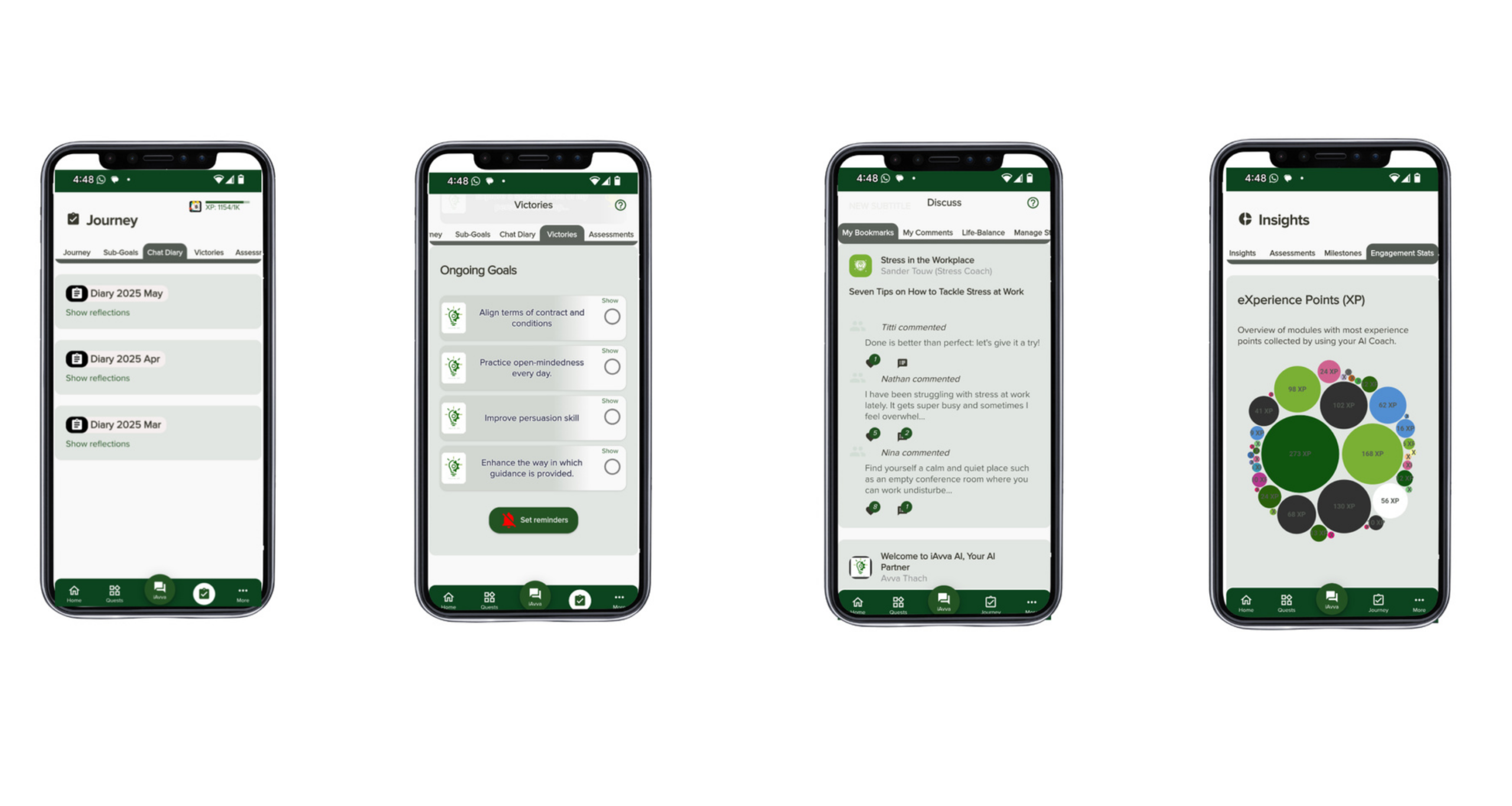
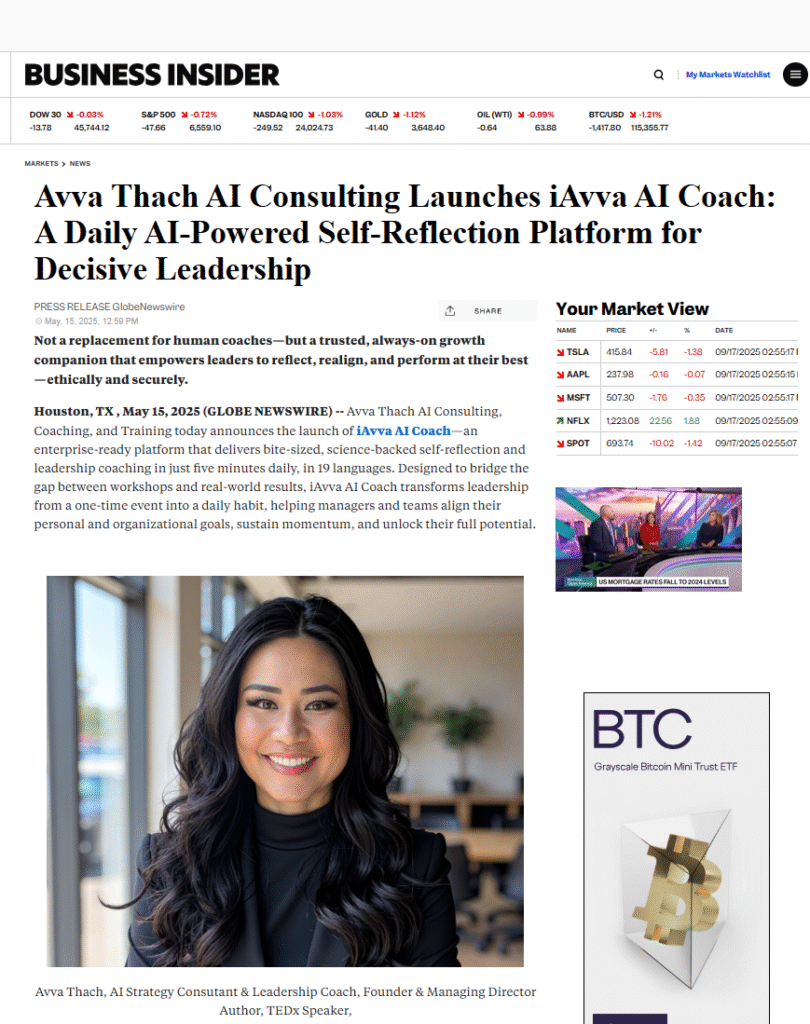
That is where a platform like iAvva AI comes in. Instead of one‑off workshops, it acts as an always‑on growth companion, using five‑minute daily reflections to build clarity, courage, and consistency—the inner habits leaders need to guide AI wisely. Across this article, I will walk through a practical roadmap for building an AI leadership mindset by 2026: what it is, why it matters, how maturity develops, how culture and structure support it, which human skills grow in value, and how iAvva AI can help you scale this mindset across your organization.
“The real competitive advantage is not AI itself, but leaders who know how to work with it wisely.”
Key Takeaways
- An AI leadership mindset is the way leaders think and act so humans, AI, and data create value together, with humans staying in charge of meaning and ethics.
- The year 2026 is a tipping point, as GenAI matures, regulations tighten, and employees expect both AI support and human‑centered leadership.
- Leaders must shift from tool obsession to human‑AI systems, from rare training events to continuous development, and from fear of AI to a focus on augmentation.
- AI leadership capability grows through a four‑stage maturity journey: foundational AI knowledge, AI‑first mindset, AI‑specific leadership skills, and confident leadership in constant disruption.
- Midlevel leaders are the key translators between AI strategy and daily work; under‑investing in them is a major risk for any AI program.
- As AI spreads, human skills like emotional intelligence, systems thinking, and cross‑functional influence become even more valuable.
- iAvva AI helps by providing daily micro‑coaching rooted in neuroscience and ICF coaching principles, across 19 languages, with OKR alignment and analytics for HR and L&D.
- If you do only three things after reading, define your AI leadership competencies, start a daily reflection habit, and set AI leadership OKRs linked to clear business outcomes.
What Is An AI Leadership Mindset In 2026?
When I talk with leaders about AI, most first think about tools: models, vendors, and platforms. Yet research on The Impact of Artificial Intelligence on transformational leadership shows that the bigger differentiator will be how leaders think about AI, not which product they install. Yet by 2026, the bigger differentiator will be how leaders think about AI, not which product they install. An AI leadership mindset is the mental operating system leaders use in a world where AI quietly touches hiring decisions, pricing, scheduling, content, and customer service.
This mindset goes beyond simple tech literacy. Knowing how to prompt a model or use a dashboard is useful, but it does not answer questions like “Should we automate this judgment call?” or “How do we talk honestly about AI’s impact on jobs?” Tech skills tell us what AI can do. Mindset guides what we decide AI should do, and how we protect people while we use it.
In 2026, several traits sit at the heart of a strong AI leadership mindset. Leaders show strategic AI fluency: they grasp where AI can move the needle on cost, quality, or experience without needing to be data scientists. They keep a human‑in‑the‑loop discipline, refusing to hand over responsibility for high‑stakes decisions. They think in systems, mapping how data, AI, and people interact across the value chain. They stay curious, trying new tools, reflecting on results, and sharing what they learn. They hold human‑centric ethics close, asking who might be harmed or left out. And they display change readiness, accepting that roles, workflows, and even products will keep shifting.
For HR leaders, CLOs, and the C‑suite, this mindset becomes table stakes. Without it, AI efforts turn into scattered pilots, compliance headaches, and talent churn. With it, organizations see higher productivity, faster innovation cycles, fewer ethical incidents, and stronger engagement scores. Candidates, especially high‑potential talent, also judge employers on how thoughtfully they use AI. In other words, AI leadership mindset links directly to performance, risk, and employer brand.
Why AI Leadership Mindset Has Become A Strategic Imperative
The New Competitive Reality: Humans With AI Vs. Humans Without AI
By 2026, the old phrase that “AI will not replace humans, but humans using AI will replace humans who are not” applies just as much to companies and leaders. When leaders treat AI as a central teammate rather than a side experiment, they shift how fast strategy becomes daily action.
Across sectors, GenAI already supports product design, sales outreach, support scripts, code reviews, and financial analysis. Companies that weave AI into their core processes shorten time‑to‑market, free human capacity for creative work, and spot risks earlier. Those that keep AI in isolated “innovation labs” often see slow adoption, uneven quality, and frustrated teams. The pattern is clear: the same tools create very different results based on leadership behavior.
So the strategic question is no longer “Should we use AI?” but “Do our leaders know how to pair human strengths with AI in ways that create value and trust?” An AI leadership mindset turns AI into a real advantage because leaders connect it to outcomes, not just dashboards.
Leadership Playbooks Are Outdated For An AI‑Driven Context
Most of us were trained in leadership models that assumed slower change and more predictable environments. However, academic research on How Artificial Intelligence Constrains organizational dynamics reveals that AI fundamentally alters the assumptions underlying traditional leadership approaches, requiring new mental models for decision-making. Management styles that rely on tight control, rigid hierarchies, and detailed oversight made sense when information moved slowly and work was mostly manual or routine.
AI changes that foundation. Information flows faster than any manager can track. Systems become more interconnected. New roles appear, from prompt designers to AI workflow leads. Market shifts show up in weeks, not years. If leaders cling to command‑and‑control habits, they create bottlenecks, slow down decisions, and cause “AI theater” where pilots look good on slides but never scale.
Newer models inspired by ideas like Management 3.0 work better here. They focus on empowerment, experimentation, and distributed decision‑making. Leaders act less like controllers and more like designers of environments where teams can safely try AI, learn, and share what works. An AI leadership mindset fits these newer playbooks and leaves the older ones behind.
Human–AI Collaboration As A Core Leadership Competency
A core job of leaders in 2026 is deciding which work belongs to humans, which to AI, and which is best handled by a blend of both. That means asking where human judgment, empathy, and creativity add the most value, and where AI can take on repetitive analysis, pattern recognition, or content drafts.
You can already see hybrid setups in many teams:
- Sales reps use AI co‑pilots to research accounts and suggest outreach, while humans still build relationships and close complex deals.
- HR uses AI to screen large volumes of resumes or run workforce analytics, while humans lead interviews and coach managers.
- Operations teams rely on AI to forecast demand or spot anomalies, while people handle trade‑offs and exceptions.
Leaders sit in the translator role. They turn broad AI capability into concrete workflows, work standards, and guardrails. For HR, L&D, IT, and People Ops, this is especially important, because they design the roles, policies, and skill paths that make human–AI collaboration safe and productive. An AI leadership mindset is what lets them do that job well.
As Satya Nadella put it, “AI is about amplifying human ingenuity.” Leaders decide where that amplification happens and how.
The 4‑Stage AI Leadership Maturity Journey
Developing an AI leadership mindset is not a switch leaders flip in one workshop. It grows step by step. I like to think of it as a four‑stage maturity journey that HR, CLOs, and L&D teams can use to plan development and measure progress.
In the first stage, leaders build basic AI knowledge that connects directly to the business. In the second, they change how they feel and behave around AI, moving from fear and occasional use to curiosity and daily practice. In the third, they gain specific skills to shape AI initiatives, from spotting use cases to designing human‑AI workflows and governance. In the fourth, they use AI confidently in a world of constant disruption, including strategic foresight and ethical stewardship.
This journey gives structure to what can feel messy. It helps leaders see where they are now and what needs to change next. It also helps HR and L&D avoid random training and instead build sequenced, reinforcing experiences.
Stage 1: Building Foundational AI Knowledge
At the first stage, I want leaders to feel “AI fluent enough” to join serious conversations, without drowning in technical detail. That means understanding high‑level ideas like machine learning, generative AI, large language models, and the difference between predictive, generative, and prescriptive uses. It also means knowing common use cases in HR, finance, marketing, operations, customer service, and IT.
Ethics belongs in this foundation too. Leaders should have a clear picture of data privacy basics, bias and fairness issues, explainability limits, and security and regulatory concerns. When they grasp these points, they are less likely to say “That is just an IT problem,” and more likely to own their role in safe design.
This knowledge must feel relevant and in plain language. Slides full of math do not help a busy plant manager or HR lead. Instead, focus on:
- Concrete cases from their own function.
- Short learning bursts they can apply the same week.
- Simple visuals that show how data moves through an AI‑supported process.
HR and L&D can weave this content into existing leadership programs and onboarding, so AI literacy becomes part of how someone “becomes a leader” in the organization.
Stage 2: Cultivating An AI‑First Leadership Mindset
Once leaders understand the basics, the next barrier is psychological. Many still carry quiet fears: “Will AI replace my role?” or “What if my team outpaces me?” Stage two is about moving from fear and hesitation to seeing AI as a daily partner.
The mindset shifts are clear. Leaders move:
- From fear to a focus on augmentation, asking how AI can remove drudge work and give them more time for people, strategy, or customers.
- From rare tool use to embedded practice, considering AI whenever they redesign a process or plan a project.
- From passive use to active experimentation, trying AI on real tasks, then reviewing and improving their approach.
You can see this mindset in behavior. Leaders use AI to draft town hall notes, sketch scenarios, or prepare for tough talks—and they tell their teams about both the wins and the rough edges. They say, “I am learning too,” which builds psychological safety.
Here is where iAvva AI is powerful. The app prompts short, daily reflections that nudge leaders to notice how they engage with AI, what they fear, and where they want to grow. That steady reflection is what turns a good intention into a stable mindset.
Stage 3: Honing AI‑Specific Leadership Skills
After mindset shifts, the next leap is into concrete skills that scale AI beyond small pilots. Leaders learn to spot where AI can meaningfully improve cost, quality, customer experience, or risk without buying into every shiny idea. They practice scoring opportunities by impact and feasibility so they do not overload teams with half‑baked experiments.
They also learn to design human–AI workflows. That means clearly stating where AI makes suggestions, where humans must review, how exceptions are handled, and what checks are in place. They practice working across boundaries, bringing business, HR, IT, data, legal, and frontline voices into the same room to design practical AI uses. Finally, they become more comfortable with governance, reading and applying enterprise AI policies rather than working around them.
L&D can support this stage through hands‑on work such as:
- Simulations where leaders must respond to AI‑driven scenarios.
- Cross‑functional projects to redesign one workflow with AI.
- Role‑plays around ethical dilemmas and tough stakeholder conversations.
Reflection through iAvva AI adds another layer, helping leaders notice what they find hard—like pushing back on an over‑simplistic AI recommendation—and set small practice goals.
Stage 4: Leading Confidently In Continuous Disruption
At the most mature stage, leaders stop seeing AI as a series of projects and start seeing it as a constant factor in strategy. They use AI tools to explore long‑term trends, run “what if” scenarios, and test how different moves might play out. They manage a portfolio of AI initiatives, balancing quick operational wins with deeper, long‑term changes in business models or customer experience.
These leaders also have the courage to “self‑disrupt,” changing successful products or processes when AI creates better ways to serve customers or employees. They give serious attention to ethical and social impact, speaking with regulators, partners, and communities rather than reacting late. HR and CLOs can spot them by their behavior: they ask better questions, share learning widely, and mentor others in human‑centered AI practice. Those are the leaders worth naming as internal AI champions.
Human‑In‑The‑Loop: Never Delegating Thinking To AI
As AI becomes more confident and more fluent, it is tempting to lean back and let the system decide. An AI leadership mindset does the opposite. It uses AI as a strong co‑pilot while keeping human thinking, values, and responsibility at the center.
This is not just a nice idea. Laws, regulators, and customers expect humans to stay in charge, especially when decisions affect people’s jobs, credit, safety, health, or rights. Leaders need simple habits and clear processes that keep humans in the loop without grinding work to a halt.
Why AI Supports Decisions But Never Owns Them
Even the best AI systems have blind spots. They can “hallucinate,” present biased patterns as fact, or miss context that any experienced manager would spot. They do not hold moral responsibility or feel the impact of a wrong call on a real person.
As leaders, we stay accountable—legally, ethically, and in the eyes of employees and customers. Regulators already expect that high‑impact decisions involve human oversight. If a model screens candidates, sets prices, or flags employees for review, someone human must understand the logic enough to judge whether it makes sense.
A simple rule helps teams: no high‑stakes decision based only on AI output. AI can propose, summarize, and predict, but a human signs off, asks “What might we be missing?”, and documents the reasoning. That habit alone reduces a lot of future risk.
Building Critical Thinking And Verification Habits
To make human‑in‑the‑loop real, leaders and teams need everyday habits, not just a policy slide. When an AI system suggests an action, leaders can get curious. They ask what data it used, what time period it covered, and which groups might be over‑ or under‑represented. They look for whose voice or data might be missing and who might be hurt if the model is wrong.
Teams can cross‑check AI outputs against other data sources or expert views. For instance, a manager may ask a senior analyst to challenge an AI‑generated forecast, or compare model recommendations with historical patterns. Marking which parts of a document or analysis were AI‑generated also helps, because it prompts reviewers to look more closely at those sections.
Daily reflection helps build this muscle. With iAvva AI Coach, leaders can spend a few minutes each day thinking about an AI‑related decision. They might reflect on when they trusted AI too quickly, or when they pushed back and why. Over time, those small check‑ins train a habit of pausing, questioning, and verifying instead of accepting outputs at face value.
Designing Guardrails And Workflows For Human Oversight
Beyond personal habits, leaders in HR, IT, and People Ops need to build processes where human review is baked in. That can mean designing workflows where AI makes an initial recommendation, then a human must approve, adjust, or reject before anything goes live. It might also mean that certain decisions—like dismissals or high‑risk financial moves—are tagged as “human‑only” regardless of what models suggest.
Organizations can define levels of automation:
- AI‑assisted: humans remain very active; AI supports research, drafting, or analysis.
- AI‑suggested: AI proposes a choice; humans usually follow but can override.
- AI‑automated: low‑risk tasks run without constant human touch but are subject to regular audits.
HR, compliance, and IT teams work together to write these rules into policies, access rights, and system design. With that structure, humans stay in charge in a way that is visible and repeatable.
Rethinking Organizational Design: Humans And AI As Co‑Workers
Most org charts still show only people. Yet by 2026, many teams will work daily with “named” AI agents that feel a lot like colleagues. To build an AI leadership mindset, leaders need to rethink design so humans and AI show up together in how we talk about roles, handoffs, and accountability.
This shift helps leaders get beyond vague talk about automation. Instead of saying “AI will help customer service,” they can say “This AI agent handles first‑line questions in these categories, and this human role takes over when these triggers appear.” That kind of clarity is good for quality, trust, and performance reviews.
From Static Org Charts To Human–AI Teams
Imagine an org chart where a revenue leader sits next to an AI “Revenue Analyst,” or a service leader works with an AI “Knowledge Assistant.” The chart shows not only people but also the AI agents that support them, along with who owns each system. This is not science fiction; early adopters already think this way.
When I look at work through this lens, I see three buckets. Some work stays fully human because it involves deep emotions, complex politics, or high‑stakes, one‑off decisions. Some work can move to fully AI when it is repetitive, rule‑based, and low risk. A large amount becomes hybrid, where AI drafts, screens, or predicts, and humans judge, adapt, and connect.
Seeing work this way helps HR and People Ops design better roles and measures. Job descriptions can explain which tasks an AI agent supports. Performance metrics can reflect how well someone uses AI, not just raw output. Succession planning can cover both human leaders and key AI systems that need care and backup.
Systems Thinking For AI‑Ready Leaders
An AI leadership mindset also asks leaders to see the whole system, not just their slice. When AI changes one step in a process, it often changes data quality, workloads, or skills needs somewhere else. Leaders who think in systems ask where human judgment adds real value, where AI handles volume, and how the data moves between them.
They look at feedback loops. AI uses data from past decisions to make new suggestions. Those suggestions shape behavior, which creates more data, which trains the next model. Without attention, small biases or errors can grow over time. Leaders who notice these loops can decide when to refresh data, retrain models, or slow down automation.
Data strategy itself becomes part of org design. Leaders work with IT to decide who gets access to what data, under which controls, and with what kind of user experience. HR, IT, and business leaders share the architect role here. Together, they design systems where the right people and AI agents see the right data, with security and fairness in mind.
HR And People Operations: Redesigning Roles, Skills, And Careers
For HR and People Ops, AI leadership mindset shows up most clearly in how they design jobs, skills, and careers. Instead of asking “Which jobs will AI remove?” they ask “Which tasks can we automate, and how do we redesign jobs around the human parts that matter most?” That approach lowers fear and opens space for meaningful work.
New roles are already appearing:
- AI product owners responsible for specific AI systems.
- AI ethics leads monitoring fairness and social impact.
- Prompt designers and human–AI workflow designers helping teams use tools well.
These roles need clear profiles, career paths, and pay bands.
Competency models also change. They now include AI fluency plus human skills like coaching, conflict handling, and systems thinking. This is where iAvva AI adds value for HR and People Ops. By gathering anonymous, aggregated data about reflection habits and growth themes, the platform helps you see which leadership behaviors are growing and where more support is needed. That insight feeds back into role design and talent planning.
Culture As The Engine Of An AI‑First Organization
Even the best tools and smartest structures fall flat in a culture of fear, silence, or blame. An AI leadership mindset lives or dies in culture: the shared beliefs about whether it is safe to experiment, speak up, and learn in public. Leaders cannot just talk about AI; they need to shape daily norms that support responsible, creative use.
Culture work is not soft at all in this context. It is risk management, innovation fuel, and a big part of your story to future hires. Teams that feel safe and curious will find and fix problems faster, which matters when AI can fail at speed.
Psychological Safety And Intellectual Candor
Psychological safety means people believe they can speak up without being punished or mocked. In AI work, that includes saying “I do not understand this model,” “This output seems biased,” or “Our chatbot gave a harmful answer.” If teams hide these issues, small cracks can quickly become big failures.
Leaders set the tone. When a leader says “I tried this AI tool and it gave me a very odd answer; here is what I learned from checking it,” they normalize honesty. When they respond to concerns with “Thank you for calling that out” rather than “You are slowing us down,” they invite more candor.
Practical rituals help. Teams can run short “AI retros” where they review how AI behaved that week, what worked, what went wrong, and which changes they will test next. Improvement dialogues give people a regular place to bring small worries before they become crises. These habits show that questions and doubts are part of good AI work, not a sign of weakness.
Curiosity And Experimentation As Leadership Expectations
In an AI‑intensive workplace, curiosity is no longer optional for leaders. The leaders who stand out by 2026 are the ones who try new tools, share their discoveries, and encourage their teams to do the same. In those cultures, it is normal to see people swapping prompts, showing little automations they built, or comparing different AI outputs.
Hiring and promotion start to reflect this. When a candidate for a senior role has never tried basic generative tools, it raises questions about their readiness. When internal candidates can show how they used AI to improve a process or learn faster, it strengthens their case. Incentives also shift: organizations start to reward learning behaviors, not just polished results.
Here, iAvva AI can act as a quiet engine. Weekly prompts can nudge leaders to try one small AI experiment, reflect on what they saw, and plan a next step. Over months, that steady rhythm builds a culture where experimentation with AI feels natural and encouraged, instead of risky or fringe.
Inclusion, Fairness, And Diverse Voices In AI Decisions
AI can either repeat past bias or help correct it. Which path you take depends a lot on whose voices shape AI choices. Inclusive leadership is not only a moral stance; it is a practical guard against skewed systems.
Leaders with an AI mindset make sure diverse groups are involved in designing, testing, and governing AI tools. They invite people from underrepresented groups and frontline roles into reviews, not just senior tech staff. They listen seriously to feedback from people affected by AI, such as candidates, shift workers, or customers with specific needs.
HR, DEI leaders, and People Ops can bake inclusion into AI governance. That might mean setting rules about which groups must review new tools, running impact checks on different populations, or opening channels for employees to report issues safely. These steps make fair outcomes more likely and build trust that AI is being used with care, not just efficiency in mind.
“Bias in, bias out” is more than a slogan; it is a reminder that who sits at the decision table shapes how AI behaves.
Human Skills That Become More Valuable In An AI World
As AI handles more routine tasks, the “human” parts of work rise in value. An AI leadership mindset not only protects these skills but actively develops them. Most future‑ready leaders will combine good AI fluency with very strong human abilities in emotion, communication, and sense‑making.
If we ignore these skills, we create a workforce of people doing what AI will soon do better. If we invest in them, we create roles AI cannot replace: people who align teams, handle conflict, guide choices, and make meaning in complex situations.
Emotional Intelligence And Trust‑Building
AI can answer questions, but it cannot sit with someone’s fear about change or read a room full of mixed reactions. Emotional intelligence—self‑awareness, empathy, and emotion management—is a core leadership asset in any transformation, and AI‑driven change is no exception.
Leaders with high emotional intelligence notice their own reactions to AI shifts: maybe excitement mixed with anxiety. They manage those feelings so they do not pass panic or denial to their teams. They listen carefully when someone says “I am scared about automation” instead of brushing it aside. They help teams process identity questions, like “What does my role mean if AI writes first drafts?”
Trust grows when people see leaders responding this way. Over time, that trust allows for more honest conversations about AI, better spotting of risks, and smoother adoption. Tools like iAvva AI Coach support this growth. Daily reflection questions guide leaders to notice emotional patterns, triggers, and blind spots, and that awareness is the first step in building deeper emotional intelligence.
Communication, Facilitation, And Influence
Clear communication only becomes more important when AI sits in the background of many decisions. Leaders need to explain AI‑driven changes in plain language: why a new system exists, how it works in simple terms, where its limits lie, and how people can raise concerns.
Facilitation skills matter too. Leaders often find themselves guiding cross‑functional meetings where AI opportunities and risks are on the table. They must help technical and non‑technical colleagues understand each other, keep discussions grounded in data and values, and surface disagreements before they turn into silent resistance.
Roles like Scrum Masters and project leads evolve here. If they just manage tasks and timelines, AI tools will handle much of their work. If they excel at guiding tough conversations, resolving conflict, and coaching teams through change, they become even more central. L&D teams can grow these abilities through simulations, practice dialogues, and structured peer feedback.
Creativity, Problem Framing, And Sense‑Making
AI can generate many ideas, but humans still need to choose the right problems to solve and make sense of the wider context. In practice, that means asking better questions: “What outcome matters most here?” or “What would a good experience look like for this group?” before jumping to tools.
Methods from design thinking, Lean, and Management 3.0 remain very relevant. They help teams clarify the problem, look at the system, and test ideas in small, safe steps. Leaders can use AI as a creativity booster—asking it for alternative angles, examples from other industries, or ways to explain a concept—while still owning the final call.
Sense‑making also involves integrating many signals: market trends, internal data, team mood, and ethical concerns. Leaders with this skill can spot when an AI‑driven metric looks good but hides a human cost, or when a small pattern might point to a bigger shift. AI can assist by surfacing patterns; humans still decide what they mean and what to do.
The Pivotal Role Of Midlevel Leaders In AI Transformation
When I look at AI programs that really stick, one pattern repeats: midlevel leaders make or break them. They sit close enough to daily work to see real problems and far enough up to influence how teams respond. Yet many feel left out of AI strategy and under‑resourced in training.
An AI leadership mindset puts midlevel leaders at the center. It treats them as translators, educators, and trust builders, not just traffic managers. For HR, CLOs, and People Ops, this is a clear call: design AI leadership journeys that focus on the middle, not just the top.
Translators, Educators, And Trust Builders
Midlevel leaders translate broad AI ambitions into “here is what changes on Monday.” They look at high‑level AI goals and decide how to adjust team workflows, handoffs, and measures. When executive notes mention “AI‑assisted forecasting,” these leaders figure out which tool fits, how to train people, and how to tweak routines so the forecasts help rather than confuse.
They also act as local teachers. A frontline employee will often ask their direct manager, not a central AI team, “What does this new tool mean for my job?” Midlevel leaders who understand AI basics and use it themselves can show practical starting points, calm fears, and point people toward learning paths.
Trust is the glue here. Because midlevel leaders know their team members personally, they can sense anxiety and resistance early. When they model responsible AI use—checking outputs, discussing limits, and owning decisions—they send a strong signal that AI is there to support, not trick, people. Yet surveys often show that many midlevel leaders feel their creativity is underused. That is a big missed chance in AI work.
Designing AI Leadership Journeys For The Middle
To close this gap, HR and L&D can build AI leadership programs specifically for midlevel leaders. These programs should respect their time pressure and performance targets while still raising the bar. Bite‑sized learning on AI basics, mindset shifts, and key skills can fit into their weeks without pulling them from the field for long periods.
Practice is key. Ask each midlevel leader to pick one real process in their area and run a small AI‑enabled improvement over a quarter. That might be using AI to improve scheduling, speed up reporting, or refine customer follow‑ups. Support them with templates, coaching, and a community of peers facing similar challenges.
This is where iAvva AI fits especially well. The app gives midlevel leaders daily prompts that help them build clarity, courage, and consistency in the middle of daily pressures. HR and L&D gain analytics to see which midlevel groups are engaging, how their reflection habits evolve, and which themes show up most. With that data, they can fine‑tune support and celebrate real progress, not just attendance.
Leadership, Culture, And Structure: Three Levers To Operationalize AI Mindset
By this point, it is clear that an AI leadership mindset touches many parts of the organization. To move from ideas to action, I find it helpful to group the work into three levers: leadership behaviors, culture and ways of working, and structure and alignment. When these move together, AI adoption feels coherent and sustainable.
Leadership behaviors set daily tone. Culture describes what people believe is safe and valued. Structure shapes incentives, decision rights, and the flow of information. Pulling only one lever often leads to frustration—for example, trying to change culture without adjusting goals or governance.
Leadership Behaviors: Creating Safe, Clear, And Empowering Environments
Leaders at every level send powerful signals through what they do, not just what they say. To build an AI‑ready environment, I encourage leaders to show that they are learners first. When they share specific examples of using AI, including where it went wrong and what they learned, they reduce shame and invite others into the process.
Regular “AI check‑ins” with teams help too. In these sessions, leaders ask which tools people are trying, what friction they face, and what worries they hold. They listen, not just present. They connect AI use back to shared purpose and OKRs so people see more than a cost‑cutting push.
Structured feedback loops round this out. Retrospectives and feedback wraps give teams a way to review AI‑related experiments and capture learning. Leaders who seek, receive, and act on this feedback show that people’s experience matters as much as metrics. That balance is at the heart of an AI leadership mindset.
Culture And Ways Of Working: Normalizing Experimentation
To make AI work sustainable, experimentation must feel normal, not like a rare “innovation week” event. Cross‑functional AI sprints where people from IT, business, HR, and frontline teams tackle one problem together build both results and relationships. Improvement dialogues give space for small, ongoing tweaks rather than giant, risky programs.
Time is the real currency. If all time is booked for current delivery, experimentation dies. Leaders need to protect regular windows for upskilling and trying AI on real tasks. Recognizing thoughtful experiments—even those that fail—shows people that learning matters.
Reflection cycles are part of these ways of working. When teams treat short reflection as part of their job, tools like iAvva AI Coach can become standard, not extras. Leaders and teams use the app to think through daily decisions, AI uses, and team dynamics, then bring key insights into team conversations.
Structure And Alignment: Connecting AI To Strategy And Governance
Finally, structure either helps or blocks AI leadership mindset. When AI initiatives are tied to clear OKRs at enterprise and team levels, people see how their work relates to strategy. Metrics might include both business outcomes (revenue, quality, risk) and human ones (engagement, skill growth).
Ownership also needs clarity. Someone at C‑level should own AI strategy, but they must work closely with CIO/CTO, CHRO, and business heads. AI centers of excellence can provide expertise, yet line leaders must have room to act rather than wait in queues. Governance forums—like AI councils or ethics boards—with voices from HR, IT, legal, business, and midlevel ranks keep decisions grounded in real work.
Good structures spread learning. Prompt libraries, internal use‑case repositories, and analytics dashboards let teams see what others have tried and where value is emerging. iAvva AI analytics add another layer here, showing how reflection and engagement patterns shift over time across units, which helps align leadership development with AI strategy.
How iAvva AI Helps You Build An AI Leadership Mindset At Scale (By 2026)
By now, the need for an AI leadership mindset by 2026 should feel clear. The challenge is doing this at scale, across busy leaders in many countries, languages, and roles. Traditional programs help, but they tend to be episodic and hard to measure. This is where iAvva AI offers a practical way forward.
Instead of replacing human coaching or training, iAvva AI works alongside them. It turns AI into a supportive partner for leadership growth itself, delivering small, research‑based prompts that help leaders build the habits needed for AI‑driven work.
iAvva AI Coach: Your Always‑On Leadership Growth Companion
The heart of the platform is the iAvva AI Coach App, a five‑minute self‑reflection tool available on Web, iOS, and Android. Leaders can use it in any of 19 languages, in text or audio form, which makes it fit neatly into global and neurodiverse workforces.
Each day, the app offers structured prompts grounded in neuroscience, positive psychology, and ICF coaching principles. These questions invite leaders to reflect on how they show up—how clear they are on goals, how bold they are in conversations, and how consistent their actions are with their values and the organization’s AI strategy.
Over time, this daily check‑in builds the inner muscles that AI leadership demands. Leaders learn to pause before reacting, to think about human impact alongside data, and to stay steady in the face of rapid change. Because the practice is short and regular, it often sticks better than long, rare workshops.
From Individual Reflection To Organizational Impact
While the experience feels personal to each leader, iAvva AI is designed for organizational impact. Leaders can align their reflections and growth goals with company OKRs, including those linked to AI adoption, culture change, or innovation. This helps them keep their growth connected to real outcomes.
For HR, L&D, and People Ops, the platform offers real‑time analytics and dashboards. You can see engagement patterns, notice which groups reflect most often, and track high‑level growth themes without reading anyone’s private content. This data helps you fine‑tune programs, spot risk areas, and show the link between leadership development and business results.
Different use cases are possible. You might:
- Run a dedicated AI leadership track for midlevel managers, pairing content on AI skills with daily reflection in the app.
- Invite senior executives to use the app to think through tough AI‑era decisions, then discuss insights in group sessions.
- Support distributed teams across regions to stay aligned on AI adoption behaviors when time zones make live sessions hard.
Throughout, GDPR‑compliant security and encryption protect privacy and build trust.
Why iAvva AI Is Built For AI Leadership In 2026 And Beyond
Several features make iAvva AI especially well suited for AI leadership challenges. Its multilingual support and neurodiversity‑friendly design (with both audio and text modes) mean that leaders across regions and learning styles can participate fully. This inclusion matters when AI affects everyone, not only one country or job family.
The content and design align with AI‑first, human‑centered leadership. The focus is not just on tech skills, but on ethics, emotional intelligence, and systems thinking—the same traits we have seen as central to an AI leadership mindset. That makes iAvva AI a strong partner to your existing LMS, technical AI training, and human coaching.
Most importantly, the platform reflects a clear vision: helping organizations grow leaders who can thrive with AI, not just survive it. In a world where tools are easy to buy but hard to use well, iAvva AI addresses the human side of AI readiness—mindset, habits, and daily behavior—at scale.
Conclusion
By 2026, almost every organization will be using AI in some way. The real question is who will win with AI and who will lag behind. The deciding factor will not be access to tools but the AI leadership mindset guiding how humans, AI, and data work together. Leaders who treat AI as a thoughtful co‑worker, keep humans in the loop, and design cultures of learning will outpace those who rely only on tech upgrades.
We have walked through what this mindset means in practice: how leaders think and decide, the four‑stage maturity journey from basic literacy to confident, ethical use, the cultural and structural levers that support it, and the human skills that grow more important as AI spreads. We have seen how midlevel leaders, HR, CLOs, L&D, IT, C‑suite, and People Ops all have distinct but connected roles in building this capacity.
Mindset and culture cannot be outsourced. They form through repeated actions, honest reflection, and clear alignment with strategy. That is why daily practice matters so much more than rare events. Platforms like iAvva AI Coach give organizations a concrete way to build this practice: five minutes at a time, across many leaders, in many languages, with a clear line from individual growth to shared OKRs.
If you want to act on this now, you can start with three simple moves:
- Define what AI leadership means in your context—the beliefs and behaviors you expect from leaders at each level.
- Help your leaders build a continuous reflection habit so they can grow those behaviors day by day.
- Consider piloting iAvva AI with a focused group—such as midlevel managers in a key function—and use the insights to shape your next steps.
With those foundations in place, your organization will be better prepared to lead, not follow, in the AI‑shaped world of 2026.
FAQs
What Exactly Is An AI Leadership Mindset, And How Is It Different From Traditional Digital Leadership?
An AI leadership mindset is the set of beliefs and daily behaviors that guide how leaders use AI, people, and data together to create value while keeping humans in charge of meaning and ethics. It is less about knowing every tool and more about how leaders design human‑in‑the‑loop systems, question AI outputs, and protect fairness. Traditional digital leadership often focused on rolling out new technologies and channels; AI leadership goes deeper into human–AI collaboration, systemic impact, and ongoing ethical choices. By 2026, this mindset sits at the core of all serious leadership roles, not only in IT.
Why Should HR Directors And CLOs Prioritize AI Leadership Mindset Development Now?
HR Directors and CLOs sit at the center of business performance, risk, and talent strategy. If they wait, they face a widening capability gap, with AI tools advancing faster than leadership practices and cultures. That gap shows up as stalled projects, resistance, and reputation hits when AI is used poorly. By starting now, they can build an employer brand that attracts AI‑curious talent, reduce the risk of “AI theater,” and support leaders through a structured maturity journey. This early work helps create a workforce that can adapt as AI reshapes jobs and skills.
How Can We Measure Whether Our Leaders Are Developing An AI Leadership Mindset?
You can watch for both qualitative and quantitative signs. Qualitatively, notice how often leaders bring AI into problem‑solving, how they talk about risks and ethics, and whether teams feel safe questioning AI outputs. Quantitatively, track adoption of AI tools in real workflows, the number and quality of AI‑enabled initiatives, and participation in AI learning experiences. Platforms like iAvva AI add another lens by giving HR and L&D analytics on reflection habits and growth themes, so you can see if leaders are building the self‑awareness and consistency needed for AI‑era leadership.
What Are The Fastest Practical Steps To Start Building AI Leadership Capability Before 2026?
A simple three‑step plan works well:
- Launch accessible AI literacy for leaders that focuses on business use cases, risks, and ethics, not deep technical detail.
- Introduce a structured reflection habit so leaders think regularly about AI‑related decisions, for example by using iAvva AI Coach for daily micro‑coaching.
- Set up a focused set of AI pilots led by midlevel leaders, each with clear learning and business goals, and share the lessons widely.
Small, repeated steps like these often beat big, one‑off programs.
How Does iAvva AI Compare To Traditional Coaching Or Leadership Training For AI Readiness?
Traditional coaching and training are valuable, but they tend to be time‑bound and reach a limited group. iAvva AI adds an always‑on layer of daily micro‑reflection that helps leaders turn one‑time insights into steady habits, which is vital for AI‑era leadership. Its prompts are grounded in neuroscience, positive psychology, and ICF principles, with a strong focus on mindset and behavior rather than only knowledge. Because the platform works in 19 languages and is designed with inclusion in mind, it scales across global workforces. It also gives HR and L&D data on engagement and growth trends, making it a strong companion to your existing programs as you build AI leadership maturity.












Leave a Reply