





OpenAI’s Apple Hire Signals That the Next AI Battle May Be in Devices
Introduction
When AI companies hire senior talent from elite hardware teams, it is rarely just a recruiting footnote. It usually signals an ambition that goes beyond software alone.
That is why reports that OpenAI is bringing in a senior Apple executive tied to Vision Pro and smart glasses work are strategically important. If OpenAI is strengthening its hardware unit with leadership experienced in premium device engineering, it suggests the company is thinking more seriously about how AI will live in products, not just in chat interfaces, APIs, and enterprise workflows.
For iAvva AI Consulting, the larger implication is clear: the next phase of AI competition may not be won only by who has the best model. It may also be shaped by who builds the most compelling device layer around that intelligence.
The long-term AI winners may be the companies that control not just intelligence, but the interface through which people experience it every day.
Key Takeaways
- OpenAI’s reported hire from Apple suggests a deeper push into AI hardware and device strategy.
- This points to a future where AI competition includes wearables, ambient interfaces, and physical product ecosystems.
- Hardware could become a major differentiator for how AI is adopted and monetized.
- Apple’s internal talent shifts and OpenAI’s hardware expansion both signal that the device layer is becoming more strategically important.
- Business leaders should watch not just model capabilities, but the interfaces that will shape daily use.
Why This Hire Matters
It is easy to dismiss executive movement between major technology firms as routine. In reality, moves like this often reveal where the market is heading. A senior hardware leader with deep experience in Vision Pro and smart glasses is valuable not just because of product execution skill, but because of what that experience represents: long-cycle device thinking, human-interface design, component trade-offs, manufacturing realism, and the ability to turn futuristic computing concepts into actual products.
If OpenAI is building a serious hardware bench, it suggests the company believes AI will need dedicated or differentiated physical form factors to unlock its next phase of value. That is a much bigger idea than simply shipping better model updates.
The Real Question: Where Will AI Live?
For the last few years, most AI interaction has happened through familiar surfaces: web apps, mobile apps, APIs, and workplace software. Those channels still matter. But they may not be the final form of the AI experience.
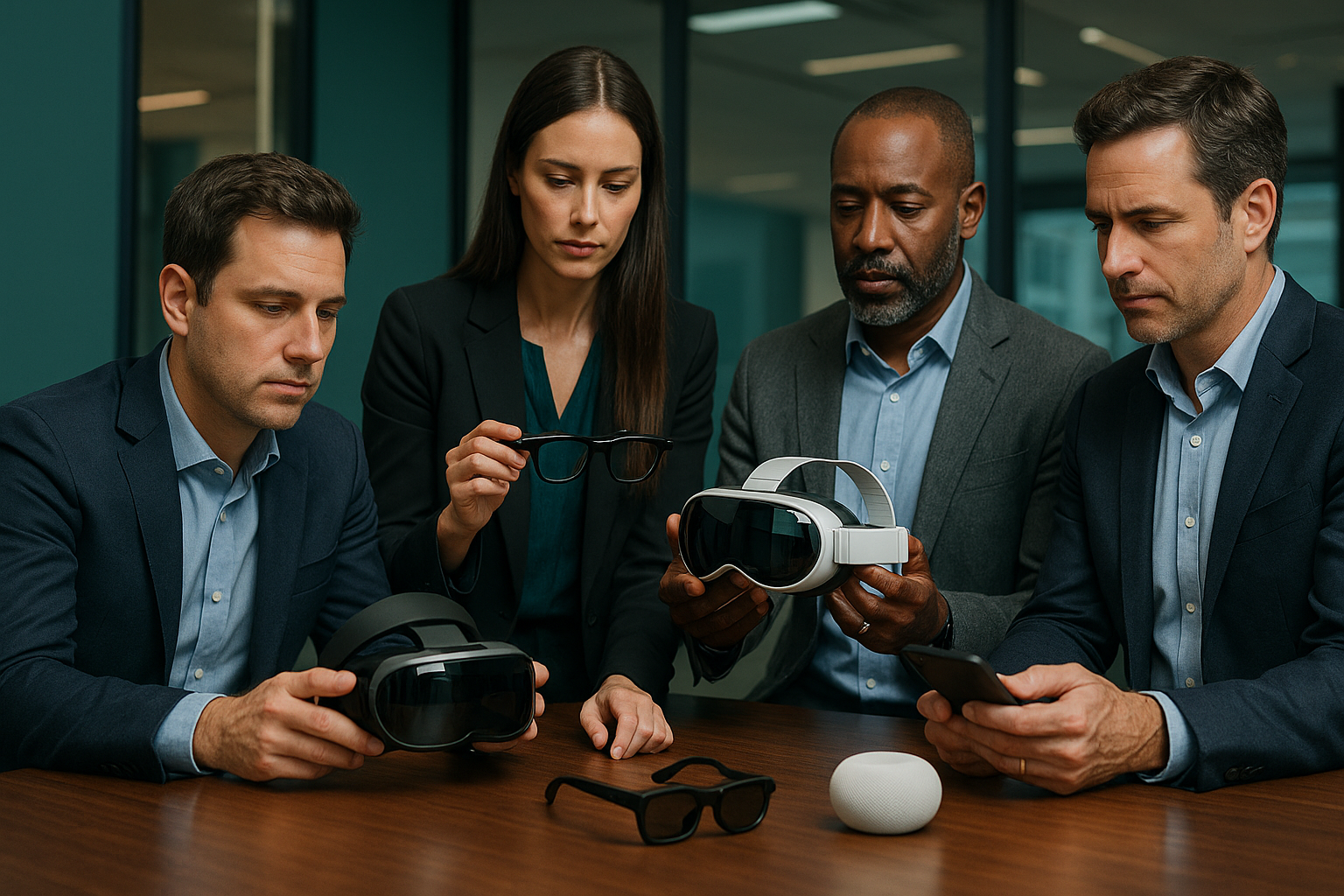
As models become more capable, the next strategic question becomes where and how they should be embedded. Smart glasses, spatial computing devices, voice-first assistants, and other ambient systems all represent attempts to move AI closer to how people actually work and live. The goal is not just more intelligence. It is less friction between intent and action.
That is where hardware becomes strategically powerful. Hardware can shape behavior, workflow, attention, and product lock-in in ways pure software often cannot.
| Software-Led AI Phase | Emerging Device-Led AI Phase | Strategic Difference |
|---|---|---|
| AI lives mainly in apps and browsers | AI moves into dedicated or ambient devices | Interface control becomes more valuable |
| Users open tools when needed | AI may become continuously available | Faster, more natural interaction loops |
| Monetization flows through subscriptions and APIs | Monetization can extend into hardware ecosystems | Broader revenue and lock-in potential |
| Competition is mostly model quality | Competition expands to form factor and experience design | Product strategy becomes multidimensional |
Why OpenAI Might Want More Than a Model Business
Model leadership is powerful, but it is also exposed. If AI companies rely only on models and APIs, they remain vulnerable to platform intermediaries, distribution dependence, and commoditization pressure. Hardware offers a different kind of leverage. It creates direct user relationships, stronger ecosystem control, and potentially a more durable way to shape how people access intelligence.
In other words, owning the device layer could help OpenAI avoid becoming just a backend engine for someone else’s experience. That is a major strategic incentive.
It also explains why a hire from Apple matters. Apple is still one of the strongest companies in the world at turning ecosystem strategy into product behavior. Pulling hardware talent from that environment suggests OpenAI wants more influence over the full AI experience stack.
Why This Matters for Business Leaders Too
At first glance, this may look like a consumer-tech story. It is not only that. Hardware shifts eventually affect enterprise behavior too. The interfaces that win in consumer environments often influence what professionals expect at work. If AI becomes more ambient, wearable, spatial, or constantly available, business workflows will change along with it.
That means leaders should not think about AI only as something inside copilots, dashboards, or software suites. They should also watch the emergence of device-led AI experiences because those may redefine how teams gather information, communicate, make decisions, and take action.
This is related to the broader pattern we have already seen in frontier model control, platform strategy and demand quality, and AI competition beyond simple model rankings. The next stage of competition is widening.
What to Watch Next
The most important thing to watch is not just whether OpenAI builds a device. It is what kind of device logic it pursues. Is it chasing wearables, smart glasses, voice-first systems, spatial interfaces, or some entirely new category? Does it want a mass-market companion, a premium productivity device, or a new kind of enterprise interface?
Those choices will reveal whether the goal is incremental expansion or a more radical attempt to redefine the AI experience layer.
For now, this hire is best read as a strategic clue. OpenAI appears to be investing in the idea that AI hardware will matter, and that is something business leaders should take seriously.
Conclusion
OpenAI’s reported hire from Apple’s Vision Pro and smart glasses leadership is not just a talent move. It is a signal that the next AI battle may increasingly involve hardware, interface design, and ownership of the user experience. As models improve, the real differentiator may become the products that wrap around them and make that intelligence useful, present, and hard to leave.
For companies building AI strategies today, the lesson is simple. Watch the device layer. The future of AI may not arrive only through better software. It may arrive through entirely new ways of experiencing computing itself.
FAQs
Why is this OpenAI hire important?
Because it suggests OpenAI may be investing more seriously in hardware and device strategy, not just model development.
Why does AI hardware matter?
Hardware can shape how people interact with AI, create stronger ecosystem control, and open new monetization paths beyond APIs and subscriptions.
Does this mean OpenAI will build smart glasses?
Not necessarily, but the hire strengthens the signal that OpenAI is exploring device-led AI experiences seriously.
Why should businesses care?
Because the interfaces that win in AI can reshape workflows, user expectations, and how intelligence gets embedded into everyday work.
Related reading: OpenAI’s Limited GPT-5.6 Release Signals a New Phase of AI Access Control, Why AI Demand Quality Matters More Than Usage Hype, What Competitive AI Parity Means for Business Risk, and Bloomberg.











Leave a Reply