



Introduction
“Success is not final, failure is not fatal. It is the courage to continue that counts.”
– Winston Churchill
Digital transformation in SMEs means reshaping how smaller and mid-sized companies create value, serve customers, and develop people with digital tools. When we treat digital transformation in SMEs as a clear business strategy instead of a shopping trip for software, we unlock real growth. Without that shift, many projects stall, even when budgets are large.
The problem is simple to describe and hard to fix. Leaders feel pressure to act fast, but they face limited time, talent, and money. They buy platforms, move some training online, and still do not see better performance or stronger leadership.
In this article, I walk through a proven, research-backed framework called DASAT that gives digital transformation in SMEs a practical, cyclical structure. I connect every phase to people, culture, and leadership, and I show where our work at iAvva AI fits in, from micro coaching to AI strategy. By the end, you can see a clear path from first assessment to measurable, sustained growth.
If that sounds like what your company needs, keep reading and match each section to where your organization sits right now.
Key Takeaways
Before we explore the details, here are the main ideas that guide this playbook.
- Digital Transformation Is a Strategic, People-First Effort. Technology matters, yet leadership, skills, and culture decide whether tools change daily work. When people feel supported, adoption rises and business results follow.
- DASAT: A Practical, Cyclical Framework for SME Growth. Digital Awareness, Digital Strategy and Roadmap, Digital Adoption and Implementation, and Digital Transformation Continuous Improvement repeat in a loop. Each pass through the loop makes your company more capable.
- Leadership Capability Is the Number One Predictor of Success. Research from Harvard Business Review shows most large change efforts fail, often because leaders treat them as side projects. When leaders model learning and data use, digital transformation in SMEs gains real traction.
- Hybrid Human Plus AI Coaching Drives Scalable Behavior Change. iAvva AI blends daily micro coaching with human expertise, so even stretched managers get steady support. That mix turns abstract strategies into everyday habits.
- Start Small, Measure Relentlessly, Improve Continuously. A few focused initiatives, clear metrics, and tight feedback loops beat a giant, vague program. DASAT helps you repeat what works and quietly drop what does not.
What Is Digital Transformation In SMEs – And Why Does It Matter Now?
Digital transformation in SMEs describes a deep shift in how smaller organizations design business models, processes, and people practices with digital tools. It goes far beyond buying apps, because it touches strategy, culture, and daily behavior. When US-based SMEs treat this shift as ongoing work, they improve performance and stay competitive.
According to IDC, global spending on digital transformation will reach about 3.4 trillion dollars by 2026. At the same time, Harvard Business Review reports that between 56 and 70 percent of such efforts fail. That gap is exactly why HR, CLOs, IT leaders, and the C-suite need a structured, people-centered approach.
Defining Digital Transformation Beyond “Buying Tools”
Digital transformation in SMEs differs from simple digitization or digitalization. Digitization means turning analog content into digital form, such as scanning paper contracts or storing files in a cloud drive. Digitalization means improving an existing process, for example moving performance reviews into an HRIS or sending invoices electronically.
Digital transformation goes further. It asks how the company makes money, serves customers, and organizes work, then redesigns all three with data and technology. For instance:
- A local training firm might add subscription learning communities.
- A manufacturer could move to sensor-based maintenance.
- A retailer may blend online ordering with in‑store pickup.
In every case, the business model and daily work both change.
This shift also reshapes the value chain. Tools like HubSpot CRM, Salesforce, or cloud ERPs connect sales, finance, supply chain, and HR so information flows without retyping. Managers read live dashboards instead of static reports and make faster decisions. Employees need different skills, different habits, and different leadership support to thrive in that environment.
Most important, digital transformation in SMEs is never finished. As McKinsey notes, high performing companies keep scanning new technology and adjusting their models and processes. That means leaders must treat transformation as a cycle of learning, not a single project with an end date.
Why Digital Transformation Is Now Mission-Critical For US SMEs
For US SMEs, the timing pressure is real. According to the U.S. Small Business Administration, small businesses make up 99.9 percent of US firms and nearly half of private sector jobs. When this segment lags on digital capabilities, entire local economies feel the impact.
SMEs now compete with digital-native firms on platforms run by Amazon, Shopify, and Google. They manage hybrid and remote teams across time zones using tools such as Microsoft Teams and Zoom. They need to sell to customers who expect fast, personalized service and smooth digital experiences as a basic standard.
Done well, digital transformation in SMEs raises efficiency, speeds up decision making, and opens new revenue sources like subscription services or online courses. Research gathered by the OECD links higher digital maturity in smaller firms with stronger productivity and export growth. That is the upside.
The risk side is also clear. Without a framework and strong leadership development, SMEs often assemble a patchwork of apps with little integration or adoption. Projects drain budgets, staff burn out, and leaders lose trust in future initiatives. A structured model like DASAT helps avoid that trap by linking tools directly to strategy, skills, and behavior change.
What Makes Digital Transformation In SMEs Different From Enterprises?
Digital transformation in SMEs plays out very differently than in large enterprises because context, capacity, and decision making structures are not the same. Smaller firms balance limited resources with faster decision cycles and heavier dependence on a few key people. That mix demands a specific playbook.
Research from the OECD and World Bank shows that company size, managerial education, and international exposure shape adoption patterns. For HR, CLOs, and IT leaders, this means copying an enterprise roadmap rarely works.
The SME Reality – Constraints, Agility, And Dependence On Key Leaders
Most SMEs live with strict resource limits. Budgets for HR, L&D, and IT are small, and one person often carries several roles, such as HR plus operations or IT plus finance. That reality shapes every decision about digital transformation in SMEs, from which platforms to select to how much training time is realistic.
Size differences inside the SME category also matter.
- Micro firms with fewer than 10 employees may use only basic tools like email, a simple website, and maybe QuickBooks.
- Medium firms with 200 employees might run cloud ERPs, CRM, and advanced analytics.
Studies summarized by OECD show that digital maturity usually rises with size, yet that pattern changes when managers have strong education or international experience.
SMEs also tend to have flatter structures. Fewer layers can mean quicker choices and faster pilots, which is a strength. At the same time, processes are often informal and live in people’s heads, not documented workflows. That makes it easy to add random apps without a clear plan.
Finally, decision power often rests with the owner or a small group of senior leaders. Their mindset about technology, risk, and learning shapes the entire effort. When they invest in their own development, models like DASAT become much easier to apply.
Determinants And Barriers That Shape SME Digital Transformation
Several research-backed factors push digital transformation in SMEs forward. Managerial education and a clear digital mindset are especially important, as shown by studies cited by OECD and European Commission. Leaders who read data, study new practices, and seek external input are more likely to modernize their firms.
Internationalization is another strong driver. SMEs that sell abroad often adopt e‑commerce, digital logistics, and secure payment systems faster. Work from OECD links export activity with higher levels of CRM, ERP, and analytics usage, even in smaller firms. That external pressure raises the bar for digital skills and customer experience.
On the barrier side, money and skills lead the list. Many SMEs fear large up‑front costs or long contract terms for software like SAP or Oracle, and they lack in‑house data or cybersecurity experts. Cyber attacks on small companies have grown, and IBM Security reports that the average data breach now costs millions of dollars, a serious threat for smaller firms.
Cultural and structural issues also slow progress. Without a clear roadmap, departments pick their own tools and data stays stuck in silos. Employees may worry about job loss or constant monitoring. For that reason, any serious plan for digital transformation in SMEs must include leadership development, culture work, and broad skill building from day one.
How The DASAT Framework Gives SMEs A Proven Path To Digital Growth
The DASAT framework gives digital transformation in SMEs a simple, repeatable structure built around four phases. Digital Awareness, Digital Strategy and Roadmap, Digital Adoption and Implementation, and Digital Transformation Continuous Improvement work together in a loop. Each cycle strengthens both technology and human capabilities.
Unlike many enterprise models, DASAT speaks directly to the constraints and strengths of SMEs. It helps leaders pick a few high‑impact moves, link them to people development, and learn quickly from results.
Overview Of The DASAT Framework For SMEs
At a high level, DASAT asks four questions:
- Digital Awareness – What do your people know and believe about digital tools, AI, and data?
- Digital Strategy And Roadmap – Why are you changing and which areas matter most now?
- Digital Adoption And Implementation – How will you run projects and support people through change?
- Digital Transformation Continuous Improvement – What will you measure, and how will you adjust?
Here is a simple way to see it.
| Phase | Core Question | Primary Owners |
|---|---|---|
| Digital Awareness | What do we know and where are the gaps? | HR, L&D, C‑suite, IT |
| Digital Strategy And Roadmap | Why and where will we change first? | C‑suite, HR, IT, Finance |
| Digital Adoption And Implementation | How will we redesign work and support people? | IT, HR, Line Leaders |
| Digital Transformation Continuous Improvement | What is working and what needs refinement? | C‑suite, HR, Analytics, IT |
This cycle repeats. Insights from Continuous Improvement feed into new Awareness activities and updated Strategy. Over time, your SME moves from occasional projects to a steady rhythm of digital improvement.
AI‑powered offerings like iAvva AI Coach and our AI strategy services map well to this structure. They give HR, CLOs, and IT leaders practical tools to assess readiness, develop leaders, and track change across the DASAT phases.
Why DASAT Works Specifically For SMEs
DASAT fits SMEs because it starts with business value and people, not with a shopping list of platforms. Instead of asking which tool to buy next, leaders ask which outcomes matter most, such as faster quote cycles or better employee retention, and work backward from there. That mindset saves money and reduces change fatigue.
The framework also respects resource limits. Rather than launching many projects at once, DASAT supports a small number of staged initiatives.
- A micro firm might focus on awareness and one customer experience project, like adding online booking.
- A medium manufacturing company might use DASAT to sequence ERP integration, basic analytics, and a leadership program for plant managers.
Another reason DASAT works for digital transformation in SMEs is that it ties technology directly to capability building. Every phase includes questions about skills, behaviors, and culture. That gives HR and CLOs a clear role, not just as trainers, but as co‑owners of the plan. Research from Bersin by Deloitte shows that companies with strong learning cultures are more than 50 percent more productive than peers, which strongly supports this focus.
In the rest of the article, I walk through each DASAT phase in practical terms. Along the way, I show where iAvva AI can shorten the path from strategy conversations to daily behavior change.
Digital Awareness – How Do We Build Literacy And Inclusion Before We Transform?
Digital awareness is the starting point for digital transformation in SMEs because people cannot use what they do not understand or trust. When leaders skip this phase, adoption suffers and projects look like failures. A solid awareness base makes later technology rollouts far smoother.
For HR, CLOs, and IT directors, this phase is where you surface gaps in skills, attitudes, and access. It also sets the tone for inclusion, which is especially important for front‑line and non‑desk workers.
Assessing Digital Literacy And Mindsets Across The Organization
Before we design any courses or introduce AI tools, we need a clear picture of current literacy and mindset. That means asking what people can actually do with tools like Microsoft 365, Google Workspace, Slack, or Zoom, not just whether licenses exist. It also means understanding how leaders think about data, experimentation, and automation.
Useful steps include:
- Short surveys and self‑assessments about tool usage and confidence.
- Simple online diagnostics to gauge skills.
- Focus groups and interviews across roles and locations to reveal fears, workarounds, and bright spots.
For example, a group of plant supervisors might share that they rarely open dashboards because the metrics feel confusing. That is pure gold for a learning plan.
It helps to segment results by role, tenure, location, and demographic factors. Studies from the OECD show that digital divides often run along age, education, and urban‑rural lines. Seeing where gaps cluster lets you choose targeted interventions instead of one generic course for everyone.
Once we see the pattern, we can prioritize. Maybe frontline employees need basic mobile app skills and security awareness, while managers need help reading analytics and guiding hybrid teams. Platforms like iAvva AI Coach can then personalize prompts and micro lessons to each group instead of sending the same content to all.
Designing Inclusive Digital Literacy And Leadership Awareness Programs
With the baseline in hand, the next task is to design programs that everyone can access and use. That means short, mobile‑friendly content that fits into real workdays, not long classroom sessions that pull people away for hours. It also means audio options, clear language, and simple interfaces that support neurodiverse employees.
Good awareness programs typically cover three layers:
Foundation For All Staff
Topics like secure passwords, phishing awareness, safe data handling, and effective use of chat and video tools.Manager‑Focused Content
Practical topics such as basic AI concepts, data ethics, leading hybrid teams, and coaching people through change.Leadership Stories And Case Examples
Real examples from similar SMEs showing how they improved customer experience, productivity, or resilience through digital moves.
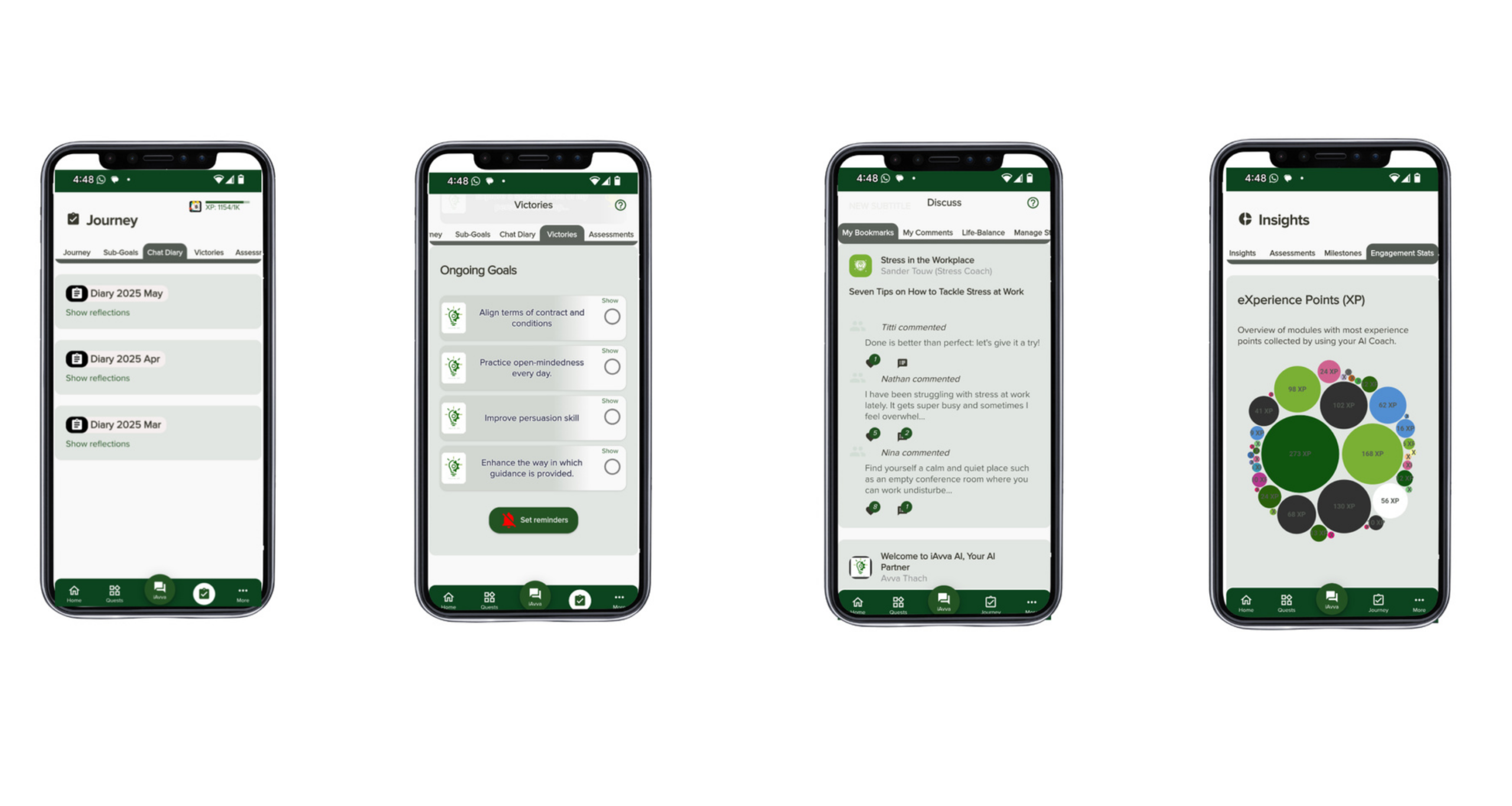
Here is where iAvva AI shines. Our iAvva AI Coach app delivers five‑minute, neuroscience‑informed prompts every day on phones or laptops in 19 languages. Leaders receive short questions and reflections on topics like digital mindset, inclusive leadership, and data‑informed decisions. Over time, these prompts shape habits without adding heavy time pressure.
Because iAvva AI includes analytics dashboards, HR and L&D teams can watch participation and sentiment by group. According to Bersin by Deloitte, companies that track learning data closely are far better at improving performance over time. That same principle holds for digital awareness, and AI‑based coaching gives smaller firms access to that kind of insight.
Digital Strategy And Roadmap – How Do We Turn Awareness Into A Real Plan?
Once we understand awareness and skills, digital transformation in SMEs needs a clear strategy and roadmap. This phase answers why the company is changing, where it will focus, and how projects align with people plans. Without this clarity, tools spread randomly and value remains low.
For C‑suite leaders, HR, and IT directors, this is where you sit at one table and connect business goals with technology and capability moves. It turns ideas from workshops into a staged plan that fits current capacity.
Aligning Digital Initiatives With Business Goals And People Strategy
A strong starting question is: Why are we pushing digital transformation in our SME right now? Common answers include revenue growth, cost reduction, resilience during shocks, and better talent attraction. Making those aims explicit helps every later decision.
Next, list the business domains that matter most in the next 12 to 24 months:
- Customer experience
- Operations and supply chain
- Finance and risk
- HR, learning, and talent
- Product or service innovation
For each one, leaders can define desired outcomes, such as faster quote response, fewer stockouts, or higher leadership bench strength. Research from MIT Sloan Management Review shows that companies with clear digital strategies outperform peers on revenue growth and profitability.
At this point, people strategy must sit beside technology plans. HR and CLOs can define digital competencies for each role and level, including behaviors like data‑informed decision making and coaching in hybrid settings. Every roadmap item should have a linked learning or coaching element. That way, new CRM or ERP deployments do not arrive without human preparation.
Objectives and Key Results (OKRs) help bring this to life. Inside iAvva AI Coach, Strategic Alignment features let leaders tie personal goals and coaching themes to company OKRs. That keeps daily leadership practice connected directly to the roadmap, not floating on the side.
Creating A Prioritized, Phased Roadmap SMEs Can Actually Execute
With priorities and competencies defined, we still need to respect capacity. Digital transformation in SMEs fails when leaders overload staff with too many initiatives at once. Instead, you can rate potential projects on factors like:
- Expected business impact
- Cost and effort
- Integration complexity
- Risk and security impact
- Change impact on people
A practical roadmap usually includes three horizons:
Short Term (0–6 Months)
- Quick wins (e.g., automating simple forms, launching awareness programs, cleaning customer data).
- Early pilots that show visible benefits fast.
Medium Term (6–18 Months)
- CRM rollout or consolidation.
- Basic analytics dashboards.
- A new learning platform or systematic leadership program.
Long Term (18+ Months)
- AI‑enabled offerings or pricing models.
- Larger shifts in operating or revenue models.
Governance matters here. A small steering group with leaders from HR, IT, operations, finance, and key business units can meet monthly or quarterly to review progress. According to Project Management Institute, projects with active executive sponsors are far more likely to meet goals. Clear decision rights and review rhythms keep the roadmap from becoming a static slide deck.
Finally, set aside time and budget for leadership coaching, culture work, and training, not just licenses and integrations. With iAvva AI, SMEs can give every manager access to daily micro coaching plus targeted 1‑to‑1 or group sessions, all tied back to roadmap items. That way, behavior change unfolds in step with technical launches.
Digital Adoption And Implementation – How Do We Drive Real Behavior Change, Not Just New Tools?
Digital adoption and implementation describe the moment when strategy meets reality. Here we see whether digital transformation in SMEs translates into new ways of working or remains a list of features no one uses. The focus shifts from planning to redesigning work and supporting people through change.
This is where IT, HR, and line leaders must move in sync. Technology choices, process mapping, change communication, and coaching all need to line up.
Redesigning Workflows, Roles, And Governance For The Digital Era
A common trap in digital transformation in SMEs is “lift and shift.” Leaders take a clumsy manual process and put it into a system without improvement. To avoid that, first map current workflows and pain points across sales, operations, finance, and HR. Then design future workflows that reduce handoffs, retyping, and waiting.
For example, a small manufacturing firm might map the quote‑to‑cash process and find multiple spreadsheets and email threads. A better design could connect CRM, pricing tools, and invoicing, with clear status visibility for sales and finance. According to McKinsey, process redesign combined with automation can cut process times by 30 to 50 percent in many settings. That is real value.
Role definitions must change too. Managers shift from supervising tasks to enabling teams through dashboards and digital collaboration spaces. Good performance now includes:
- Accurate data entry and documentation.
- Clear digital communication.
- Smart use of automation and analytics in everyday decisions.
HR can update job descriptions and performance criteria to reflect this reality.
Governance completes the picture. IT sets standards for security, data privacy, and vendor selection. HR and compliance leaders agree on practices like access controls and acceptable use. Together they design incident response plans so the company can react quickly to cybersecurity issues, which IBM Security notes are increasingly costly for smaller firms.
Embedding Change Management, Coaching, And Micro Learning Into Implementation
Even the best design will struggle if people feel confused or threatened. Change management gives them context, support, and a voice. A simple but strong narrative explains why the company is changing now, what success looks like, and what support people can expect.
Helpful practices include:
- Change champions and super users in each department who test systems early and help peers.
- Regular communication through town halls, intranet posts, and team meetings.
- Feedback channels such as short surveys or open forums so teams can raise issues quickly.
Research from Prosci shows that projects with excellent change management are about six times more likely to meet objectives than those with poor support. That alone justifies investment in this area.
Micro learning and coaching fill in the daily gaps. Instead of one long workshop, managers receive small, task‑specific lessons at the moment of need. For example, before go‑live of a new CRM, sales leaders might complete a series of short prompts on coaching reps with dashboards and using data in pipeline reviews.
iAvva AI plays a central role here. Our AI Coach provides daily micro coaching on topics like leading through change, remote communication, and AI readiness. Mentor and Coach modes support both individual leaders and broader company programs. Real‑time analytics help HR and L&D see which groups lean in and where more human coaching or communication is needed. This mix of AI and human support turns adoption from a one‑time event into a steady climb.
As Peter Drucker is often quoted,
“The greatest danger in times of turbulence is not the turbulence; it is to act with yesterday’s logic.”
Digital adoption supported by coaching helps leaders avoid that trap.
Digital Transformation Continuous Improvement – How Do We Measure, Learn, And Keep Evolving?
Digital transformation in SMEs only delivers lasting advantage when companies keep measuring, learning, and adjusting. Continuous improvement turns one‑off projects into a steady habit of refinement and innovation. It closes the DASAT loop and feeds new insight into Awareness and Strategy.
For leaders, this phase answers a simple question: after all the effort and spend, what changed in systems, business results, and human behavior, and what should we adjust next?
Measuring Technical, Business, And Human Outcomes
Good measurement starts with clear, layered indicators.
Technical metrics might include:
- System uptime and response times.
- Usage rates and feature adoption.
- Error rates and incident counts.
These numbers show whether tools are stable and used often.
Business metrics track results tied directly to goals, such as:
- Quote turnaround time.
- Order accuracy and on‑time delivery.
- Revenue per customer or per employee.
- Cost per ticket in customer service.
Research from McKinsey links higher digital intensity in processes with faster revenue growth and better margins, but only when leaders connect technology to specific outcomes.
The human layer matters just as much. You can track:
- Digital confidence and perceived readiness.
- Leadership behaviors and coaching frequency.
- Learning completion and on‑the‑job application.
According to Gallup, teams in the top quartile of employee engagement show 23 percent higher profitability than those in the bottom quartile. When digital transformation in SMEs raises both engagement and digital skills, financial results usually improve as well.
Platforms like iAvva AI provide extra visibility. Our dashboards show participation in micro coaching, leadership growth trends, and links to OKRs. HR and CLOs can compare leadership development data with adoption and performance metrics to learn which behaviors drive results. That insight supports smarter investment decisions for the next DASAT cycle.
Creating A Culture Of Experimentation And Ongoing Capability Building
Measurement only matters if it leads to better choices. To lock in continuous improvement, SMEs benefit from simple routines that treat each project as a learning opportunity.
Consider practices such as:
- Regular roadmap reviews to assess progress and adjust priorities.
- Quarterly retrospectives on major initiatives, with clear “start, stop, continue” outcomes.
- Lessons learned sessions where teams share both successes and missteps.
Small experiments become a normal part of work. A sales team might test a new email sequence with a subset of leads, while an operations team pilots a new scheduling approach in one site. Clear hypotheses and simple metrics make these experiments easy to evaluate. Work from OECD around dynamic capabilities shows that this kind of experimentation supports long‑term resilience.
Capability frameworks and learning plans need updates as tools and markets move. HR and L&D can review competencies yearly, adjust for new AI tools, and refresh programs. Ongoing use of iAvva AI Coach reinforces habits of reflection, ethical thinking, and experimentation by nudging leaders every day to pause, review data, and choose deliberate actions.
For distributed or global SMEs, our multi‑language, mobile‑friendly design keeps leaders connected across locations. Combined with human coaching and AI strategy services, this supports a steady rise in both technical and human maturity, rather than one big push followed by silence.
How iAvva AI Becomes The Strategic Bridge Between AI, Leadership, And SME Growth
Digital transformation in SMEs often breaks at the bridge between strategy, technology, and everyday leadership behavior. iAvva AI exists to strengthen that bridge with a mix of AI‑driven micro coaching, human coaching, and AI‑focused consulting. We bring enterprise‑level expertise to SME scale, without heavy overhead.
Our founder’s background includes more than twenty years of leadership coaching and large program work at Accenture, guiding billion‑dollar initiatives. Through Techstars acceptance and partnerships with Microsoft, SBDC advisors, and Umbrex consultants, we bring both depth and broad support to clients.
The iAvva AI Ecosystem: From Micro Coaching To Strategic AI Consulting
At the center sits the iAvva AI Coach platform. It delivers five‑minute self‑reflection and micro coaching sessions on web, iOS, and Android devices in 19 languages. Prompts draw on neuroscience, positive psychology, and ICF‑aligned coaching methods, helping leaders build habits of focus, empathy, and ethical decision making. Early users report higher self‑awareness and productivity.
Key capabilities include:
- Coach Mode for individual development.
- Mentor Mode for organizational programs and cohorts.
- Strategic Alignment features that connect personal leadership goals with business OKRs.
- Real‑time analytics dashboards that give HR and L&D clear visibility into engagement and growth.
Design choices such as audio options and clean layouts support neurodiverse users, and the system remains GDPR compliant and encrypted.
Alongside the platform, we deliver 1‑to‑1 and group coaching, with more than 1,400 hours already provided across sectors like healthcare, manufacturing, finance, energy, and public services. These sessions address complex topics such as board communication, deep conflict, and strategic career decisions that AI alone cannot handle.
Finally, our AI‑defined IT Project Management training and AI strategy consulting help bridge the gap between business and technology teams. Using tools like HubSpot CRM, Asana, and specialized AI operations platforms, we co‑design AI and automation projects for SMEs in fields like healthcare revenue cycles and renewable energy optimization. This side of iAvva AI makes sure the technical path matches the human path.
Where iAvva AI Fits Across The DASAT Framework
Across DASAT, iAvva AI slots into each phase in clear ways.
During Digital Awareness
Micro learning within iAvva AI Coach introduces AI concepts, data ethics, and digital leadership mindsets in tiny, daily pieces. Leaders gain language and confidence before major projects begin.In Digital Strategy And Roadmap
Our executive coaching and AI strategy services help C‑suite, HR, and IT leaders clarify digital ambition, evaluate options, and shape realistic plans. Because we work across many industries through Techstars and partner networks, we can share patterns and examples from peers.During Digital Adoption And Implementation
Daily micro coaching supports managers as they lead through real rollouts. Prompts on feedback, psychological safety, and data‑informed decisions land alongside new dashboards and platforms. Our AI‑defined IT Project Management programs also build shared methods across business and IT, reducing misalignment that often harms digital transformation in SMEs.In Digital Transformation Continuous Improvement
Analytics from iAvva AI Coach help leaders see where behavior change is sticking and where more support is needed. We can correlate engagement with business results and refine programs. This turns leadership development into a measurable lever inside the DASAT loop, not a side activity.
In short, iAvva AI gives SMEs access to the kind of integrated leadership and AI support that large enterprises get from big consultancies, but in lighter, more flexible formats that match SME realities.
Putting It All Together
Digital transformation in SMEs is not just about apps, cloud platforms, or AI models. It is a long‑term shift in how smaller firms think, decide, learn, and serve customers, all powered by digital tools. When leaders see it that way, they stop hunting for a magic product and start building repeatable practices.
The DASAT framework gives a simple structure for those practices:
- Digital Awareness surfaces what people know and feel.
- Digital Strategy And Roadmap connects that insight to clear, staged plans.
- Digital Adoption And Implementation reshapes workflows and supports people through change.
- Digital Transformation Continuous Improvement closes the loop with measurement and learning.
Across every phase, leadership and culture matter as much as the tools. HR Directors, CLOs, IT leaders, and the rest of the C‑suite share responsibility for digital literacy, psychological safety, and data‑informed thinking. According to Harvard Business Review, most large change programs fail, yet those that combine clear strategy with strong people practices stand a much better chance. SMEs are no different.
iAvva AI exists to make that combination practical. With AI‑powered micro coaching, experienced human coaches, and AI‑centered consulting, we help SMEs turn intent into behavior at scale.
A practical next step:
- Run a quick awareness and readiness assessment.
- Gather your cross‑functional group.
- Sketch your first DASAT‑based roadmap, with one or two high‑impact priorities.
If you want a partner on that path, we would be glad to help you explore how iAvva AI Coach and our services fit your goals.
Frequently Asked Questions
Question: What Is The First Practical Step An SME Should Take To Start Digital Transformation?
The first practical step is to run a simple digital awareness and readiness assessment across the organization. Include questions on tools, skills, attitudes, and security habits, and involve HR, IT, and key business leaders. Use the findings to pick one or two quick wins and the biggest capability gaps. iAvva AI can then support leaders with rapid mindset and skill shifts through micro coaching and targeted consulting.
Question: How Can SMEs Measure ROI On Leadership Development In Digital Transformation?
SMEs can measure ROI by tying leadership development to clear, shared metrics. Start with adoption rates, process cycle times, error reduction, and employee engagement scores before and after programs. Use platforms like iAvva AI to track coaching participation and goal progress, then compare those trends with business indicators. Add qualitative evidence from manager and employee stories to round out the picture.
Question: Do Very Small Or Micro Businesses Really Need A Formal Digital Transformation Framework?
Yes, even very small businesses benefit from a light framework, though it can stay simple. DASAT helps micro firms focus on awareness, one or two strategic priorities, and steady, low‑risk adoption. External partners and cloud platforms provide capabilities that small teams cannot build alone. Micro coaching from iAvva AI fits teams of under ten people without adding big time demands.
Question: How Can HR And L&D Leaders Influence Digital Transformation If They Don’t Control The IT Budget?
HR and L&D leaders can shape digital transformation in SMEs by owning the capability agenda. They can present clear data on skills gaps, engagement, and turnover to strengthen the case for change. By co‑leading DASAT phases on Awareness, Strategy, and Continuous Improvement, they move from training providers to strategic partners. Proposing scalable options like iAvva AI often fits within modest budgets and standard IT requirements.
Question: What Risks Should SMEs Watch Out For When Adopting AI In Their Transformation?
Key risks include data privacy breaches, weak security, and non‑compliant data use. Over‑automation can also ignore human strengths, damage trust, or create unfair outcomes when AI models carry bias. SMEs can reduce these risks through clear governance, ethical guidelines, and transparent communication. Hybrid models, like human plus AI coaching from iAvva AI, keep people in the loop for important decisions.
Question: How Long Does Meaningful Digital Transformation Typically Take For An SME?
Meaningful change usually unfolds over 12 to 36 months, depending on size, sector, and ambition. The most effective SMEs break work into small releases so staff see value within weeks, not years. DASAT supports that pattern by structuring each cycle of awareness, strategy, adoption, and improvement. iAvva AI accelerates behavior change so leaders adapt faster and results appear sooner.
Question: Can Distributed Or Global SME Teams Benefit From iAvva AI In Digital Transformation?
Yes, distributed and global teams are a strong fit for iAvva AI. Our mobile‑friendly AI Coach runs on web, iOS, and Android and supports 19 languages, which suits cross‑border work. Daily micro coaching keeps leaders aligned on shared behaviors across time zones. Analytics give HR and L&D a single view of leadership growth and engagement across all locations.













Leave a Reply