




How an AI Business Coach Can Support Strategic Decisions Without Replacing Human Judgment
For SMBs, an ai business coach can sharpen strategic decision-making without replacing human judgment. This post lays out a governance-driven framework to weave AI coaching into existing leadership programs, covering data sources, decision gates, and guardrails. You’ll learn how to measure impact with concrete metrics, preserve executive judgment, and implement practical steps that blend AI insights with human expertise.
1. AI Coaching and Human Judgment: A Complementary Model for Strategy
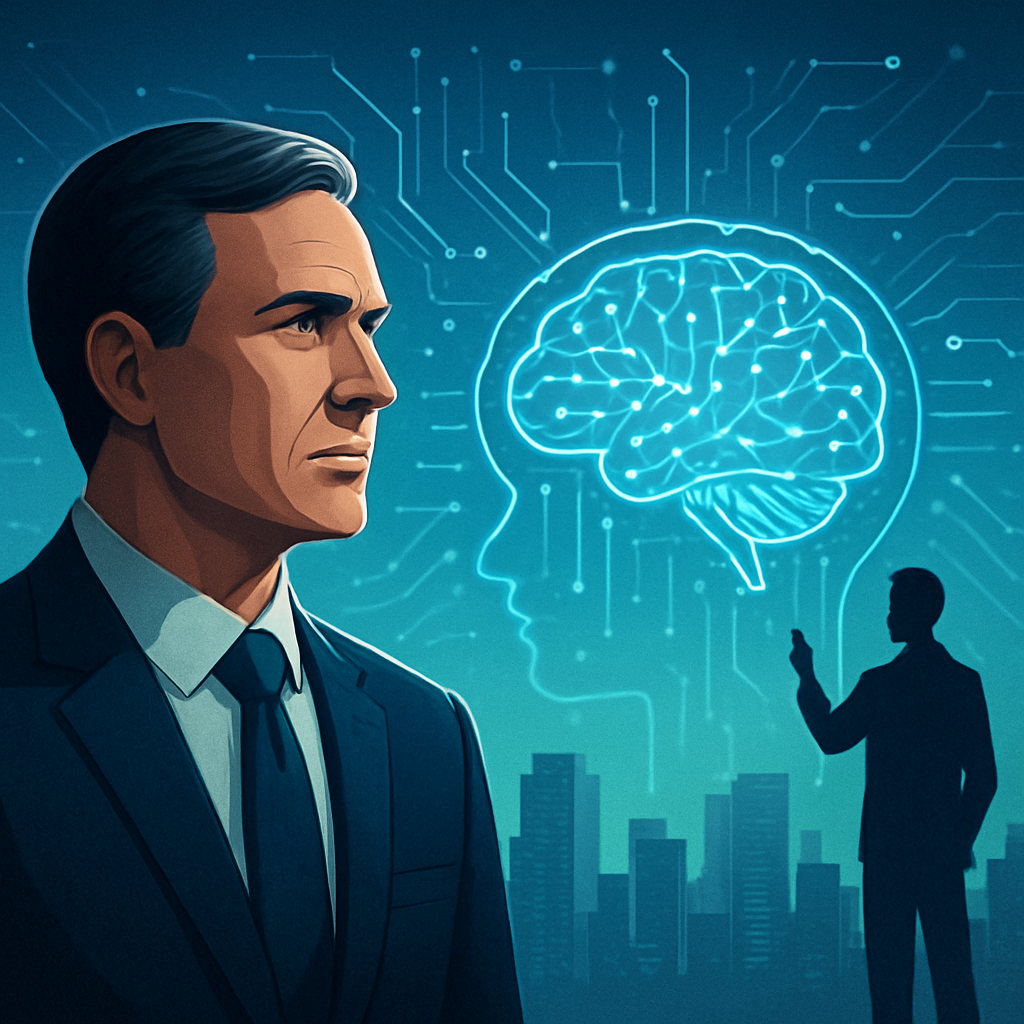
In a real SMB strategy room, an ai business coach acts as a data lens, not a decision-maker. The AI coaching tools excel at synthesizing inputs, spotting patterns, and tracking progress across initiatives, while human judgment carries ethics, context, and relational leadership. Treat the AI as a smart assistant that keeps the team honest about trade-offs, timing, and stakeholder impact.
Key distinction: AI coaching tools process large data sets and generate scenarios; human leaders interpret these signals through values, political dynamics, and customer relationships. The result is a cooperative loop where insights inform choices, but decisions stay with humans.
A practical loop looks like: AI analyzes data and flags risks, humans interpret with context, and executives decide, using AI input as a structured signal to guide monitoring and iterative planning.
How the cooperative loop works in practice
First, AI compiles plausible futures from current data—performance deltas, capacity constraints, and market signals. Then a human adds context: regulatory considerations, brand risk, and strategic priorities. Finally, leadership decides and uses AI insights to guide execution and adaptive planning.
- Data inputs and quality: Pull from CRM, ERP, project dashboards, and external signals; ensure data privacy and versioning.
- Decision gates: Define stages (Define → Decide → Review) with human sign-offs at each milestone.
Establish data governance and privacy as core prerequisites. Without clear inputs and access controls, AI coaching amplifies errors rather than insight.
Concrete use case: a mid-sized software firm uses an AI-augmented coaching workflow to stress-test a portfolio shift. AI flags margin pressure across product lines and identifies dependency risks; executives weigh these signals against GTM constraints and customer impact, arriving at a revised rollout plan that preserves strategic intent while reducing risk.
Practical limitation: AI coaching is only as good as the data and governance behind it; weak inputs or unclear ownership produce blind spots.
To make this tangible, share a simple diagram that shows AI input feeding human interpretation and executive decision, with an ongoing feedback loop to refine data inputs and thresholds.
The strongest AI coaching outcomes come from integrating governance—clear roles, guardrails, and a cadence that keeps human judgment front and center. This is how you avoid the illusion of AI-driven omniscience and instead gain practical advantage.
Takeaway: adopt a governance-first, loop-based approach so AI coaching supports, not replaces, strategic leadership.
2. A Practical Framework for AI Augmented Strategy
This practical framework starts with a concrete assertion: AI input should sharpen decision quality, not replace human judgment. In SMBs, the real value lies in mapping AI coaching signals—pattern detection, scenario modeling, early risk flags—to the strategic moments where leaders decide. The goal is a governance-first workflow that keeps senior judgment central while letting AI surface options and tell you what to consider.
Framework Components
Three pillars anchor the framework: data readiness, governance, and decision gates. Without clean data and traceable lineage, AI insights are noise. Without explicit governance, bias and privacy risk grow. Without clear gates, teams drift into overreliance and inconsistent outcomes.
- Define strategic objectives and decision points where AI input adds value (portfolio shifts, resource allocation, risk assessment).
- Identify data sources, data governance, and privacy considerations required for AI coaching (ERP, CRM, forecasts, market signals).
- Describe a decision gate process (Define → Decide → Review) to incorporate AI insights at key milestones; assign owners and outputs.
Example: A regional manufacturing firm integrated an AI-driven forecast to flag sudden demand shifts. Leadership used the AI-projected scenarios to reallocate production and adjust procurement; after the cycle, a human decision validated the plan before execution.
| Gate | AI Input | Human Decision | Accountability |
|---|---|---|---|
| Define | Market trends, scenario outputs | Align with strategic objectives | Executive Sponsor |
| Decide | Risk forecast, option analyses | Select plan to execute; adjust budget | CFO/COO |
| Review | Post-implementation metrics | Assess outcomes and learnings | CEO/Steering Committee |
Takeaway: Treat AI as a disciplined amplifier of leadership—define gates, protect ethical boundaries, and let humans decide the strategic terms. Without governance, AI coaching stays a data source; with governance, it becomes a real coaching partner.
3. Roles, Governance, and Guardrails
In practice, the AI business coach only adds value when you embed it in a governance scaffold that names who does what, when, and how decisions are final. Without explicit roles and guardrails, data-driven inputs can drift into unwelcome influence, and judgment becomes reactive to the latest model outputs.
Define a clear trio of roles to avoid overlaps: the AI Coach, the Human Coach, and senior leaders. The AI Coach compiles data-driven insights, scenario outputs, and early risk signals; the Human Coach translates those signals into context-rich guidance, restrains risks that data can’t capture, and keeps conversations anchored to values. Senior leaders own the decision rights and ensure alignment with organizational policy.
- RACI mapping: assign responsibilities for data inputs, interpretation, and decision rights; specify who can accept, modify, or veto AI-driven recommendations.
- Guardrails: establish bias monitoring, data-access controls, and ethics checks aligned with regulatory and organizational values.
- Escalation paths: outline how to handle inconclusive AI outputs or conflicting AI recommendations and when to invoke human-in-the-loop reviews.
A concrete example: in a mid-sized software firm, the executive team defined RACI for AI coaching during quarterly planning. The AI Coach prepared market and competitor scenario analyses; the Human Coach led interpretation and framed implications for product strategy; executives retained final decision rights and signed off on the plan. Within two cycles, portfolio reviews were faster and more data-informed, but decisions still reflected company values and risk tolerance.
Guardrails matter as much as insights. Put in place concrete controls for data privacy, bias detection, and regulatory compliance; make sure every AI-driven recommendation is traceable and contestable.
- Data access controls: isolate sensitive datasets and enforce least privilege for AI inputs.
- Bias monitoring: run periodic audits on outputs and adjust data sources as needed.
- Ethical guardrails: align AI guidance with core values and external standards; require human sign-off for high-stakes decisions.
Escalation pathways should be explicit: if AI suggests a course of action that conflicts with risk tolerance or strategic intent, the decision moves to a human-in-the-loop review with a documented rationale.
Takeaway: governance upfront is non-negotiable – define roles, guardrails, and escalation early so AI coaching augments judgment without rewriting it.
4. Integrating with Existing Leadership Coaching Programs
Embedding an ai business coach into leadership development is not about replacing mentors. For SMBs, the value comes from weaving AI-generated inputs into the cadence of existing programs so human coaches apply context, ethics, and relationship-building where it matters most.
Operationalize integration with a practical framework: align AI inputs with the program’s objectives, specify data sources that feed the AI coach, establish governance and privacy guardrails, and insert AI insights into decision gates your leadership teams already use. Where to start? anchor the coaching cadence by tying AI outputs to established programs like BetterUp or CoachHub, and link AI-driven insights to your internal Store for repeatable cycles. See governance perspectives from IDC and HBR when shaping controls and ethics.
Blended coaching cycle: a practical example
In a C-suite planning session, AI analyzes a year of operating data to surface scenario implications on capacity and cash flow. The human facilitator frames the discussion around values, relationships, and strategic trade-offs, while the AI presents a concise dashboard of risks and opportunities. The combined input feeds a defined decision gate that determines which options move into the executive vote.
- Align objectives and decisions: specify where AI adds value (portfolio balance, scenario planning, risk exposure) and ensure leadership agrees on the yardsticks.
- Data sources and governance: define which data streams feed the AI, how access is controlled, and how privacy is protected.
- Decision gates and cadence: install a Define → Decide → Review loop that integrates AI outputs at key milestones.
- Program integration cadence: map AI coaching to existing session calendars and ensure human coaches maintain control of the facilitation.
- Pilot plan: run a two-quarter pilot with a single business unit before scaling.
A practical tradeoff to expect is increased coordination overhead and potential friction around data privacy. The payoff appears when AI augments the coach’s facilitation rather than trying to replace it, but you must invest in governance, change-management, and clear escalation paths to avoid drift.
Next: design a 90-day pilot that ties AI inputs to a single planning cycle, with explicit governance roles, data sources catalog, and a simple metrics set to gauge early impact.
5. Tools, Evidence, and Practical Application
Tools are accelerants, not replacements. The AI business coach should augment decision prep by surfacing data-driven insights, scenario options, and risk signals that humans would miss in a fast-moving environment. In SMB contexts, the real value comes from weaving these inputs into governance and leadership discipline so AI informs judgment without taking it over.
Practical tooling and data flows
Map data sources to decision gates. In practice that means pulling financials, pipeline health, customer signals, and resource calendars into a secure, privacy-conscious environment. The AI coach then generates 2–4 scenarios with ROI, risk, and trigger conditions. The governance layer is non-negotiable: anonymize sensitive data, enforce role-based access, and run bias checks before any coaching output is used in planning. This approach aligns with broader evidence: IDC notes 93% of companies are in some stage of digital transformation, PwC finds 75% say training and coaching are essential to successful transformation, and HBR reports that integrating AI strategies with leadership coaching significantly boosts transformation effectiveness IDC, PwC, HBR. For practical onboarding, see the store for starter templates.
Concrete example: In a regional SMB planning session, the AI ingests Q2 financials, forecast pipeline, and capacity constraints; it surfaces three scenarios with projected ROI and risk metrics. The executive team uses these as anchors while the CFO validates projections in real time, reducing back-and-forth and keeping the discussion data-grounded.
Be mindful of trade-offs: off-the-shelf AI tooling speeds value but may limit customization; governance overhead grows with the data you ingest; vendor lock-in and data portability matter; change-management friction can blunt early wins if leadership lacks trust.
- Define a narrow pilot objective tied to one decision point to keep the scope controllable.
- Lock data sources and privacy guardrails before you connect tools so you reduce risk.
- Set concrete success metrics upfront including both leading and lagging indicators.
- Involve human-in-the-loop during the pilot to validate AI outputs and build trust.
Takeaway: Start with a controlled pilot anchored to one decision point, and codify data governance before scaling.
6. Measuring Impact and Sustaining Adoption
Measuring the impact of an AI business coach isn’t about a single ROI figure. In practice, value shows up as faster, more informed decisions, clearer alignment across initiatives, and durable adoption at the leadership level. You measure what you govern: speed and quality of decisions, and the degree to which AI input informs rather than dictates the strategic path.
Adopt a two-track metrics framework that combines leading indicators—process health and AI engagement—with lagging indicators—business outcomes that materialize after decisions land.
- Leading indicators: data completeness and cleanliness, preparation time for strategy sessions, frequency and quality of AI interactions, trust in AI outputs (qualitative signals captured in debriefs), and completion of governance audits.
- Lagging indicators: ROI and revenue impact from initiatives guided by AI coaching, time-to-market for prioritized bets, project success rate, and employee engagement with leadership across cycles.
Tie metrics to governance gates so measurement drives behavior, not vanity stats. Pull data from multiple sources—planning documents, coaching platform analytics, CRM and ERP dashboards, and post-session debriefs—to ban data silos and reduce the risk of gaming one metric. Industry data supports this discipline: IDC notes 93% of organizations are in some stage of digital transformation, PwC finds effective training essential for transformation, and Harvard Business Review reports that integrating AI strategies with leadership coaching significantly boosts transformation effectiveness.
Adoption metrics matter as much as outcome metrics. Track how many executives engage weekly, how deeply they rely on AI inputs (depth of prompts, number of insights acted on), and whether coaching cycles compress or extend leadership development timelines. If engagement stalls, re-examine data quality, relevance of AI outputs, and how the inputs align with strategic priorities.
Concrete example: A mid-market manufacturing firm piloted AI coaching to optimize portfolio prioritization. Over three months, AI flagged two high-potential bets the humans had underestimated and helped cut decision cycles from two weeks to four days. The result was faster bets aligned with manufacturing capacity, contributing to on-time delivery improvements and a modest lift in gross margin.
A common misstep is chasing ROI without ensuring adoption and governance keep pace. Without clear escalation paths, bias monitoring, and transparent inputs, leadership might over-trust AI outputs or ignore data quality issues.
Next consideration: institutionalize a quarterly measurement sprint with a defined governance cadence to review data sources, metrics, and guardrails, then recalibrate AI coaching inputs as needed.















Leave a Reply