







Big Data Analytics Consultants: 5 Ways They Turn Data Into Strategic Decisions
Senior Learning and Development and HR leaders increasingly hire a big data analytics consultant to turn fragmented people and operations data into repeatable decision processes that actually change behavior. This piece lays out five practical ways consultants do that, with concrete methods, tools, KPIs, short implementation checklists, and the change management steps you should require from vendors. Read on to judge proposals, scope a pilot, and ensure analytics become part of routine decision making.
1. Align analytics to strategic decisions by framing hypotheses and decision triggers
Start with the decision, not the data. A big data analytics consultant’s first job is to translate a strategic choice into a testable hypothesis and an explicit decision trigger so analytics produces a yes/no action, not an ambiguous score.
Method: Use CRISP-DM style scoping with a hypothesis map that ties each hypothesis to a decision owner, an action, and the metric threshold that will trigger that action. Simple artifacts beat overengineered models at this stage: a stakeholder decision matrix, a priority backlog, and a few SQL queries or a Jupyter notebook proving the signal exists.
Hypothesis mapping template
- Hypothesis: When turnover risk > 0.7 for employees in role X then open a retention case with manager within 48 hours
- Metric: Turnover risk score, calibrated on past 12 months, precision >= 0.6 at top decile
- Decision trigger: Automated ticket creation; owner = HR Business Partner; SLA = 48 hours
- Acceptance: Sample
SQLquery and Jupyter notebook proving lift, plus two-week pilot with manager feedback
Tools and artifacts that matter: For rapid alignment use Excel or Google Sheets for the hypothesis backlog, Jupyter for testing, and Looker or embedded dashboards for rule deployment. Demand delivery of example queries, a RACI for the decision, and a one-page decision trigger statement for each hypothesis.
Practical trade-off: Framing strict hypotheses focuses scarce effort on decisions that move the business, but it also risks tunnel vision. Maintain a parallel queue for exploratory signals and A/B tests so you do not miss non-hypothesized patterns that could become new triggers.
Concrete example: Google Project Oxygen turned people analytics into managerial decisions by mapping specific manager behaviors to promotion and retention outcomes and then creating coaching triggers for managers. In practice this looked like a small pilot that validated behavioral signals, defined thresholds that signaled intervention, and rolled a playbook to managers who owned the action.
SQL queries or notebooks proving lift; priority roadmap for pilot; signed acceptance criteria from sponsor. For a model-driven decision require testable precision/recall targets and an operational handoff plan.Judgment you won’t hear enough: Many vendors deliver sophisticated models but stop short of defining who will act and when. If a proposal lacks explicit decision triggers and owner signoff, it will likely produce insights that sit in a dashboard and never change behavior. Require deliverables that convert model outputs into operational steps, not just visualizations.
Decision-grade analytics starts with a clear action. No trigger, no decision.
2. Translate analytics into operational KPIs and actionable dashboards
Key point: Analytics change behavior only when outputs become the metrics people manage every day. A big data analytics consultant turns model scores and signals into simple, role-specific KPIs, alert rules, and dashboard views that sit in the user workflow — not in an archive of pretty charts.
Design rules for operational KPIs and dashboards
- Make KPIs action-oriented: Define the action, the owner, and the SLA alongside each KPI (for example: owner = store manager, action = adjust staff within 2 shifts).
- Lead vs lag clarity: Present a small set of leading indicators for near-term action and a separate view for outcome metrics used in weekly or monthly review.
- Thresholds and alerts: Hard thresholds win over vague color scales; pair thresholds with escalation paths and an automated ticket or task creation.
- Workflow embedding: Put dashboards where decisions happen — embedded in
Workdayfor HR approvals or in Salesforce for sales coaching — instead of relying only on a centralized BI portal. - Data freshness and cost trade-off: Decide which KPIs need near real-time updates and which can be hourly/daily. Real-time is expensive; choose it only where it changes the decision.
Practical trade-off: A single, multifunctional dashboard looks impressive but seldom gets used. In practice split audiences: one compact operational panel for frontline users and one strategic roll-up for leaders. Expect to sacrifice some exploratory analysis to keep operational screens tight and fast.
Concrete example: Starbucks operationalized store-level analytics into manager dashboards that combine location sales, customer traffic, and labor availability to drive shift staffing decisions. In pilots that pattern, consultants typically use Snowflake or Databricks as the data platform and Tableau or Power BI for the embedded manager view, with streaming or near-real-time feeds for sales and POS.
HR-specific KPIs to demand: Percent of high-potential hires promoted within 12 months, percent of flagged retention-risk employees with an open action plan within 48 hours, time-to-impact for training cohorts measured by pre/post performance delta. These tie analytics directly to the manager actions and make ROI measurable.
- Pilot delivery checklist (6–12 week scope): Data contracts for each source defining refresh cadence and owner.
- Two role-based dashboards: frontline (compact, <6 metrics) and leader (trend + cohort analysis).
- Drill-to-transaction capability so users can trace a KPI back to the source record.
- Defined alerting rules and automated task/ticket integration with SLA testing.
- Mobile view and performance budget (page load <3s on typical connection).
- User acceptance with at least three real users validating workflow integration for two weeks.
Judgment you need to make: Favor targeted, embedded dashboards over centralized dashboard sprawl. Consultants who push many generic reports are avoiding the harder work of integrating analytics into daily decisions. When evaluating proposals, insist on proof of workflow integration and a small set of KPIs with clear owners — then require a rapid iteration cycle backed by user testing.
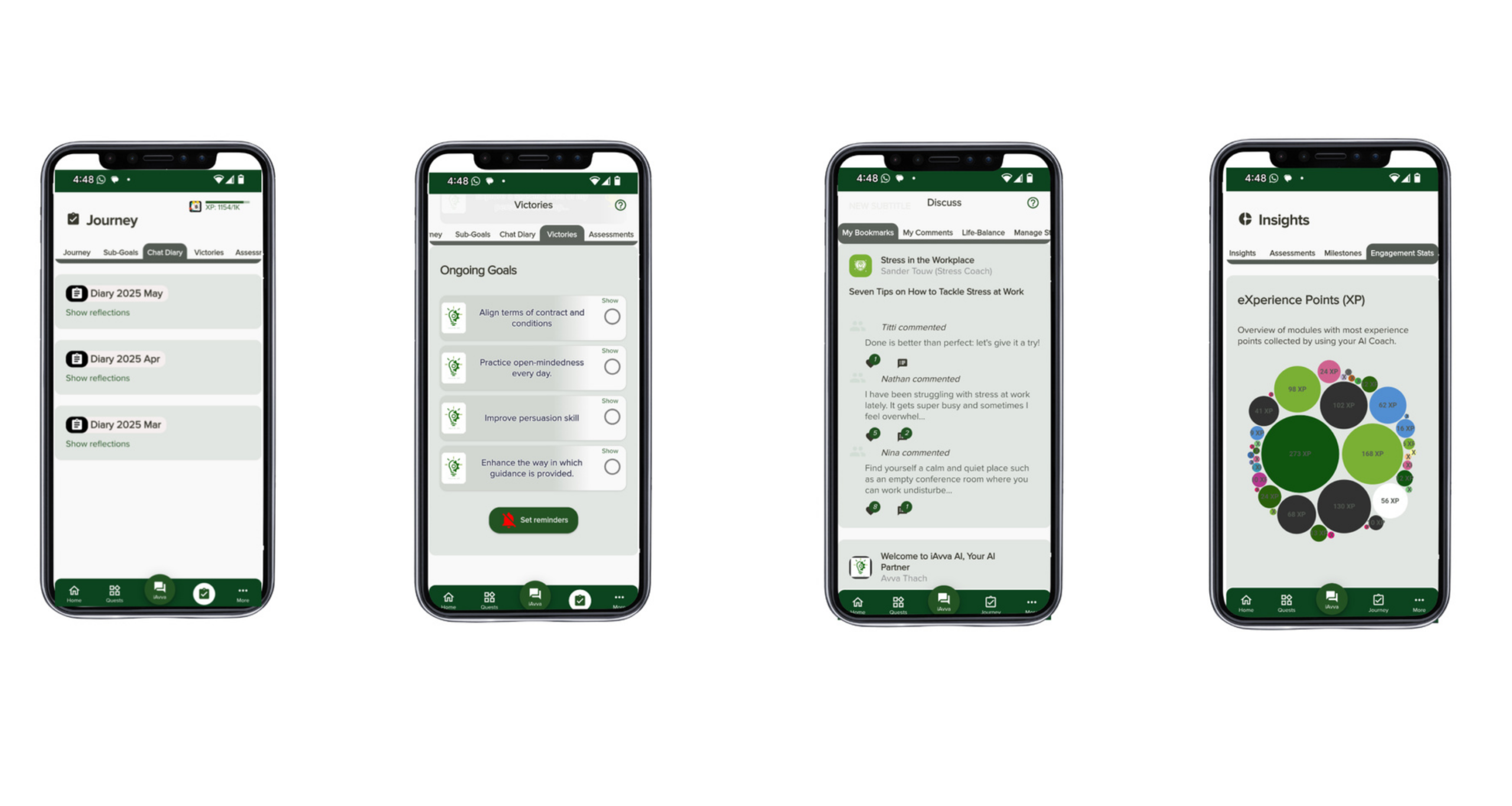
Next consideration: after the pilot, measure adoption with usage and action metrics and fold that data into the roadmap. For practical help linking dashboards to leader coaching and adoption practice, see iAvva AI Consulting.
3. Operationalize predictive models into business processes using MLOps
Direct point: Models that live only in notebooks do not change decisions. A big data analytics consultant must treat a model as a product: defined decision contract, repeatable deployment pipeline, active monitoring, and an operational handoff so business teams can rely on it day to day.
- Define the decision contract: specify the business input, the model output, the action taken, the owner and the SLA. This forces answers to who will act, when, and how the outcome is measured.
- Prepare the feature fabric: implement a feature store or curated feature layer so training and scoring use identical logic. Use
Tectonor managed feature stores on cloud platforms to avoid train/serve skew. - Automate CI CD for models: push reproducible builds from repo to model registry, run validation tests, and promote artifacts through environments using
MLflow,Kubeflow, orSageMakerpipelines. - Instrument monitoring and drift detection: track data drift, model performance, input distribution changes, and business KPIs. Set automated alerts and a retraining cadence tied to business triggers.
- Design decision integration patterns: choose synchronous API scoring for low latency decisions, batch scoring for planning use cases, and a human in the loop for high risk HR decisions.
- Prepare rollback and retrain playbooks: include quick rollback, safe default outputs, and a documented retrain workflow so incidents do not become business outages.
- Handoff and runbooks: deliver runbooks, SLOs, contact lists, and a knowledge transfer sprint with the platform and operations teams.
Integration patterns and tradeoffs
Key tradeoff: real-time scoring solves different problems than batch. Real-time APIs increase infrastructure cost and operational complexity but reduce decision latency. Batch scoring is cheaper and easier to govern but cannot support immediate interventions such as an offer adjustment during hiring.
Human in the loop: for sensitive people decisions embed approval gates and explainability checks. Automated action for HR is feasible but only with clear fairness tests and documented appeal processes; many organizations must accept a slower cadence to preserve compliance and trust.
Tool realism: tools like MLflow, Kubeflow, and SageMaker solve different pieces. Do not evaluate vendors by tool name alone. The real question is how the consultant wires model CI CD to your data platform, feature store, and ticketing systems so the business action actually happens.
Concrete example: A multinational insurer embedded a credit risk model into its underwriting workflow via a synchronous scoring API. The model triaged applications into automated approve, manual review, or reject buckets; underwriters used the model explanation panel when a case required manual review. That pattern reduced the manual review queue materially while keeping a human gate for complex cases.
Judgment you need to apply: MLOps is not a purely technical project. Expect the first deployments to expose organizational gaps – unclear owners, missing features in production, incomplete logs. Insist on a product owner from the business, measurable SLOs tied to decision outcomes, and a short knowledge transfer sprint. If a vendor promises production in a week without a governance plan, treat that as a red flag and require deliverables and SLAs in the contract. For help framing operational acceptance criteria see iAvva AI Consulting or the MLflow docs for model registry patterns at MLflow.
4. Build a trusted data foundation and governance to create decision grade data
Immediate point: Without trustworthy data, every analytic recommendation remains advisory, not operational. A big data analytics consultant must deliver concrete artifacts that replace skepticism with measurable trust so leaders will take action on insights.
Pillars of a decision grade data foundation
- Inventory and ownership: catalog critical data domains and assign explicit data owners and stewards in HR, Finance, and Ops so ambiguity does not stall fixes.
- Catalog and lineage: deploy a searchable catalog and automated lineage so a dashboard cell traces to the source table and transformation logic; tools include Alation or Collibra and lineage features in platforms like
SnowflakeorDelta Lake. - Quality rules and monitoring: implement deterministic quality checks – null rates, schema drift, referential integrity – with automated alerts and SLAs tied to business owners.
- Access control and privacy: role based access control, masking for PII, and approved data usage policies that match HR and compliance requirements.
- Master data and reference reconciliation: single source of truth for employee ids, cost centers, and job taxonomies to avoid mismatched joins and phantom counts.
- Operational telemetry and certification: surface dataset health and a certification stamp that indicates fit for decision making.
Practical tradeoff: Centralizing governance accelerates consistency but risks bottlenecks and slow response times. Federated governance works better at scale – central policies plus local stewards – but requires clear automation and tooling so local teams are not reinventing quality rules.
Concrete example: A regional bank integrated automated lineage and quality gates before deploying a credit loss forecasting model. Auditors and underwriters could trace scores to sanitized transaction tables and the model passed compliance checks faster, reducing the production approval cycle from months to weeks while preserving manual review for borderline cases.
What consultants actually deliver: Expect a prioritized critical data inventory, runnable quality rules against production pipelines, a catalog with at least three certified datasets, lineage diagrams for top decision pipelines, and a stewardship RACI. If a vendor cannot produce these artifacts during a 90 day pilot, the work will not be decision grade.
Decision grade equals auditable lineage, active quality gates, and a certification that a dataset is fit for the specific decision it supports.
Measurement and procurement signal: Ask for baseline metrics – dataset quality score, percent certified datasets, and time-to-first-certified-report – and tie acceptance criteria to those numbers in the contract. Vendors that treat governance as optional are a procurement risk.
Next consideration: require the consultant to show how the governance artifacts plug into your operational stack and workflows before any model goes live. For governance playbook examples see iAvva services and industry guidance from Gartner.
5. Coach leaders and build organizational capability so decisions stick
Core point: Building models and dashboards is necessary but not sufficient — a big data analytics consultant must embed new decision routines through targeted coaching and capability building so outputs become persistent habits, not one‑off reports.
What consultants actually do: They pair analytical artifacts with leadership coaching, role‑specific playbooks, and on‑the‑job practice. Typical components are an analytics translator embedded with the business for the first 90 days, short cohort microlearning for managers, scenario workshops where leaders use company data to make live decisions, and a documented playbook that ties each dashboard or model to the precise action a leader should take.
Practical tradeoff and limitation: Intensive coaching accelerates behavior change but costs time and budget. Quick, slide‑based training creates temporary knowledge spikes that fade; conversely, deep coaching creates dependence on the consultant unless the engagement explicitly transfers skills. Insist on deliverables that convert consultant-led coaching into repeatable internal practices and named internal owners.
12‑week capability sprint (practical sequence)
- Week 1: Executive alignment workshop — confirm decisions to be influenced, cadence, and sponsorship; set acceptance KPIs.
- Weeks 2–3: Manager cohort kickoff — 2 half‑day hands‑on labs using sanitized company data; produce first action plans.
- Weeks 4–6: Embedded coaching rounds — consultants shadow real decision meetings, coach leaders live, and update playbooks after each session.
- Weeks 7–8: Simulation and escalation drills — run mock cases where managers must use dashboards and follow the playbook under time pressure.
- Weeks 9–10: Measurement sprint — collect usage logs, meeting notes, and manager self‑assessments to quantify adoption signals.
- Weeks 11–12: Handoff and sustainment planning — certify internal coaches, deliver knowledge transfer, and lock in a 6‑month coaching cadence owned by the client.
Concrete example: A midmarket healthcare employer ran a 12‑week sprint where consultants paired a retention risk dashboard with manager coaching and a weekly case huddle. Managers practiced prioritizing cases in the huddle; after the sprint the organization kept the weekly cadence and the HR business partners owned a rotating coaching roster to sustain the practice.
How to measure whether coaching stuck: Track behavioral KPIs (weekly active dashboard users in target cohorts, percent of decisions with an attached data rationale or ticket, completion rate of microlearning modules, and time from insight to action). Use simple instruments: a one‑minute post‑meeting checkbox that records whether data informed the decision, and a short manager confidence survey to surface friction points.
Judgment call you should make: Prefer consultants who price and schedule explicit capability transfer instead of those that offer perpetual managed services without a handoff. If a proposal lacks a named internal owner and a repeatable coaching cadence, the analytics will likely revert to occasional novelty rather than change operational decisions.
Next consideration: require a measurable handoff — not just training hours — and make leader behavior change an explicit acceptance criterion in the SOW.
How to evaluate and select a big data analytics consultant
Straight decision: Hire for measurable change, not for slides or product badges. The clearest indicator a vendor will move analytics into routine decisions is an evidence‑driven procurement package that ties each deliverable to a business decision, an owner, and an acceptance test.
A pragmatic selection framework
Use a concise, weighted scorecard during vendor evaluation. Weighting forces tradeoffs instead of letting glossy demos dominate. Suggested weights below reflect what matters in practice for midmarket and enterprise HR buyers.
- Domain outcomes (30%): proven case studies with numeric business results in HR or adjacent functions (retention, time‑to‑fill, productivity).
- Decision integration (20%): concrete plans showing how outputs map to workflows, SLAs, and owners rather than generic dashboards.
- Data & governance (15%): approach for dataset certification, lineage, and access controls compatible with your stack (Snowflake, Databricks, Azure).
- Capability transfer (15%): a named handoff plan, coaching days, and measurable adoption criteria.
- Technical delivery (10%): MLOps and infra competence (
MLflow, managed feature stores, CI/CD) sufficient for your latency and scale needs. - Commercial clarity (10%): transparent pricing, phased milestones tied to acceptance criteria.
Practical tradeoff to decide now: If your internal analytics capability is weak, prioritize capability transfer and decision integration over the newest ML technique. Advanced models without adoption rarely produce ROI.
Concrete checks to require in the RFP
- Deliver a one‑page decision map for the pilot showing input data, the decision trigger, the actor, and the acceptance metric.
- Provide a sample architecture diagram with data lineage from source to dashboard/model, naming specific platform components.
- Submit two recent client references where the consultant delivered measurable process change and show before/after KPIs.
- Include a runbook and knowledge transfer plan with hours and sign‑off criteria for internal ops and HR owners.
- State measurable adoption targets (for example: 60% of target managers use the dashboard weekly and 40% of flagged cases have an action recorded within 48 hours).
Contract levers that work: Structure the SOW into short, outcome‑driven phases. Tie at least one payment milestone to adoption metrics and require a limited warranty period for production models and dashboards. Avoid open‑ended managed service terms without explicit handoff criteria.
Common red flags: heavy emphasis on proprietary black boxes with no explainability, no named internal owners in the plan, absence of quality rules or lineage artifacts, and resistance to defining acceptance metrics up front. Treat any proposal that promises instant production without governance as low credibility.
Concrete example: A midmarket healthcare employer shortlisted two vendors: one boasted advanced ML models, the other focused on workflow embedding and coaching. They chose the latter because early pilots required behavior change more than model novelty. Within 10 weeks the organization had an operational retention workflow, measurable manager actions, and a plan to introduce more complex models later.
Final judgment: Prefer vendors who sell a short, testable pilot focused on a single decision and who commit to measurable adoption criteria. If a proposal fixesate on tech platforms or algorithms with no clear operational hook, deprioritize it. For assistance framing pilots and acceptance tests, see iAvva AI Consulting and procurement guidance from Gartner.
Implementation roadmap and typical budget ranges for pilots
Practical assertion: A pilot that is tightly scoped to one decision and one owner will surface value and risk far faster than an open ended analytics exploration. Structure the work as a sequence of short, timeboxed phases with explicit acceptance gates tied to decision outcomes and adoption metrics.
Phased roadmap (how to structure the engagement)
Use a sprint-based cadence. Each phase has a clear decision focus, a tech deliverable, and a people deliverable. Treat the pilot as a product: a minimal set of features that prove an actionable decision, then stop and measure before extending scope.
| Phase | Primary outcome | Core deliverables | Typical timebox (sprints) |
|---|---|---|---|
| Discovery and decision mapping | Signed decision trigger and data checklist | Decision map, prioritized hypothesis backlog, sample queries, stakeholder RACI | 1-2 sprints |
| Proof of value pilot | Operational pilot with role-based dashboard and acceptance test | Staged dataset, one dashboard, alerting rule, user acceptance from 3 users, measurement plan | 3-6 sprints |
| Productionization and governance | Model or dashboard moved to runbooked production | Model registry or published dataset, data quality gates, runbook, SLAs | 6-12 sprints |
| Capability and adoption sprint | Named internal owners executing the decision routine | Leader coaching, playbook, training, adoption metrics and handoff signoff | 2-4 sprints |
Budget reality check: Pilot costs vary by data complexity and delivery model. For a midmarket buyer expect the following ballpark ranges: discovery work often falls under $10k to $25k, a focused proof of value pilot commonly budgets $50k to $150k, and initial production scale typically requires $150k to $500k depending on cloud infrastructure and integration needs. Ongoing run costs for cloud compute, feature stores, and monitoring are incremental and should be budgeted separately.
- Primary cost drivers: data integration effort, number of source systems to onboard, need for real-time scoring, regulatory or privacy controls, and bespoke coaching or change management.
- Tradeoff to manage: cheaper pilots often skip governance and incur technical debt that multiplies when you scale. Spending more early on governance shortens approval cycles later, but it also delays initial user feedback.
Concrete example: A regional retailer ran a targeted pilot to reduce time to fill for key store roles. The vendor delivered a one-dashboard pilot plus an alert integration to the ATS and coached five hiring managers. Within the pilot the hiring managers used the alert workflow and time-to-fill for the targeted roles dropped enough to justify scaling; procurement then committed to the production budget tied to SLAed refresh rates and a feature store for scoring.
Judgment you need to make: If your team cannot commit time to act on pilot outputs, reduce technical ambition and invest instead in coaching and workflow hooks. The most common procurement mistake is buying models without securing the human attention required to operationalize them.
Start with a single, measurable decision and a modest pilot budget. Prove impact, lock in governance, then scale with confidence.














Leave a Reply