








Executive Coaching Certification Programs: Become an Industry-Recognized Coach
When organizations need credible, scalable coaching for senior leaders, choosing the right executive coaching certification programs separates a compliance exercise from interventions that change leader behavior and business outcomes. This guide gives senior HR and L&D leaders a practical framework to evaluate accreditation frameworks, supervised practice and assessment rigor, compare reputable providers, and design a pilot that ties certification to measurable leadership metrics. It also shows how to integrate certification with AI-enabled talent analytics, internal coach development, and procurement criteria so you can pick and deploy programs that scale.
Why industry-recognized executive coaching certification matters for organizations
Immediate point: buying recognized executive coaching certification programs is a risk management decision as much as a learning one. Organizations need a defensible standard that protects executives, satisfies procurement and insurance requirements, and makes coaching an enterprise-grade intervention rather than an ad hoc perk.
Accreditation is a signal, not a solution. ICF, EMCC and reputable academic providers like the Academy of Executive Coaching offer frameworks that reduce variability in coach competence, but those marks only matter when paired with specific deliverables HR can verify: supervised practice hours, mentor coaching, assessed recorded sessions, and an outcome measurement plan.
Why those program details matter to HR buyers
Programs differ on the things that actually predict executive-level readiness. Some vendor brochures emphasize curriculum topics; smarter buyers focus on assessment format and evidence of applied skill. In practice, a program that requires assessed recorded sessions and mentor coaching produces coaches who can handle stakeholder complexity and confidentiality in enterprise settings.
- Do require documented supervised practice hours and mentor coaching as contract deliverables
- Do insist on access to assessment rubrics and sample recorded session feedback
- Do require the vendor to provide exportable data for your measurement systems to allow integration with AI-enabled analytics
- Watch out for low-cost, short online executive coaching certification options that skip live assessed practice
Tradeoff to accept: higher program cost and longer timelines up front in exchange for lower downstream risk and faster executive uptake. Cheap, short courses scale quickly but create hidden costs: inconsistent coaching quality, longer onboarding for internal stakeholders, and poor ROI because sessions do not translate to measurable behavior change.
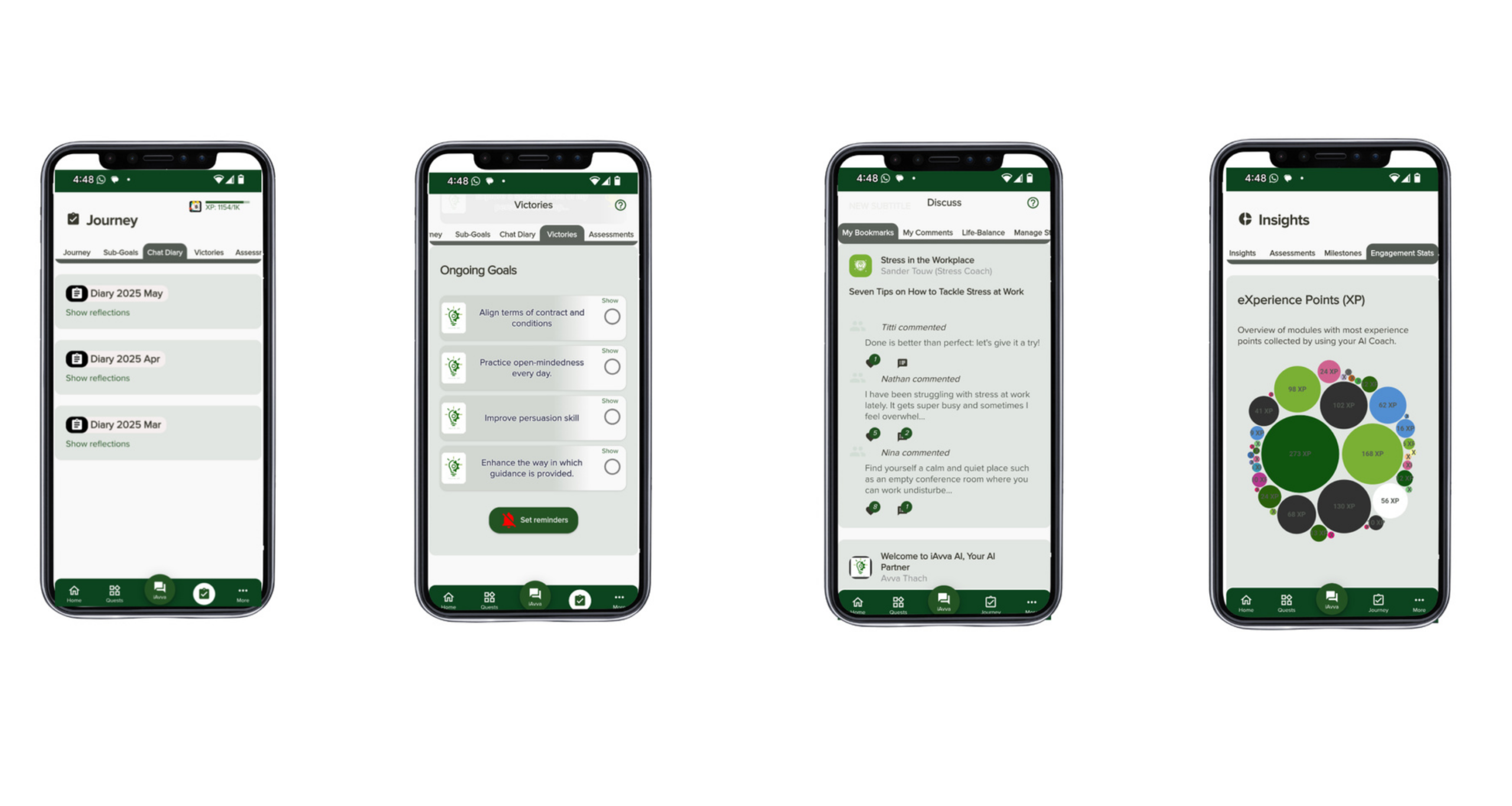
Concrete example: iAvva ran a three-month pilot where certified executive coach training was paired with AI-enabled 360 analytics. We certified six internal coaches through a provider with ICF-aligned assessment, ran pre and post 360s, and matched coaches using behavioral profile data. The result: shorter ramp to effective coaching and a clean data feed for ongoing impact analysis; the approach paid back in improved leadership 360 scores within six months.
Priority for procurement: accreditation plus verifiable supervised practice and data access beats accreditation alone.
Next consideration: when you scope a pilot, translate these certification requirements into measurable contract terms and a short governance plan – who validates recorded sessions, how data flows to your analytics stack, and what success looks like at three and six months.
Core program features and learning outcomes that predict coach readiness
Direct point: the single best predictor of an executive coach being ready for senior work is evidence of applied skill, not course hours or topic lists. Demand vendor deliverables you can verify: assessed recorded coaching sessions, mentor coaching notes tied to development goals, and integration of leader assessment data into practice.
What to insist on in contracts: require the vendor to provide assessment rubrics, recorded-session transcripts or redacted recordings, mentor coach feedback summaries, and exportable 360 or behavioral-assessment data so your analytics team can validate impact.
Outcome-to-evidence mapping you can operationalize
| Learning outcome | Evidence you should contract for | Early business signal of readiness |
|---|---|---|
| Advanced listening and systemic questioning | Assessed recorded sessions with rubric scores and assessor comments | Sponsor feedback reporting quicker alignment and fewer clarifying meetings |
| Stakeholder and sponsor management | Documented sponsor engagement plans and a sponsor feedback form | Shorter time to scheduling sponsor alignment sessions and higher sponsor satisfaction |
| Team and group coaching capability | Observed group coaching session or portfolio case study assessed by faculty | Higher immediate engagement in team action plans and follow-through rates |
| Use of assessment and analytics | Submission of an integrated 360 report with coach-led interpretation session | Data feed into talent analytics and measurable shifts on target behaviors |
- Practical tradeoff: deeper assessment requires time and assessor capacity. Expect longer program timelines, but the payoff is lower executive risk and faster client acceptance.
- Common limitation: counting contact hours is necessary but insufficient. The quality of mentor coaching and assessor calibration matters more than raw hours.
- Operational step: build sample acceptance criteria into RFPs so vendors must show anonymized evidence from past cohorts before you approve enrollment.
Concrete example: a midmarket technology company used a CoachU pathway but added contractual requirements for two assessed recorded sessions and export of pre and post 360 data. HR found internal coaches achieved sponsor-ready status faster because assessor feedback drove targeted supervision, and the analytics feed showed behavior shifts the business could measure.
If a program markets itself as a leadership coaching certification but cannot produce assessed artifacts or data exports, treat it as a development course, not an executive qualification.
Next consideration: convert these outcome-evidence pairs into contract SLAs and an acceptance checklist for candidate graduation. That is the operational move that separates certification on paper from coaches who actually perform with senior leaders.
Program formats and credentialing pathways for enterprise learners
Direct point: enterprise buyers must choose a credentialing pathway and a delivery format as a paired decision – the best credential in the wrong delivery model still fails to produce sponsor-ready coaches.
How credential pathways map to enterprise needs
Credential trade-off: pick an ICF pathway if you need globally recognized coach credentialing; pick EMCC or AoEC-aligned programs when you want supervision-intensive practice and European corporate credibility; pick university routes if you require academic credit or integration with HR development curricula.
| Pathway | What it delivers to an enterprise | When to choose it |
|---|---|---|
| ICF ACTP / ACSTH | Direct route to ICF credentialing, standardized competency framework, predictable credential levels | When procurement requires a market-recognized credential and fast route to credential issuance |
| EMCC / AoEC practitioner routes | Stronger emphasis on supervision, reflective practice, and organizational coaching standards | When supervision quality and enterprise governance are priorities, especially in Europe |
| University executive certificates | Academic rigor, credits, and tight alignment with leadership curricula and talent systems | When HR needs alignment with L&D crediting, succession programs, or regulatory proof points |
| Vendor microcredentials / short online courses | Fast, lower-cost skill refreshers but often light on supervised client practice | When scaling basic coaching literacy across a large population, not when qualifying executive coaches |
Delivery formats and scaling trade-offs
- Cohort, in-person intensive: fastest for skill transfer and assessor calibration but costly and hard to schedule globally
- Blended cohorts (virtual + practice labs): best balance for distributed organizations; requires disciplined facilitation and reliable tech
- Asynchronous microcredentials: scalable and cheap but insufficient alone for executive-level readiness
- Train-the-trainer / enterprise licensing: higher upfront cost and governance work, but the only sustainable path if you want hundreds of internal coaches
Practical limitation: scaling quickly with short online executive coaching certification options creates hidden supervision debt. You either accept lower coach competence or you add an internal supervision layer, which negates much of the initial cost savings.
Concrete example: A European healthcare group selected an AoEC-aligned executive coaching program for its senior leader cohort because EMCC-style supervision met regulatory and procurement expectations. They combined the external certification with an internal supervision schedule and an enterprise license to train 25 internal coaches over 18 months; the external provider handled assessor calibration while internal supervisors managed ongoing fidelity.
Procurement levers that matter
Buy-side levers: negotiate vendor SLAs for assessor access, exportable assessment artifacts, cohort composition minimums, and an option for train-the-trainer transfer. Favor engagement models that supply raw outputs your analytics stack can consume.
Next consideration: convert your preferred pathway and format into three procurement scenarios (fast-to-deploy, balanced, build-to-scale) with clear cost, governance, and time-to-sponsor-ready metrics before issuing an RFP. See services for implementation options and compare providers against the mapping above.
ICF credentials indicate levels of coach experience and assessed competency with ACC as entry, PCC as professional, and MCC as master; HR should care because credential level correlates with readiness to handle complex executive engagements and procurement requirements.
” } }, { “@type”: “Question”, “name”: “Do organizations need ICF or EMCC accreditation to get business value from coaching?”, “acceptedAnswer”: { “@type”: “Answer”, “text”: “
No, but accreditation provides a recognized quality baseline; without it organizations must ensure programs include supervised practice, assessment, and measurable outcomes to mitigate performance risk.
” } }, { “@type”: “Question”, “name”: “How long does it typically take for a participant to be ready to coach executives?”, “acceptedAnswer”: { “@type”: “Answer”, “text”: “
Readiness commonly requires 60 to 200 hours of combined training and supervised practice depending on program and prior experience, with many organizations aiming for 6 to 12 months to reach executive-level capability.
” } }, { “@type”: “:Question”, “:name”:”What budget should be allocated per participant for enterprise-grade certification?”, “:acceptedAnswer”:{ “:@type”:”Answer”, “:text”:”
Expect a range from approximately 3,000 to 15,000 USD per participant for reputable programs when factoring program fees, supervision, assessments, and lost productivity; university executive programs can be higher.
” } }, { “:@type”:”Question”, “:name”:”How can AI and analytics improve the effectiveness of a coaching program?”, “:acceptedAnswer”:{ “:@type”:”Answer”, “:text”:”
AI and analytics can optimize coach matching, track behavioral changes using 360 and sentiment data, identify high impact coaching topics, and surface scalable insights that improve program ROI when integrated into the measurement plan.
” } }, { “:@type”:”Question”, “:name”:”What governance is required to maintain coaching quality after certification?”, “:acceptedAnswer”:{ “:@type”:”Answer”, “:text”:”
Implement scheduled supervision, a community of practice, periodic recredentialing or continuing development requirements, client feedback loops, and performance dashboards to monitor coach outcomes.
” } } ] }, { “:@context”:”https://schema.org”, “:@id”:”#speakable”, “:@graph”:[{ “:@type” : [“SpeakableSpecification”], “:xpath” : [“/html/head/title”,”/html/head/meta[@name=’description’]/@content”]}]} ] }













Leave a Reply