
Introduction
“The best way to predict the future is to create it.” — Peter Drucker
AI strategy is now one of the main ways leaders create that future. By AI strategy, I mean a clear plan for how artificial intelligence supports business goals and people goals at the same time. In this guide, I show how executives can build a future‑ready AI strategy that feels practical, safe, and very human.
AI is already reshaping how companies make decisions, develop leaders, and serve customers. According to IDC, organizations will spend around 3.4 trillion dollars on digital transformation by 2026, and AI sits at the center of that spend — a trend supported by Digital Transformation Market Size, share, and trends research projecting continued explosive growth through 2034. Without a coherent AI strategy, that money often goes into scattered pilots, “rogue” tools, and confused employees.
My aim here is simple. I walk through how to link AI strategy to business outcomes, pick the right use cases, choose technology patterns, build a safe data and governance base, grow leadership skills, and turn plans into an operating rhythm. Along the way, I show where iAvva AI fits as a leadership development and AI transformation partner. Ready to turn AI from noise into a clear leadership agenda that works in real life? Let us get started.
Key Takeaways
AI Strategy As A Leadership Imperative
AI strategy now sits in the core job of CEOs, CHROs, CLOs, and business heads. It shapes how fast decisions move, how people grow, and how culture shifts. Treating AI as only an IT topic leads to missed value and more risk.From Pilots To Portfolio
Random pilots feel exciting at first, then stall. A portfolio view helps leaders pick a small set of high‑impact AI use cases with clear goals and owners. That shift from experiments to a managed portfolio raises focus, learning, and trust.Secure, Ethical, And Data Ready Foundation
AI quality depends on data quality, access rules, and clear guardrails. Leaders need data classification, access control, and responsible AI policies before they scale. This lowers legal, privacy, and reputation risk, especially for HR and people analytics.Scaling Leadership Development With AI Coaching
AI can give managers daily micro‑coaching, feedback, and practice, while human coaches handle deeper work. Platforms such as iAvva AI blend AI prompts, analytics, and expert coaching, so leadership habits keep pace with new AI tools.Turning Strategy Into Measurable Outcomes
The best AI strategy links every use case to specific KPIs and feedback loops. That includes time saved, revenue impact, risk reduction, and leadership growth. With clear metrics, executives can adjust direction early instead of guessing.
Why AI Strategy Is Now A Core Leadership Agenda
AI strategy is now a leadership agenda because it changes business models, jobs, and culture, not just software. When executives treat AI as a shared business and people plan, they gain speed, insight, and trust across the organization. When they treat it as a side IT project, they see confusion, shadow tools, and stalled change.
According to Harvard Business Review, between 56 percent and 70 percent of digital transformations fall short of their goals, a pattern explored in depth through The Seventy Percent: Why IT transformation has remained statistically difficult for over a decade. The main reason is not technology limits, but misalignment between leaders, strategy, and people practices. iAvva AI exists in that gap, helping executives connect AI ambitions with daily leadership behavior. GenAI tools such as Microsoft 365 Copilot, and analytical AI across Azure and Power BI, only deliver value when leaders change how they decide, coach, and learn.
As Satya Nadella has put it, “AI is not just another piece of technology. It is the next major wave of computing that will change every software category.” That is a leadership issue, not just a systems issue.
What Do We Really Mean By “AI Strategy”?
By AI strategy, I mean an organization‑wide plan for how AI supports business outcomes and people outcomes in a joined way. It is a clear answer to questions like who owns what, which problems come first, and how we keep AI safe and fair. Without that clarity, tools appear in pockets and nobody knows whether they help or hurt.
A solid AI strategy has three parts:
Vision In Business Language
A vision that states how AI supports productivity, growth, risk, and leadership development in plain terms.Portfolio Of Use Cases
A portfolio across HR, L&D, operations, finance, sales, and service that links straight to that vision and is easy to explain.Operating Model
An operating model that sets roles, governance, and technology patterns, from SaaS copilots to Azure OpenAI based agents.
For HR and Learning teams, this means AI is not just a tool box. It becomes a core capability that supports leadership programs, skills, and performance.
Why Executives Cannot Delegate AI Strategy To IT Alone
Executives cannot hand AI strategy to IT and hope for the best. AI changes decision rights, job design, and culture, so CEOs, CHROs, CLOs, and business unit heads must own the direction. When only CIOs and data teams lead, AI projects may be smart technically, yet misfit real business pain and people concerns.
The failure data is sobering. Research from Harvard Business Review shows that 56 percent to 70 percent of digital transformations fail, often because leadership teams lack shared purpose and clear roles — a finding reinforced by Digital Transformation Failure: 2026 research statistics that document the most common root causes behind these shortfalls. AI now touches hiring, performance, coaching, and even layoffs, so HR and People Operations must sit in the same room as IT, Security, and Legal. Without that cross‑functional voice, AI tools can feel like surveillance, trigger privacy fears, or confuse managers. I see iAvva AI clients gain momentum when business leaders, HR, and IT co‑own both AI strategy and leadership development.
How To Align AI Strategy With Business And People Outcomes
Alignment between AI strategy and business outcomes means every AI move links to clear financial and people results. At the same time, new AI options should reshape how leaders think about products, services, and structures. When this link runs in both directions, AI becomes part of the regular strategy conversation instead of a side show.
According to IDC, trillions in digital investment will flow to AI‑enabled programs over the next few years. Boards at companies from PayPal to national energy firms now ask how those investments change customer value and workforce skills. That is why I advise leadership teams to write AI goals in plain outcomes, not technical features.
Defining Your AI Vision, Ambition, And Success Metrics
A useful AI vision sounds like a business plan, not a model list. I start with questions such as whether we want AI mainly for efficiency, for new offerings, or both. I also ask whether the company aims to be a fast follower or to test early patterns such as AI agents built on Azure OpenAI or similar services — a question that The Corporate Strategy Function in an AI-First World research from BCG addresses directly when advising how executives should frame competitive AI ambitions.
From there, I help executives set concrete adoption targets. That might include a share of knowledge workers using copilots each week, or the portion of leadership programs that use AI‑powered coaching platforms like iAvva AI within two years. Then we agree on KPI categories across productivity, revenue, leadership capability, and risk. A simple table helps.
| KPI Area | Example Measures |
|---|---|
| Productivity | Hours saved on reporting and admin for managers |
| Revenue And Growth | Win rate lift in AI‑assisted sales teams |
| Leadership And Talent | Time to proficiency for new managers using AI coaching |
| Risk And Compliance | Number of AI policy breaches and response time |
Tip: Keep each KPI connected to a real decision. If leaders cannot say what they will do when a metric moves up or down, it is probably the wrong measure.
Aligning AI With Business Strategy In Both Directions
Alignment must work in both directions or it fades — and Decisive Economic Advantage: Modeling the transition from temporary first-mover leads to economic dominance in AI illustrates how organizations that embed AI into core strategy cycles, rather than treating it as a parallel workstream, build compounding competitive advantages over time. Business strategy should guide which AI use cases matter most, for example, customer support, workforce planning, or leadership development. At the same time, new AI options, such as agents built with Copilot Studio or Azure Machine Learning, can open fresh paths for services and structures.
I suggest leaders add AI to regular strategy reviews instead of a yearly side meeting.
- Quarterly Reviews: The C‑suite maps business priorities to AI initiatives and asks whether any AI pilot now points to a new line of revenue or a simpler structure.
- People And Learning Inputs: HR and CLOs bring learning analytics, engagement data, and feedback from AI‑enabled programs such as iAvva AI into these conversations.
- Feedback Loop: This loop keeps AI strategy live rather than stuck in a slide deck and helps retire projects that no longer matter.
How To Identify And Prioritize High Impact AI Use Cases
A future‑ready AI strategy lives or dies on use case choice. High value use cases start from friction in real workflows, not from shiny tools. When leaders map those pains and then rank ideas by value and risk, they turn scattered AI hopes into a clear portfolio.
According to IDC, spending on digital programs that lack clear business cases tends to stall or get cut. I see the same pattern inside clients that collect dozens of AI ideas without structure. The fix is a simple, repeatable method that HR, L&D, IT, and business units can share.
Mapping Pain Points And Opportunities Across The Organization
I like to begin with cross‑functional workshops that include HR, L&D, IT, Finance, Operations, and line leaders. In those sessions, we walk through major processes such as onboarding, sales planning, performance reviews, and customer support. At each step, we ask where people face:
- Slow decisions
- Manual tasks
- Handoffs and rework
- Bottlenecks in approvals
- Poor visibility into data
That map becomes the hunting ground for AI opportunities.
From there, we cluster ideas into three types:
Automation
Taking routine steps out of human hands. Examples: contract parsing, HR document checks, or expense validation.Augmentation
AI supports judgment, such as copilots that help managers craft feedback, or coaching bots that pose reflection questions before a performance talk.Acceleration
Faster learning and analysis, such as AI‑based simulations for leaders, or talent analytics in tools like Power BI that show skill gaps in near real time.
This simple language helps non‑technical leaders join the conversation without jargon.
Prioritizing A Balanced AI Use Case Portfolio
Once ideas flow, the danger is to chase all of them. Instead, I ask teams to write one page per candidate use case that spells out the goal, objective, and measures. For example, an HR assistant bot might aim to cut ticket volume by 40 percent while raising satisfaction scores. We also log the data sources, systems, and departments involved.
Then we score the ideas on four axes:
- Business Value: Impact on revenue, cost, or risk.
- Feasibility: Data quality, skills, and integration effort with platforms like Microsoft 365, Workday, or SAP.
- Risk: Privacy, bias, and regulatory exposure, which is especially sensitive for hiring or promotion.
- Learning Value: Whether the work builds patterns we can reuse, like a standard RAG architecture on Azure.
A simple impact versus effort matrix helps pick:
- A few quick wins that prove value and build trust.
- A few strategic bets that reshape how the organization works.
This balanced portfolio keeps energy high while still managing risk.
Choosing The Right AI Technology Stack For Your Organization
The right AI stack gives you speed where you need it and control where you must have it. For most organizations, that means starting with ready‑to‑use SaaS copilots, then adding low code tools, and only later building on PaaS and infrastructure. HR, L&D, and IT leaders should choose this path together so that tools match people needs and policy.
In my work with companies from small tech firms to large public bodies, I see the same pattern — and AI in Digital Transformation market forecasts to 2034 confirm that organizations starting with SaaS-layer deployments consistently outperform those that begin with custom infrastructure builds. Those who start with heavy custom models often stall under cost and complexity. Those who start with Microsoft 365 Copilot, Dynamics 365 copilots, or GitHub Copilot and then extend with Copilot Studio and Azure OpenAI move faster and learn more.
From SaaS Copilots To Low Code Agents: Where To Start
SaaS copilots are usually the easiest entry point. Leaders and teams already live inside Microsoft 365, Google Workspace, Salesforce, and CRM or ERP tools, so AI features there feel natural. Use cases include:
- Drafting emails and documents
- Summarizing Teams or Zoom meetings
- Preparing reports and board updates
- Turning raw feedback into action plans
These are relatively low risk and build confidence.
Next, I look at low code platforms such as Copilot Studio and Power Apps. They let HR and L&D teams build:
- HR policy assistants
- Learning navigators
- Simple coaching or FAQ bots
- Internal “how do I…” guides for managers
All of this can happen without large engineering squads. IT still stays close to set data connections, guardrails, and monitoring. Decision makers can look at internal AI skills, urgency, compliance rules like GDPR or HIPAA, and budget to decide how far to go with SaaS and low code before moving deeper.
When To Invest In Custom Platforms, PaaS, And Infrastructure
Custom platforms on services like Azure OpenAI, Azure Machine Learning, and Microsoft Fabric make sense when you need deep control or special logic. Examples include:
- Leadership analytics that blend 360 feedback, performance data, and LMS records
- AI agents that support strategic workforce planning
- Advanced scenario simulators for senior leaders
These systems often use retrieval augmented generation with SharePoint, HRIS, and LMS data, and need strong MLOps practices.
At the far end, infrastructure such as Azure Virtual Machines with GPUs or Azure Kubernetes Service fits organizations that train or host their own models. This may be needed for strict data residency, sector rules, or a strong competitive moat. In any custom or infrastructure path, I advise teams to follow standards such as Model Context Protocol, so AI agents can reach HR, Finance, and Operations systems in a clean, governed way.
The key is a layered approach where:
- SaaS and low code prove value and adoption.
- PaaS and infrastructure enter only for the few cases that truly need that depth and control.
Building A Secure, Ethical, And Data Ready Foundation For AI
AI is only as safe and effective as the data, security, and ethics behind it. A future‑ready AI strategy needs a data plan, access rules, and responsible AI governance before large rollouts. This is especially true for HR, L&D, and people analytics, where errors can harm trust and break laws.
According to IDC, data growth and AI use go hand in hand, and unmanaged data risk is one of the main reasons boards slow AI adoption — a concern amplified by C-Suite Digital Transformation Statistics showing how executive priorities around data governance have intensified heading into 2026. I see smart executives treat data strategy and responsible AI as part of the same work as use case choice and tech stacks, not as a side policy project.
What Data Strategy Do You Need To Power AI Safely?
A people‑centric data strategy starts with clear labels. I help teams define what counts as public, internal, confidential, and highly sensitive data, especially for HR records, pay, performance notes, and learning logs. Tools such as Microsoft Purview can scan and label those sources across SharePoint, OneDrive, Dataverse, and data lakes.
Next comes access control with least privilege. AI tools, including copilots and custom agents, should only see data that the signed‑in user is allowed to see. That means aligning AI access with HR roles like HRBP, manager, individual contributor, or external coach.
Other core elements include:
- Shared Definitions: Standardized terms for items such as high potential leader, completed course, or critical skill.
- Data Lineage: A record of where data comes from and how it feeds models and dashboards.
- Lifecycle Rules: Shorter retention for subjective data like coaching notes; longer for objective records, with clear “right to be forgotten” paths for employees who leave.
This structure keeps AI helpful without turning into a security or privacy risk.
Operationalizing Responsible AI And Governance
Responsible AI moves from slogans to daily practice when we build structures and tools. I recommend an AI Governance Council or Center of Excellence that includes HR, L&D, IT, Legal, Compliance, Security, and business leaders. This group sets principles around fairness, privacy, transparency, and human oversight, and then turns them into design checklists and approval flows.
Risk comes in several shapes:
- Employment Risk: When AI seems to watch workers or influence hiring and pay without explanation.
- Cultural Risk: When AI replaces human mentoring or feedback too much.
- Reputation Risk: If a faulty model harms customers or staff.
To manage this, I like:
- Pilots with opt‑in participants
- Human‑in‑the‑loop review for high stakes decisions
- Clear employee messages and FAQs
- Monitoring dashboards on platforms like Azure that track prompts, outputs, and incidents
Regulations such as the EU AI Act, GDPR, CCPA, and sector rules like HIPAA should guide use cases and vendor choices, including leadership platforms like iAvva AI.
“Trust is the highest currency in the relationship between people and technology,” notes IEEE’s work on ethical AI. Building that trust is a design choice, not an accident.
Developing Talent, Culture, And Leadership For An AI Enabled Organization
No AI strategy works without leaders and teams who know how to use AI wisely. Skills, mindset, and culture make the difference between a few interesting tools and deep behavior change. That means AI literacy, leadership growth, and psychological safety must stand beside tech and data on the strategy page.
Programs at places like MIT Sloan Management Review stress that leaders now need fluency in AI concepts, ethics, and change, not coding skills alone — a point elaborated in the Handbook of Artificial Intelligence and Strategy, which maps how strategic AI literacy differs from technical AI expertise. In my experience, organizations that invest in these human capabilities early see faster, safer adoption of tools such as Microsoft 365 Copilot, Azure OpenAI apps, and platforms like iAvva AI.
What Skills Do Leaders And Teams Need To Thrive With AI?
Different roles need different depth:
Executives
Need plain language understanding of AI types, where models can help, where they fail, and what good questions to ask about risk and ROI. They also must read AI‑driven dashboards, such as people analytics in Power BI or leadership insights from iAvva AI, without blindly trusting them.HR And L&D Professionals
Need skills in AI‑assisted learning design, vendor assessment, and bias spotting in content and recommendations. They should be able to explain to employees how AI is used in development and talent decisions.IT And Data Teams
Need strong cloud skills on Azure, MLOps, AI security, and integration with HRIS and LMS platforms. They are also key to designing monitoring, logging, and incident response for AI services.People Leaders And Managers
Need day‑to‑day practice with AI tools for feedback, coaching, planning, and communication. They must know when to rely on AI suggestions and when to override them.
A simple competency framework that lists knowledge, skills, and behaviors for each group, paired with AI‑supported learning paths, helps close these gaps over time.
Creating A Culture Of Experimentation And Responsible Innovation
Culture decides whether AI feels like help or threat. I encourage leaders to create safe to try spaces where teams can test AI on real tasks with clear guardrails. That might be an internal community around Microsoft 365 Copilot, or a pilot cohort using iAvva AI micro coaching to support their change work.
Key norms that help:
- Share What Works And What Does Not: Leaders talk openly about experiments that failed and what they learned.
- Embed AI In Leadership Models: HR and CLOs can add capabilities such as data‑informed decisions, ethical judgment, and continuous learning into leadership frameworks and performance reviews.
- Directly Address Fears: Communication should speak to worries about job loss and quality, while showing how AI can free time for higher value work and deeper human connection.
When people trust that AI supports rather than replaces them, adoption grows and creativity returns.
From Strategy To Execution Designing Your AI Roadmap And Operating Model
A future‑ready AI strategy needs a clear path from idea to daily use. That path looks like a phased roadmap and an operating model that set who does what, when, and how. Without this, even a clever strategy sits in PowerPoint and never reaches customers or employees.
Research and my own work across 68 enterprises, cited by iAvva AI, show that organizations with a staged plan and shared roles make steady AI progress. Others jump from pilot to pilot without shared learning. A simple five‑phase roadmap anchors the work.
Phased AI Roadmap For HR, L&D, And Business Leaders
You can think of the roadmap as five linked phases:
Explore And Educate
- Run executive workshops on AI basics, risks, and use cases.
- Launch baseline AI literacy for managers and HR or L&D leaders.
- Set early principles for data and ethics to shape later choices.
Discover And Design
- Cross‑functional groups collect and score use cases.
- IT and data teams run quick checks on data quality, access, and security.
- Together, they pick a small first portfolio with clear owners.
Pilot And Learn
- Examples include an HR assistant built with Copilot Studio, AI support for leadership feedback summaries, or AI‑generated learning content.
- Collect both numbers and stories from users, including areas of friction.
- Adjust design, training, and guardrails based on evidence.
Scale And Standardize
- Successful pilots connect to core systems like HRIS, LMS, CRM, and collaboration tools.
- Training, onboarding materials, and help channels support wider use.
- Governance patterns and templates spread across teams.
Transform And Innovate
- Rethink full journeys such as leadership development, onboarding, or strategic workforce planning with AI at the center.
- Advanced agents on Azure or similar platforms may appear here, but they rest on all the earlier work.
- Regular reviews help you retire old processes that AI has made redundant.
A useful rule of thumb: do not move to the next phase until you can describe, in one slide, what you learned in the current phase and how it changed your plan.
Designing An AI Operating Model That Actually Works
An operating model answers who owns AI, how teams work together, and how decisions move. Many organizations use a hybrid model: a central AI Center of Excellence plus embedded AI champions in HR, L&D, and business units. The CoE sets standards, tools, and portfolio oversight, while domain teams design and run local use cases.
Cross‑functional squads are the heartbeat of this model. A typical squad might include:
- An HR or L&D lead
- A product owner or business sponsor
- An architect from IT
- A data engineer or data scientist
- A security or compliance partner
They work in short cycles, sharing backlogs and KPIs. Portfolio tracking tools, often built in Power BI or similar, log each AI initiative by stage, owner, benefits, and risk. This gives the C‑suite and the AI Governance Council a single view of where AI strategy stands and what to adjust.
Clear decision rights also matter:
- Who approves new AI pilots?
- Who can pause or stop a live AI service?
- Who speaks to regulators or works councils if questions arise?
Writing these down prevents confusion when pressure is high.
Where iAvva AI Fits In Your Future Ready AI Strategy
iAvva AI sits at the junction of AI strategy, leadership development, and behavior change. While many vendors sell tools, iAvva AI combines an AI coaching platform, human executive coaching, and AI strategy services into one integrated offering. That mix turns AI plans into daily habits for leaders across the organization.
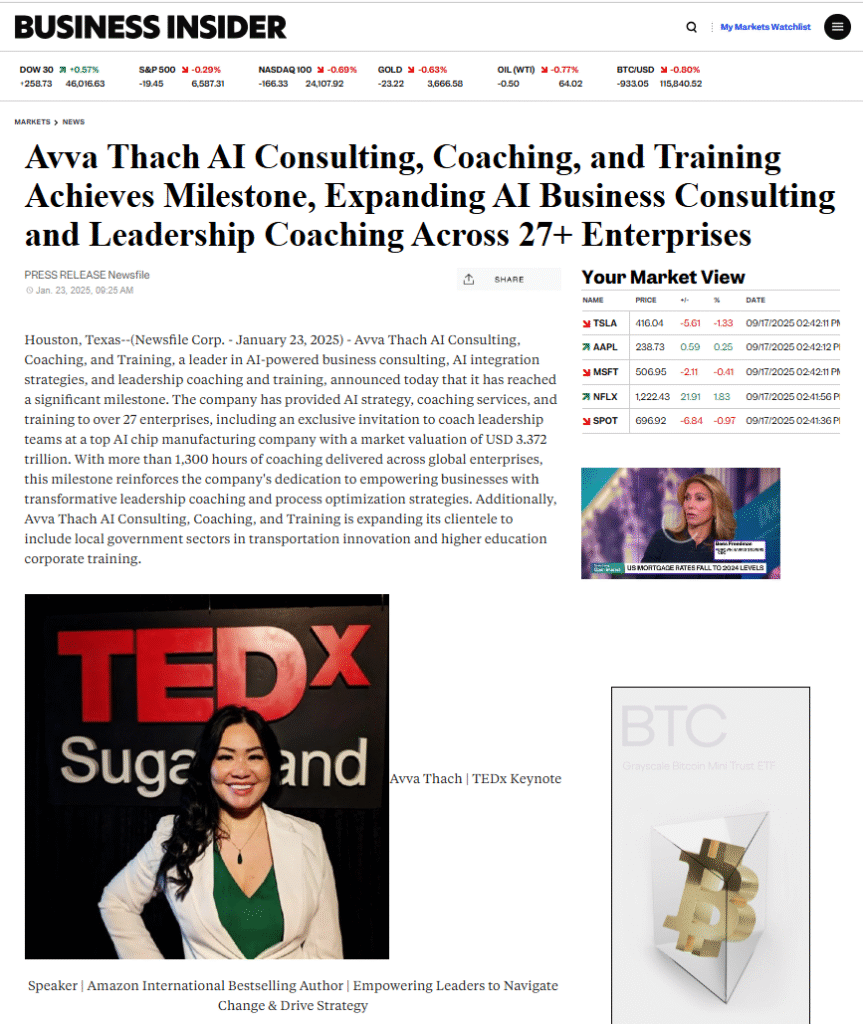
According to iAvva AI, the company’s founder brings more than twenty years of experience in leadership coaching and digital programs, including work on a 22‑billion‑dollar transformation at Accenture. The platform has already supported leaders in 68 enterprises, PayPal executives, and national level public sector leaders. This track record matters when you ask leaders to change how they work.
Using iAvva AI To Close The Leadership And Alignment Gap
Many AI programs fail not because models are weak, but because leaders do not change how they think and act. High failure rates for digital transformations, reported by Harvard Business Review, reflect this leadership gap. iAvva AI exists to close exactly that gap.
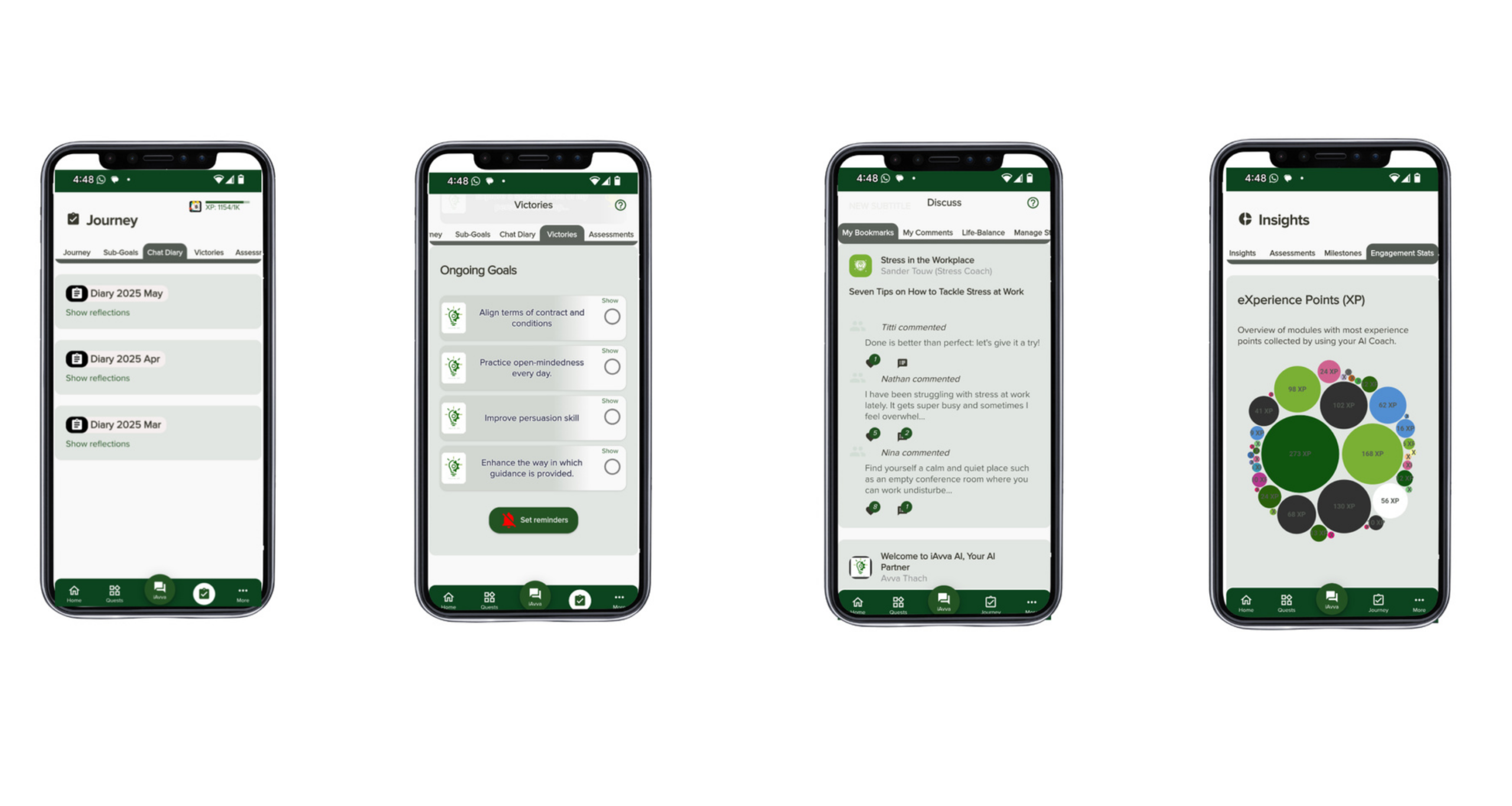
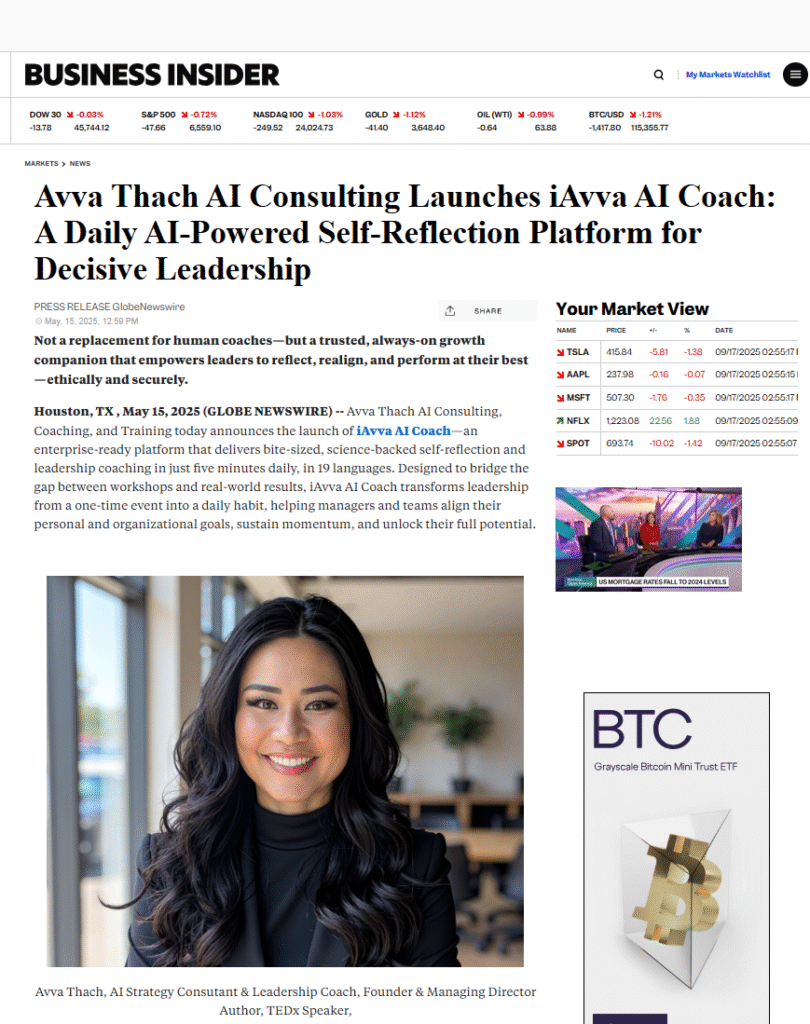
The iAvva AI Coach platform delivers five‑minute daily micro coaching on web, iOS, and Android in 19 languages. Prompts draw on neuroscience, positive psychology, and ICF coaching principles, so leaders build habits of reflection and decisive action. Dual modes for Coach and Mentor help with both personal growth and strategic follow through.
Key features that support AI strategy include:
- Real‑Time Analytics Dashboards: HR and L&D teams see engagement, growth signals, and ROI trends.
- Data Protection: Strict encryption and GDPR‑aligned design protect sensitive data.
- Hybrid Support: Paired with 1‑to‑1 or group executive coaching and AI strategy consulting, this creates a human plus AI environment that keeps leadership behavior aligned with AI roadmaps.
In effect, iAvva AI becomes a continuous change‑support system for leaders, rather than a one‑off training course.
Integrating iAvva AI Into Your AI Roadmap And Governance
I usually position iAvva AI early in the roadmap as a leadership readiness layer.
- During Explore And Educate: Executives and managers use micro coaching to build AI literacy, change skills, and shared language.
- During Discover And Design: Cohorts of leaders use the platform to reflect on use case choices, risks, and communication plans.
- As You Scale: The platform supports wider groups of managers, high potentials, and project leads who carry AI work into daily decisions.
From a governance view, iAvva AI fits under the AI CoE with clear data handling rules, integration points, and measurement. It can connect to HRIS and LMS platforms, so coaching data and development plans align with other talent processes. Analytics from iAvva AI feed into enterprise KPI dashboards, giving the AI Governance Council insight into leadership behaviors across regions and functions.
In simple terms, the platform becomes an always‑on leadership engine that keeps AI strategy from stalling at the human level.
In Summary
AI strategy now is a shared leadership and people agenda, not just a technical plan. When we link AI to clear business and people outcomes, pick use cases with care, build a safe data and ethics base, and grow leadership skills, AI turns from vague noise into concrete progress. That progress shows up in better decisions, faster cycles, and more confident teams.
The path is clear:
- Start with vision and metrics.
- Choose high‑impact use cases across HR, L&D, and core operations.
- Select a stack that mixes ready‑to‑use copilots, low code agents, and, where needed, custom platforms on services like Azure OpenAI.
- Wrap that in strong data governance and responsible AI, plus a roadmap and operating model that move from explore to transform.
Along the way, do not forget the human side. Leaders need ongoing support to change habits, mindsets, and skills. This is where a platform like iAvva AI, backed by deep coaching and consulting experience, pairs well with your AI strategy. If you are ready to test where your organization stands, start by mapping your current AI efforts, leadership readiness, and data practices, then choose one or two concrete steps to move forward. Small, consistent moves beat big promises that never land.
Frequently Asked Questions
Question: What are the first 3 steps I should take to build an AI strategy as an executive?
Start by clarifying business and people outcomes in plain language. Next, run a short readiness and use case workshop with HR, L&D, IT, and business leaders. Then set minimal governance with principles, data rules, and an approval path for pilots. Many executives also use leadership coaching or platforms like iAvva AI to align the top team before tools roll out.
Question: How can small and mid sized businesses create an AI strategy without a large data science team?
Smaller firms can lean on SaaS copilots in suites like Microsoft 365 and low code tools such as Copilot Studio. Focus on a few high value, low risk use cases like HR self service, sales support, or leadership assistance. Partner with trusted vendors and advisors instead of building every model in house. AI powered leadership platforms such as iAvva AI can also upskill managers quickly.
Question: How do I make sure our AI strategy is ethical and complies with regulations like GDPR?
Form a cross‑functional AI governance group that includes Legal, HR, IT, and business leaders. Adopt clear principles for fairness, privacy, transparency, and human oversight, and turn them into design and review checklists. Set data classification, access, and retention policies that match laws such as GDPR and CCPA. Ask vendors, including leadership platforms like iAvva AI, to document security and compliance practices.
Question: What metrics should I track to measure the success of our AI strategy?
Track technology and process metrics such as usage, time saved, and error rates. Add people metrics, including leadership skill growth, engagement scores, and time to proficiency for new managers. Include business outcomes such as revenue lift, margin change, and customer satisfaction where AI plays a role. Watch governance indicators like policy breaches or bias findings, and use dashboards, including iAvva AI analytics, to keep leaders informed.
Question: How can AI support leadership development without replacing human coaches?
AI works best as a partner to human coaches, not a replacement. Use AI for daily micro coaching, practice prompts, and personalized nudges that fit into busy schedules. Keep human coaches for complex topics such as values, politics, and deep feedback. Hybrid models, like those used by iAvva AI, combine scalable AI support with expert coaching, so leaders get both convenience and depth.
Question: How often should we update or review our AI strategy?
Review AI strategy at least once per quarter as part of regular business reviews. Schedule extra reviews when major regulations change, serious AI incidents occur, or new capabilities such as advanced agents appear. Gather feedback from leaders, employees, and customers to refine your portfolio and guardrails. Treat the AI strategy as a living plan that grows with your organization.














Leave a Reply