
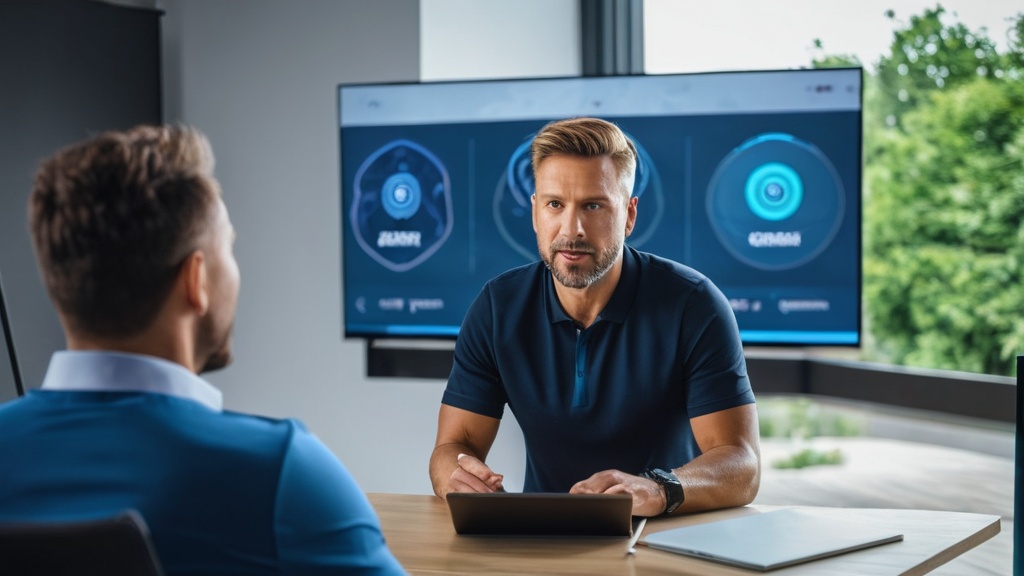

- Unlocking Your Potential: How AI Coaching is Revolutionizing Personal and Professional Growth
You stand at the precipice of a new era in personal development and professional advancement. The whispers of artificial intelligence in the realm of coaching are no longer just whispers; they are a resounding chorus, promising to democratize access to guidance, enhance your learning, and transform how you achieve your goals. As the Listicle Content Architect, it’s my job to distill the most impactful trends, and right now, AI coaching is arguably the most exciting frontier for anyone seeking to level up their life. Forget the sci-fi fantasies; this is about tangible tools designed to empower you, right now.
You might be thinking, “AI coaching? Isn’t that just a chatbot spitting out generic advice?” If so, prepare to be amazed. The landscape of AI coaching has evolved at breakneck speed, moving far beyond rudimentary interactions. We’re talking about sophisticated platforms that can analyze your performance, understand your unique challenges, and offer personalized insights, all while respecting your privacy and adapting to your evolving needs. This isn’t about replacing human connection entirely; it’s about Augmenting your journey with an ever-available, intelligent support system. The implications for your personal growth, career trajectory, and overall well-being are profound. Let’s dive into the specifics and explore how this game-changing technology is set to redefine what it means to be coached, accessible, and successful.
- ### Understanding the AI Coaching Phenomenon
At its core, AI coaching represents the integration of artificial intelligence technologies into the process of guiding and developing individuals. This isn’t a monolithic entity; rather, it’s a spectrum of applications, from simple on-demand tools to complex conversational agents, all designed with the overarching goal of facilitating your progress. The fundamental shift is from a historically scarce and often expensive resource (human coaching) to a potentially ubiquitous and scalable solution. You might have heard about AI’s capabilities in other fields, but its application in personal and professional development is particularly significant because it directly impacts your ability to learn, adapt, and thrive in an increasingly complex world.
- #### The Evolution from Traditional Coaching
For decades, coaching has been a premium service, typically reserved for executives or those who could afford dedicated human mentors. This created a significant gap, leaving a vast majority of individuals without regular, personalized guidance. The advent of AI has begun to dismantle these barriers. Think of the difference between a private tutor and an online learning platform that offers personalized practice. AI coaching builds upon this concept, offering a level of immediate, data-driven feedback that was previously unimaginable. You can now receive support and insights tailored to your specific needs without the scheduling constraints or high costs associated with traditional human coaching. This accessibility is a cornerstone of the AI coaching revolution.
- #### More Than Just a Chatbot: The Sophistication of AI Coaches
The term “AI coach” might conjure images of a simple script-following program. However, the reality is far more advanced. Modern AI coaching platforms leverage sophisticated natural language processing (NLP), machine learning (ML), and even sentiment analysis to understand your input, identify patterns in your behavior, and provide relevant, contextual advice. This means that when you interact with an AI coach, it’s not just responding to keywords; it’s analyzing the nuances of your communication, understanding your emotional tone, and drawing upon vast datasets to offer insights that resonate. This depth of understanding allows the AI to act as a more effective partner in your development journey.
- Widening the Net: AI Coaching’s Impact on Accessibility and Equity
One of the most transformative aspects of AI coaching is its ability to democratize access to guidance. Historically, the benefits of personalized coaching have been largely confined to a privileged few. You, like many others, might have felt that robust professional development was out of reach. AI is changing that narrative, making sophisticated guidance available to everyone, regardless of their position within an organization or their personal financial situation. This is empowering individuals at all levels and fostering a more equitable landscape for growth.
- ### Empowering the Every Employee
Leading organizations are recognizing that nurturing talent isn’t just an executive prerogative. BetterUp, a prominent player in the coaching space, reports a significant expansion in the reach of their AI-powered mentoring. This means that individuals across all strata of an organization, from entry-level employees to mid-tier managers, can now benefit from personalized guidance. You no longer have to wait for a promotion or a special initiative to receive support aimed at improving your performance, developing new skills, or navigating workplace challenges. AI coaching ensures that this critical support is a consistent part of your professional journey.
- #### Breaking Down Hierarchical Barriers
The traditional model often saw coaching as a perk for those already at the top. This created a self-perpetuating cycle where leadership development was concentrated, while others were left to figure things out independently. AI coaching breaks down these hierarchical barriers. Imagine an AI coach being able to provide personalized feedback on your presentation skills, help you identify areas for improvement in your project management, or offer strategies for better time management, all available on demand. This broadens access to developmental resources, ensuring that talent can be cultivated at every level, leading to a more skilled and engaged workforce overall. You can proactively seek help without feeling like you’re overstepping or requiring senior-level intervention.
- #### Anytime, Anywhere Learning and Development
Another significant advantage of AI coaching is its sheer availability. Platforms like Learning Pool’s new “AI Coach,” which leverages powerful tools like OpenAI’s GPT, offer on-demand professional coaching. This means you can access support whenever and wherever you need it. Stuck on a complex problem late at night? Facing a tricky conversation you want to prepare for? Your AI coach is there, ready to provide instant, personalized assistance without the need to book an appointment or wait for business hours. This constant availability fosters a more agile and responsive approach to learning and development, allowing you to address challenges and seize opportunities in real-time.
- The Human Touch vs. AI’s Efficiency: Finding the Optimal Blend
It’s crucial to address a common concern: will AI replace human coaches entirely? The current consensus among experts and observed trends suggests a more nuanced answer. While AI excels at certain aspects of coaching, the irreplaceable value of human connection, empathy, and complex judgment remains paramount. The future likely lies not in an either/or scenario, but in a sophisticated integration of both AI and human expertise. You’ll want to understand where each excels to maximize your own growth.
- ### AI’s Strengths: Customization, Convenience, and Data-Driven Insights
New research from The Conference Board and BetterUp highlights the remarkable capabilities of AI in the coaching arena. AI can effectively handle a significant portion, reportedly up to 90%, of day-to-day coaching functions. This includes tasks like providing customized feedback based on your performance data, offering easy-to-use tools for skill development, and delivering structured guidance. For instance, an AI might analyze your project management tasks and suggest more efficient workflows, or provide personalized practice scenarios for sales pitches based on your interaction history. You benefit from this efficiency through rapid feedback loops and readily available resources.
- #### Streamlining Repetitive Coaching Functions
Think about the administrative and structured aspects of coaching. AI is a natural fit for these. It can manage scheduling, track progress against defined goals, offer pre-designed exercises, and even provide preliminary feedback on written communications. This frees up human coaches to focus on more complex and impactful interactions. For you, this means quicker access to skill-building modules and more consistent tracking of your development, all handled with seamless efficiency.
- #### Personalization at Scale
One of AI’s superpowers is its ability to process vast amounts of data and tailor recommendations accordingly. For AI coaching, this translates into highly personalized experiences. Based on your inputs, performance metrics, and stated goals, an AI coach can curate specific learning paths, suggest relevant resources, and adapt its communication style to best suit your preferences. This level of granular personalization is often challenging for human coaches to deliver consistently across a large number of clients, making AI a powerful tool for efficient, individualized support.
- ### The Irreplaceable Role of Human Coaches
Despite AI’s impressive progress, human coaches remain indispensable for navigating the more intricate aspects of personal and professional development. The Conference Board and BetterUp research points out that emotionally charged conversations, discussions involving workplace politics, and explorations of deeply held values are areas where the human touch is critical. You need a human coach for empathy, intuition, and the ability to read between the lines in ways AI currently cannot.
- #### Navigating Emotional and Interpersonal Dynamics
When you’re dealing with significant emotional distress, interpersonal conflicts, or complex ethical dilemmas, a human coach provides an empathetic ear and discerning judgment that AI struggles to replicate. The ability to understand unspoken cues, offer genuine comfort, and guide you through sensitive discussions is a uniquely human skill. This is where the relational aspect of coaching truly shines, fostering trust and deeper self-awareness.
- #### Addressing Complex Ethical and Political Landscapes
Workplace dynamics can be incredibly complex, involving subtle power plays, organizational politics, and nuanced ethical considerations. A human coach can help you strategize, build resilience, and act with integrity within these challenging environments. Their life experience and understanding of human nature allow them to offer guidance that transcends algorithms, helping you make wise decisions in situations where there are no easy answers.
- The Future of Coaching: Tiered, Blended, and Human-Centric
The most effective approach to AI coaching, as envisioned by leading experts, is not one where AI dictates terms, but one where it integrates seamlessly with human expertise in a thoughtful, deliberate manner. This “tiered and blended model” ensures that you receive the right kind of support at the right time, maximizing both efficiency and the depth of your development. It’s about creating a holistic coaching ecosystem where technology augments, rather than replaces, essential human connection.
- ### The Tiered and Blended Model Explained
This model suggests a strategic division of labor between AI and human coaches. AI typically handles the initial stages, administrative tasks, and structured reflection. Think of it as your first line of support, providing quick answers, organizing your learning plan, and offering objective feedback on defined metrics. As challenges become more complex, emotionally laden, or ethically sensitive, the system directs you to a human coach, ensuring that you receive the most appropriate and impactful guidance. This tiered approach ensures that AI is used for what it does best, while preserving the invaluable contribution of human insight and empathy.
- #### AI Handling the Foundational Elements
In this model, AI coaches take on the responsibility for tasks such as onboarding, basic skill assessment, goal tracking, and providing standardized feedback. For example, if you’re learning a new software skill, an AI coach might guide you through tutorials, administer quizzes, and provide immediate corrections on your practice exercises. This makes learning more efficient and accessible, allowing you to build a solid foundation under AI’s guidance. You can practice at your own pace and receive consistent support for fundamental aspects of your development.
- #### Human Coaches for Relational Depth and Judgment
When the coaching engagement requires deep empathy, navigating personal values, or addressing intricate interpersonal conflicts, the model wisely escalates to a human coach. These professionals are adept at building rapport, fostering trust, and providing subjective insights that AI cannot replicate. For instance, if you’re grappling with a difficult team dynamic or seeking clarity on your career path based on your core values, a human coach will provide the nuanced support needed for profound growth. This ensures that you receive sensitive and insightful guidance for your most critical developmental needs.
- #### Clear Criteria for Escalation
A crucial element of the blended model is establishing clear protocols for when to transition from AI to human coaching. These criteria might include certain keywords or sentiment indicators in your interactions, the complexity of the user’s stated problem, or explicit requests for human intervention. Having well-defined triggers ensures that the system is responsive to your evolving needs and efficiently routes you to the most qualified support, preventing frustration and maximizing the effectiveness of the coaching experience.
- Navigating the Future: The Rise of Specialized AI and Security Considerations
As AI coaching matures, you’ll see its application diversify, extending into highly specialized domains and prompting important discussions around data security and privacy. The more personalized and data-driven AI becomes, the more critical it is to ensure responsible development and deployment. Understanding these emerging trends will help you engage with AI coaching tools more effectively and with greater awareness.
- ### AI in Specialized Performance Coaching
AI’s capacity for detailed data analysis is opening new frontiers in performance-based coaching, particularly in fields like sports. Amateur tennis players, for instance, can now use AI tools to meticulously compare their technique against that of world-class professionals. This allows for hyper-specific identification of areas for improvement, offering personalized drills and feedback tailored to bridge the gap between your current skill level and elite performance. This demonstrates how AI can be a powerful catalyst for observable skill enhancement.
- #### Objective Performance Analysis
AI excels at capturing and analyzing performance metrics with a level of detail and objectivity that is often beyond human capabilities. In sports, this might mean tracking every aspect of a tennis player’s swing, from racket angle to follow-through. In a professional context, it could involve analyzing your communication patterns in customer service interactions or your coding efficiency. This data-driven approach provides you with undeniable evidence of your strengths and weaknesses, enabling a more focused and effective development strategy.
- #### Tailored Training and Skill Development
Once AI has identified specific areas for improvement, it can then generate personalized training modules or practice routines. For the tennis player, this might be a series of drills designed to correct a specific flaw in their serve. For a business professional, it could be simulations to practice difficult client conversations or feedback mechanisms to refine their writing. This targeted approach ensures that your development efforts are highly efficient, addressing your unique needs rather than generic advice.
- ### Paramount Importance of Security and Privacy
As AI coaches become more adept at leveraging your workforce data to enhance their effectiveness, the risks associated with data mishandling and privacy breaches become increasingly significant. Industry leaders are rightly emphasizing the need for extremely strict security criteria to protect sensitive personal and professional information. You should be aware that while AI offers immense benefits, robust data protection measures are non-negotiable.
- #### Protecting Sensitive Workforce Data
The efficacy of AI coaching often hinges on access to detailed information about your work, performance, and professional interactions. This data, if mishandled, could have serious consequences. As AI coaches become more integrated into professional environments, ensuring that this data is anonymized, encrypted, and securely stored is paramount. You need to trust that your information is being used ethically and responsibly for your benefit, not exposed to undue risk.
- #### Building Trust Through Robust Security Protocols
For AI coaching to achieve widespread adoption and trust, organizations must prioritize and clearly communicate their security protocols. This includes transparent policies on data usage, robust access controls, and regular security audits. You should be assured that the platforms you use have been vetted for their security compliance and that your privacy is a top priority. Without this assurance, the adoption of AI coaching may face significant resistance.
- ### Cultural Nuances and the Future of Adoption
While the global trend points towards increased AI adoption, it’s important to acknowledge that cultural preferences can influence the reception of this technology. In some regions, such as India, there’s a noted preference for human mentorship, often tied to cultural values and the perceived importance of human connection in guidance. Reports suggest that a rising Human Progress Index in these areas correlates with a healthy skepticism toward fully AI-driven coaching, indicating that a human-centric approach remains deeply valued. This highlights the need for AI coaching solutions to be sensitive to local contexts and to offer flexible models that respect diverse cultural expectations.
- #### Respecting Cultural Preferences
As AI coaching solutions expand globally, it is imperative for developers and providers to understand and respect cultural differences in approaching mentorship and guidance. In societies where personal relationships and hierarchical mentorship are deeply ingrained, a purely AI-driven approach may be met with resistance. Solutions that can adapt to these cultural nuances, perhaps by offering AI as a complementary tool to human interaction, are likely to be more successful.
- #### The Future: A Spectrum of Acceptance
Ultimately, the future of AI coaching will likely be a spectrum of acceptance, influenced by technological advancement, perceived benefits, and cultural considerations. While technological capabilities will continue to advance, the human element will remain a crucial factor, particularly in fostering deep trust and guiding complex personal journeys. You can expect to see a continued evolution of AI coaching that either integrates seamlessly with human guidance or offers hyper-specialized solutions where human interaction is less critical.
FAQs
What is AI coaching?
AI coaching refers to the use of artificial intelligence technology to provide personalized coaching and guidance to individuals in various aspects of their lives, such as career development, health and wellness, and personal growth.
How does AI coaching work?
AI coaching works by using algorithms and machine learning to analyze data and provide tailored recommendations and feedback to users. This can include personalized goal setting, progress tracking, and real-time support and advice.
What are the benefits of AI coaching?
Some of the benefits of AI coaching include accessibility, as it can be available 24/7, personalized guidance based on individual needs and preferences, and the ability to analyze large amounts of data to provide insights and recommendations.
What are some examples of AI coaching applications?
Examples of AI coaching applications include virtual health and fitness coaches, career development platforms that provide personalized advice and resources, and personal finance tools that offer tailored financial planning and budgeting guidance.
Are there any limitations or concerns with AI coaching?
Some limitations and concerns with AI coaching include privacy and data security issues, the potential for bias in the algorithms used, and the lack of human empathy and understanding that can be provided by a real-life coach.











Leave a Reply