




AI Coach Tools Explained: Which Features Actually Help Leaders and Teams
ai coach tools promise faster time-to-competency and sharper decision-making, but not every feature actually moves the needle. This post breaks down which AI coaching capabilities matter for leaders and teams, and translates them into practical criteria SMBs can use to evaluate, pilot, and scale. You’ll get real-world guidance on ROI, integration with existing L&D programs, governance, and deployment patterns you can adapt to your organization.
1. BetterUp
BetterUp’s ai coach capabilities scale leadership development, but in SMBs the real delta comes from how the tool plugs into existing workflows and governance. The core value is in matching the right development path and delivering bite-sized guidance that leaders can apply in the flow of work, not in flashy metrics alone. See it in action at BetterUp.
- ai coach matching and personalized development plans: Aligns learning with role and business priorities; without a clear tie-in to performance goals and reviews, the plans drift.
- Real-time feedback, micro-interventions, and progress dashboards: Keeps momentum, but requires clean data and clear ownership of coaching records; dashboards lose meaning if data feeds are inconsistent.
- 360-degree insights and anonymized team data: Helps leaders identify gaps, yet privacy controls and sampling biases can distort coaching decisions if not managed carefully.
- Best-fit use cases for executives, managers, and high-potential teams: Avoid one-size-fits-all; segment cohorts and define success metrics per group to prevent wasted seats.
- Implementation considerations for SMBs: cost, integration, privacy, and governance: Cap licenses, formalize data-sharing, and map to your LMS/HRIS so coaching outcomes feed performance processes.
Implementation reality for SMBs centers on cost, integration, and governance. Pricing often scales with seats and activity, so insist on SMB-friendly terms and a clear plan for SSO, data hosting, and exportability of coaching data. The leverage comes when the tool sits alongside your existing L&D stack rather than in a silo.
Example: a 350-person software firm ran a 12-week BetterUp pilot for 6 executives and 12 high-potential managers. They used ai coach matching to assign development plans and integrated dashboards into their leadership review process. After the pilot, competency milestones advanced noticeably faster, but only after formalizing data-sharing agreements and budgeting for ongoing licenses.
A common misstep is treating AI coaching as a replacement for human mentorship. In practice, the strongest programs couple AI-generated insights with human coaching to contextualize strategy and culture, otherwise you flatten nuance and risk misalignment with business goals.
Next consideration: run a disciplined SMB-friendly pilot with defined metrics, a governance charter for data and privacy, and a plan to scale if impact proves durable.
2. CoachHub
CoachHub scales quality coaching across an organization by connecting a global network of coaches with your leaders. It provides scalable one-on-one and group programs, but ROI shows up only when you define use cases, governance, and data flows instead of chasing features.
What CoachHub actually brings to the table
For SMBs, the platform delivers global coaching network access, coach matching, and a mobile-friendly experience. The emphasis is on accessibility and consistency: coaches are assigned via algorithms, with multilingual options to support diverse teams, and a dashboard that keeps coaching activity visible across cohorts. For leaders, this means you can scale development without locking in headcount growth.
- Global coaching network with scalable one-on-one and group programs
- Coach matching and multilingual options to fit diverse teams, accessible on mobile
- Analytics dashboards to track engagement, progress, and ROI
- Ideal use cases: leadership development at scale, succession planning, and onboarding
To get practical value, integrate with your LMS or HRIS so coaching doesn’t live in a silo. Data privacy and governance are not afterthoughts—define who can view coaching data, how long records stay, and where data is stored. If you cannot demonstrate data provenance and a clear consent model, you won’t sustain adoption with executives. See how this integrates with broader programs at CoachHub.
Concrete use case: a mid-market HR team rolled out CoachHub for onboarding and first-line manager development. Over four months, managers reported clearer development plans and more consistent coaching sessions across locations, with engagement metrics trending upward. The program was then scaled to 60 managers across two regions.
A critical constraint in practice is governance: without clear SLAs, coach quality control, and escalation paths for situations needing human mentorship, you get uneven outcomes and a sense that the tool is just a badge. The platform shines when paired with structured coaching goals tied to business outcomes and regular governance reviews.
Take the next step by starting with a narrow pilot—onboarding or frontline leadership—and design a data-friendly plan for expansion, so you can demonstrate concrete ROIs before broad rollout.
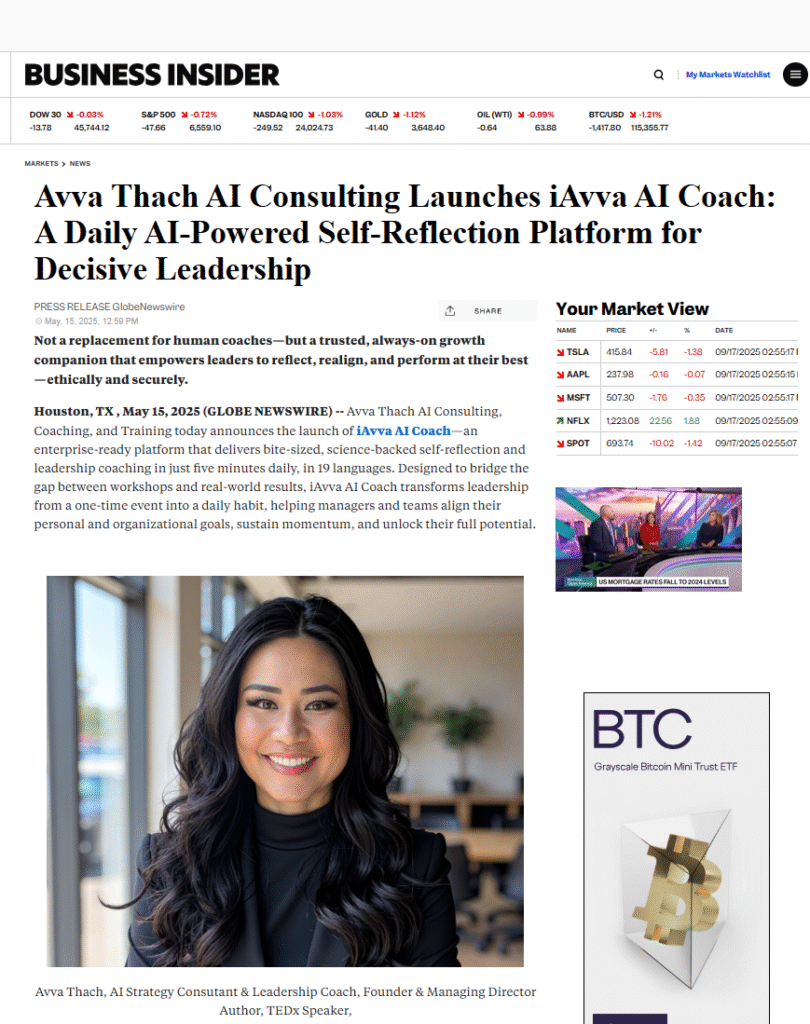
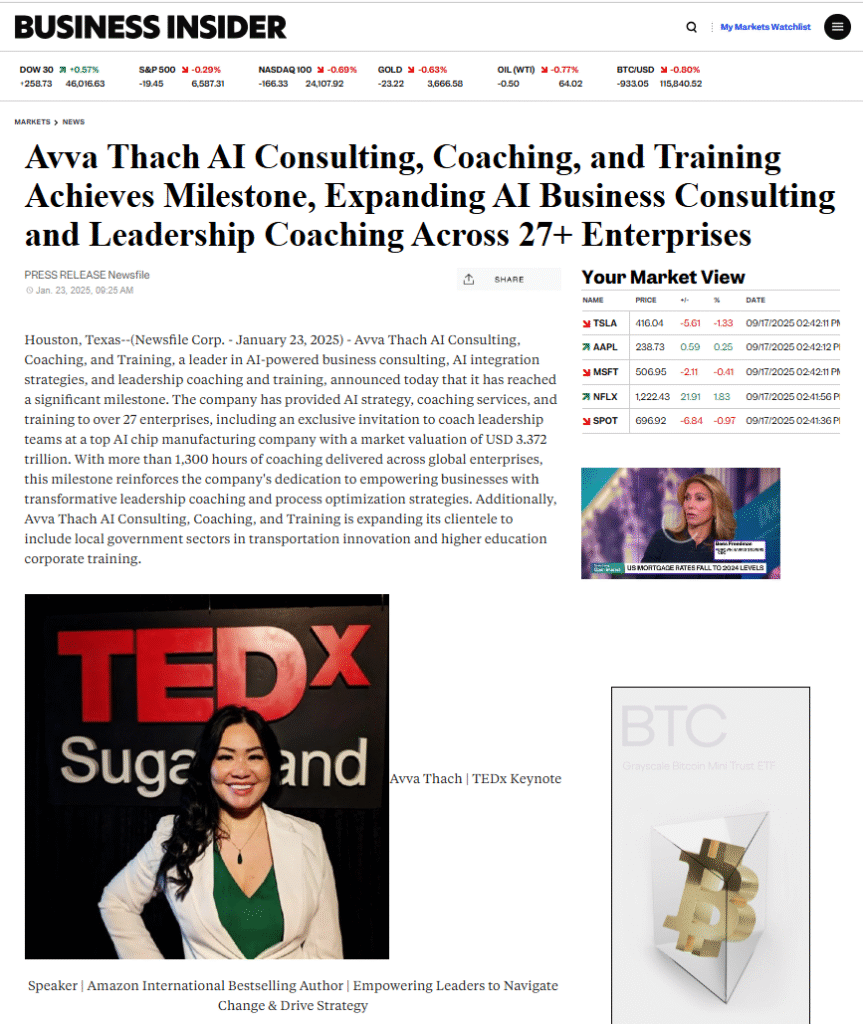
3. iAvva AI Coaching & Leadership Development Program
The iAvva AI Coaching & Leadership Development Program is built around a three-pillar framework designed for SMBs: Customized Consulting, Coaching & Facilitation, and Training & Development. This structure translates strategic AI coaching into practical, bite-sized initiatives with measurable milestones, and you can review the deployment milestones in our program roadmap here.
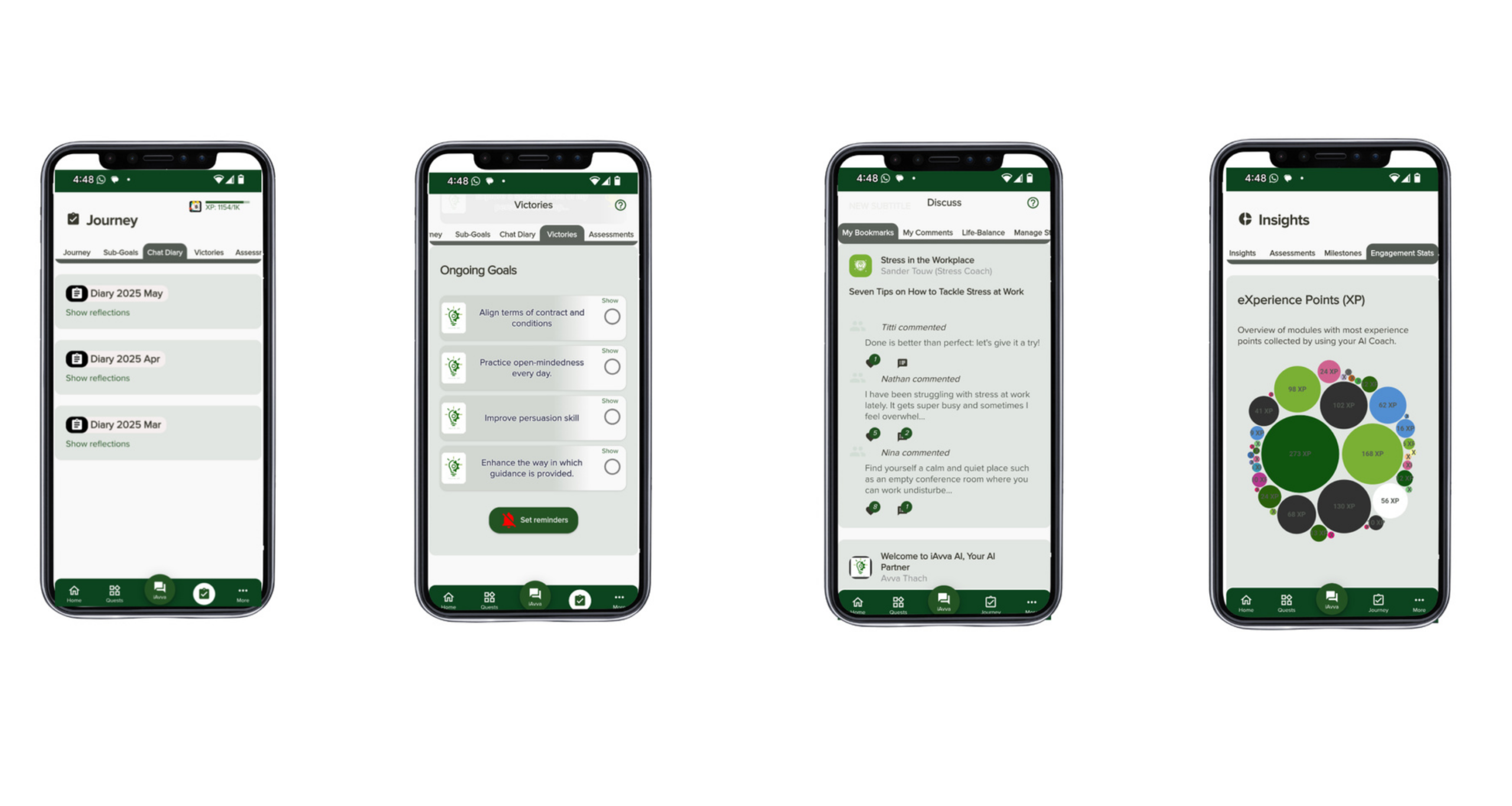
One-to-one executive coaching pairs with cohort programs, all tracked by an ai coach that surfaces progress, nudges, and AI-assisted insights. The program blends human mentorship with automated coaching to keep development aligned with real business priorities and available data.
- Lean Six Sigma-inspired process improvements to align coaching with business goals and deliver tangible workflow changes.
- Clear metrics and ROI definitions: time-to-competency, productivity gains, and leadership impact.
- A deployment roadmap with SMB-focused milestones that phases scope and investment.
- Seamless integration with existing L&D systems (LMS/HRIS) and robust data privacy governance.
- Multi-mode coaching options: one-to-one, small cohorts, and targeted micro-learning.
Practical limitation: The Lean Six Sigma frame is powerful for operations but can feel constraining in creative or rapidly changing environments. Treat it as a guidance system, pin a few high-leverage outcomes each quarter, and let AI surface alternative paths rather than forcing rigidity.
Concrete example: A mid-market manufacturer piloted iAvva for frontline supervisors over 12 weeks. With a structured cohort, time-to-competency dropped from about 9 months to 5–6 months, and line productivity rose by roughly 12–15 percent during the pilot. ai coach-driven dashboards continually adjusted coaching plans to reflect real-time performance data.
Judgment: SMBs often chase feature richness and overlook governance. Real value comes from interoperable data, clear privacy controls, and human mentorship that contextualizes AI prompts. Don’t let automation erode trust—design coaching to augment autonomy.
Takeaway: start with a tightly scoped pilot tied to a single KPI, ensure governance and data interoperability, and plan for how coaching insights flow into your existing development programs.
4. Mursion
Mursion fuses VR-based simulations with AI-powered coaching prompts to give leaders practice in high-stakes conversations without real-world risk. This isn’t a generic e-learning module; it’s a live, repeatable rehearsal space that surfaces behaviors you can’t easily observe in a classroom.
Core capabilities include adaptive scenarios that adjust to a participant’s responses, AI-generated feedback on communication patterns, and analytics that map decision paths, timing, and empathy cues. You can see where a leader stumbles in tone, framing, or questioning, then reset the scenario to reinforce a more effective approach. For SMBs, this is most valuable when tied to concrete leadership objectives and a structured debrief with a human coach. Mursion is the primary reference here.
The practical value comes with trade-offs. High-fidelity simulations demand time to design and curate relevant scenarios, plus ongoing licensing and hardware costs. Some learners fatigue if sessions are too long or too frequent, and transfer to real work hinges on strong debriefs that translate in-sim insights into visible behavioral changes.
- Fidelity vs. cost: prioritize scenarios that map to your actual leadership challenges and cap hardware and licensing to a scalable level.
- Cadence and integration: schedule simulations to align with coaching cadences and action-plans, so in-sim learnings feed live development work.
- Measurement and ROI discipline: define a pre/post assessment and concrete transfer metrics to show impact beyond in-sim scores.
Concrete Example: In a mid-market software company, a leadership cohort rehearsed investor Q&A and critical client negotiations using adaptive boardroom scenarios. After six sessions over eight weeks, AI feedback highlighted clarity gaps and negotiation framing, which were then reinforced in guided debriefs with an executive coach. Participants reported crisper messaging and more decisive responses in subsequent live meetings, with managers noting faster alignment across functions.
Takeaway: use Mursion to accelerate soft-skill development when you have clearly defined boardroom-like scenarios and a plan to transfer in-sim gains to real meetings. Next consideration: embed the simulations into a broader coaching roadmap with data flows into your LMS and leadership dashboards to prove value and guide ongoing investment.
5. Lattice Coaching
Coaching at scale converges with performance management in Lattice Coaching. The tool’s core value for SMBs is embedding coaching within the ongoing evaluation and feedback cadence, rather than treating development as a quarterly add-on. When AI-assisted coaching recommendations sit inside the LMS/HRIS ecosystem, managers receive near real-time prompts tied to actual goals, not abstract competencies. The payoff is not just better feedback—it’s structured development that moves business metrics, such as goal attainment, team engagement, and time-to-competency.
How Lattice Coaching integrates with performance management
In practice, the integration enables coaching recommendations to be operationalized in the same system that tracks performance reviews, 360 feedback, and goal progress. That convergence creates a predictable rhythm: managers prep for one-on-ones with AI-suggested development steps, employees see recommendations aligned to their objectives, and HR can report on coaching activity alongside performance outcomes. The result is a continuous improvement loop rather than sporadic training bursts. For a practical SMB roadmap, see the iAvva coaching program store store.
Practical considerations
- Integration readiness: Clear data ownership and smooth API connections with your LMS/HRIS.
- Transparency and auditability: The AI guidance should show what data influenced the recommendation and allow HR to audit outcomes.
- 360 feedback alignment: Ensure 360 data remains within the same ecosystem to maintain consistent reporting.
- Change management: Sponsor leadership, train managers, and have a plan for user adoption.
Concrete example: a midsize product company piloted Lattice Coaching by linking it to quarterly reviews and ongoing feedback cycles. AI-assisted recommendations surfaced to managers before 1:1s, informing development plans and follow-up actions. Within six months, leaders reported more consistent coaching conversations and better alignment between individual development plans and quarterly objectives.
Be mindful that scale can dilute quality if governance and curation lag. AI can surface generic suggestions or misinterpret noisy data from performance reviews; keep human oversight, require manager validation of AI guidance, and use governance to prevent biased or punitive recommendations. The best SMB outcomes come from pairing AI-driven prompts with trusted mentors and a clearly defined escalation path when AI flags risk.
Takeaway: design a six-month pilot that ties coaching goals to 1–2 business objectives, establish data governance, and reserve human mentorship for high-leverage conversations before scaling.













Leave a Reply