






Designing Executive Coaching Training That Creates Measurable Behavior Change
This practical guide on executive coaching training translates leadership potential into verifiable behavior change, not just activity. It delivers a repeatable framework to align coaching outcomes with business goals, design an outcome-focused curriculum, and blend AI-assisted feedback with human coaching—without losing empathy or nuance. You’ll get a 90‑day pilot, governance playbooks, and a clear path to measurable ROI for SMBs.
Define Behavior Change Outcomes That Matter
Define business-aligned observable behaviors that drive outcomes instead of chasing vague leadership virtues. Start by anchoring every coaching target to a business goal, then translate that goal into concrete, observable actions. For each role or function, identify 3–5 critical behaviors and map them to specific KPIs.
Choose data sources early and specify objective indicators for each behavior. For example, tie a behavior like decisive prioritization to data from performance reviews, 360 feedback, and operational metrics. Make data sourcing explicit and accessible to prevent measurement drift as programs scale and to keep sponsors aligned with real impact.
Concrete use-case: a Vice President of Product targets faster cycles and stronger cross-functional alignment. Key behaviors include decisive prioritization in cross-functional forums, timely stakeholder communication, and explicit risk signaling. Measurable indicators are feature lead time, release readiness, and cross-functional partner satisfaction. With that alignment, coaching conversations stay focused on observable actions, and progress shows up in cadence reviews Korn Ferry and internal dashboards.
A practical trade-off: lean the mapping to avoid signal overload. Too many behaviors create noisy data and dilute accountability; too few gaps leave you with incomplete transfer. Start with a tight set—3–5 behaviors per role—and ensure each ties to at least one KPI you can genuinely measure. If baseline data is thin, supplement with validated assessments like CliftonStrengths or Hogan, but keep the behavioral targets concrete.
Governance and measurement planning matter just as much as design. Assign a data owner, decide data refresh cadences, and set privacy guardrails from day one. Roll out a 90-day pilot with 1–2 leadership teams to establish a believable through-line from behavior to business results, then use a simple ROI lens to decide whether to scale. A well-defined pilot creates the credibility to justify broader investment and governance.
Takeaway: keep the mapping lean, anchored in business outcomes, and validated with real data early. That discipline is what makes executive coaching training measurable in practice, not slogans or endless surveys.
Design an Outcome-Focused Executive Coaching Curriculum
To design an outcome-focused curriculum for executive coaching, start with a clean blueprint: for each target behavior, specify the learning activity that will drive it, the evidence you will collect, and the reinforcement cadence. The curriculum should blend one-on-one coaching, structured group sessions, and AI-powered feedback, ensuring continuity from pilot to scale.
Think modular rather than monolithic. A 12-week cycle with three 4-week waves of coaching labs, plus mid-cycle check-ins and a final impact review, yields steadier transfer than a single block. This approach makes trade-offs explicit: more coaching depth costs more, but it increases transfer probability; more AI nudges scale learning without proportional coaching hours.
Concrete example: in a mid-market software company, a 12-week curriculum enrolled 6 executives with weekly 60-minute 1:1 coaching, biweekly 90-minute group workshops on strategic delegation, and an AI coaching app that provides daily feedback and reflection prompts. After three months, they reported faster decision cycles and a 22% reduction in project cycle time, with cross-team collaboration metrics improving meaningfully.
Design tactics matter: pair robust assessment tools with AI analytics while preserving human interpretation. Use tools like CliftonStrengths and Hogan with a Korn Ferry 360, and feed results into personalized coaching plans. Build a transfer plan where leaders commit to 2 concrete behaviors in the next quarter, with observable evidence tracked in a shared dashboard.
Budget-conscious SMBs should expect friction. The answer is a staged rollout: start with 1–2 leadership teams, lean on a scalable coach-to-participant ratio, and use AI to amplify reach without replacing human coaching. Governance and clear sponsorship are non-negotiable to prevent scope creep and misaligned outcomes.
Next step: draft the 90-day pilot blueprint, assign sponsorship, and select the measurement suite so you can demonstrate early behavior change and business impact.
Measurement and Metrics: Moving Beyond Satisfaction to Behavior Change
Measurement should cut through satisfaction surveys and tie observable leadership behaviors to concrete business outcomes. In practice, you need a framework that captures behavior, learning, and results across time, so you can attribute change to the coaching program rather than other initiatives.
Key elements of a robust measurement framework
Adopt a multi level lens centered on behavior change and business results. Use Kirkpatrick levels 3 and 4 to focus on observable behavior in the workplace and the impact on organizational performance, not just learner reactions.
- Baseline and cadence: Establish baseline metrics before the program and schedule checkpoints at 90 days, 6 months, and 12 months.
- Triangulated data sources: Combine observed behaviors, performance metrics, and business outcomes using data from 360 assessments, Hogan, CliftonStrengths, and operational KPIs.
- Dashboards and reporting: Build dashboards that map coaching activities to KPI changes and track ROI over time.
- Governance and attribution: Define data ownership, privacy, and a clear attribution model to separate coaching impact from other initiatives.
This framework aligns with coaching effectiveness research from CCL and Korn Ferry, reinforcing the credibility of tying observable behaviors to business outcomes.
Concrete example: in a 90 day pilot with two leadership teams, baseline project cycle time averages 60 days. After the pilot, cycle time falls to 48 days, and cross functional handoffs improve by measurable collaboration scores. An ROI model shows meaningful value when these changes persist over six months.
Important: attribution matters. Without a plausible model for separating coaching impact from other initiatives, you risk overstating ROI.
| Behavioral Area | Data Source | KPI | Timing |
|---|---|---|---|
| Strategic decision making | 360 feedback, performance reviews | Decision cycle speed | 90 days |
| Cross functional collaboration | Hogan and CliftonStrengths data, project metrics | handoff quality score | 6 months |
Integrating AI Tools and Human Coaching for Transfer
AI is not a stand-alone trainer; its real value shows up when it’s embedded in the transfer workflow, tied to observable leadership behaviors and the coaching cadence rather than generic e-learning.
Clear governance matters: decide where AI adds value in the early pilot, who reviews AI outputs, and how data from coaching conversations is stored and used. Without boundaries you invite noise, privacy risk, and misaligned expectations.
Practical integration steps
- Map AI touchpoints to the coaching cadence and the defined behaviors, linking nudges, dashboards, and reflection prompts to concrete KPIs.
- Define prompts and escalation: craft prompts for daily feedback, weekly summaries, and a clear path for human intervention in high-stakes decisions.
- Establish governance and privacy: assign data owners, set retention rules, obtain consent, and implement access controls to keep sensitive conversations protected.
- Synchronize measurement: align AI signals with human observations; use dashboards that display both AI-derived nudges and observed behavior changes in the same view.
- Guardrails against overreliance: cap AI suggestion frequency, require human review for critical moves, and schedule calibration sessions with coaches.
Concrete use case: A SMB software firm deploys an AI coach app to surface daily nudges on decision quality and stakeholder communication. A senior executive coach reviews a weekly digest that highlights patterns in escalation timing and response effectiveness, then works with the leader in a focused 1:1 to adjust behaviors. After three months, the leader demonstrates more timely stakeholder updates and sharper decision traces in the team metrics.
Where you deploy the AI layer matters: embedding AI in an existing leadership portal keeps context and legacy data intact, but a standalone AI coaching app can offer ultra-focused nudges and faster iteration. If you couple AI to your CRM or collaboration tools, tie prompts to real customer-facing events, but watch for data fragmentation and access control.
A critical trade-off to face: AI can multiply touchpoints and speed, but it should not replace the nuanced coaching dialogue. Privacy, bias, and misinterpretation are real risks; mitigate with discipline around data governance, frequent calibration, and keeping human interpretation central.
Next: lock in governance and pilot scope, then align sponsor expectations with a 90-day pilot that maps AI outputs to observable behavior changes and business outcomes.
Implementation Roadmap for SMBs: Pilot to Scale
Implementation is where the design either sticks or frays. For executive coaching training in SMBs, the path to measurable change runs through a tightly scoped pilot, a clear governance model, and a repeatable playbook you can scale once you prove impact.
Start with a 90-day pilot that targets 1–2 leadership teams, with a handful of observable behaviors tied to concrete KPIs. Build a simple budget and a fixed set of data sources so you can triangulate progress without drowning in vanity metrics.
- Define pilot scope and success criteria for the first wave of coaching.
- Assign governance roles (sponsor, program owner, data steward, and privacy lead) and cadence.
- Choose measurement tools that already align with behavior goals and business KPIs.
- Create standard playbooks and templates to enable quick scaling after the pilot.
Two practical constraints shape what you can achieve: governance overhead and tool integration. Too much ceremony slows momentum; too little oversight invites misalignment between coaching activities and business outcomes. The right balance is a lean governance spine—clear decisions, documented baselines, and light-touch dashboards that executives can trust.
Data privacy and ethics matter from day one. Build a lightweight governance charter that covers consent, data access, anonymization of feedback where possible, and clear ownership of analytics. Align AI-enabled insights with human judgment to guard against bias and preserve accountability.
Scale readiness hinges on repeatable assets. Produce a compact set of coaching agendas, assessment templates, and a vendor-ready ROI calculator so you can deploy the same package across teams with minimal customization. See the practical ROI approach referenced in our materials here: ROI model.
Example: a regional manufacturing firm ran a 12-week pilot with two senior managers. They defined three behaviors: faster decision-making, cross-functional collaboration, and quality of feedback. By week 12, decisions were made 22% faster, cross-team project cycles shortened by 12%, and coaching participation reached 78% with positive sentiment in post-pilot surveys.
Pilot structure and governance
Institute a lightweight governance model: a sponsor who approves the ROI framework, a coaching lead who manages the curriculum, a data steward who safeguards privacy, and quarterly review cadences. Keep dashboards focused on the pre-defined KPIs and make data ownership explicit so there’s no ambiguity when you scale.
Takeaway: lock governance and a straightforward ROI approach before you scale; AI coaching should augment human effort, not replace judgment, and your next wave will hinge on the pilot’s clarity and sponsorship.
Real-World Insights: Case Studies and Practical Takeaways
Real-world coaching gains show up when you stop treating outcomes as training satisfaction and start mapping them to business impact. In practice, the strongest programs tie a small set of observable behaviors to concrete KPIs, then track those behaviors across the 90‑day pilot and beyond. This requires crisp definitions, reliable data sources, and sponsorship that treats accountability as essential, not optional. Without that alignment, coaching remains a nice-to-have rather than a measurable driver of performance.
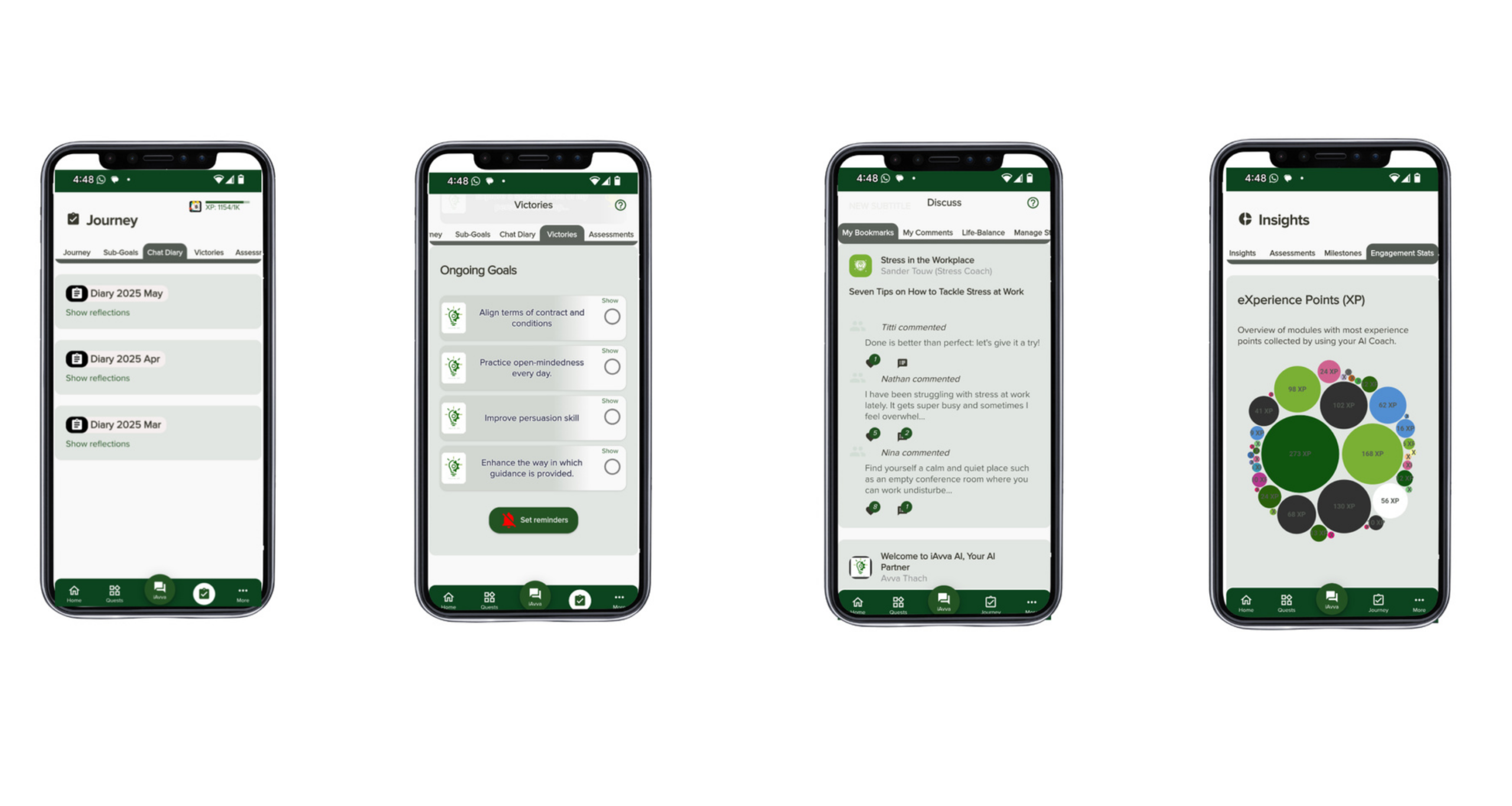
AI-assisted coaching can scale support without eroding nuance, but it is not a substitute for human judgment. Use AI for data collection, progress dashboards, and timely nudges, while leaving interpretation, development planning, and sensitive conversations to experienced coaches. Expect ongoing governance, privacy safeguards, and bias checks to be non-negotiable; neglect them and you undermine trust and outcomes.
- Anchor outcomes in business results: define 3–5 behaviors per role and map them to KPIs; ensure data sources are credible (360s, performance metrics, operational metrics).
- Use a multi-source measurement playbook: establish baselines, conduct 90‑day checks, and track 6– to 12‑month follow-ups; triangulate data from observed behaviors and business outcomes.
- Build scalable yet personalized processes: combine one‑to‑one coaching with peer sessions and AI feedback; standardize playbooks so teams can scale without losing nuance.
- Governance from day one: require privacy consent, define data ownership, and create a simple ROI model to communicate progress to executives.
Concrete example: a mid-market software firm ran a 90‑day pilot with two leadership teams, targeting three behaviors—clear sponsorship alignment, cross‑functional decision making, and feedback quality. They paired 360 assessments with tailored Hogan insights to inform development and deployed an AI coach to deliver weekly nudges and dashboards. By the end of the pilot, teams reported faster decision cycles and fewer inter-team escalations, with managers linking improvements directly to the targeted behaviors.
One common trade-off is speed versus depth. Pushing to scale quickly can dilute coaching quality if AI content is overused or if coaches are pulled into rapid-cycle administration rather than development. Guardrails matter: expert sponsor reviews, calibrated development plans, and periodic calibration sessions. Another risk is data governance. If participants fear data will be misused or exposed, participation drops and results skew negative. Solve this with transparent consent, clear ownership, and restricted data sharing aligned to privacy laws.
Sustainability, Governance, and Ethical Considerations
In practice, governance and ethics aren’t bolt-ons; they’re the operating system that keeps executive coaching programs from drifting into questionable territory.
Set a lightweight but rigorous framework that covers data ownership, consent, privacy, bias monitoring, and audit trails. Without it, AI-assisted coaching will outpace your ability to govern risk, and ROI experiments will be muddied.
- Governance framework: assign owners for data, decisions on AI feedback use, and escalation paths.
- Data privacy and consent: establish clear opt-in for AI features, define retention, and enforce access controls.
- Bias and oversight: implement guardrails to flag biased coaching prompts or recommendations; maintain human review.
- Transparency and boundaries: publish what AI does, what data is shared with participants, and where human judgment applies.
- Vendor and contract risk: ensure data processing agreements, security standards, and sunset clauses.
- Continuous improvement: schedule quarterly reviews to refresh curricula and measurement approaches.
A practical example: a 40-person SMB piloted executive coaching with AI-assisted nudges. They defined data ownership, obtained explicit consent for AI analytics, and ran monthly privacy audits. Human coaches interpreted AI feedback in each session, ensuring empathy and complex decision-making remained central.
One tough trade-off: privacy versus personalization. The more you anonymize data, the less you can personalize nudges; the fix is to segment access and apply personalization at the clinician level while preserving privacy for aggregated analytics. Also, governance adds friction, which slows iteration – plan for a 6-8 week governance setup before pilot, not after.
Takeaway: establish governance and ethical guardrails before scaling coaching programs.
What to Do Next: A Practical 30/60/90 Day Action Plan
Start with a crisp anchor: a 90-day plan that ties your executive coaching training to measurable business outcomes, with sponsor alignment, baseline data, and a simple governance model. This is not a brochure exercise; it requires concrete milestones, named owners, and a dashboard you can actually trust, anchored by clear data sources dashboard design resources.
30-Day Milestones
- Finalize outcomes and sponsorship: lock the 3–5 observable behaviors linked to KPI targets and obtain formal sign-off from the sponsor.
- Select assessment tools and configure AI coaching: choose 360 tools (e.g., Korn Ferry), Hogan, CliftonStrengths, and set up the AI coaching app with privacy guardrails.
- Configure dashboards and baselines: establish baseline metrics, data sources, and a simple ROI model that informs the pilot.
60-Day Milestones
- Run a small pilot with 1–2 leadership teams: implement 4–6 coaching cycles, collect baseline data, and start real-time feedback with AI nudges.
- Publish a simple dashboard for progress: track behavior changes against KPIs, update baseline comparisons, and flag blockers.
- Institutionalize governance: confirm data ownership, escalation paths, and consent protocols for AI-assisted coaching.
90-Day Milestones
- Review results and iterate: refine curriculum by behavior impact, adjust coaching hours, and reallocate sponsor time as needed.
- Prepare a scale plan: document a repeatable package, pricing, and staffing model to roll out across teams.
- Solidify ROI narrative: tie observed behavior changes to business outcomes with a clear cost-benefit model.
Concrete example: in a 200-person manufacturing SMB, we piloted with two senior managers. After 90 days, cross-functional project cycle time shortened by 12%, and 360 feedback showed a 7-point increase in collaboration, anchored by 3 measurable behaviors.
A practical trade-off to acknowledge: tight 90-day windows force quick wins but can squeeze depth. You may need to defer new behavioral targets or extend coaching hours to sustain transfer, especially when ambient business pressures are high.
Takeaway: lock governance up front, secure sponsor alignment and baseline measurement, and design the 90-day plan to scale.
















Leave a Reply