


AI Executive Coaching: Enhancing Executive Performance Without Losing the Human Touch
ai executive coaching is reshaping leadership development by delivering data-informed insights while keeping human judgment at the center. This article explains how ai executive coaching can elevate performance without losing the human touch and offers a practical three-pillar framework plus a step-by-step integration playbook tailored for SMBs and mid-market firms. With real-world examples from iAvva AI Consulting, you’ll learn how to measure ROI, govern data ethically, and blend AI-driven personalization with coach-led development.
AI Driven Leadership: Redefining Coaching in the Age of AI
AI augmentation of coaching is not automation. In ai executive coaching, the platform surfaces data informed signals that shape the coach agenda, while the human maintains final judgment. The distinction matters because AI informs decisions with speed and scale, yet it cannot replace the human lens on motive, culture, and nuance. When used correctly, AI-driven analytics reveal blind spots, patterns in decision making, and the time executives spend on leadership tasks that would take weeks to surface manually.
Emotional intelligence remains central to leadership. Emotional intelligence is not a metric AI can fully replace. AI can quantify engagement signals, assist in preparing feedback, and track progress, but it cannot emulate empathy or build trust in the moment. The human coach interprets context, ethics, and political nuance, using AI insights to tailor conversations that land with executives and teams. The result is a partnership where AI handles pattern recognition and scale, and humans handle coaching presence, pushback, and accountability.
Concrete use case: In a mid market healthcare system, AI-enabled coaching analyzed 360 feedback, meeting dynamics, and project outcomes to surface a personalized development path for a group of senior leaders. The coach then used this input to structure focused one on one sessions and targeted group workshops. Within a few months, leaders improved cross functional collaboration and began delivering strategic initiatives more reliably. For details on how this is implemented in practice, see the iAvva executive coaching program.
Practical trade off: data quality and privacy matter. AI insights are only as good as the data behind them, and data governance must be explicit. Without guardrails, teams risk bias amplification, vanity metrics, or misalignment with culture. The fix is to embed human in the loop, establish clear data policies, and run regular bias audits.
Takeaway: design ai executive coaching with governance from day one and tether insights to tangible business outcomes, otherwise the human touch risks fading as data noise grows.
Three-Pillar Framework for AI Enhanced Leadership
The Three-Pillar Framework binds AI capabilities to tangible leadership outcomes. It operates like a well-structured program rather than a collection of tools, ensuring value delivery without eroding the human-centered core of leadership.
Customized Consulting: strategy, Lean Six Sigma, and AI readiness mapping
Start with business outcomes and map the AI potential to them. This pillar blends strategic coaching with process optimization and a practical AI readiness assessment. It forces a disciplined view of data maturity, ethics posture, and culture before any tech is deployed. The result is a prioritized, Lean-ready plan that couples leadership development with concrete value streams.
Example: in a regional hospital network, we ran an AI readiness mapping exercise that surfaced three high-impact coaching targets—accelerated decision cycles, cross-functional alignment, and data-informed risk management. We then designed a 90-day lean plan with clear metrics, translating analytics into coaching agendas and measurable improvements in governance and speed to action.
Coaching and Facilitation: one-on-one and group sessions augmented by AI feedback loops
This pillar uses AI to surface patterns, prepare coaches, and tailor development plans, while human facilitators keep empathy, context, and accountability intact. AI-generated prompts, 360-degree insights, and sentiment signals inform each session, but the coach curates the conversation and anchors learning to real-world goals. The aim is to translate data into behavior change without turning coaching into a data-overload exercise.
Example: in a healthcare Agile program, AI identified recurrent decision chokepoints and stakeholder misalignment. The coach leveraged those signals to recalibrate focus areas for weekly sessions, and within six months the team reached clearer priorities and improved sprint outcomes, fueled by targeted, data-informed coaching.
Training and Development: skilling IT and leadership for a future-ready workforce
This pillar builds scalable learning paths that blend digital, experiential, and social learning. It emphasizes adaptive learning, role-based simulations, and micro-credentials aligned to strategic priorities. The design avoids tech fatigue by tying skilling directly to business impact and by maintaining a strong link between IT capability and leadership effectiveness.
Trade-off to watch: it’s tempting to chase every capability. Prioritize learning that sharpens decisions, collaboration, and adaptability, then layer in advanced analytics literacy as a secondary, expandable track.
Takeaway: launch with a tightly scoped pilot that pairs one pillar with measurable outcomes, then expand once governance, ROI, and alignment with culture are demonstrated.
Practical Playbook: Integrating AI Coaching into an Existing Program
A lean integration hinges on a needs assessment tied to measurable business outcomes rather than a tech first wishlist. Start by mapping leadership gaps to concrete goals such as time to competency, decision quality, and cross functional velocity, and design the AI coaching plan around those outcomes while preserving the human coaching relationship.
AI tools accelerate feedback, personalize development, and scale coaching, but they introduce governance and privacy challenges. The real lever is human in the loop oversight: clear data usage policies, transparency about what the AI analyzes, and ongoing access for coaches to interpret insights within organizational context.
Cadence design and tooling
Define a cadence that blends AI generated insights with human sessions so leaders receive bite sized feedback between meetings without turning coaching into data review only.
- Step 1: Conduct an executive coaching needs assessment aligned to business outcomes – interview stakeholders, confirm metrics, and carve observable behaviors to improve.
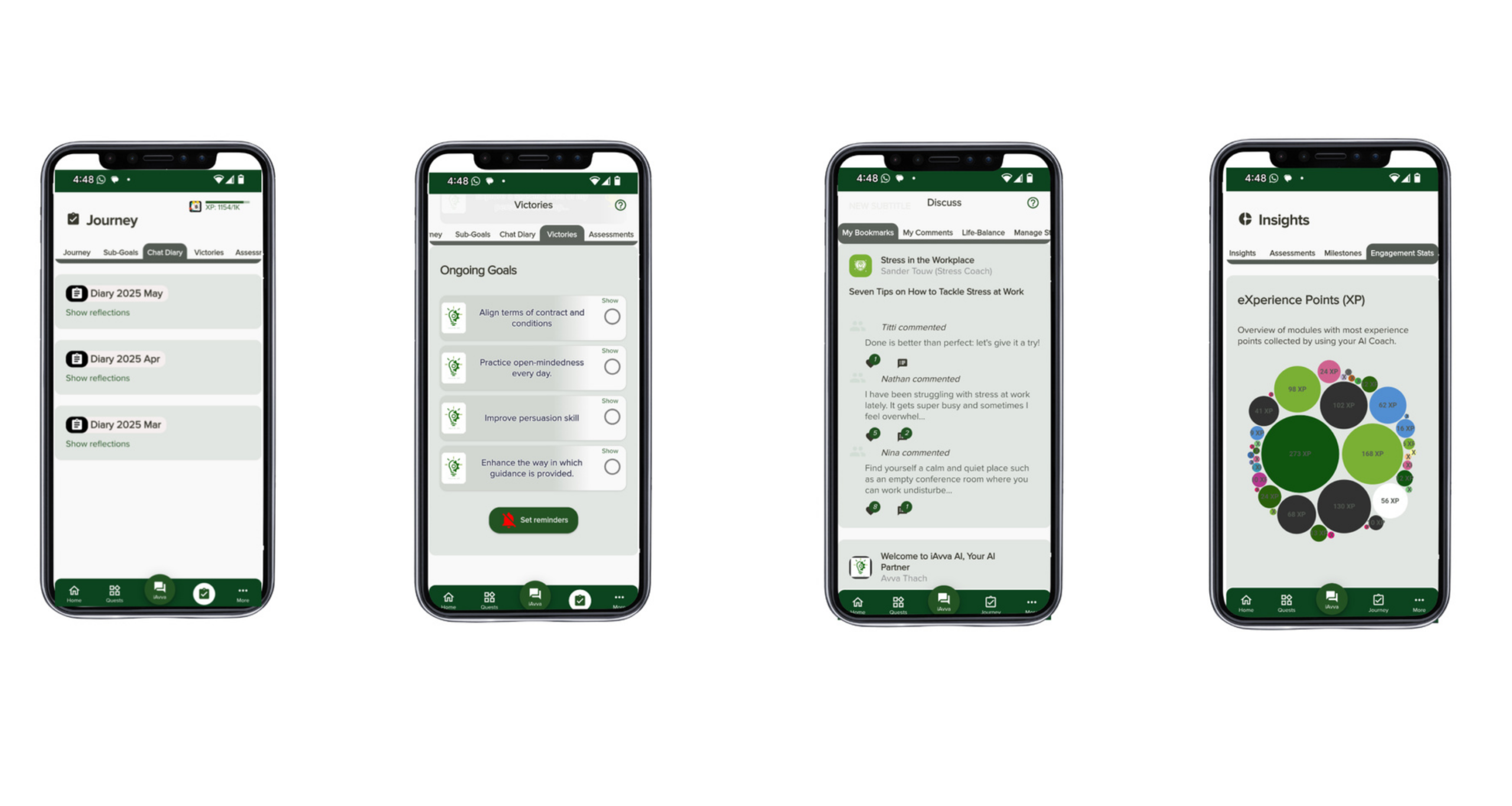
- Step 2: Select AI-enabled tools such as the iAVVA AI App to support insights while retaining human coaching – prioritize data privacy controls and explainable analytics.
- Step 3: Design a cadence combining AI-driven feedback with human coaching sessions – set weekly micro insights, monthly coaching, quarterly synthesis.
- Step 4: Pilot, measure, and iterate with a lean implementation approach – start small, publish lightweight ROI, adjust baselines.
In a mid market healthcare system, we ran an 8 week pilot with four executives. We used the AI app to surface blind spots in prioritization and workflow, then met weekly for coaching to translate those insights into actions. Within three months, time to competency for strategic initiatives improved by about 25 percent, and cross functional project cycle times shortened by 15 percent.
Next consideration: establish a lightweight ROI framework and governance baseline before broad rollout.
Measuring Impact: Metrics, ROI, and Governance
Measuring impact in AI executive coaching starts with a hard line of sight to business outcomes. You cannot justify programs on vibes alone; you need a lightweight, governance-ready ROI frame that survives scrutiny from executives. In practice, that means agreeing up front on KPI families that cover capability milestones, observable behavioral changes, and measurable corporate results, then tracking them with a minimal, auditable data footprint.
Identify concrete KPIs and data sources that map coaching to value. Common measures include time-to-competency, leadership effectiveness scores, retention of high-potential managers, and cross-functional delivery metrics. Tie these to business outcomes such as project speed, quality, and customer outcomes. Data sources should be limited to what you already collect or can reliably collect—360 feedback, performance reviews, engagement surveys, and operational metrics—so you avoid chase-the-metrics overreach and maintain trust.
ROI modeling is where many programs stumble. A practical model links benefits to dollars and keeps consequences visible: ROI = (monetized benefits minus program costs) divided by costs. Monetized benefits come from productivity gains, faster ramp, lower turnover, and smarter decisions with AI-supported insights. Costs include software licenses, data infrastructure, coaching hours, and change-management expenses. The hard reality: attribution will be imperfect. Use scenario ranges and guardrails, not single-point estimates, to keep the model honesty and useful for decision-makers.
Governance and ethics sit at the top of the ROI discussion. Be explicit about data privacy, bias mitigation, data ownership, and the explainability of AI recommendations. Maintain strong human-in-the-loop for interpretation, and publish simple governance notes so leaders understand how insights arrive at recommendations. Without a governance layer, even strong coaching outcomes can erode trust if stakeholders suspect data is being mishandled or biased.
Real-world example: a mid-market healthcare client deployed AI-enhanced leadership coaching and tracked outcomes across a 12-month window. Time-to-competency for frontline managers dropped from eight to six months, and voluntary turnover among mid-level leaders decreased by about 5 percentage points. The ROI model indicated a payback period of roughly 12–14 months when you add reduced recruitment costs and productivity gains from earlier project delivery. The client used the iAVVA AI App to surface coaching insights and track progress.
Data quality matters more than fancy algorithms. If inputs are noisy, feedback loops will mislead managers and undermine credibility. Start with clean, standardized assessments, clear data ownership, and precise definitions of what each metric means in coaching contexts. The result is feedback managers actually trust and act on, not data that looks impressive but yields hollow improvements.
Takeaway: design measurement guardrails before you scale AI executive coaching—determine what you measure, how you monetize it, and who owns governance. Do not launch into a broad program without that governance anchor in place; otherwise you’re optimizing the wrong things and sacrificing trust.
Real-World Examples and Lessons from iAvva
Real-world evidence shows AI executive coaching amplifies leadership performance while preserving the human relationship at the center. In practice, we see AI surfaces patterns at scale, but only meaningful when a trusted coach translates data into context-specific actions. Across engagements with SMBs and mid-market firms, clients report faster feedback loops, clearer decision-making, and better alignment between strategic intent and day-to-day execution.
In a nine-month engagement with a regional health system, iAvva paired AI-driven feedback dashboards with biweekly coaching. Executives received personalized insights on decision speed, stakeholder management, and risk communication. This combination also pared coaching time with actionable outcomes, making the program palatable for busy executives. Over time, teams reported higher-quality risk mitigations and improved meeting discipline; enterprise-wide project delivery saw measurable gains.
Across Agile product teams at a mid-market software firm, AI-assisted coaching surfaced blind spots in prioritization and cadence. Coaches used AI-backed insights to challenge trade-offs in sprint planning and alignment on outcomes. The result was better backlog clarity, reduced rework, and faster release cycles; managers gained greater confidence in delegating decisions.
A key trade-off in these efforts: AI offers scalable, data-driven feedback, but quality hinges on data readiness. Poor data or opaque AI signals can mislead managers; without human interpretation, insights flatten into metrics rather than meaningful development. The governance layer—clear data usage policies, opt-in for sensitive metrics, and transparent AI rationale—matters for trust.
A practical insight is that human coaches stay essential for context-setting and accountability. AI surfaces patterns; the coach interprets them through culture, constraints, and political realities of the organization. Without that human lens, teams chase numbers rather than outcomes; with it, insights become experiments that fit the business tempo.
To replicate, start with a focused pilot: map a small group of leaders to business outcomes, deploy the iAVVA AI App for insights, and pair with structured coaching sessions. Track time-to-competency and decision-making speed, then iterate. Takeaway: start small, measure outcomes, and solidify governance before scaling.
Ethical Considerations and Change Management
Effective AI executive coaching hinges on governance that protects privacy, minimizes bias, and preserves human judgment. Without a human-in-the-loop, AI insights risk eroding trust, misaligning with culture, and triggering unpredictable outcomes in decision making.
A practical governance baseline starts with data provenance, consent, access controls, and purpose limitation. Data minimization helps reduce risk while still enabling personalized development. Explainability of AI recommendations is essential; leaders need to know why a suggestion exists, not just what to do. Without that clarity, buy-in frays and coaching relationships weaken.
In a regional healthcare system, leadership piloted AI-enhanced coaching for senior leaders. They defined clear consent for data sharing, restricted access to leadership-relevant metrics, and conducted bias audits on the AI model. Human coaches remained responsible for interpretation and relationship-building, and adoption grew as trust in the process increased.
Change management is a prerequisite, not a byproduct. Secure executive sponsorship, map stakeholders, and craft transparent communications about what AI contributes and what remains human. Integrate AI insights into existing coaching cadences, and train coaches to interpret dashboards, not replace conversations. Start with a lean pilot and scale only after governance gates are cleared.
Richer data enables deeper personalization but raises privacy and regulatory risk. There is a real trade-off between data richness and control. Overreliance on AI can crowd out human judgment; keep human coaches central in decision-making and ensure bias audits and fairness checks are ongoing.
A second example shows how a manufacturing portfolio company used AI-driven leadership assessments across plants to surface leadership gaps and readiness for cross-functional roles. The program kept human coaches in the loop, anonymized aggregate insights for fairness, and established a governance board that reviewed outcomes and policy updates. The result was faster cross-functional collaboration without sacrificing trust.
Next considerations: embed change management into the rollout plan, align metrics to business outcomes, and iterate based on governance feedback. Do not treat ethics and change as afterthoughts; they are the design constraints that determine whether AI coaching yields durable, human-centered growth.
Future of AI Enhanced Leadership
The future of AI enhanced leadership isn’t about more automation; it’s about context-aware coaching that travels with leaders through projects, teams, and time. AI provides data-informed feedback and micro-insights in near real time, while human coaches translate that input into action, preserving judgment, empathy, and strategic alignment.
AI’s evolving role in leadership development
Continuous partnership: AI moves from batch reports to ongoing coaching loops, surfacing patterns in decision making, stakeholder trust, and team energy. It tests scenarios, then lets leaders practice in safe, low-risk contexts while the coach interprets results and calibrates next steps.
Practical implications for SMBs
- Start small, scale thoughtfully: run a 6–12 week pilot with 3–5 leaders, tie success to a single business outcome, and avoid sprawling scope too early.
- Keep human-in-the-loop: AI-generated insights should be validated by a coach; establish clear handoff points and escalation paths.
- Prioritize data governance: implement consent, privacy safeguards, bias audits, and transparent data usage policies from day one.
- Culture-first design: ensure outputs respect existing norms and change programs; avoid pushing AI in places it would create resistance.
Concrete use case
Use case example: a mid-market hospital system piloted AI-assisted coaching to surface warning signs in cross-functional collaboration. Over 12 weeks, leaders received weekly nudges aligned to patient-stay metrics; escalations reduced, and project cycle times improved by roughly a quarter.
Governance and risk management
Explainability, bias mitigation, and data lifecycle governance are non-negotiables. Make AI recommendations explainable, document data sources, and assign a human governance sponsor to resolve ambiguous cases. This keeps trust intact and avoids the illusion of objectivity.
Takeaway: map AI capabilities to concrete business outcomes, implement guardrails, and pursue a staged rollout that preserves the human touch while expanding reach.
AI executive coaching combines artificial intelligence tools with personalized coaching to enhance leadership performance while maintaining a human touch.
” } }, { “@type”: “Question”, “name”: “How does AI improve the coaching process?”, “acceptedAnswer”: { “@type”: “Answer”, “text”: “
AI provides data-driven insights that help coaches identify patterns and areas for improvement, allowing for tailored coaching sessions that focus on specific leadership challenges.
” } }, { “@type”: “Question”, “name”: “What are the key benefits of AI executive coaching?”, “acceptedAnswer”: { “@type”: “Answer”, “text”: “
Key benefits include improved decision-making, faster feedback loops, enhanced emotional intelligence, and better alignment between strategic goals and daily operations.
” } } ] }, { “@context”:”https://schema.org”,”@type”:”SpeakableSpecification”,”speakableMode”:”PlainText”,”speakable”:”AI executive coaching enhances leadership performance by combining data-driven insights with personalized human interaction. It focuses on improving decision-making and fostering emotional intelligence while preserving the human element in coaching.” } ] }













Leave a Reply