



Choosing between dozens of executive coaching courses is a real-world problem, not a checklist exercise, especially when leaders must deliver on AI and digital transformation goals. This practical buyer guide compares accreditation, delivery formats, time to competence, cost, and fit for internal build versus external hire, and highlights programs that link coaching to measurable business outcomes. Read on for clear selection criteria, implementation steps, and the metrics you should use to judge impact.
Marshall Goldsmith Stakeholder Centered Coaching Certification
Direct point: Marshall Goldsmith Stakeholder Centered Coaching (SCC) is built for targeted, observable behavior change at the executive level, not for broad coach skill certification alone. The method forces leaders to commit to a small set of behaviors and uses structured stakeholder feedback to hold them accountable.
Format, accreditation, and what it actually prepares you for
Format and cadence: SCC is delivered as a short intensive workshop plus multi-month practice cycles where leaders collect stakeholder feedback and report progress. Delivery can be in-person or virtual, and many providers run cohort models for executive groups. Accreditation: SCC is a proprietary certification; it is not primarily positioned as an ICF coach training pathway that automatically yields ICF credentialing hours. The approach aligns with many ICF competencies in practice, but organizations should confirm current ICF recognition if ICF hours matter to you. See Marshall Goldsmith and check ICF guidance at International Coach Federation before committing.
- Best fit: Senior executives, CEOs, board members, and leadership teams where fast, measurable behavior change will influence stakeholders.
- Typical time to impact: Initial behavior shifts in 8 to 12 weeks; reliable stakeholder perception change requires 3 to 6 months with at least two feedback cycles.
- Cost signal: Premium executive pricing; expect workshop and certification per-leader fees in the mid four to low five figure range, with enterprise licensing or cohort programs costing more.
Practical tradeoff: SCC produces clear accountability and is highly effective when you need focused change tied to stakeholder perceptions. It is weaker as a standalone program if your objective is to create an internal bench of ICF credentialed coaches or to develop broad coaching competencies tied to organizational change frameworks.
Concrete example: A multinational put their COO through SCC when operational metrics and cross-functional collaboration were stalling. The COO selected three behaviors, collected monthly stakeholder feedback from 10 peers, and after two cycles achieved measurable improvement in peer-rated collaboration and a 12 percent reduction in project cycle time linked to clearer decision behaviors. The organization paired SCC with targeted skill workshops so the behavioral change stuck.
Integration with transformation work: Use SCC when behavior change maps to a specific transformation KPI – for example, adoption rates for an AI tool, speed of decision making in a product launch, or cross-team collaboration during an organizational redesign. It is not a substitute for domain coaching on AI strategy or change management; pair SCC with domain experts or an ICF-aligned program if you plan to scale internal coaching capability.
If your goal is measurable senior leader behavior change that stakeholders can see and quantify, SCC is high leverage. If your goal is system wide coach capability and ICF credentialing, SCC should be one component of a broader training pathway.
Next consideration: Before buying SCC at scale, decide whether you need it as a short, high-impact intervention for senior leaders or as one piece of a certified coach development track; that choice determines partner selection, measurement design, and budget allocation. See iAvva services for integrated options at iAvva AI Consulting Services.
Erickson International The Art and Science of Coaching
Direct assessment: Erickson The Art and Science of Coaching is one of the most practical, credential-focused pathways for organisations that need a scalable, ICF-aligned coach training backbone rather than a boutique executive advisory track.
Accreditation and what participants actually earn
ICF alignment: The program historically delivers coach training hours recognised by the International Coach Federation as ACSTH eligible training, which can be applied toward ACC or PCC credentialing when combined with required mentoring and client coaching hours. Verify current hour counts and pathway changes at International Coach Federation before procurement.
What it prepares you for in practice: Graduates leave with robust coaching methodologies, session frameworks, and supervised practice. In real organisations that need internal coach capability, Erickson supplies the learning architecture and documented hours you need for credential pipelines; it does not automatically make people effective executive advisors on unfamiliar business domains without further on-the-job practice.
- Primary fit: HR teams creating an internal coach bench, L&D leaders establishing a repeatable ACC track, and professionals aiming for a credentialed coaching practice.
- Delivery tradeoffs: The curriculum scales well in virtual cohort format – fast throughput and standardisation are strengths. The tradeoff is lower spontaneous peer learning compared with long residential programs unless the provider builds in mentored peer practice and live supervision.
- Time to competence and cost signals: Expect a multi month pathway to reach ACC readiness when mentoring and client hours are included. Budget for program fees plus internal supervision and at least 20 to 40 hours of mentored practice per candidate.
Practical limitation to plan for: Erickson focuses on coaching skills and process fidelity. When your objective is to coach senior leaders through domain heavy transformations – for example rapid AI adoption or major restructuring – those newly credentialed coaches will need targeted business-context modules or shadowing with domain experts to be credible and effective at C suite level.
Concrete example: A regional tech company trained 10 internal HR and people leaders with Erickson cohorts to build a bench for frontline leader coaching during an AI rollout. The new coaches handled development conversations and 1 on 1 performance coaching effectively, but the organisation paired them with product managers and an iAvva consultant to coach on adoption metrics and change resistance. That pairing shortened time to adoption of a new workflow by aligning coaching conversations to measurable usage KPIs.
Key decision point: Choose Erickson when you need a repeatable, credential-ready coach training pathway. If your priority is immediate executive domain advising on AI strategy, plan a hybrid solution that pairs Erickson-trained coaches with subject matter experts or a provider like iAvva AI Consulting.
Next consideration: Before committing at scale, pilot Erickson with a small cohort and measure two things – coach competency against ICF milestones and coach impact on a tightly scoped business KPI – then decide whether to supplement the pathway with domain training or senior executive mentoring.
Hudson Institute of Coaching Certificate in Executive Coaching
Direct assessment: The Hudson Institute certificate is a mentor‑intensive, practitioner oriented executive coaching pathway that builds coaching judgment for senior leaders rather than quick procedural skills.
Accreditation and pathway: The curriculum is aligned with core ICF competencies and includes supervised practice and mentor coaching hours that can be mapped toward ICF credentialing; confirm current hour counts with the provider or at International Coach Federation when procurement demands formal credential timelines.
What Hudson actually prepares participants to do
Core outcome: Graduates develop the ability to hold high‑stakes coaching conversations with senior leaders, use developmental assessments, and provide mentor supervised coaching that stands up to C suite expectations. Assessment is practical: recorded coaching sessions, mentor evaluation, and live supervision rather than only written exams.
| Program element | Hudson profile |
|---|---|
| Typical duration | 9 to 12 months with practicum and mentor coaching cycles |
| Delivery | Blended cohorts with in person intensives and virtual supervision |
| ICF alignment | Mapped to ICF competencies; provides supervised hours usable toward ACC/PCC pathways (verify current totals) |
| Typical cost signal | Upper mid market to premium per participant; enterprise cohort pricing varies |
- Unique strength: Deep mentor supervision that accelerates coaching judgment for senior contexts.
- Practical tradeoff: Time and cost are significant; participants need real client assignments inside the organisation to translate skills to domain heavy issues like AI strategy.
- Deployment note: Best used when you intend to build a small, high‑quality internal bench of executive coaches rather than a broad front line coaching capability.
Concrete example: A professional services firm certified six senior HR partners through Hudson to serve as internal executive coaches for partner performance and succession work. They paired each coach with a business unit lead for six months so coaches accumulated supervised internal client hours; promotion rates for coached partners improved and successor readiness accelerated for two leadership roles within a year.
Judgment for buyers: If your objective is to create a small number of highly credible internal executive coaches who will work with the C suite, Hudson is a top choice. If your objective is high throughput or tightly tied domain coaching on AI transformation, plan to add short, focused modules on strategic leadership, data literacy, and adoption metrics or partner Hudson graduates with domain experts such as iAvva AI Consulting Services.
Hudson creates depth and credibility in executive coaching, but it is not a plug and play shortcut to domain expertise; successful deployments pair the certificate with business context modules and a measurement plan tied to leadership outcomes.
Columbia University Coaching Certification Program
Columbia delivers an academic, evidence based coaching pathway that raises the rigor of your internal coaching practice but does not automatically make graduates ready to advise on domain specific transformation work.
Accreditation, structure, and what it actually prepares you for
The program is built on applied research into adult learning and leadership development and is explicitly framed for leaders and HR professionals who need coaching that sits inside organizational strategy. Accreditation status: the curriculum is generally mapped to ICF competencies and can contribute to continuing education or coach training hours; confirm current ICF hour recognition with the provider and the International Coach Federation at International Coach Federation before procurement. Columbia emphasizes clinical assessment tools, research literate methods, and supervisory feedback rather than high volume credential throughput.
- Best operational fit: Senior HR leaders, L&D heads, and executive coaches who need research based frameworks to design organizational coaching initiatives.
- Delivery model: Blended cohorts – online learning plus campus or virtual intensives – with supervised practice and reflective assignments; cohort pacing means start dates are limited.
- Time to practical competence: Expect 4 to 9 months from start to practicum completion; graduates show stronger theoretical judgment and assessment capability than raw session count.
- Price signal and procurement note: Premium pricing consistent with university executive education; total cost will typically exceed vendor led bootcamps when you include tuition and travel for in person modules.
Practical tradeoff: Columbia adds credibility and diagnostic sophistication – useful when you must defend coaching design to the C suite or embed coaching inside leadership assessment centers. The tradeoff is slower throughput and less immediate emphasis on business domain coaching techniques such as AI adoption metrics or product delivery coaching. In practice, you will still need short domain modules or pairing with subject matter experts to make coaches effective on transformation work.
Concrete example: A financial services HR leader used Columbia certification to redesign the firmwide executive coaching standard. Graduates produced assessment driven development plans and introduced structured measurement for coaching outcomes. The organization then commissioned a small iAvva engagement to add practical modules linking coaching goals to AI driven customer experience metrics, which shortened pilot adoption time by aligning coaching conversations to specific operational KPIs.
Common misunderstanding: Buyers assume university programs replace practitioner supervision. They do not. Columbia strengthens diagnostic and theoretical capacity but effective executive coaching at C suite level still requires supervised practice, shadowing of experienced executive coaches, and contextual modules on strategic leadership and data literacy.
If you need research credibility and diagnostic depth for executive coaching, choose Columbia; if you need rapid, domain specific coach deployment for AI transformation, plan a hybrid approach that pairs Columbia graduates with short practical clinics or external mentors.
Center for Creative Leadership Leadership Coaching for Results
Direct assessment: Center for Creative Leadership Leadership Coaching for Results is built for enterprise scale and talent‑system integration, not for producing ICF credentialed coaches as a primary outcome. If your objective is to raise leadership capability across pipelines and link coaching to promotion, retention, or programmatic KPIs, CCL is one of the few providers with the research and corporate footprint to execute at scale.
Accreditation, delivery, and what it prepares participants to do
ICF alignment: CCL programs typically map to ICF competencies and supply rigorous coach frameworks and 360 diagnostics, but they do not automatically serve as an ICF ACSTH credential pathway in the way Erickson or some university programs do. Verify current hour counts and ICF recognition with CCL and the International Coach Federation if formal credentialing is a hard requirement for your internal bench.
Delivery model: The program is offered as customized corporate cohorts, blended learning with short in‑person intensives, and virtual follow up coaching. CCL excels when you need standardized leader experiences across multiple cohorts and want proprietary diagnostics tied into succession or talent review systems.
- Practical tools provided: CCL packages usually include 360 assessments, structured development plans, coach guides for managers, and measurement templates you can plug into HR dashboards.
- Tradeoff to budget for: Customization and enterprise integration are expensive and require procurement time; the vendor model assumes you will cascade outcomes through talent processes rather than deliver one-off skill certification.
- Operational limitation: If your principal need is to create a floor of ICF‑credentialed internal coaches, CCL should be paired with a credential pathway or mentor supervision to meet ICF hour requirements.
Integration with AI transformation: Use CCL when coaching must change leader behavior that directly affects adoption or operational KPIs. For example, require each coaching cohort to include one transformation KPI (adoption rate, cycle time, model governance compliance) as a success metric and run 360s at baseline and 6 months to show movement tied to those indicators. Pair CCL diagnostics with subject matter modules on data literacy or AI governance for credibility in technical conversations.
Concrete example: A regulated health insurer deployed Leadership Coaching for Results across its mid to senior manager cohort while rolling out a customer experience AI. CCL handled the leadership diagnostics and coaching cadence; the L&D team, with support from an AI strategy partner, inserted short modules on data ethics and AI adoption into the coaching curriculum. Coaches then used specific adoption KPIs in their development plans, which made coaching conversations operationally relevant to product and data teams.
Judgment for buyers: Pick CCL when you need enterprise credibility, standardization across talent programs, and evidence‑based diagnostics that plug into HR systems. Do not pick CCL expecting it alone to create an ICF‑credentialed internal coach bench or to substitute for deep domain coaching on AI and product issues—those are separate investments.
Association for Executive Coaching Practitioner Diploma in Executive Coaching
Straight assessment: The Association for Executive Coaching (AoEC) Practitioner Diploma is a practice‑first pathway built to convert experienced leaders and HR professionals into functioning internal coaches quickly rather than to produce academic credentials alone.
What the diploma delivers in practice
Core deliverables: The program blends live modules, supervised practice, recorded session review, and peer coaching labs. Delivery formats vary by provider partner and include multi‑week virtual cohorts and short in‑person intensives, which makes the diploma flexible for corporate rollout.
- Accreditation note: AoEC programs typically map to ICF core competencies and provide documented coach training hours and mentor coaching elements that can contribute toward ICF credentialing; confirm current recognition with the provider and the International Coach Federation before procurement.
- Best fit: Middle to senior people leaders you want to redeploy as internal coaches for leadership development, change programmes, or manager coaching pools.
- Time to deploy: Expect a practical rollout window of roughly six months from intake to supervised practicum completion when the program is run as a corporate cohort.
- Delivery tradeoff: Fast, applied practice means less time on theory and less exposure to research diagnostics compared with university programs; plan for follow up mentoring for C suite credibility.
Practical limitation: Trainer quality and local delivery consistency vary. AoEC uses a network model of licensed tutors; that speeds scale but produces variable classroom rigor. Buyers must audit facilitator profiles and insist on recorded session samples and mentor supervision schedules as part of the contract.
Concrete example: A mid market manufacturing firm used the AoEC Practitioner Diploma to upskill 10 HR business partners into internal coaches supporting an operations AI adoption. The cohort completed the diploma over six months, ran internal coaching pods paired with product owners, and used coaching conversations to reduce rollout friction by surfacing adoption blockers and aligning leader action plans to deployment milestones.
Judgment for buyers: If your priority is a pragmatic, repeatable internal coach bench that can immediately support manager development and change initiatives, AoEC is a cost‑efficient choice. If you need deep diagnostic rigor for C suite advisory work or an automatic ICF credential pathway, plan extra mentor supervision, senior‑level coaching shadowing, or pair the diploma with a university or ICF‑centric provider.
Require the diploma contract to specify supervised client hours, mentor review cadence, and sample deliverables before you sign.
Takeaway: Use AoEC when you need a hands‑on, fast path to an internal coach bench; budget time and a small additional investment to add senior mentoring and domain modules if those coaches must support AI or high‑stakes C suite work.
INSEAD Coaching for Leadership and Transition
Direct point: INSEAD Coaching for Leadership and Transition is best used when you need an academically grounded, short‑cycle executive intervention that primes senior leaders to navigate strategic inflection points – not as the sole route to producing ICF credentialed coaches.
Accreditation note: The program is positioned as executive education with strong alignment to leadership theory and coaching practice; it does not automatically substitute for an ICF ACSTH pathway. If ICF hours are a procurement requirement, verify current mappings with the provider and the International Coach Federation (link).
How INSEAD fits practical coaching needs
Format and timing: Typical delivery is a multi‑day in person or blended executive module plus virtual follow ups and alumni networks. Expect an intensive 3 to 5 day core module with 2 to 6 months of optional coaching clinics or peer action learning sets. Price signal: premium executive education pricing; budget planning should assume mid five to low six figure cohort fees or high four to low five figure per participant pricing depending on customization and location.
- Best fit: Senior leaders in transition – new CEOs, incoming business unit heads, leaders managing M&A, or sponsors of large scale AI adoption programs.
- Strength: Combines rigorous decision making frameworks, cross cultural leadership insights, and peer challenge in cohorts that accelerate strategic clarity during disruption.
- Limitation: Short, intensive format produces frameworks and intent but limited supervised coaching hours; sustained behavior change requires structured follow up and measurement.
- Time to practical impact: Leaders usually report clearer priorities and immediate shifts in decision framing after the module; measurable changes in stakeholder behavior typically need 3 to 6 months with follow up coaching.
Tradeoff to manage: Buy INSEAD when you need rapid strategic alignment and credibility with the C suite. Do not expect it alone to create an internal coach bench or provide the supervised practice required for ICF credentialing – plan a complementary credentialing pathway or an internal mentoring program to convert concepts into coaching capability.
Concrete example: A technology firm facing rapid AI platform rollout enrolled its executive steering team in INSEAD Coaching for Leadership and Transition to accelerate alignment on governance and decision rights. The module created a shared language and decision rubric; the organization then assigned 1:1 executive coaches for six months and tied coaching goals to adoption KPIs, cutting decision cycle time for model approvals by measurable margins within four months.
Practical deployment steps: Use INSEAD as the strategic entry point: 1) run the module for your senior sponsor group, 2) map two transition KPIs per leader, 3) provision 3 to 6 months of follow up coaching or action learning, and 4) measure with baseline 360s and KPI tracking at 3 and 6 months.
INSEAD is high leverage for strategic transitions and C suite alignment; treat it as the strategy level intervention and build supervised coaching and measurement around it if your goal includes internal capability or ICF credentialing.
iAvva AI Consulting Executive Coaching Program
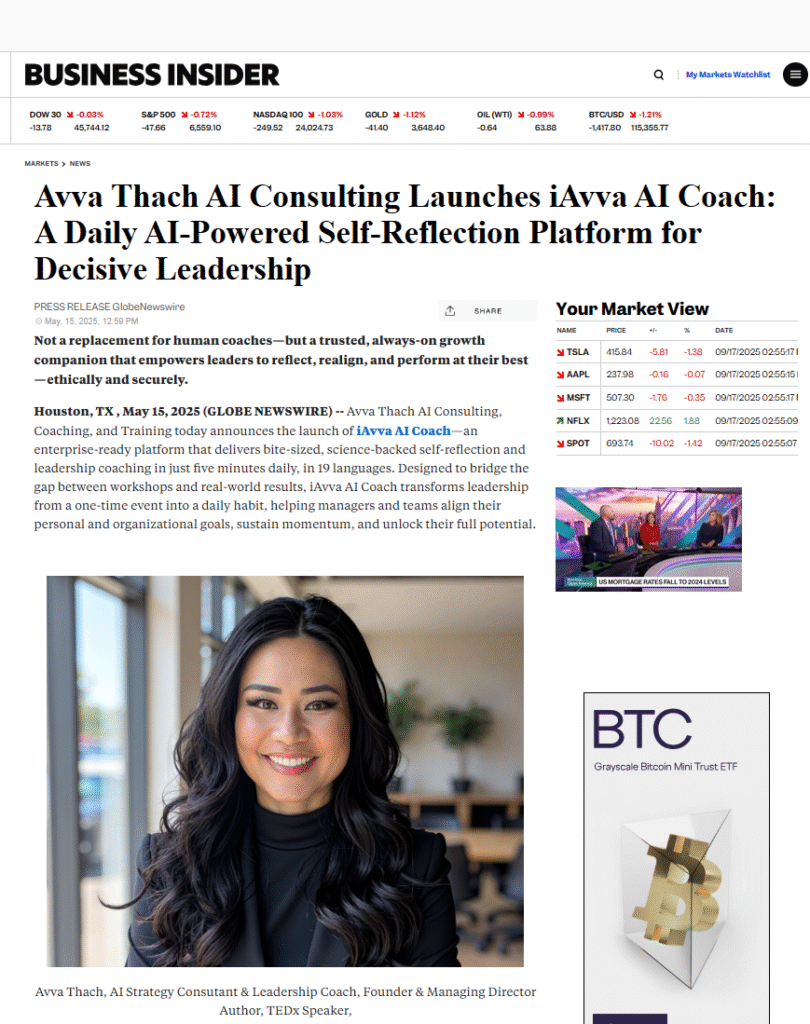
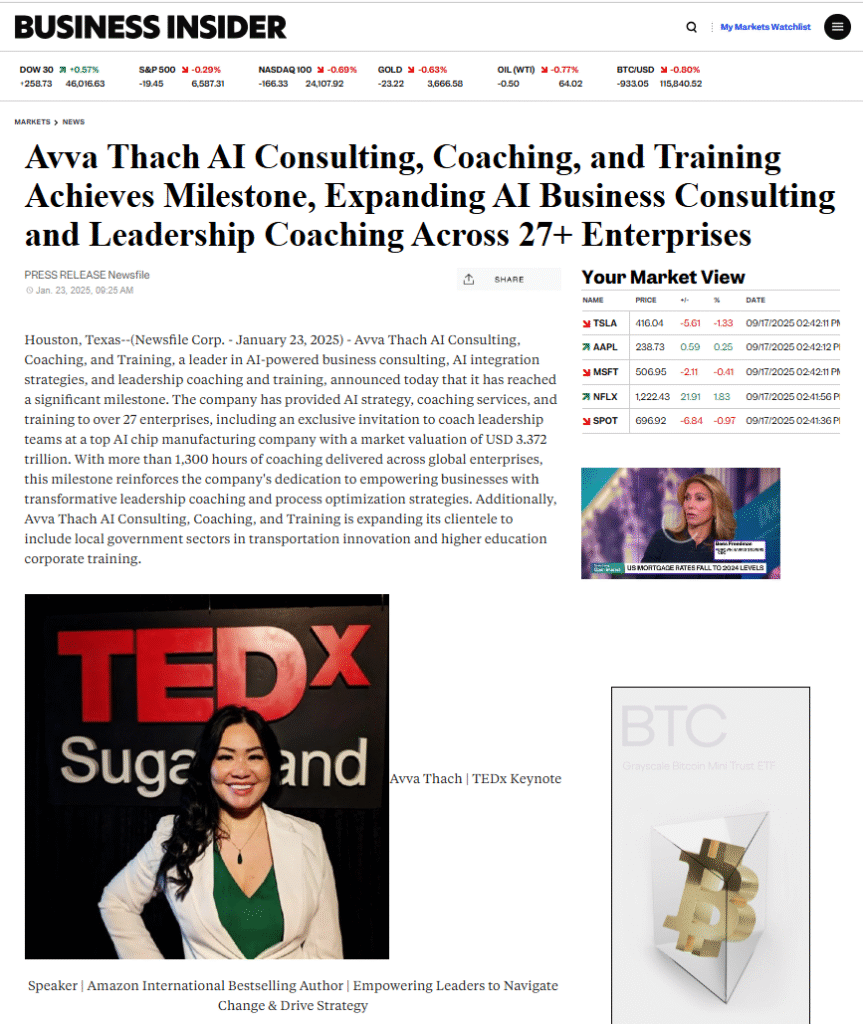
Straight to the point: iAvva combines hands‑on AI strategy work with executive coaching so leaders are coached on real business problems rather than abstract leadership models. The program is built to move adoption, governance, and operational KPIs—not just raise self awareness.
Accreditation and credentialing: The curriculum is explicitly mapped to core ICF competencies and includes mentor coaching and supervised practice that participants can log toward ICF credential requirements. iAvva does not itself issue ICF credentials; organisations that require formal ICF certification should plan to document hours and complete required external verification with the International Coach Federation.
Program structure and delivery
- Delivery formats: cohort workshops, 1:1 executive coaching, small group pods, and on‑demand microlearning tailored to role and level.
- Core components: coached sprints that align leader goals to an AI or digital initiative, stakeholder feedback loops, practical templates for adoption metrics, and mentor review of recorded sessions.
- Duration options: short pilots (6 to 12 weeks) for targeted adoption problems or extended pathways (4 to 9 months) for internal coach bench development.
Practical tradeoff to plan for: Integrating domain consulting with coaching accelerates credibility with technical leaders but creates role tension—coaches who also advise on product decisions can blur confidentiality lines. Manage that by separating advisory sprints from coaching engagements or by explicitly defining role boundaries in each engagement.
Concrete example: A mid‑market fintech piloted iAvva to accelerate deployment of a customer scoring model. Eight leaders entered a 10‑week program combining fortnightly 1:1 coaching and group pods tied to model governance KPIs. Coaches worked with product and data owners to align leader action plans to approval and adoption milestones; after the pilot the team reduced handoffs and increased the rate of model go‑live readiness on planned sprints.
- How to pilot it effectively: pick 1 to 2 clear operational KPIs (for example, model approval cycle time or adoption rate), select a cohort of 6 to 10 leaders directly accountable for those KPIs, baseline measurements, run a 10 to 12 week coached sprint, then measure at 3 and 6 months.
- Scaling path: convert top performers into internal coach‑practitioners using a train‑the‑trainer + mentor supervision model, require logged supervised hours for ICF alignment, and embed coaching outcomes in talent review processes.
- Measurement mix: use stakeholder feedback, baseline and follow up 360 inputs, and direct KPI tracking tied to the transformation—avoid relying on satisfaction scores alone.
Next consideration: If your priority is immediate, measurable movement on AI adoption KPIs, pilot iAvva with a focused cohort. If your goal is broad ICF credentialing across the organisation, pair the program with a formal credential pathway and mandated supervised client hours.
Practical judgment: Domain‑integrated coaching shortens the gap between intent and operational change, but it will not substitute for a disciplined credentialing pipeline if you need ICF credentials at scale.














Leave a Reply