

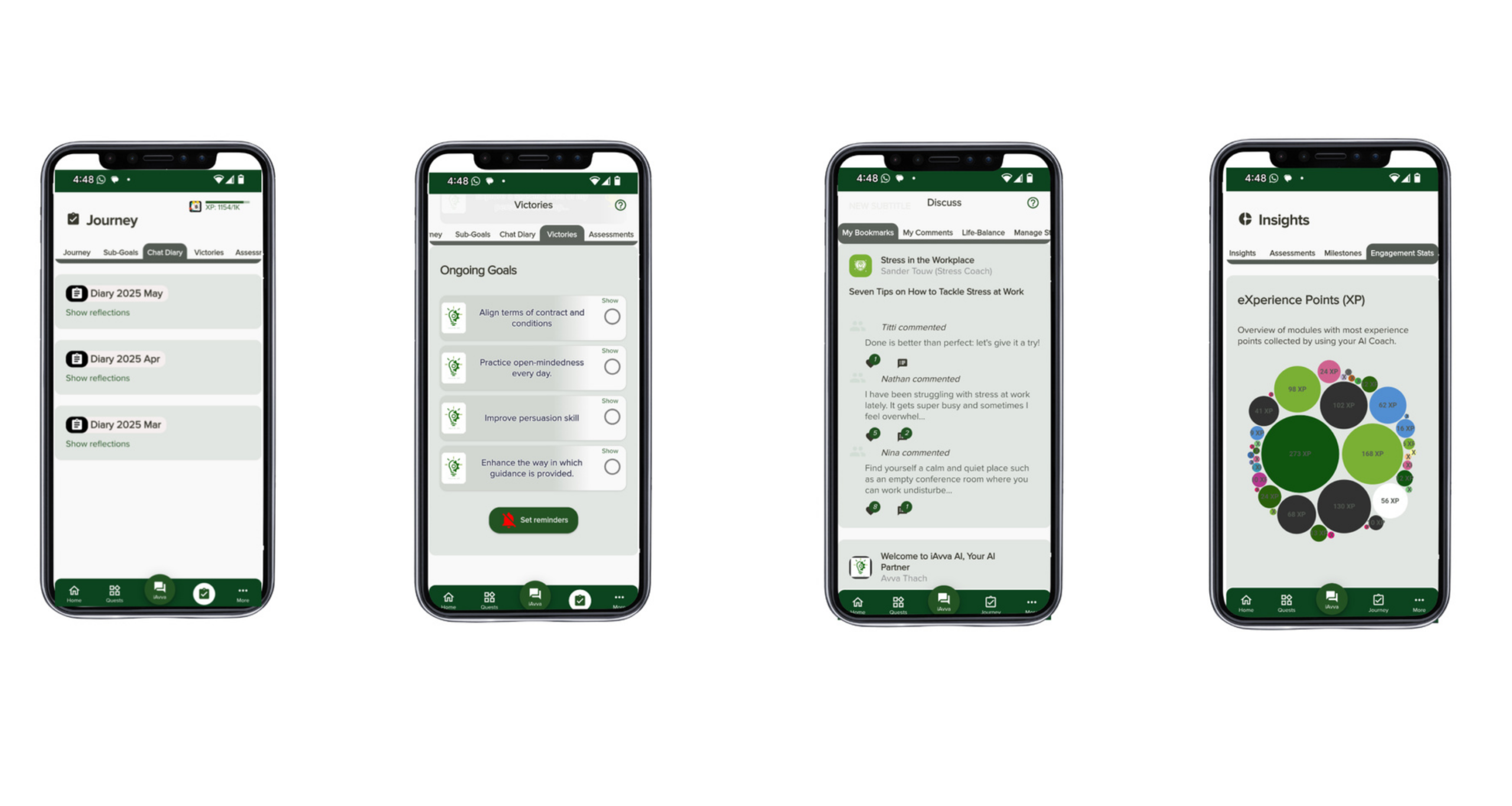







Leadership training and development too often produces attendance certificates instead of measurable capability tied to business priorities. This how-to guide gives HR and L&D leaders a step-by-step, scalable framework to align learning with AI-driven transformation, translate strategy into observable competencies, and measure behavior change against business KPIs. You will get concrete templates – a competency matrix, a 90/180/365 rollout roadmap, vendor evaluation criteria, and KPI dashboard specs – so you can pilot, scale, and sustain leadership capability with clear outcomes.
1. Tie the Program to Strategic Outcomes and Stakeholder Goals
If leadership training and development is not explicitly linked to two or three business outcomes, it becomes a budget line, not a capability program. Start by naming the decision or result you expect leaders to influence – not the course content. That shifts the conversation from training delivery to measurable business impact.
From business priority to leader behavior
Use a short mapping process: 1) select the top strategic priority, 2) identify the leader decisions that move that priority, 3) specify observable behaviors tied to those decisions, and 4) pick 1-2 business KPIs to measure impact. Do not start by choosing workshops or vendors; pick the outcome first and design learning to remove the blockers to that outcome.
- Sponsor: senior executive who signs funding and removes organizational blockers
- Business Owner: owner of the KPI who accepts accountability for results
- L&D Owner: designs the learning architecture and measurement plan
- IT/AI Lead: ensures data, platforms, and integrations support measurement
- HR Business Partner: embeds role-level expectations into performance processes
- Legal/Compliance: validates governance and ethical constraints for AI-related content
Sample outcome statements: reduce time to decision for product launches by 25% within 12 months; raise cross-functional collaboration score by 15 points on the quarterly engagement survey; lower churn of high-potential managers by 10% year-over-year. These are specific, time-bound, and auditable.
4-step checklist to align training objectives to strategic KPIs
- Translate the strategic priority into 3 observable leader behaviors that directly influence the KPI.
- Map each behavior to a role level with success criteria and a data source (e.g., product delivery cycle times, 360 scores, retention rates).
- Agree on targets, cadence, and who signs off – Sponsor, Business Owner, and L&D Owner must co-sign the measurement plan.
- Design a minimum viable intervention that includes on-the-job application and a 90-day pilot with pre-post measures.
Practical trade-off: tying programs to business KPIs improves sponsorship and funding, but it narrows the set of behaviors you can practically influence in a single rollout. If you try to move too many KPIs at once you will dilute focus and measurement will be inconclusive. Choose the highest-leverage KPI and one reinforcing behavioral metric.
Concrete example: A 250-person SaaS firm launching AI-enabled features linked a leadership track to shorten product decision cycles. They mapped the KPI – time from idea to market – to behaviors such as cross-functional prioritization meetings and data-driven decision templates, ran a 30-person pilot with coaching + action projects, and saw a measurable reduction in average decision latency at six months. Measurement combined product metrics and manager observation rubrics.
A common misstep is treating stakeholder mapping as administrative. In practice, the loneliest L&D owner loses programs that lack an accountable Business Owner and an executive Sponsor with budget authority. Insist on a single business owner who will be held to the KPI.
If you want templates or external support for the executive summary and stakeholder alignment, see iAvva services for leadership coaching and program design at iAvva AI Consulting. For research on linking programs to business outcomes, consult Harvard Business Review and PwC.
Next consideration: secure a business owner who will accept KPI accountability before you commit to vendors or scale. Without that, measurement and funding will fail.
Frequently Asked Questions
Reality check: Executives back leadership training and development when it produces a credible, time-bound path from leader behavior to an operational result. Funders do not care about course hours; they care about decisions that change outcomes.
How soon do behaviors change? Expect visible shifts in leader practice within three to six months when learning is paired with coaching and on-the-job delivery work; expect measurable business outcomes in the six- to twelve-month window. Measurement noise and attribution are the hard parts — design simple pre/post behavior checks and tie them to one business pilot so you can link cause and effect.
Pilot size and trade-offs: A pilot cohort of 20–50 leaders balances operational ease with enough signal to detect behavioral change. Smaller cohorts move faster but risk statistical ambiguity; larger pilots give better evidence at higher cost and coordination overhead. Sample across functions so the pilot surfaces cross-functional barriers rather than local training needs.
Which metrics to prioritize to prove ROI? Choose two business KPIs tied to your strategic priority and two behavioral indicators (for example, manager 360 on cross-functional decision-making and proportion of decisions using a data rubric). Combine those with a leader effectiveness index and use a simple ROI method such as a benefits-to-cost projection rather than complex financial modeling early on.
How to prevent bias from AI tools: Put HR, legal, and a DEI reviewer in the loop; require vendors to share model provenance and training data summaries; run disparate-impact checks and keep a human-in-the-loop for recommendations that affect role assignment or promotion. Practical constraint: many vendors will not provide full training data — plan for independent validation tests as part of procurement.
When to buy versus build? Buy when you need scale quickly, for example for platform personalization or external executive coaching. Build when your required behaviors are tightly tied to company-specific processes, culture, or proprietary AI practices. Contractually require outcome clauses, data ownership, and exit portability when buying.
Budget guidance and engagement retention: Model costs across platform fees, coaching hours, content licensing, program operations, and measurement. Per-leader annual costs commonly range based on coaching intensity and platform choice; present a three-year TCO with expected benefit milestones. Keep engagement with short, role-relevant microlearning, manager accountability, and action projects — but watch for initiative fatigue from too many touchpoints.
Concrete example: A 300-person professional services firm ran a 40-leader pilot that combined cohort workshops, two coaching sessions each, and a 90-day action project to remove decision bottlenecks. At six months the firm reported an 18% reduction in average project approval time and a 12-point lift in cross-team NPS; leaders credited the coaching-plus-project design for translating learning into daily practice.
- Immediate actions: Run a 90-day pilot with 20–50 cross-functional leaders and a single business KPI; include coaching and an action project.
- Procurement checklist: Demand outcome KPIs, data access for measurement, and an audit clause for AI features when evaluating vendors (see iAvva services for scope examples).
- Measurement starter: Create a simple dashboard combining one business KPI, one behavior metric (360 or observation), and platform engagement to review at 90 and 180 days; reference methods in Harvard Business Review for behavior-to-impact mapping.
Expect visible shifts in leader practice within three to six months when learning is paired with coaching and on-the-job delivery work; expect measurable business outcomes in the six- to twelve-month window. Measurement noise and attribution are the hard parts — design simple pre/post behavior checks and tie them to one business pilot so you can link cause and effect.
” } }, { “@type”: “Question”, “name”: “Pilot size and trade-offs:”, “acceptedAnswer”: { “@type”: “Answer”, “text”: “
A pilot cohort of 20–50 leaders balances operational ease with enough signal to detect behavioral change. Smaller cohorts move faster but risk statistical ambiguity; larger pilots give better evidence at higher cost and coordination overhead. Sample across functions so the pilot surfaces cross-functional barriers rather than local training needs.
” } }, { “@type”: “Question”, “name”: “Which metrics to prioritize to prove ROI?”, “acceptedAnswer”: { “@type”: “Answer”, “text”: “
Choose two business KPIs tied to your strategic priority and two behavioral indicators (for example, manager 360 on cross-functional decision-making and proportion of decisions using a data rubric). Combine those with a leader effectiveness index and use a simple ROI method such as a benefits-to-cost projection rather than complex financial modeling early on.
” } }, { “@type”: “Question”, “name”:”How to prevent bias from AI tools:”, “acceptedAnswer”:{ “@type”:”Answer”, “tex”:”
Put HR, legal, and a DEI reviewer in the loop; require vendors to share model provenance and training data summaries; run disparate-impact checks and keep a human-in-the-loop for recommendations that affect role assignment or promotion. Practical constraint: many vendors will not provide full training data — plan for independent validation tests as part of procurement.
” } }, { “@type”:”Question”, “name”:”When to buy versus build?”, “acceptedAnswer”:{ “@type”:”Answer”, “text”:”
Buy when you need scale quickly, for example for platform personalization or external executive coaching. Build when your required behaviors are tightly tied to company-specific processes, culture, or proprietary AI practices. Contractually require outcome clauses, data ownership, and exit portability when buying.
” } }, { “@type”:”Question”, “name”:”Budget guidance and engagement retention:”, “acceptedAnswer”:{ “@type”:”Answer”, “text”:”
Model costs across platform fees, coaching hours, content licensing, program operations, and measurement. Per-leader annual costs commonly range based on coaching intensity and platform choice; present a three-year TCO with expected benefit milestones. Keep engagement with short, role-relevant microlearning, manager accountability, and action projects — but watch for initiative fatigue from too many touchpoints.
” } } ] }, { “@type”:”SpeakableSpecification”, “/@context/”:[“https://schema.org”], “/@graph”:[{ “/@context”:[“https://schema.org”], “/@graph”:[{ “/@context”:[“https://schema.org”], “/@graph”:[{“/name”:[“Scalable Leadership Training & Development Program”],”/url”:[“https://iavva.ai/scalable-leadership-training-development”]}] }] }] }] }


















Leave a Reply