



How to Choose Leadership Training That Actually Moves the Needle for Your Organization
Article Overview
Article Type: How-To Guide
Primary Goal: Equip senior HR and L&D leaders with a practical, evidence based decision framework to select, pilot, measure, and scale leadership training programs that deliver measurable business outcomes and integrate with AI and digital transformation efforts.
Who is the reader: Senior Vice President of Human Resources, Vice President of Learning and Development, Head of Organizational Development, and Vice President of AI Transformation at small and midsize enterprises and midmarket organizations who are evaluating or procuring leadership training programs to support digital transformation and AI adoption.
What they know: They understand basic leadership development modalities such as workshops, coaching, and e learning. They are familiar with corporate metrics like turnover, engagement, and performance rating trends but often lack clear methods to link training to business KPIs. They want a repeatable process to evaluate vendors, design pilots, and measure ROI while aligning training to AI strategy.
What are their challenges: They face pressure to demonstrate measurable impact quickly, limited budgets, competing priorities across transformation initiatives, difficulty diagnosing real capability gaps, vendor noise and one size fits all offerings, low learner engagement, and weak systems to sustain behavior change after training.
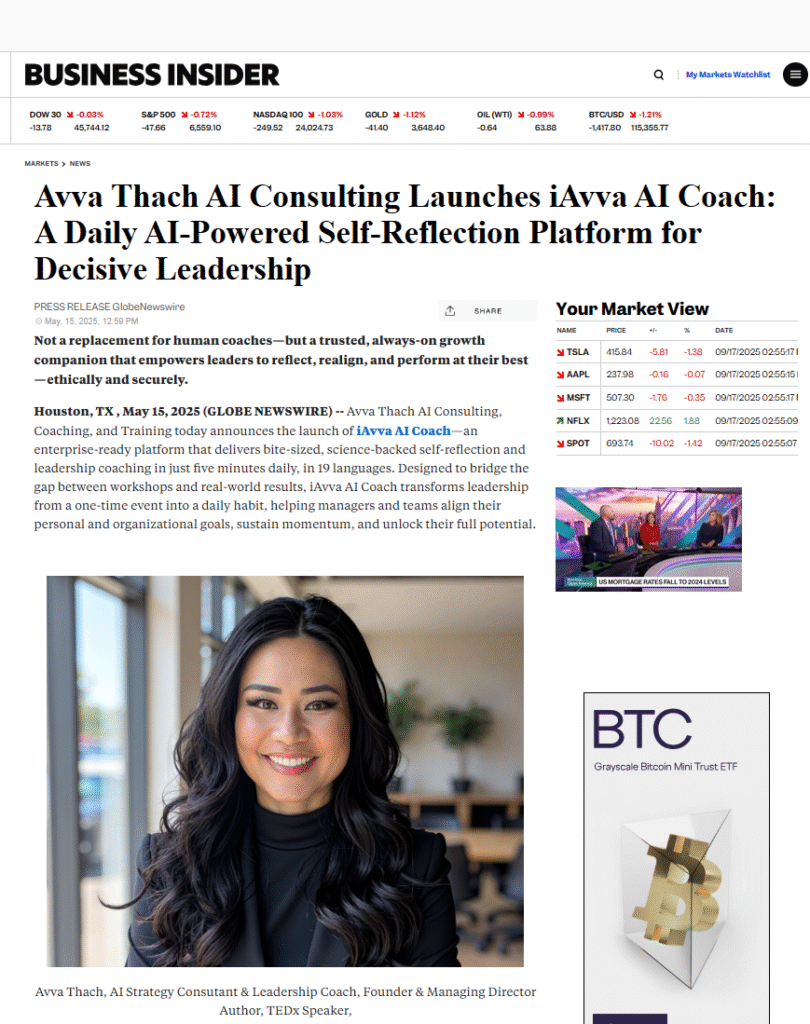
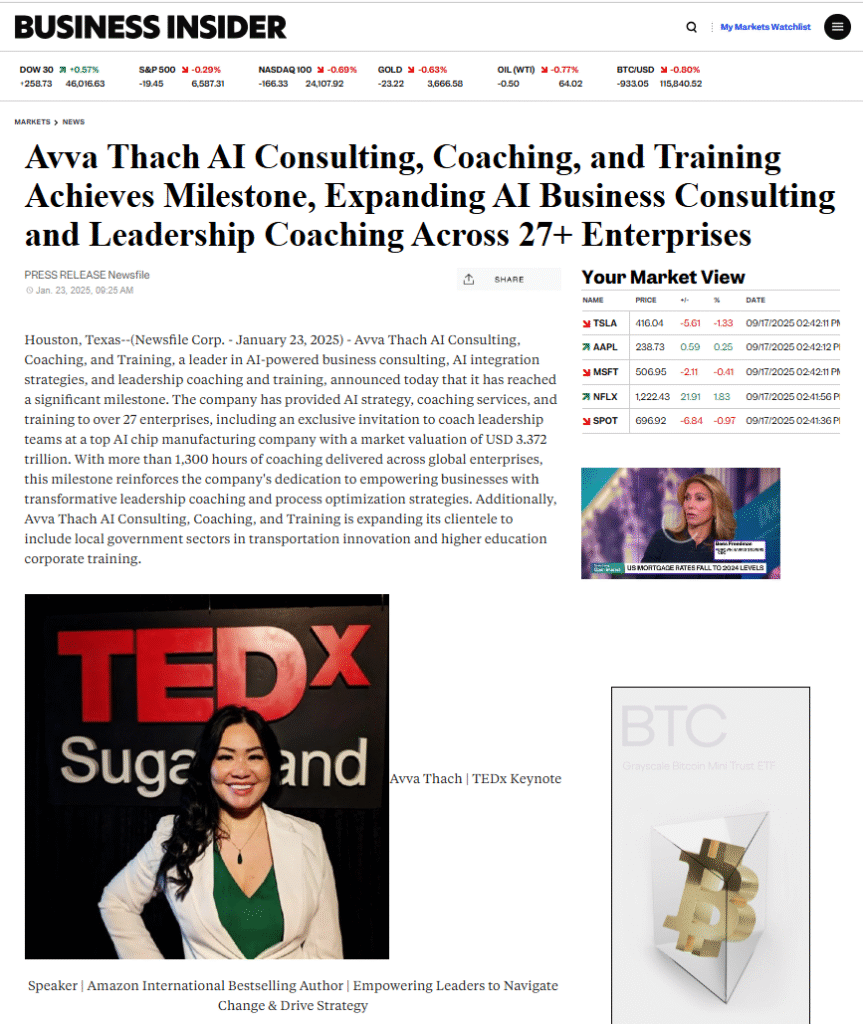
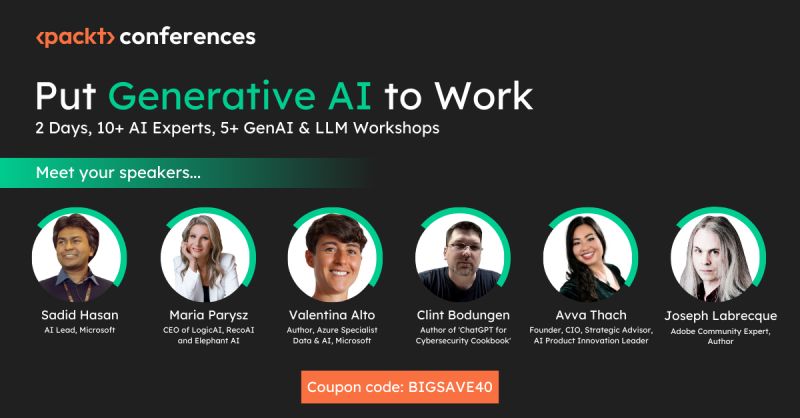
Why the brand is credible on the topic: iAvva AI Consulting led by Avva Thach combines hands on AI strategy and implementation experience with executive coaching and corporate training. Avva has global product and transformation experience at Accenture SolutionsIQ and has public thought leadership including a TEDx talk and a book on decisive leadership. iAvva works with SMBs to align AI initiatives, process improvement, and leadership coaching to drive measurable results, making the brand credible on integrating leadership development with digital transformation.
Tone of voice: Professional, evidence based, and practical. Use clear executive language with industry terms when appropriate. Prioritize action oriented recommendations, concrete examples, and measurable criteria rather than theory. Maintain neutral objective voice with a helpful consultancy perspective and low promotional language.
Sources:
- IDC press release on digital transformation spending https://www.idc.com/getdoc.jsp?containerId=prUS47060320
- PwC research on upskilling and the role of training in transformation https://www.pwc.com/gx/en/issues/upskilling.html
- Harvard Business Review article Why Leadership Development Programs Fail https://hbr.org/2016/10/why-leadership-development-programs-fail
- Association for Talent Development research on measuring learning effectiveness https://www.td.org
- Kirkpatrick Partners guidance on levels of evaluation https://www.kirkpatrickpartners.com/Our-Philosophy/The-Kirkpatrick-Model
Key findings:
- Digital transformation is widespread and ongoing, increasing demand for leadership capabilities that support technology adoption and cross functional collaboration.
- A large majority of organizations rate training and coaching as critical to transformation success but struggle to link programs to measurable business outcomes.
- Research and practitioner guidance emphasize the need for rigorous diagnosis, blended learning designs, pilot testing, and evaluation frameworks such as Kirkpatrick and Phillips ROI to demonstrate impact.
Key points:
- Require alignment between leadership learning objectives and specific business outcomes and KPIs before approving any program.
- Use data and AI enabled diagnostics to pinpoint capability gaps rather than relying on assumptions or one size fits all curricula.
- Design blended programs that combine coaching, action learning projects, and measurement, and run time boxed pilots with defined success criteria.
- Evaluate vendors on measurable outcomes, integration with existing talent systems, and ability to scale behavioral change, including an option for tailored AI enabled solutions like iAvva AI Consulting.
Anything to avoid:
- Avoid accepting vendor claims without defined success metrics, baseline data, and an evaluation plan.
- Avoid one off workshops as the primary intervention without follow up coaching or practice cycles.
- Avoid jargon heavy descriptions that obscure how learning will link to measurable results.
- Avoid promotional language and generic training platitudes in the article.
External links:
- https://hbr.org/2016/10/why-leadership-development-programs-fail
- https://www.kirkpatrickpartners.com/Our-Philosophy/The-Kirkpatrick-Model
- https://www.pwc.com/gx/en/issues/upskilling.html
- https://www.td.org
- https://roiinstitute.net
Internal links:
Content Brief
This article is an actionable how to guide for senior HR and L&D leaders who must select leadership training that delivers measurable business impact. Write with a professional consultancy voice that prioritizes practical steps, concrete examples, and evaluation criteria. Emphasize alignment to business outcomes, use of data and AI diagnostics, pilot testing, vendor selection criteria, measurement frameworks, and scaling plans. Include real vendor examples and recognizable models such as Center for Creative Leadership, Korn Ferry, BetterUp, Coursera for Business, Degreed, GE Crotonville, Kirkpatrick model, and Phillips ROI. Integrate iAvva AI Consulting as an example of a tailored provider that combines AI strategy with leadership coaching for SMBs. Keep language evidence based, avoid promotional hyperbole, and include short call to action prompts to contact iAvva for tailored pilots. Use bullet lists and numbered steps for readability and include suggested KPI templates and sample pilot timelines in the final content.
1. Define the Business Outcomes You Need Leadership to Drive
- Explain the necessity of naming 3 to 5 specific, measurable business outcomes before selecting training, with examples such as reduce time to market by 20 percent, improve customer satisfaction NPS by 4 points, reduce average handle time by 15 percent, or increase cross functional project delivery rate by 30 percent.
- Provide a short template that maps typical leadership behaviors to business KPIs for functions such as product, IT, operations, and customer service.
- Include a concrete example mapping: agile leadership training tied to a 25 percent increase in sprint predictability and tie that to fewer production incidents and shorter cycle time using real world analogies like Netflix or Microsoft transformation examples.
2. Diagnose Capability Gaps with Data and AI Enabled Tools
- Describe a diagnostic workflow: gather performance metrics, run 360 feedback, map skills inventory, and analyze collaboration and process metrics from tools such as Jira, Zendesk, or CRM to identify causal gaps.
- Recommend specific tools and vendors for skills and learning analytics such as Degreed, Coursera for Business analytics, LinkedIn Learning insights, Glint, and internal HRIS data sources.
- Provide a short case example: how analysis of Jira throughput and manager 360s might reveal coaching and delegation as the top two development needs for engineering leads.
3. Design Blended Programs That Link Learning to Work
- List core components of a high impact blended program: executive alignment session, action learning project tied to a live business problem, 1 on 1 executive coaching, peer cohort sessions, microlearning, and AI enabled practice simulations.
- Give examples of simulation and practice platforms such as Harvard Business Publishing simulations, Forio, and scenario based role plays supported by virtual coaching tools.
- Prescribe a sample 90 day program blueprint with cadence: week 0 baseline, weeks 1 4 cohort workshops and coaching, weeks 5 10 action learning project, weeks 11 12 measurement and leadership showcase.
4. Evaluate Vendors and Partners Using a Decision Scorecard
- Provide a vendor evaluation scorecard with weighted criteria such as demonstrated outcomes (30 percent), measurement and evaluation capability (20 percent), ability to integrate with talent systems (15 percent), customization and domain expertise (15 percent), pricing and delivery model (10 percent), and references and case studies (10 percent).
- Include real provider examples and where they fit: Center for Creative Leadership and Korn Ferry for leadership bench and assessments, BetterUp for scalable coaching, Coursera for Business and Degreed for skilling platforms, McKinsey Academy for enterprise upskilling, and iAvva AI Consulting for tailored AI integrated leadership coaching for SMB transformations.
- Offer RFP questions to include in vendor selection such as request for a pilot proposal, sample success metrics, data integration requirements, sample dashboard, and references with measurable outcomes.
5. Run a Time boxed Pilot and Measure What Matters
- Describe pilot design elements: sample size, control group or baseline, duration (60 to 120 days), specific business metric targets, and stakeholder governance including executive sponsor and data owner.
- Recommend measurement frameworks and methods: use Kirkpatrick levels for reaction and learning, link to behavioral change measured via 360 and manager observations, and calculate business impact with Phillips ROI methodology where feasible.
- Give a sample pilot KPI dashboard layout showing baseline, target, and post pilot results for three KPIs such as cycle time, NPS, and leadership effectiveness score.
6. Scale Successful Programs and Integrate into Talent Systems
- Explain governance and funding models to shift successful pilots into recurring programs, including center of excellence roles, budget allocation, and cadence for intake and renewal.
- Detail technical integration points: LMS and LXP integration, HRIS and succession planning integration, learning record store (LRS) for xAPI data, and using Degreed or LinkedIn Learning APIs for analytics.
- Share an example rollout sequence for a 12 month scale plan that phases cohorts, trains internal facilitators, and ties outcomes into performance calibration and succession decisions.
7. Sustain Behavior Change with Reinforcement and AI Enabled Nudges
- List reinforcement mechanisms: leadership rituals, communities of practice, manager enabled practice and coaching, monthly refresh microlearning, and integration into performance conversations.
- Describe how AI can assist in sustaining change through personalized learning paths, micro nudges in collaboration tools like Slack or Teams, and analytics that flag regression in behaviors.
- Offer an example of a sustainment plan with timelines, responsibilities, and expected maintenance metrics such as coaching touchpoints per leader per quarter and percentage of leaders demonstrating changed behavior at 6 months.
Frequently Asked Questions
How do I set KPIs that prove training moved the needle rather than coinciding with other initiatives
Start with narrowly scoped, attributable metrics tied to the participants work such as project delivery time, escalation rates, or NPS on a pilot group and use baselines or control groups and time boxed pilots to isolate impact.
What is an appropriate pilot length to see meaningful change from leadership training
A 60 to 120 day pilot that includes real on the job action learning and coaching usually reveals early behavioral change and measurable shifts in short cycle operational KPIs.
How much budget should we allocate per leader for an effective leadership program
Budget varies by modality but expect higher ROI from blended programs; per leader annual cost can range from a few thousand for targeted coaching programs to tens of thousands for immersive multi month executive programs; prioritize measurable pilots before large scale spend.
Can AI tools replace human coaching in leadership development
AI can augment coaching with personalized learning paths and behavioral nudges but human coaches remain essential for complex judgment work, empathy, and accountability; best results combine both.
Which evaluation framework should we use to measure impact
Use Kirkpatrick levels for staged evaluation and apply the Phillips ROI model for programs where translating outcomes into monetary impact is feasible.
How do we avoid vendor driven cookie cutter programs
Require vendors to propose a problem statement tied to your defined business outcomes, present a pilot with success criteria, and provide client case studies that show measurable results for similar contexts.
When should we consider a tailored provider like iAvva AI Consulting
Consider a tailored provider when your transformation requires integration of AI strategy, data driven diagnostics, and leadership coaching aligned for SMB scale and when off the shelf programs fail to map to your business outcomes.
How to Choose Leadership Training That Actually Moves the Needle for Your Organization
Article Overview
Article Type: How-To Guide
Primary Goal: Equip senior HR and L&D leaders with a practical, evidence based decision framework to select, pilot, measure, and scale leadership training programs that deliver measurable business outcomes and integrate with AI and digital transformation efforts.
” }, { “@type”: “FAQPage”, “mainEntity”: [ { “@type”: “Question”, “name”: “How do I set KPIs that prove training moved the needle rather than coinciding with other initiatives?”, “acceptedAnswer”: { “@type”: “Answer”, “text”: “
Start with narrowly scoped, attributable metrics tied to the participants work such as project delivery time, escalation rates, or NPS on a pilot group and use baselines or control groups and time boxed pilots to isolate impact.
” } }, { “@type”: “Question”, “name”: “What is an appropriate pilot length to see meaningful change from leadership training?”, “acceptedAnswer”: { “@type”: “Answer”, “text”: “
A 60 to 120 day pilot that includes real on the job action learning and coaching usually reveals early behavioral change and measurable shifts in short cycle operational KPIs.
” } }, { “@type”: “Question”, “name”: “How much budget should we allocate per leader for an effective leadership program?”, “acceptedAnswer”: { “@type” : “Answer”, “text” : “
Budget varies by modality but expect higher ROI from blended programs; per leader annual cost can range from a few thousand for targeted coaching programs to tens of thousands for immersive multi month executive programs; prioritize measurable pilots before large scale spend.
” } }, { “@type”:”Question”, “name”:”Can AI tools replace human coaching in leadership development?”, “acceptedAnswer”:{ “@type”:”Answer”, “text”:”
AI can augment coaching with personalized learning paths and behavioral nudges but human coaches remain essential for complex judgment work, empathy, and accountability; best results combine both.
” } }, { “@type”:”Question”, “name”:”Which evaluation framework should we use to measure impact?”, “acceptedAnswer”:{ “@type”:”Answer”, “text”:”
Use Kirkpatrick levels for staged evaluation and apply the Phillips ROI model for programs where translating outcomes into monetary impact is feasible.
” } }, { “@type”:”Question”, “name”:”How do we avoid vendor driven cookie cutter programs?”, “acceptedAnswer”:{ “@type”:”Answer”, “text”:”
Require vendors to propose a problem statement tied to your defined business outcomes, present a pilot with success criteria, and provide client case studies that show measurable results for similar contexts.
” } }, { “@type”:”Question”, “name”:”When should we consider a tailored provider like iAvva AI Consulting?”, “acceptedAnswer”:{ “@type”:”Answer”, “text”:”
Consider a tailored provider when your transformation requires integration of AI strategy, data driven diagnostics, and leadership coaching aligned for SMB scale and when off the shelf programs fail to map to your business outcomes.
” } } ] }, { “@type”:”SpeakableSpecification”,
“,” :”,” ,”,” :”,” ,”,”: “,” ,”,”: “,” ,”,”: “,” ,”,”: “,” ,”,”: “,” ,”,”: “,”
,” ,” : “,” ,” :” :”” ,” : ” : “” ,” : ” : “” ,” : ” :
“,,” ,”” : “” , “” : “” , “” : “” ,”” : “”, “” :” ,:” ,”” : “”, “” :” ,: ” ,”” : “”, “” :” ,: ” ,”” : “”, “” :” ,:” ,”” : “”, “” :” ,: ” ,”” : “”, “” :” ,:” ,”” : “”, “” :” ,: ” ,”” : “”, “” :” ,:” ,”” : “”, “”
:”,”
,””:
“,”
,””:
“,”
,””:
“,”
,””:
“,”
,””:
“,”
,””:
“,”
,””:
“,”
,””:
“,”
,””:
“,”
,””:
“,”
,””:
“,”
,””:
“,”
,
“”
:
“”
,
“”
:
“”
,
“”
:
“”
,
“”
:
“”
,
“”
:
“”
,
“”
:
“”
,
“”
:
“” }]}















Leave a Reply