



The Executive-Friendly AI Workshop Agenda: Outcomes, Labs, and Metrics
Introduction
Imagine funding multiple AI pilots, watching dashboards light up with activity, yet seeing almost nothing change in revenue, costs, or customer experience. That is where many leadership teams find themselves right now. Research from MIT Media Lab shows that while 91% of leading businesses invest in AI, 95% report zero return from their Generative AI efforts.
The gap is not about tools. It is about direction, alignment, and behavior. Eighty‑four percent of CEOs say innovation is vital, but only 6% are happy with their progress without expert help. That is the space where a well-designed, executive-friendly AI workshop agenda for outcomes, labs, and metrics makes the difference. It turns AI from an interesting topic into a focused leadership agenda with clear next steps.
We see this pattern often. HR and L&D leaders are under pressure to prove ROI, CIOs must keep risk under control, and executives in small and mid-sized companies are expected to “do something with AI” while still running the business. At the same time, people operations teams manage distributed workforces and need repeatable ways to build AI-ready leadership at scale.
This article lays out that repeatable way. We walk through The Executive-Friendly AI Workshop Agenda: Outcomes, Labs, and Metrics as a practical blueprint. You will see how to design an agenda that aligns AI with strategy, uses hands-on labs instead of lectures, and anchors success in metrics across three levels – personal, team, and organizational.
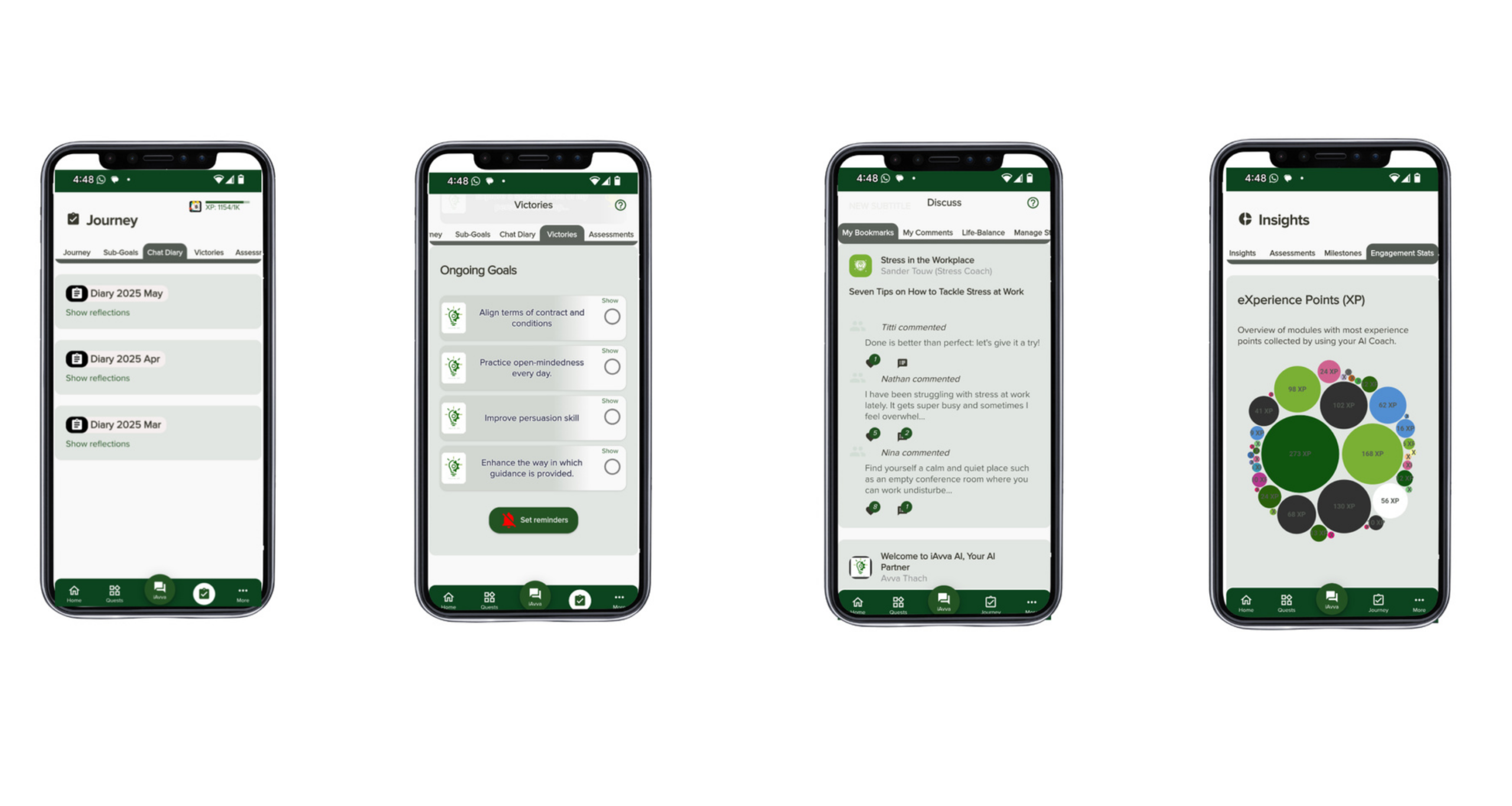
From our work at iAvva AI, we have learned that workshops alone are not enough. Real change comes when the workshop is paired with continuous reinforcement that nudges leaders to apply what they learned every single week. Our AI Coach platform does exactly that through daily, five‑minute reflections mapped to business OKRs.
Stay with us, and you will walk away with a complete playbook to design, run, and measure executive AI workshops that produce real business impact, not just slide decks and enthusiasm that fades within a month.
Key Takeaways
Executive AI workshops only earn their keep when they produce three concrete outputs that leaders can act on right away:
a prioritized AI use case portfolio, a clear ROI and feasibility view, and an implementation roadmap with owners and milestones that ties directly to current strategy.Measurement cannot sit in a single dashboard or on one level. Reliable AI impact tracking spans three layers (personal, team, organizational) and uses four lenses (efficiency, effectiveness, output, outcome). When those views line up, leaders can see how individual habits roll up into business results.
The strongest workshops mix three ingredients in the agenda: strategic awareness, hands-on labs using real business cases, and post‑workshop reinforcement so new behaviors do not fade. That mix turns a one‑day event into an ongoing practice.
Projects that start with a thoughtful roadmap show very different results from ad‑hoc experiments. Research shows that 92% of AI programs that begin with careful planning create real value inside the first year, while most unstructured pilots stall or get shut down quietly.
Continuous learning platforms such as iAvva AI Coach extend workshop impact past the event itself. By turning insights into small, daily leadership habits and tracking them against OKRs, they help HR, L&D, and business leaders see a clear link between behavior change and business outcomes.
From day one, teams need to draw a firm line between vanity metrics and actionable metrics. Counts of prompts, pilots, or logins may look impressive, but only metrics tied to faster decisions, better outcomes, or improved financials help leaders refine their AI agenda.
Moving from workshop room to deployment floor requires much more than ideas. It needs governance for ethics and data, clear change leadership strategies, and success KPIs baked into roadmaps, so every AI effort can be judged on real business value.
Why Executive AI Workshops Are a Strategic Imperative for Modern Organizations
Executives know they cannot ignore AI, yet most admit they do not have a clear plan. Studies show that only about 14% of organizations feel ready for AI-driven change, even though the overwhelming majority are already spending money on tools and pilots, and research on the implications of Artificial Intelligence confirms that most HR practices remain unprepared for the transformation ahead. This is a recipe for wasted budgets and frustrated teams.
An executive AI workshop is not just another training day. Done well, it acts as a focused strategy session for AI. It aligns the C‑suite, HR, L&D, and IT on what the business should actually do with AI, in what order, and how success will be measured. It moves conversations away from “Which tool should we buy?” toward “Which business problem are we solving, and how will we know it worked?”
For HR and L&D leaders, the workshop is also a way to show clear impact. Instead of generic leadership programs, they can sponsor a session that gives executives specific use cases, roadmaps, and metrics. When that is paired with ongoing support through tools like iAvva AI Coach, it becomes a repeatable system for AI‑ready leadership development.
The ROI Reality: What Data Tells Us About AI Workshop Effectiveness
When observers talk about AI ROI, they often mix excitement with frustration. On one hand, structured AI programs can reach a 3.5x return, meaning three dollars and fifty cents back for every dollar invested. That return usually comes from three buckets:
- Lower operating costs
- Higher efficiency and productivity
- New revenue from AI‑enabled products or services
On the other hand, many organizations never get there because they jump into pilots without a plan.
Workshops change that equation by forcing clarity up front. Leaders leave with a small number of high‑value use cases, each with a basic ROI view and a path to a proof of concept. That focus matters. Projects that begin inside a roadmap hit value in about twelve months in more than nine out of ten cases, while unstructured experiments can linger for years.
The MIT Media Lab finding that 95% of Generative AI efforts show no return has a clear root cause. Technology teams build something interesting, but it does not line up with a real business need. A good workshop corrects this by starting with strategy and outcomes and working backward to AI, not the other way around.
ROI is not only a finance topic. For L&D leaders, a strong AI workshop agenda also connects to metrics such as time‑to‑competency for executives, leadership confidence scores on AI topics, and the quality of strategic decisions over time. When these are tracked in platforms like iAvva AI Coach, which already links daily behavior to OKRs, it becomes possible to see how a single workshop keeps paying off week after week.
“What gets measured gets managed.”
— Peter Drucker
The Preparedness Gap: Why 86% of Organizations Aren’t Ready
Most organizations are buying AI tools faster than they build the capabilities needed to use them well. We see four dimensions of readiness that often fall short:
- Strategic clarity – agreement on why AI matters and what success looks like
- Technical infrastructure – data quality, integration, and security
- Cultural openness – willingness to test new ways of working
- Leadership capability – the ability to connect AI to strategy and behavior
Strategic clarity means leaders agree on why they want AI and what success looks like. Without this, each business unit runs its own experiments, and the organization ends up with a patchwork of pilots that never add up to real impact. Technical infrastructure covers data quality, integration, and security. Many companies discover late in the process that their data is scattered or unreliable.
Cultural openness is about how comfortable people feel testing new approaches. Fear of disruption, job loss, or “being replaced by a model” can quietly block progress. Leadership capability may be the most important dimension. Without leaders who can connect AI to strategy, explain the change, and model new behaviors, even the best tools sit unused.
Executive AI workshops help diagnose these gaps early. Through structured discussions and labs, misalignment becomes visible, and leaders can agree on where they are strong and where they need to invest. Post‑workshop, a continuous learning platform like iAvva AI Coach keeps addressing the most common gap of all, which is the lack of consistent leadership habits that support AI-informed decisions. With five‑minute daily prompts, leaders keep practicing the skills needed to guide AI work with confidence and care.
Core Objectives of an Executive-Focused AI Workshop
A strong executive AI workshop is part classroom, part strategy lab. Leaders should walk out not only understanding AI better but also holding a focused plan for what the organization will do next. For HR and L&D sponsors, this dual role of education and planning is what makes the day worth the investment.
We see six non‑negotiable objectives:
- Align AI capabilities with real business goals, so every idea links back to revenue, margin, or customer value.
- Build a shared base of AI literacy across the leadership team.
- Create actionable roadmaps instead of vague intentions.
- Bring risks and ethics into the center of the conversation, not as an afterthought.
- Give executives simple, reliable ways to measure ROI.
- Help leaders guide cultural and workforce change that AI brings.
A well‑run workshop compresses months of scattered conversations into a single, focused event. With skilled moderators, executives leave with shared mental models and far fewer conflicting priorities. From there, continuous coaching through a platform like iAvva AI Coach keeps that alignment alive in daily decisions.
Objective 1: Aligning AI Capabilities With Strategic Business Goals
Strategic alignment means that every AI effort starts from the company’s current goals, not from technology features. During the workshop, we work with leaders to map AI ideas directly to existing objectives and OKRs. For example, if the priority is margin growth, promising use cases tend to focus on process efficiency or smarter pricing rather than flashy customer apps.
This mapping work is done in plain language. Each potential use case is tested with simple questions such as:
- Does it drive revenue growth?
- Does it cut costs in a measurable way?
- Does it strengthen our market advantage?
- Does it improve the customer experience in a clear way?
If the answer is vague, it does not belong on the near‑term list.
To reduce “shiny object syndrome,” we use prioritization frameworks that score each idea on strategic impact and feasibility. This helps executives say no to attractive but low‑value efforts. It also creates buy‑in, because leaders see that the final list reflects agreed criteria, not personal influence.
Inside iAvva AI Coach, we apply the same principle at the individual level. Leaders align their personal growth goals with business OKRs. That way, the daily reflection habit supports not just self‑development but also the same strategic aims that guided the workshop.
Objective 2: Building Foundational AI Literacy Across Leadership
Many AI efforts stall because technical teams and business leaders talk past each other. Data scientists mention models, tokens, and training sets, while executives speak in terms of customer segments, margins, and risk. An early goal of any executive AI workshop is to close this gap.
We aim for a careful balance. Leaders do not need to code, but they do need a working understanding of what AI, machine learning, and Generative AI can and cannot do. That includes basic ideas like how models learn from data, why bias appears, and why good data matters more than fancy algorithms in many cases.
Workshops also reset expectations around timelines and outcomes. Real‑world use cases from similar industries show what is realistic in twelve to eighteen months and what belongs in a longer time frame. This protects executives from both over‑optimism and unnecessary fear.
When leaders share common vocabulary and a grounded view of AI, they feel more confident approving and challenging proposals. The workshop plants that seed. Ongoing education, delivered as short, relevant prompts inside iAvva AI Coach, keeps that literacy current as AI tools and practices keep changing.
Objective 3: Developing Actionable Implementation Roadmaps
Ideas without a plan drain energy. A central outcome of the workshop is a roadmap that turns “We should use AI in X” into “Here is what we will do in the next 3, 6, and 12 months.” Actionable roadmaps have a few key traits:
- Clear milestones and decision points
- Named owners and accountable sponsors
- Success metrics linked to business goals
- Realistic timelines based on capacity and budgets
During the workshop, leaders move from a broad list of use cases to a sequenced set of initiatives. They weigh dependencies, such as data work that must come first, and decide which projects count as early wins. Smaller, fast projects might target one team or process, while more complex efforts begin with a focused proof of concept.
Good roadmaps also respect limits. They account for budget cycles, hiring constraints, and the current state of IT systems. Governance checkpoints are built into the plan, with moments for data privacy reviews, security checks, and ethical assessments.
We encourage organizations to treat the roadmap as a living document reviewed at least quarterly. iAvva AI Coach helps here as well. Leaders can reflect on progress toward roadmap goals, spot patterns in obstacles, and adjust their own focus and behaviors to keep initiatives on track.
Designing Your Workshop Agenda: Six Essential Modules
An executive AI workshop works best when it follows a clear structure. Each module has a job to do and builds on the one before it. By the end, leaders move from awareness, through discovery and analysis, to a concrete action plan.
We recommend six modules. The first builds shared understanding of AI. The second surfaces and ranks opportunities. The third tests those opportunities for feasibility and value. The fourth looks squarely at risks and ethics. The fifth focuses on leadership and culture. The sixth brings everything together into a phased roadmap.
This structure can fit into a full day, two half days, or a series of shorter sessions, depending on the size and schedule of the leadership group. What matters most is balance. Each module should mix short presentations with open discussion and, where possible, hands‑on labs based on the company’s real context.
Strong guidance is essential. Ideally, one facilitator brings deep AI and data experience, and another brings business and leadership experience. Together, they keep the day grounded in both technical reality and strategic needs. After the workshop, a platform like iAvva AI Coach keeps the themes alive through regular prompts and analytics.
Module 1: Strategic AI Awareness and Fundamentals
The first module sets the stage. Its goal is to give every leader enough understanding of AI to take part in later decisions with confidence. We cover core ideas such as the difference between AI, machine learning, and Generative AI, how models learn from data, and where their limits lie.
Rather than heavy technical detail, we use simple analogies, visual examples, and live demos where possible. For instance, showing how a model drafts an email or summarizes a long report in seconds makes the power and the risks feel real. We also address common myths early, such as “AI will replace all jobs” or “AI is magic.”
Industry-specific examples help here. A healthcare organization might review how AI speeds up diagnosis support, while an insurance company might see how models read and classify documents. These stories make the discussion concrete and prompt leaders to think, “Where could this apply for us?”
We aim for an “aha” moment in this module, when executives see not just that AI is important, but that it can serve specific parts of their business. From there, short, ongoing lessons through iAvva AI Coach keep their knowledge current without adding heavy time burdens.
Module 2: Opportunity Discovery and Use Case Prioritization
Once leaders share a base of understanding, they are ready to look at their own business, applying frameworks that make operations research more accessible and actionable for strategic decision-making. Module two is highly interactive. Cross‑functional groups map out pain points, slow processes, and missed opportunities. They then ask, “Where could AI help reduce cost, improve speed, or open new offerings?”
We often structure this around three value types:
- Cost reduction – automating manual work or simplifying reporting
- Efficiency – faster document review, more accurate forecasting
- New value – AI‑supported services or personalized experiences that were not possible before
Ideas are then plotted on a simple matrix that compares business impact with technical and organizational feasibility. This makes trade‑offs visible. Some ideas may promise high impact but require data work or system changes that will take time. Others may be modest in impact but easy to pilot.
By the end of this module, the group has moved from a long list of ideas to a short list of perhaps five to seven high‑priority use cases. This list includes an initial view of how each idea fits with existing workflows. Later, iAvva AI Coach can help leaders keep these priorities visible amid daily noise through reflective prompts tied to the chosen initiatives.
Module 3: Feasibility Analysis and Value Mapping
Good ideas become great investments only after careful analysis. In module three, leaders and technical experts examine the short‑listed use cases through several lenses:
- Technical feasibility
- Data readiness
- Team skills and capacity
- Financial impact and time to value
We start with a feasibility snapshot. For each use case, the group assesses whether the required data exists, whether it is accessible and trustworthy, and whether current systems can support the needed integrations. They also consider internal skills and where outside partners may be needed.
Next comes value mapping. Using simple models, teams estimate potential cost savings, productivity gains, or revenue uplift over twelve, twenty‑four, and thirty‑six months. They also estimate initial and ongoing costs. Assumptions are written down clearly, so they can be revisited later.
A technical complexity scorecard helps manage expectations. Some initiatives may score as low effort with quick payback, ideal for early wins. Others may involve higher complexity but offer strategic value. This module ends with feasibility summaries, draft ROI views, and clarity about which ideas are ready for a proof of concept. iAvva AI Coach then supports executives in revisiting these assumptions as real results come in.
Module 4: Risk Management and Ethical Considerations
AI brings real benefits and real risks. Module four gives leaders structured time to face both. We cover four risk categories:
- Ethical – bias, fairness, explainability
- Data – privacy, security, consent
- Technical – model limits, reliability, integration issues
- Organizational – resistance, skills gaps, misaligned incentives
The group then discusses what responsible AI means for their company values. This often leads to draft guiding principles, such as commitments to explainability, human oversight, and respect for user privacy. From there, we outline what strong data governance looks like, including consent, storage, access controls, and audit trails.
We also address the practical limits of AI. Models can be brittle at the edges, can reflect bias in training data, and can drift over time. Leaders need to understand that AI systems require monitoring, updating, and clear accountability.
Finally, the module turns to structure. Who owns AI ethics? Who serves as a data steward? What is the review process before a model goes into production? The output is a first pass at an AI governance framework and a risk register tied to the top use cases. Through prompts focused on ethical reflection, iAvva AI Coach helps leaders revisit these themes in their weekly practice.
“The future is already here — it’s just not evenly distributed.”
— William Gibson
Module 5: Leading AI-Driven Organizational Change
AI work is mostly people work. Module five focuses on how leaders guide teams through the changes that AI brings. We begin with a candid look at current culture. Do people feel safe suggesting new ideas? How do teams react when a project fails? Are managers modeling curiosity, or do they cling to old habits?
From there, we explore typical sources of resistance. Employees may fear job loss, feel skeptical about new tools, or worry they will look foolish if they cannot adapt quickly. Leaders practice language that frames AI as augmentation rather than replacement, and that clearly spells out how roles may shift over time.
The module also covers communication planning. Different audiences need different messages. Executives need a clear link between AI and strategy. Managers need concrete guidance on processes and expectations. Frontline staff need to know what will change in their day‑to‑day work and where to get support.
Workforce development is a final key piece. Leaders identify skill gaps and early upskilling priorities, such as prompt writing, data literacy, or AI‑assisted decision‑making. The module ends with a draft change plan and learning roadmap. iAvva AI Coach then reinforces new leadership behaviors by nudging executives to reflect on how they communicate, support teams, and respond to resistance in real situations.
Module 6: Building the Actionable Implementation Roadmap
The final module brings every thread together into a clear plan. Using outputs from earlier modules, leaders build a phased roadmap that covers short‑term wins, medium‑term foundation work, and longer‑term strategic initiatives.
We start by mapping initiatives to a timeline:
- Short‑term efforts (3–6 months) – quick wins and visible pilots
- Medium‑term efforts (6–18 months) – data platform work and broader rollouts
- Longer‑term efforts (18+ months) – shifts in offerings or operating models
For each initiative, the group defines milestones, success criteria, and needed resources. They decide which projects need executive sponsorship, which teams will lead, and where to bring in external partners. Governance checkpoints are also placed along the timeline so that ethics, privacy, and security reviews occur before major releases.
The module ends with a draft roadmap document, an execution plan for the first phase, and a clear list of next steps. Once leaders leave the room, iAvva AI Coach helps keep the roadmap alive. Executives can log progress, reflect on blockers, and align their weekly focus with the commitments they made during the workshop.
The Power of Hands-On Labs: Bridging Theory and Practice
Slides alone do not change behavior. Research on Gemini at Work: Knowledge systems confirms that executives learn best when they apply new ideas to their own context in real time, particularly when using AI tools in practical business scenarios. That is where labs come in. In an executive AI workshop, labs are structured working sessions, not technical coding tasks. They guide leaders through frameworks using their own data, priorities, and constraints.
Labs shift the tone from passive listening to active problem‑solving. When leaders sit together around a prioritization matrix, an ROI template, or a risk heat map, they must surface assumptions, negotiate trade‑offs, and agree on what matters most. This sparks the kind of alignment that no lecture can create.
Labs also build confidence. Once an executive has personally helped score use cases or build a first ROI view, they are much more likely to repeat that process later with their own teams. The methods stop feeling abstract and start feeling like tools they own.
There is another benefit. Labs create structured cross‑functional conversations. Finance hears directly from product, HR hears from IT, and everyone sees where their interests align or clash. This reduces siloed decisions later on. While labs require more workshop time, they turn the event into a working session that produces usable outputs instead of just notes.
The four labs below fit naturally with the six modules described earlier. They can be run in smaller groups, then shared back in plenary. After the workshop, a platform like iAvva AI Coach keeps the “learning by doing” spirit alive by asking leaders to reflect on how they are applying these same frameworks in their weekly work.
“AI is the new electricity.”
— Andrew Ng
Lab 1: Use Case Prioritization Workshop
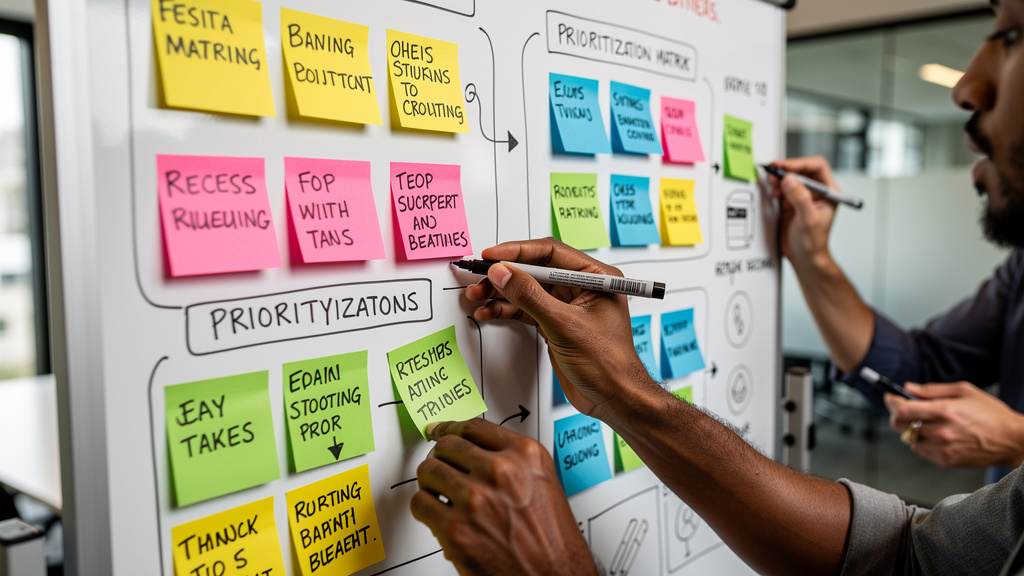
In the first lab, leaders take the raw list of AI ideas and sort them into a clear picture of what matters now. We divide participants into mixed groups so each table includes different functions such as finance, operations, HR, and technology. Each group receives a simple matrix with business impact along one axis and feasibility along the other.
Teams place each use case on the grid. They discuss what high impact means for their company. For some, that may be profit margin, for others, risk reduction or customer retention. They also discuss what feasibility means in their context, such as data readiness, system fit, and change effort.
Disagreements are expected and even welcomed. The structured nature of the matrix helps keep debate productive by anchoring it in shared criteria rather than personal preference. By talking it through, leaders gain a deeper sense of each other’s priorities and constraints.
At the end, each group presents its top five to seven use cases and explains the reasoning. These are merged into a single prioritized list for the organization. Participants leave this lab with a repeatable way to evaluate ideas, not just a one‑time ranking. Later, iAvva AI Coach can prompt leaders to use the same lens when new AI ideas surface during the year.
Lab 2: ROI Forecasting and Business Case Simulation
The second lab builds financial muscles for AI decisions. Each group chooses one high‑priority use case from the previous lab and works through a structured ROI worksheet. The aim is not perfect accuracy but clear, testable thinking.
Teams estimate cost savings, such as hours saved from automation or reduced error rates. They also consider revenue effects, such as higher conversion, better cross‑sell, or new fee‑based services. On the cost side, they list technology, integration work, training, and ongoing support. Time frames are typically twelve, twenty‑four, and thirty‑six months.
A key part of this lab is making assumptions visible. Groups write down what must be true for their estimates to hold. For example, they may assume a certain adoption rate among staff or a certain level of data quality by a given month. They then create a simple best case, expected case, and worst case.
By the end, each group has a draft financial story for its chosen use case. Presenting these drafts to peers serves as a reality check. Leaders gain a more grounded sense of what AI projects really cost and what they may return. This makes later investment decisions more confident and less based on excitement alone. iAvva AI Coach supports this by nudging leaders to revisit these assumptions when real numbers start to arrive.
Lab 3: Risk Assessment and Mitigation Planning
Lab three turns risk from a vague concern into a structured plan. Each group takes a proposed AI project and examines it through the four risk categories discussed earlier. They brainstorm possible issues under ethics, data, technical, and organizational headings.
Next, they rate each risk by likelihood and impact. High‑impact, high‑likelihood items become the focus. For these, the group drafts specific mitigation steps. For example, a bias risk may lead to a plan for diverse test sets and regular fairness checks. A data privacy risk may prompt stronger access controls or new consent flows.
Groups also define who will watch each risk and what kind of trigger would require escalation. This might be model performance dropping below a threshold, user complaints rising, or regulatory changes. By assigning roles, leaders move beyond general concern into clear accountability.
The lab ends with a risk matrix and mitigation plan for each project. Participants often comment that this exercise helps them feel more comfortable backing AI efforts, because they can see concrete plans rather than abstract worry. iAvva AI Coach then keeps ethical reflection alive through targeted prompts about real choices leaders face in their daily work.
Lab 4: Strategic Roadmap Sketching Session
The final lab takes all previous outputs and turns them into a time‑based picture. Groups receive templates with columns for time frames, key initiatives, milestones, owners, and measures of success. They begin by placing their top use cases into near, mid, and longer‑term buckets.
They then define what success looks like at each stage. For a quick‑win pilot, success might be a working prototype with clear user feedback within three months. For a larger program, success might be a certain percentage reduction in processing time or an agreed new revenue line within a year.
Ownership is assigned at this point. Each major effort receives an executive sponsor, a project lead, and a core team. Dependencies and resource needs are noted. Groups also mark where governance checkpoints, such as security reviews or ethics panels, must appear on the timeline.
The output is a draft AI roadmap that the broader leadership team can refine after the workshop. More importantly, participants leave with felt experience of how to sequence AI work instead of treating it as a loose set of experiments. This sense of shared commitment is reinforced later when iAvva AI Coach prompts leaders to review progress on roadmap milestones and adjust their own behavior to support them.
Key Deliverables: What Leaders Walk Away With
The success of an executive AI workshop should never be judged only by satisfaction scores or photos of sticky notes on walls. The real test is whether leaders leave with documents and decisions that they can use the next morning. Clear, well‑crafted deliverables are how L&D and HR sponsors prove value to the wider organization.
We see three primary deliverables:
- A prioritized portfolio of AI use cases that have passed a basic strategic and operational test.
- An ROI and feasibility pack that shows where value is likely, what it will take, and where the main risks sit.
- A step‑by‑step roadmap for near‑term and medium‑term action.
Each deliverable should be concrete enough that it does not require weeks of extra effort to make it usable. It should include owners, timelines, and links to existing strategies. Wherever possible, it should also be customized to the organization’s language and structure, not left as a generic template.
These deliverables then become anchors for accountability. They give executives something to revisit in quarterly reviews and provide HR and L&D teams with clear reference points when designing supporting training or coaching. Inside iAvva AI Coach, these same artifacts can be mirrored in goal structures and reflection prompts, so everyday leadership behavior lines up with the workshop’s commitments.
Deliverable 1: Prioritized High-Impact AI Use Case Portfolio
The first major output is a written portfolio of AI opportunities. In practice, this is often a short document of around five to seven pages. It starts with an executive summary that explains why these use cases matter and how they were chosen.
Each use case entry describes:
- The business problem
- The proposed AI‑supported approach
- The main benefits in clear business terms
- Key stakeholders such as affected teams, customers, or partners
The entry also names any obvious data or system needs that must be addressed.
A visual prioritization matrix sits alongside these descriptions. This shows at a glance which ideas rate high on impact and feasibility and which ones sit lower on the list. It helps executives see the whole picture, not just their favorite idea.
Finally, the document includes a short operational fit note for each use case. This explains where in current workflows the AI component would sit and hints at expected process changes. Because this portfolio is a “living” asset, we recommend reviewing and updating it quarterly. iAvva AI Coach supports that cycle by prompting leaders to reflect on which use cases still make sense as the market and internal priorities shift.
Deliverable 2: Comprehensive AI ROI and Feasibility Analysis

The second deliverable goes deeper on the numbers and practicalities. For each high‑priority use case, the workshop team creates a feasibility snapshot, an ROI forecast, and a technical complexity rating. Together, these give decision‑makers the clarity they need to move ahead or pause.
The feasibility snapshot covers three areas:
- Data readiness – whether the right data exists, is accessible, and is clean
- Systems readiness – integration points, performance limits, and security
- Team readiness – internal skills, capacity, and need for external partners
The ROI forecast lays out expected costs and benefits across one, two, and three years. Costs might include licenses, development, integration, and training. Benefits might involve hours saved, error reductions, or added revenue. Assumptions are spelled out in plain language so they can be revisited.
The technical complexity scorecard rates each idea on factors such as data volume, model sophistication, and integration depth. High complexity does not mean “do not proceed,” but it does signal the need for stronger governance and support. Executives can compare use cases on a like‑for‑like basis rather than relying on instinct alone. iAvva AI Coach then helps leaders keep these expectations in mind by linking reflection prompts to the KPIs defined in this analysis.
Deliverable 3: Strategic Step-by-Step AI Transformation Roadmap

The third deliverable is the roadmap that turns all this analysis into action. It is often structured into three phases. Phase one may cover the first six months and focus on pilots and foundational data work. Phase two may span the next year with broader rollouts. Phase three may look up to three years ahead, touching more ambitious shifts in offerings or operating models.
Each phase includes specific initiatives, such as “automate claims triage for small policies” or “introduce AI‑assisted coaching for frontline managers.” For each initiative, the roadmap notes milestones, such as “pilot live with two teams” or “first ten external customers onboarded.”
Resource plans sit next to these milestones. They show who leads which piece, what budget is set aside, and what infrastructure is needed. Key performance indicators are defined at initiative level and phase level, with baselines and target values.
Risk management is woven into the roadmap, not added at the end. Governance checkpoints, compliance reviews, and ethics assessments are shown on the same timeline. The roadmap also includes a short communication plan, pointing out how and when progress will be shared with staff, customers, and other stakeholders. iAvva AI Coach then supports execution by helping leaders reflect on their part in moving each phase forward.
A Comprehensive Framework for Measuring AI Transformation Success
Without clear measurement, AI work turns into a set of stories and opinions. Some teams claim success based on activity, others complain about costs, and the organization cannot tell who is right. A thoughtful framework for measurement keeps conversations honest and focuses attention on what truly matters.
We recommend looking at AI‑driven change through three levels and four lenses. The levels are personal, team, and organizational. The lenses are efficiency, effectiveness, output, and outcome. This combination gives leaders a way to see both the “micro” effects on individual behavior and the “macro” effects on revenue, cost, and risk.
Another helpful idea is the “Faster, More Frequent, Cheaper, Better” model. It asks simple questions:
- Are we learning faster?
- Are we running more experiments?
- Are we learning at lower cost?
- Are the outcomes better for customers and the business?
This model keeps measurement grounded in everyday reality.
A final distinction that matters greatly is the one between vanity metrics and actionable metrics. Vanity metrics look impressive but do not guide decisions. Actionable metrics are tied to specific actions leaders can take when they move up or down. Systems like iAvva AI Coach lean toward actionable metrics by design, since they connect leadership behavior directly to OKRs and outcomes.
“The technology you use impresses no one. The experience you create with it is everything.”
— Sean Gerety
The Three Levels of Measurement: Personal, Team, and Organizational

Real change starts with people, spreads through teams, and then shows up in overall business results. Measuring only at the top level hides early progress and makes it hard to steer. That is why we encourage organizations to think in three levels.
At the personal level, measurement focuses on how individual leaders change. Do they use AI to prepare for meetings, to explore scenarios, or to test ideas before acting? Are they making decisions faster with equal or higher quality? Are they engaging in regular reflection about how AI affects their choices?
At the team level, the focus shifts to collaboration and delivery. Are teams designing and running experiments faster? Are they reducing rework because AI gives better early feedback? Are they using shared dashboards or assistants to coordinate more smoothly across functions?
At the organizational level, attention turns to revenue, cost, risk, and new capabilities. Are there new products or services that did not exist before AI? Has time‑to‑value for major initiatives shortened? Are more business units using AI in everyday workflows, and are those uses linked to better outcomes?
These levels must connect. For example, a personal metric such as “time saved per decision” should support a team metric such as “time from idea to tested experiment,” which in turn supports an organizational metric such as “time‑to‑value for new features.” iAvva AI Coach is built with this vertical link in mind, offering individual insight, team views, and organization‑wide analytics from the same base data.
The Four Lenses: Efficiency, Effectiveness, Output, and Outcome
Even with levels defined, leaders can still miss the point if they look only at one type of measure. That is why the four lenses matter. Each lens asks a different question and together they give a fuller picture.
Efficiency looks at speed and resource use. With AI support, do teams complete tasks faster, with fewer people, or with lower spend? Examples include reduced time to prepare reports, fewer hours spent on manual data entry, or shorter customer response times.
Effectiveness looks at quality and impact. Are decisions better? Are errors down? Are customers more satisfied? Metrics in this lens might include decision accuracy, customer satisfaction scores, or first‑contact resolution rates.
Output metrics count what was produced. This could be the number of AI‑assisted features released, models trained, documents processed, or experiments run. These are easy to count and can show momentum, especially early on.
Outcome metrics show what changed because those outputs existed. They might look at churn reduction, revenue growth, margin improvement, or staff engagement. Outcomes tell the real story. A team may have shipped many AI features, but if customers do not use them or margins do not change, the true impact is weak.
Early in an AI program, it is normal to see more focus on efficiency and output. As the program matures, effectiveness and outcome should take center stage. Platforms such as iAvva AI Coach help by tracking not only how often leaders interact with AI but also how those interactions line up with improvements in their own goals and the company’s OKRs.
To make this concrete, you can map levels and lenses together:
| Lens / Level | Personal Example | Team Example | Organizational Example |
|---|---|---|---|
| Efficiency | Time saved on meeting prep with AI summaries | Cycle time from idea to experiment | Time‑to‑market for new AI‑assisted features |
| Effectiveness | Better decision quality with AI scenario checks | Higher first‑time‑right rate in key processes | Improved customer satisfaction or NPS |
| Output | Number of AI‑assisted drafts or analyses | Number of AI‑supported experiments per quarter | Number of AI‑powered services live for customers |
| Outcome | Deals closed or issues resolved faster | Revenue or cost impact from team AI initiatives | Margin improvement, risk reduction, or new revenue |
Vanity vs. Actionable Metrics: The Critical Distinction
Vanity metrics are tempting because they are simple and often large. It feels good to report that hundreds of people used an AI tool last month or that dozens of pilots are running. The trouble is that these numbers say little about value. They do not tell leaders what to do more of or less of.
Actionable metrics are different. They link activity to results and point to clear next steps. A good test is this question: If this metric moves up or down, do we know what action to take? If the answer is no, the metric is likely vanity.
At the personal level, a vanity metric might be “number of AI prompts run per week.” An actionable metric would be “percentage reduction in meeting prep time with stable or higher decision quality.” At the team level, “number of prototypes built” is vanity, while “drop in cycle time from prototype to live feature with stable or better user outcomes” is actionable.
At the organizational level, “number of AI projects started” is vanity. A more useful metric would be “percentage of AI initiatives that reach positive business outcomes and the average cost per such outcome.” That tells leaders whether the AI program is getting more effective over time.
Reporting also needs discipline. Dashboards filled with vanity metrics give false comfort. We advise organizations to start with a small set of meaningful measures and review them consistently. iAvva AI Coach follows this principle by emphasizing progress toward goals, changes in leadership behaviors, and links to business KPIs rather than raw usage counts.
Measuring AI Impact at the Personal Level
If leaders do not change how they think and act, AI will remain a set of tools that only a few specialists use. That is why personal‑level measurement is the foundation of any serious AI program. The goal is not surveillance. It is to give executives honest feedback about how they are using AI to improve their own performance.
Personal metrics should feel practical and fair. They should support self‑awareness, not create fear. They also need to be easy enough to track that they do not add heavy admin work. In many cases, the most useful data comes from simple self‑reports, calendar patterns, and a few well‑chosen behavioral signals.
One helpful starting point is personal efficiency. Leaders can look at tasks such as preparing for key meetings, drafting communications, or reviewing reports. With AI assistance, how much time are they saving while keeping quality at least as high? For example, a leader might track the average minutes spent preparing for a weekly leadership meeting for a month without AI support, then compare it to a month with support.
Personal effectiveness is another key dimension. Here the question is whether AI helps leaders make better choices, not just faster ones. Simple practices such as running two or three alternative scenarios through an AI assistant before a big decision can be tracked. Over time, leaders can reflect on how often those extra views changed their thinking for the better.
It is also useful to distinguish between output and outcome at the personal level. Output might be the number of AI‑supported proposals, memos, or plans a leader produces. Outcome might be how many of those artifacts led to approvals, moved deals forward, or improved team results. This makes it easier to spot when more activity is not leading to better impact.
The “Faster, More Frequent, Cheaper, Better” model applies here as well:
- Faster might mean cutting time to a first draft in half.
- More frequent might mean testing small AI‑assisted experiments weekly rather than quarterly.
- Cheaper could refer to lower mental load or fewer late‑night work sessions before key meetings.
- Better rests on clearer decisions that align with long‑term goals.
iAvva AI Coach was designed with this personal level in mind. It invites leaders into brief daily reflections about how they used AI that day, what worked, what did not, and how that relates to their OKRs. Over time, patterns emerge. Leaders can see, for example, that when they use AI to structure thinking early in the week, they avoid last‑minute scrambles and make more thoughtful choices. HR and L&D teams then gain anonymized, aggregated insights about how leadership habits with AI are developing across the company.
Conclusion
Executive AI workshops are no longer a nice‑to‑have experiment. For organizations that want real returns from AI investments, they are a practical necessity. A clear agenda built around outcomes, labs, and metrics turns abstract talk into aligned decisions, focused pilots, and accountable roadmaps.
We have walked through why these workshops matter, what objectives they must hit, how to structure six core modules, and how to use hands‑on labs to move from theory to practice. We also looked at the key deliverables leaders should expect and a measurement framework that keeps everyone honest across personal, team, and organizational levels.
The final piece is staying power. A single workshop can set direction, but daily behavior keeps it alive. That is where tools like iAvva AI Coach come in. By linking five‑minute reflections to business OKRs, offering voice and text in nineteen languages, and giving HR and L&D real‑time analytics, the platform turns one‑time insight into ongoing leadership growth.
If you are an HR director, CLO, CIO, or business leader planning your next move with AI, start with a clear, executive‑friendly workshop agenda. Make sure it ends with a prioritized portfolio, a realistic ROI view, and a roadmap with owners and metrics. Then, support your leaders with continuous coaching so that AI thinking becomes a natural part of how your organization leads, decides, and delivers.
FAQs
How Long Should an Executive AI Workshop Last?
Most organizations get the best results from a full‑day or two half‑day format for the core leadership group. This allows enough time to cover fundamentals, run the key labs, and agree on a roadmap without rushing. Larger enterprises sometimes add shorter follow‑up sessions for specific business units. What matters most is that leaders have uninterrupted time to think together, not just back‑to‑back slide presentations between other meetings.
Who Should Be in the Room for the Workshop?
At a minimum, include the CEO or business unit head, HR or people leadership, the CIO or senior IT leader, finance, and key owners of major product or service lines. When possible, we also recommend including someone who understands risk and compliance and at least one person who works closely with customers. Cross‑functional representation helps make the outputs real and reduces the chance that important concerns appear only after the workshop has finished.
How Often Should We Run Executive AI Workshops?
For many small and mid‑sized organizations, one major workshop each year, with lighter check‑ins every quarter, works well. Fast‑moving companies or those in highly competitive markets may benefit from a deeper refresh every six to nine months. In between, leaders can use tools like iAvva AI Coach to track progress against the roadmap, reflect on what is working, and identify when a new workshop cycle is needed.
How Do We Know if Our Workshop Was Successful?
Look beyond satisfaction surveys. A successful workshop produces three things within a few weeks:
- A written, prioritized set of AI use cases that leaders actually reference.
- A basic ROI and feasibility view for top initiatives that finance and IT accept as a starting point.
- A roadmap with named owners and near‑term milestones that appears in regular leadership reviews.
Over the next six to twelve months, you should see faster proof‑of‑concept cycles, fewer abandoned pilots, and clearer links between AI work and business KPIs.
Where Does iAvva AI Fit Into Our AI Workshop Plans?
iAvva AI does not replace your workshop. Instead, it acts as a force multiplier before and after the event. Beforehand, you can use iAvva AI Coach to gather baseline data on leadership habits and confidence with AI. Afterward, you can translate workshop commitments into personal and team goals inside the app. Daily prompts keep leaders focused on the behaviors that support your AI roadmap, while analytics dashboards give HR, L&D, and executives clear visibility into engagement and growth. This combination turns your one‑day workshop into a long‑term engine for AI‑ready leadership.















Leave a Reply