




10 Benefits Of An AI Workshop For Employees: GenAI + LLMs + Agents With A Productivity Lab Template
Introduction
Only a small share of companies have gone beyond experiments with AI. Research shows that about 21 percent of organizations have fully adopted AI, even though forecasts say AI could add between 13 and 15.7 trillion dollars to the global economy by 2030. That gap between promise and practice is where risk grows and where the biggest competitive gains are sitting on the table.
Right now, leaders face a hard choice. Either build an AI-assisted organization where people and intelligent agents work together, or watch faster rivals pass them. Research on (PDF) Generative AI at work demonstrates that employees using generative AI tools show significant productivity improvements, making the competitive imperative clear. Most executives already see which way this is going. Around 87 percent expect roles to be augmented by generative AI, not replaced. The workforce of the near future will work side by side with GenAI tools, Large Language Models (LLMs), and AI agents that handle long, detailed workflows.
The question is no longer whether to run an AI Workshop For Employees: GenAI + LLMs + Agents (With A Productivity Lab Template). The question is how quickly a company can help people move from curiosity to confident daily use. Watching a few videos or “playing with ChatGPT” does not create a real shift in how work gets done.
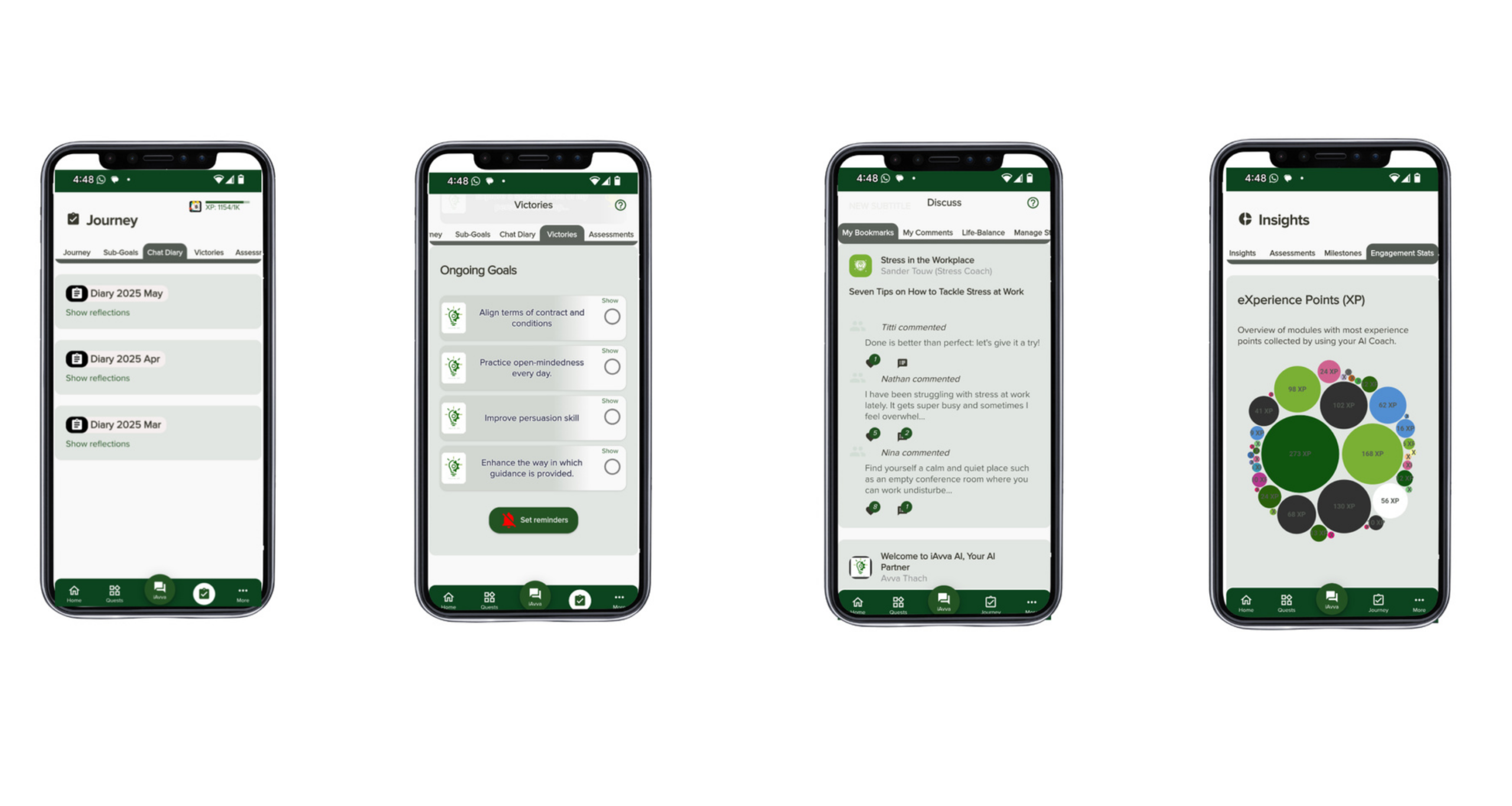
At iAvva AI, we see this tension every day. Leaders want measurable impact, not just cool demos. That is why we combine practical AI education with our AI Coach App, which builds the daily focus, self-awareness, and habits needed for sustained change. Our approach ties personal growth and AI skills directly to business goals through OKRs, analytics, and daily micro-reflections.
“AI is the new electricity.”
— Andrew Ng
In this article, we walk through ten concrete benefits of running a focused AI workshop for employees that centers on GenAI, LLMs, and AI agents. We also share a practical Productivity Lab template that turns theory into working automations. By the end, it will be clear how an AI workshop can help build an AI-augmented workforce, reduce risk, and create a lasting edge for the organization.
Key Takeaways
- AI workshops close the gap between AI buzz and real business impact by giving employees shared language, hands-on practice, and clear guardrails. This moves teams from scattered experiments to a common, strategic approach.
- Structured training on generative AI, LLMs, and AI agents turns employees into active innovators who can design and refine their own automations. People stop asking what AI might do and start building workflows that matter for their roles.
- A Productivity Lab template creates a repeatable path from learning to real results. Employees identify tasks, build and test agents, share wins, and then refine and deploy what works into daily operations.
- A phased roadmap from Level 0 to Level 5 of AI integration helps leaders manage risk while scaling adoption. Each level adds clear capabilities without overwhelming the organization.
- Modern no-code and low-code tools allow non-technical staff in HR, finance, marketing, sales, and operations to build agents in minutes instead of weeks. This spreads innovation across the company.
- Organizations that invest in comprehensive AI training see gains in productivity, engagement, and talent attraction. Candidates increasingly look for employers who support AI skill-building and meaningful, less repetitive work.
- iAvva AI pairs AI strategy training with an AI coaching platform that drives over 60 percent weekly engagement. Our analytics connect individual growth, AI usage, and business outcomes in a way executives can track and act on.
1. Clarifying AI Technologies: Building Foundational Knowledge Across Your Organization

The first big win from an AI workshop is simple to state and hard to fake. People across the company gain a shared, grounded understanding of what AI is and what it is not. Without that base, leaders make poor bets, employees resist change, and vendors can overpromise without being challenged.
During a well-designed AI Workshop For Employees: GenAI + LLMs + Agents (With A Productivity Lab Template), we walk through the main building blocks in plain language:
- Generative AI: tools that create new text, images, audio, code, and more.
- Large Language Models (LLMs): engines that read and write text at scale.
- Foundation models: large neural networks behind many of these systems.
- AI agents: the “doers” that use these models plus tools, data, and rules to complete multi-step tasks.
When non-technical staff understand these ideas, the whole company makes better choices. A sales manager can ask the right questions about an AI-driven lead scoring tool. A finance leader can see where an agent might safely automate reconciliations and where human review is still needed. AI literacy becomes a base skill, not a niche topic for engineers.
At iAvva AI, we design training so that even complex topics like the ReAct framework or model hallucinations feel concrete and practical. We use real-world examples from HR, finance, operations, and leadership, paired with short reflection prompts drawn from our AI Coach App. This mix helps people connect concepts to their own work and remember them long after the workshop ends.
Why Traditional On-The-Job Learning Falls Short For AI
Many teams hope people will “figure out AI as they go” through online videos, blogs, or quick internal demos. That kind of self-directed learning can be helpful, but it usually leads to:
- Patchy understanding: everyone follows different sources and ends up speaking different “AI dialects.”
- Shallow skills: people know a few prompt tricks but lack a mental model of how agents and data fit together.
- Hidden risk: staff use tools that are not approved or paste sensitive data into public interfaces.
This scattered approach also ages fast. AI capabilities move quickly, so tutorials from six months ago may already be outdated. Without guidance, employees pick up habits that do not match company risk policies. They may also copy prompts that work for one context but fail badly in another.
AI technologies stack many concepts together. To use an agent safely, someone needs at least a light sense of how LLMs, external tools, data sources, and guardrails fit. That is hard to pick up from random content. The cost of gaps shows up later as wrong decisions, biased results, security issues, or failed pilots.
A workshop, in contrast, gives curated, up-to-date content that links directly to business goals. People learn in cohorts, ask questions in real time, and hear how colleagues in other functions are thinking. Research across learning programs shows that structured training like this leads to much higher success rates for new technologies compared with “learning by wandering around” on the internet.
From Understanding To Application: The Knowledge-Action Bridge
Knowledge alone does not change how work gets done. Employees need a bridge from “I get the concept” to “I changed this process next week.” We design that bridge by teaching simple patterns like the reasoning and acting approach used in many AI agents.
For example, when an employee learns that an AI agent can break a goal into steps, call tools, and loop through feedback, they start to see processes differently. An HR specialist might think through resume screening in stages. The agent could:
- Read resumes.
- Score them against a role profile.
- Flag edge cases for human review.
- Draft follow-up messages.
That shift from a vague idea to a clear sequence is where value appears.
Understanding AI limits also matters. When people see examples of hallucinations or flawed reasoning, they become better designers of human-in-the-loop checks. They stop expecting magic and start planning where human review must stay in the flow. This reduces risk and builds trust.
iAvva AI blends this technical learning with neuroscience-based coaching. Our AI Coach App prompts help people reflect on what they learned, where they feel nervous, and which small experiment they want to run next. Organizations that combine education with this kind of reflection often see a sharp rise in identified automation ideas. Internal studies and external benchmarks point to around 30–35 percent more spotted opportunities once staff have both knowledge and confidence.
2. Accelerating Productivity Through Hands-On AI Agent Building

The second major benefit of an AI workshop is direct productivity gain. Once employees see that they can build AI agents themselves, using no-code and low-code tools, their relationship with work changes. They stop thinking of AI as something “IT will sort out one day” and start treating it as a daily assistant.
Forecasts suggest that up to half of work activities could be automated by around 2060, and a large share of that is white-collar knowledge work. The good news is that companies do not have to wait decades to see impact. Many manual tasks can be automated or assisted right now, including:
- Reading and summarizing long documents.
- Drafting first versions of emails, reports, and presentations.
- Summarizing calls and meetings into action lists.
- Moving data between systems and cleaning simple datasets.
- Producing basic analysis and visualizations.
Modern agent-building platforms let a non-technical employee design a working agent in as little as fifteen to sixty minutes. Instead of filing a ticket and waiting weeks for a developer, a marketing coordinator can build an agent that compiles weekly campaign metrics. A support leader can set up an agent that turns emails into structured tickets, routes them, and drafts first replies.
When each person automates even a few hours of repetitive work per week, the math compounds. Teams spend more time on decisions, relationships, and creative problems, and less on cutting and pasting information. iAvva AI clients frequently report noticeable boosts in focus and productivity after pairing workshops with our coaching prompts, which help employees plan and stick to new AI habits.
The Productivity Lab Framework: Theory To Practice In Hours
The Productivity Lab is where theory turns into changed behavior. Instead of leaving employees with slides and good intentions, we guide them through a four-phase process they can repeat again and again.
Identify opportunities
Each participant lists boring, error-prone, or slow tasks in their weekly work and estimates:- Time spent.
- Risk level.
- Frequency.
This simple step often surfaces 5–12 candidate workflows per person, from report formatting to candidate screening.
Build and test
Using a no-code tool, each participant designs at least one basic agent. For example, a project manager might build an agent that reads meeting notes and generates task lists. They run tests with sample data, refine prompts, and add simple guardrails. Because the platform handles the technical side, the focus stays on process and outcome.Share and collaborate
Small groups present their agents, explain what worked, and discuss limits. This sparks cross-pollination. Someone in finance might see how a marketing agent handles summaries and adapt the pattern for budget commentary.Refine and deploy
IT and leadership step in to review, approve, and move selected agents into production. The same template works for small teams and large enterprises. With iAvva AI, we then connect these new workflows to OKRs and dashboards so leaders can see where agents are saving time and how that supports strategic goals.
Measuring Immediate Workshop ROI: Productivity Metrics That Matter
Executives want to know when an AI workshop pays for itself. Productivity gains from agent building can be measured in straightforward ways.
Key measures include:
- Time saved: hours freed per week per person.
- Error reduction: fewer mistakes in repetitive tasks like data entry.
- Speed of delivery: shorter turnaround times for reports, responses, and decisions.
- Engagement shifts: higher scores on surveys about workload and confidence with AI.
“What gets measured gets managed.”
— Peter Drucker
If an employee automates a task that took one hour per day, that is five hours returned each week per person. Multiply that across a team and the effect is substantial. When agents take over repetitive tasks, organizations also commonly see errors drop by 40–60 percent.
With a Productivity Lab format, most organizations see their first production-ready agents within two to four weeks after training, not months. iAvva AI adds another layer with our AI Coach App dashboards, which show weekly engagement with reflection prompts and tie personal productivity goals to business outcomes. When companies track these numbers over ninety days, double-digit percentage gains in output per person are common.
3. Bridging The Digital Skills Gap: Future-Proofing Your Workforce

A third core benefit is closing the AI skills gap that many boards now discuss in nearly every meeting. Surveys show that a large majority of CEOs list workforce skills as a top concern for the next few years. The demand for employees who can work with AI far exceeds the current supply.
Without a plan, this gap turns into a talent risk. High performers who are excited about AI may leave for employers who support learning, while those who stay may feel left behind. At the same time, roles and tasks are shifting. Requiring “five years of AI experience” on job posts makes little sense. Developing the people already inside the company is a more realistic and fair path.
AI workshops send a clear signal that the organization is serious about future readiness. Employees see that leaders want them to grow, not just to keep up with tools, but to shape how those tools are used. This sense of investment is one of the strongest predictors of retention, especially in technical and knowledge-intensive roles.
There is also an ethical side. As AI spreads into hiring, performance assessment, and customer interactions, employees need a voice and a basic understanding of how these systems work. iAvva AI’s mission is to build AI-powered leadership and productivity in a way that respects people. Our coaching prompts and training content help leaders handle this shift with empathy and clear communication.
Designing Role-Specific AI Competency Frameworks
Generic AI training rarely lands well. Developers, senior executives, frontline managers, and individual contributors all need different levels of detail and different skill sets. A workshop works best when it is part of a broader role-based competency framework.
For example:
Executives
Focus on strategy, governance, and competitive positioning. They need:- Language to talk with boards and investors.
- A view of risk and regulation.
- A clear sense of how AI connects to revenue, cost, and culture.
Managers
Need to know how to guide teams in using AI:- Choosing which workflows to automate.
- Setting performance expectations for human-plus-agent teams.
- Reading dashboards that show agent impact.
- Coaching employees who may feel anxious about change.
Individual contributors
Benefit from hands-on practice:- Prompt design.
- Simple agent building.
- Workflow mapping.
- Tool selection and safe usage.
Technical teams
Go deeper into:- API integration.
- Model selection.
- Security configuration.
- Monitoring and observability.
Different departments also have their own patterns. Sales and marketing lean heavily on lead scoring, personalized content, and social monitoring. HR and L&D use AI for resume screening, skills assessment, and personalized learning paths. Operations and finance focus on process optimization and document handling. iAvva AI supports this variety with an AI Coach App that works in nineteen languages and offers text and voice modes that support different learning styles, including neurodivergent employees.
From Skills Gap To Skills Surplus: The Growth Path
Moving from a skills gap to what we might call a skills surplus does not happen overnight, but the timeline can be shorter than many leaders expect.
Weeks 1–4: “AI curious” to “AI capable”
Employees try prompts, test simple agents, and see a few hours of time savings.Months 2–3: “AI confident”
More employees can independently design straightforward automations, and peer teaching starts to happen inside teams. Leaders receive regular lists of new use cases from staff who once felt nervous about AI.Month 6 and beyond: “AI creative”
Certain teams start rethinking how work should flow:- Data analysts act like internal AI engineers.
- Marketers design and run content factories powered by agents.
- HR teams use AI to design fairer, more supportive processes.
Retention data often reflects this growth. Companies that invest in clear learning paths, tied to new career options such as AI champion or AI architect, see lower turnover in technical and knowledge roles. iAvva AI supports this longer arc with our “always-on” coaching style. Short daily reflections keep skills fresh and encourage employees to keep looking for new ways to apply what they learned in the workshop.
4. Enabling Cross-Functional Collaboration And Innovation

The fourth benefit of a structured AI workshop is the way it breaks down silos. Many AI opportunities sit at the seams between departments. A lead flows from marketing to sales to customer success. An employee moves from recruiting to onboarding to performance management. When each function optimizes its own slice without coordination, value is lost.
AI workshops that include people from different teams create a shared language around GenAI, LLMs, and agents. A sales leader can talk with a support manager about handoffs in a far more concrete way once both understand what an AI agent can do. This shared base makes it easier to spot cross-functional processes that could be automated or improved.
Collaboration during the workshop often uncovers use cases no single group would have found alone. Operations might not realize how much time sales spends on manual data entry. HR might not see how often managers in other functions rebuild similar reports. When these threads come together, teams can design agents that serve several groups at once.
iAvva AI reinforces this with team-based growth insights. Our platform lets HR and L&D leaders see engagement and progress by function, region, or cohort. That visibility helps them support cross-team learning and reward groups that drive collaborative AI projects instead of working in isolation.
Project-Based Learning: Building Cross-Functional AI Projects
Project-based learning is one of the most effective ways to build both skills and collaboration. In our AI workshops, we often form mixed cohorts that include people from sales, marketing, operations, finance, HR, and IT. Each cohort picks a real business problem that affects more than one team.
A common example is the full customer experience. A cohort might design an AI agent system where:
- Marketing uses one agent to capture and qualify leads.
- Sales uses another agent to prepare personalized briefs for meetings.
- Customer service uses a third agent to guide early onboarding and early support.
These agents pass structured data between them so that context is never lost.
Daily standups and working sessions keep the project moving. Team members share what they tried, where the agent struggled, and how they refined prompts or data sources. Peer review sessions help groups spot risks such as bias or bad data before anything moves to production.
By the end of the workshop, each cohort presents a working prototype and a simple business case. This deliverable shows leaders that AI is not just a concept. It is a tool their own people can use to address real issues. The process mirrors how our AI Coach App encourages structured reflection. Both approaches build habits of clarity, experimentation, and shared learning.
“None of us is as smart as all of us.”
— Ken Blanchard
Creating Communities Of Practice: Sustaining Innovation Post-Workshop
One of the biggest risks after a strong workshop is quiet fade-out. People feel excited for a few weeks, then daily pressures pull them back to old habits. To avoid this, organizations need light but steady structures that keep AI learning alive.
Effective patterns include:
AI champions across functions who:
- Join the workshop.
- Go a bit deeper on concepts.
- Act as local coaches and connectors.
Regular “AI show and tell” sessions
Once a month, a few employees share agents they built, what they learned, and what results they saw. These can be informal, hosted through tools like Slack or Teams, and recorded for later viewing.An internal knowledge hub
A simple space that stores agent templates, prompt examples, and short how-to notes gives everyone a place to start.Quarterly challenges
Teams submit their most helpful new agent. Executive sponsors attend these sessions and talk about AI in town halls to show that this work matters.
iAvva AI helps keep this culture going by giving leaders a clear line of sight from AI activities to business OKRs. When employees see that their experiments contribute to visible company goals, they are far more likely to keep building, sharing, and improving.
5. Reducing Operational Costs Through Strategic Automation
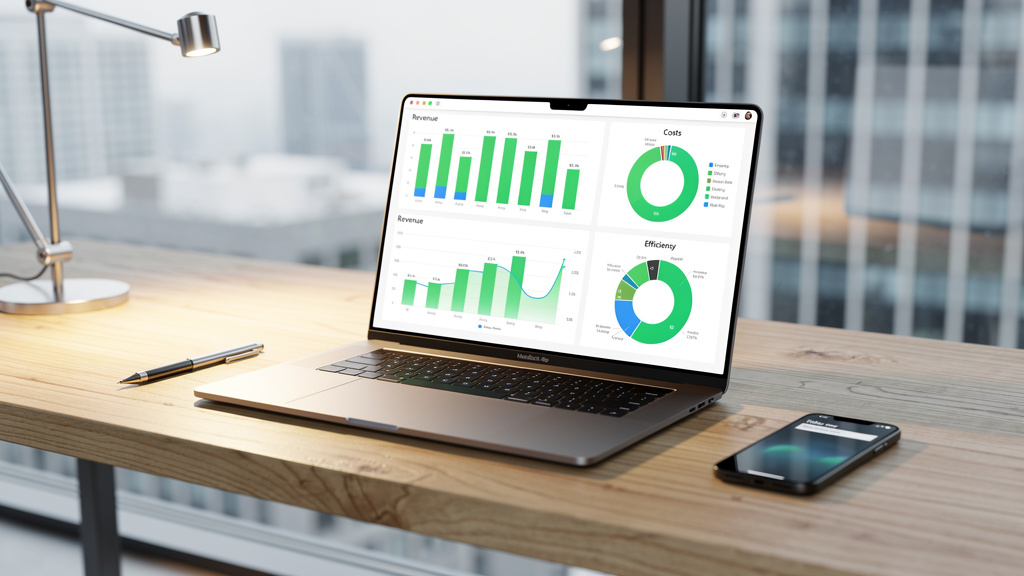
The fifth benefit centers on the numbers that matter most to finance and operations leaders. Well-designed AI agents reduce costs by taking on repeatable work at a far lower marginal cost than human labor. Done well, this does not mean cutting staff. Instead, it means using people for work that truly needs human judgment, empathy, and creativity.
Many cost drivers in a business hide inside manual processes. Think about:
- Customer service tickets that require copying information between systems.
- Finance staff who retype data from invoices.
- HR teams that sift through hundreds of resumes by hand.
Each small activity adds up across months and across hundreds or thousands of employees.
AI agents are especially strong in these structured, rules-based areas. Once an agent is built and tested, it can run as often as needed without overtime or fatigue. A support triage agent can route requests at midnight just as easily as at noon. A reconciliation agent can review thousands of lines of data faster than any human, flagging only the exceptions for review.
Workshops that include a Productivity Lab help teams spot and model these savings. Participants often leave with several candidate agents that could save hours per week per person. Over a full year, those hours translate into real money that can be redirected toward new projects, innovation, or employee development. iAvva AI ties this operational picture back to personal productivity, helping leaders track how staff use freed-up time.
Calculating Your AI Automation ROI: A Framework
To have a credible conversation with a CFO, it helps to walk through a clear, simple ROI method. At a basic level, we compare the cost of running workshops and building agents with the time and error savings those agents create over a defined period.
Calculate investment
- Workshop fees.
- Platform subscriptions.
- Internal time spent during training and early builds.
Estimate returns
For each agent, multiply:- Hours saved per week.
- Number of people using it.
- Average hourly cost.
Then add reductions in rework, customer credits, or other expenses when errors fall.
Project payback
For example, imagine fifty employees attend a two-day AI workshop that costs fifty thousand dollars all-in. After the workshop, each of them automates work equal to eight hours saved per week. That adds up to four hundred hours freed every week. If the average fully loaded hourly cost is fifty dollars, that is twenty thousand dollars in value each week, or more than one million dollars per year.
Even after adjusting for adoption rate, learning curve, and ramp-up time, the payback period is often three to six months. When organizations track these numbers in a dashboard, they can compare projected savings to actual results and fine-tune where to focus next. iAvva AI’s analytics help do something similar on the leadership and habit side by showing how often people engage in growth activities and how that correlates with their performance.
From Cost Center To Profit Center: The Strategic Reframe
Focusing only on cost savings can lead to a narrow view of AI. The deeper story is how automation frees capacity for revenue-driving work. When people spend less time on low-value tasks, they can spend more time with customers, on product improvements, or on strategic analysis.
Sales teams are a clear example. If an agent handles note-taking, CRM updates, and first-draft follow-ups, sales reps can spend more of their day in real conversations. This usually raises close rates and deal sizes. Marketing teams that use AI for content creation can run more tests in the same time, reaching new segments and improving return on ad spend.
Customer service teams that are not buried under basic tickets can focus on complex cases, proactive outreach, and customer education. That shift often improves retention and upsell rates. In this way, departments traditionally seen as cost centers start to contribute more visible revenue impact.
iAvva AI helps connect these dots. By aligning AI productivity gains with business OKRs in our platform, leaders can see how time saved in one part of the business supports outcomes elsewhere. Over time, organizations stop talking about AI just as an efficiency play and start seeing it as a core engine of growth.
6. Improving Decision-Making With Data-Driven AI Insights
The sixth benefit addresses a common pain point. Many organizations have more data than they can reasonably analyze. Spreadsheets, dashboards, reports, and logs pile up, but decision-makers still feel like they are guessing. AI can act as an intelligence layer that turns this raw information into clear, timely insights.
LLMs can read and summarize long documents, compare data from multiple sources, and present findings in natural language. AI agents can go further by pulling data from databases, CRMs, and external feeds, then packaging it into concise summaries and recommendations for specific roles.
When employees at all levels can ask data-driven questions in plain language, the quality of everyday decisions improves. For example:
- A regional manager can ask for key trends in last quarter’s performance for her area.
- An HR leader can get a breakdown of engagement scores by role and tenure.
- A product manager can see which features customers mention most in feedback.
These insights arrive in minutes instead of days.
Workshops that include hands-on time with decision-support agents help people trust and use these tools. They see how AI comes to its suggestions, where human judgment still matters, and how to ask better questions. iAvva AI pushes this further by using AI insight for self-reflection. Leaders can see patterns in their own behavior and decisions, building a habit of thoughtful review rather than purely reactive action.
Building Decision-Support AI Agents: Workshop Applications
During an AI workshop, we often guide teams to build simple decision-support agents that mirror real choices they face weekly. These agents follow a straightforward pattern: bring data in, analyze it, generate insights, and present a recommendation with context for a human to review.
Examples include:
Sales opportunity scoring agent
Pulls in past deal history, current pipeline data, and customer engagement signals. It then scores open opportunities, explains why certain deals look promising, and suggests where reps should spend their time first.Marketing campaign performance agent
Compares click-through rates, conversion rates, and cost per lead across channels. It points out what is working, what is lagging, and where budget shifts might pay off.Operations bottleneck agent
Highlights delays in order processing or logistics by looking at cycle times across steps and suggesting where to add capacity or automation.Finance variance analysis agent
Looks at budgets, actuals, and trends, then flags unusual changes and offers plain-language explanations.HR retention risk agent
Combines engagement scores, manager feedback, and tenure to highlight groups that might need attention.
In each case, the agent does the heavy lifting but does not make the final call. Humans use the insights as input and bring context, ethics, and long-term thinking. That balance is a key principle in our workshops and in how we design decision-support dashboards in the iAvva AI platform.
From Reactive To Predictive: The Decision-Making Evolution
Many organizations operate in a mainly reactive mode. They respond to churn after customers leave, rush to fix inventory gaps after stockouts, or scramble when a key employee resigns. AI can help shift this pattern from after-the-fact response to earlier warning and preparation.
Predictive agents look for patterns in historical data and current signals. For example:
- A churn model notices usage patterns that often appear three months before cancellation.
- A forecasting agent highlights products that tend to sell out during specific seasons or events.
- An HR agent flags a cluster of low engagement scores in a team that has just experienced a leadership change.
When leaders receive these alerts with clear explanations, they can act sooner. They might reach out to at-risk customers, adjust inventory, or run pulse surveys with teams. The speed of action increases, but so does confidence, because decisions are grounded in data rather than pure instinct.
“The future is already here — it’s just not evenly distributed.”
— William Gibson
Over time, this predictive mindset changes culture. Teams start asking “What are we likely to see next quarter, and how can we prepare?” instead of “How do we fix what just went wrong?” iAvva AI supports a similar shift at the personal level. Our coaching prompts ask leaders to think ahead, consider patterns in their own actions, and choose intentional responses instead of automatic ones.
7. Mitigating AI Implementation Risks Through Proper Training
The seventh benefit speaks directly to board and regulator concerns. AI brings not only opportunity but also real risk. Algorithmic bias, data privacy breaches, intellectual property challenges, and security gaps can damage trust, brand, and finances. Poorly understood AI use can also lead to faulty decisions and legal exposure.
Untrained employees, even with good intentions, can make serious mistakes. They might:
- Upload confidential customer data into public tools.
- Rely on incorrect AI outputs without checking.
- Use generative models to create content that infringes on someone else’s rights.
When AI adoption grows without guidance, these risks multiply.
Formal AI training acts as a form of risk management. Employees learn where AI is strong and where it is weak, how to check outputs, and when to ask for help. They also see examples of bias and harm that can arise if AI is left unchecked, which builds a healthy level of caution.
iAvva AI takes this seriously. Our content and AI Coach App are designed with data protection, fairness, and well-being in mind. We comply with GDPR, encrypt data, and design prompts based on ethics-focused coaching standards. When we support an AI Workshop For Employees: GenAI + LLMs + Agents (With A Productivity Lab Template), governance is not an afterthought. It is one of the core modules.
Building An AI Governance Framework: Workshop Essential
A strong governance framework gives employees clear rules, reduces confusion, and helps leaders show they are acting responsibly. During workshops, we guide organizations in drafting and refining this framework so it fits their context.
Key components include:
AI policy
Explains which kinds of use are allowed, which are banned, and which need approval. Describes how data should be handled, which tools are approved, and what employees should do if they see a problem.Risk assessment practices
Before deploying an agent, teams ask structured questions:- What data will it use?
- Who might be affected by its errors?
- Could it introduce bias or treat some groups unfairly?
Human oversight rules
High-stakes decisions in areas like hiring, lending, or medical advice should always include human judgment. Workshops cover how to build checkpoints into workflows, document reviews, and respond when agents make visible mistakes.Compliance mapping and incident response
Organizations link AI use to regulations such as GDPR or SOC 2, and they design steps for handling issues when they arise.
We also encourage naming AI champions who act as internal guides and watchdogs. iAvva AI’s enterprise capabilities, including single sign-on, role-based access, and detailed audit logs, support these frameworks in practice.
Testing, Validation, And Quality Assurance: Essential Skills
Even the best-designed agent can fail if it is not tested thoroughly. That is why we treat testing and quality assurance as core skills in AI workshops, not as optional extras for technical teams.
Participants learn to:
- Run agents through simulation scenarios before going live, including typical cases, edge cases, and intentionally challenging inputs.
- Compare outputs from different models to find the best balance of quality, cost, and speed.
- Check for bias patterns in outputs that might disadvantage certain groups.
- Track performance metrics such as accuracy, response time, and cost per run across many tests.
- Use version control so teams can roll back or compare behavior over time.
Finally, we stress the importance of human validation. Even when an agent passes tests, staff need to know when and how to review its work in live settings. Over time, as confidence grows, some checks can be relaxed, but thoughtful oversight should never vanish. iAvva AI mirrors this through continuous improvement loops in our coaching platform, where reflection and adjustment are seen as everyday practices, not one-time events.
8. Scaling AI Adoption Through Phased Deployment Strategies
The eighth benefit is about scale. Many organizations manage a few promising pilots but struggle to spread AI across functions. Without a clear roadmap, efforts become scattered. Some teams rush ahead, others hold back, and executives find it hard to track progress.
A phased model for AI adoption gives everyone a shared map. Instead of trying to leap from no automation to full autonomy, organizations move level by level. Each level adds new capabilities while building on the last, reducing risk and confusion.
Workshops play a vital role in the early stages of this progression. They equip employees with the skills and confidence needed for the first two levels, which involve personal productivity and simple process automation. From there, companies can decide how fast and how far to move.
iAvva AI’s own approach to leadership development mirrors this gradual scale-up. Our AI Coach App builds habits through five-minute reflections, not heavy, one-time courses. In the same way, we encourage organizations to think of AI integration as a steady, guided climb rather than a sudden leap.
The 6 Levels Of AI Integration: Your Deployment Roadmap
A simple six-level model helps describe where you are and where you want to go:
Level 0 – Minimal awareness
Little or no deliberate AI use. Any AI present hides inside vendor products without much awareness. First step: audit current tools and identify where AI is already in play. This baseline assessment often takes one to two weeks.Level 1 – Foundational augmentation
Employees actively use accessible tools such as AI notetakers, writing assistants, and basic analytics. A company-wide workshop on generative AI, prompt craft, and productivity tricks often triggers this shift. Over one to three months, the goal is to have most employees using at least one AI tool weekly.Level 2 – Process automation
Employees build and run custom agents that handle specific multi-step workflows within a department. Productivity Lab sessions sit at the heart of this stage. Over two to four months after the workshop, organizations aim to have several production agents running and measurable time savings in defined processes.Level 3 – Functional integration
AI becomes woven into core operations across sales, marketing, customer service, HR, and finance. This stage often arrives six to twelve months after the first workshop. More advanced training helps teams connect agents to systems such as CRMs and ERPs. Roles start to change as AI-supported work becomes the norm.Level 4 – Cross-functional orchestration
Agents coordinate across departments, handling tasks that span several teams. For example, an AI system may manage a customer from first touch through renewal, triggering work in marketing, sales, delivery, and support. Achieving this stage usually takes twelve to twenty-four months and requires clear governance and technical architecture.Level 5 – High autonomy in selected areas
AI agents manage certain functions with minimal human intervention, within legal and ethical rules. Humans set strategy, monitor outcomes, and adjust guardrails, but day-to-day operations in those areas run through agents.
The value of this model is that it gives leaders a shared way to describe where they are and where they aim to go.
Customizing The Roadmap: Industry And Organizational Factors
No two organizations will move through these levels at the same pace. Factors that shape the path include:
Regulation
Highly regulated sectors such as healthcare and finance may need more time at each level because of compliance reviews and documentation requirements.Size and structure
Smaller and mid-sized businesses often advance quickly because they have fewer legacy systems and approval layers. Larger enterprises may need more planning but can benefit from deeper resources and dedicated AI teams.Culture
Companies with a history of experimentation and learning from failure usually adopt AI more smoothly. Those with more cautious cultures may need extra change management support and more visible executive sponsorship.Technical maturity
Organizations that have already invested in clean data, modern systems, and cloud platforms are better positioned to plug in AI agents. Those still relying on manual or outdated setups may need foundational upgrades first.
iAvva AI offers consulting support to help map these factors and create a realistic plan. In many cases, organizations can reach Level 3 in twelve to eighteen months with the right mix of workshops, coaching, and focused projects. The key is patience paired with steady progress, not a rush that burns out teams or a delay that lets competitors pull too far ahead.
9. Attracting And Retaining Top Talent With An AI-Forward Culture
The ninth benefit speaks directly to talent leaders. The market for skilled employees is tight, and people with AI skills or strong learning capacity have many choices. Organizations that signal an AI-forward culture stand out in that competition.
Job seekers increasingly ask how employers use AI and what training they provide. When candidates hear that a company runs serious AI workshops and supports daily learning, their interest rises. They see a place where their skills will grow rather than fade. This is especially true for younger workers who have grown up with technology and expect modern tools at work.
AI also connects to the desire for meaningful work. Studies show that many employees care more about the importance of their daily tasks than about headline brand names. When AI takes on boring, repetitive work, people spend more time on tasks that feel valuable and creative. That shift boosts engagement and retention.
iAvva AI strengthens this effect by linking AI learning and leadership growth. Our AI Coach App helps employees reflect on how they use their time, what matters to them, and how they can influence results. When combined with an AI Workshop For Employees: GenAI + LLMs + Agents (With A Productivity Lab Template), this creates both skill growth and a sense of personal progress.
Marketing Your AI Workshop Program For Talent Acquisition
To gain full recruiting value from AI investments, employers need to talk about them clearly in the market. Tactics that work well include:
- Mentioning structured AI training and tools in job descriptions.
- Highlighting case stories on career pages where employees changed their roles through AI-enabled projects.
- Stressing that staff spend most of their time on thinking, design, and relationships, rather than data entry and paperwork.
- Encouraging interviewers to share workshop experiences and simple examples of agents that teams have built.
Recruitment campaigns can also feature short videos or posts from employees who attended workshops. Hearing a peer explain how AI training helped them feel more confident, cut down on late-night work, or free time for strategy carries more weight than generic employer branding lines.
Some organizations host public “AI lunch and learn” sessions or partner with universities to offer mini-workshops to students. These actions show that the company is serious about AI learning at all levels. iAvva AI’s multilingual support in nineteen languages means these messages and programs can reach candidates across regions while keeping a consistent core story.
Retention Through Continuous Learning: Post-Workshop Pathways
A single workshop can light a spark, but sustained retention gains come from a longer learning path. Employees want to see that there is a future for them inside the company as AI spreads. That future may include new roles, deeper skills, and more autonomy.
Patterns that support this include:
A ladder of AI learning
People start with a foundation workshop, then move into more advanced modules or certification tracks. Someone might grow from “Agent Builder” to “AI Architect” to “AI Strategist” over several years, with each step opening new responsibilities and rewards.Protected time for experimentation
When employees know they have a few hours each month to work on AI ideas, they are more likely to stay curious and engaged.Internal AI showcases or conferences
Give employees a stage to present what they have done and learn from peers.External learning support
Stipends for courses or conferences send a strong signal of commitment.
Crucially, career frameworks need to reflect these new capabilities so that AI work leads to visible advancement. Titles and compensation bands should include paths for AI champions, product owners, and change leaders.
The iAvva AI Coach App fits neatly into this model as a daily partner. Our five-minute reflections reinforce the habit of learning something, trying something, and then reviewing what happened. Organizations that combine workshops, ongoing learning paths, and daily coaching often see retention rates 15–25 percent higher than peers that treat training as a one-off event.
10. Positioning Your Organization For Long-Term Competitive Advantage
The tenth benefit brings all the others together into a strategic picture. AI capability is shifting from a nice extra into a base requirement for long-term success. Companies that build strong AI practices early can widen the gap with slower rivals year after year.
Early adopters collect several forms of advantage. They:
- Build libraries of tested agents that handle key workflows.
- Develop internal talent who understand both the business and the technology.
- Gather more and better data about operations, customers, and employees, which then feeds back into smarter AI systems.
This creates what many call an innovation flywheel. Better tools allow teams to move faster and test more ideas. Those experiments generate data and insight. That, in turn, guides the next round of improvements. Competitors that stay at low levels of AI use find it harder and harder to match that pace.
An AI Workshop For Employees: GenAI + LLMs + Agents (With A Productivity Lab Template) is a practical starting point for this flywheel. It plants AI skills and habits across the organization rather than locking them away in a small specialist group. When paired with a platform like iAvva AI’s coaching app and analytics, leaders can monitor progress and guide the next steps.
Looking ahead, the role of AI agents will only expand. Agents that can read, write, see, and act will connect with physical systems and new channels. The organizations that did the groundwork early will be better placed to decide where to use high autonomy, where to keep humans in control, and how to communicate those choices to stakeholders. Workshops and coaching do not just build tools; they build the leadership capacity required to steer through these changes.
Conclusion
Across all ten benefits, a clear pattern appears. AI workshops are not about teaching a few clever prompts or running a flashy demo. They are about building the mindsets, skills, and guardrails needed for an AI-augmented workforce that can perform better, move faster, and stay safer.
By clearly explaining GenAI, LLMs, and agents, employees gain shared language and confidence. Through the Productivity Lab, they apply that knowledge to real workflows, building agents that save time and reduce errors. Phased deployment strategies help the organization scale these wins without losing control, while governance and testing practices keep risk in check.
On the human side, AI workshops support talent goals by offering meaningful work, clear learning paths, and visible investment in people’s futures. When combined with the iAvva AI Coach App, daily reflection and leadership growth become part of the same story as AI adoption. Our platform links individual habits, AI usage, and business outcomes through analytics and OKR alignment, giving leaders a live view of progress.
The window for easy advantage will not stay open forever. As more companies move beyond experiments, the bar for “normal” AI capability will rise. Starting now with a focused AI Workshop For Employees: GenAI + LLMs + Agents (With A Productivity Lab Template) is a practical way to step ahead rather than catch up later. With the right design and the right partner, AI training can become a lasting source of strength for the entire organization.
FAQs
What is an AI workshop for employees focused on GenAI, LLMs, and agents?
An AI workshop for employees is a structured training program that explains how generative AI, Large Language Models (LLMs), and AI agents work and how they apply to real business tasks. Participants learn basic concepts, see demonstrations, and then build their own simple agents for everyday workflows. The workshop described here also includes a Productivity Lab, where employees identify tasks, build prototypes, and test them in a guided setting. The aim is to move quickly from theory to working tools that save time and reduce errors.
Who should attend an AI workshop in our organization?
Ideally, the workshop includes a mix of roles and levels. Senior leaders gain language for strategy and governance, managers learn how to guide AI use in their teams, and individual contributors get hands-on practice building agents. Including people from different functions such as sales, marketing, HR, finance, operations, and IT helps uncover cross-functional use cases. Starting with a core group and then expanding in waves often works best.
How long does it take to see real business impact from an AI workshop?
Most organizations see early wins within a few weeks. During the workshop, employees usually design at least one working agent, and many of those can move into limited production quickly. As teams refine agents and build new ones, time savings and error reductions grow over the next two to three months. With a clear roadmap and support from leaders, many companies reach noticeable productivity gains and better decision-making within the first quarter after training.
How do we handle data privacy and security when employees start using AI tools?
Data privacy and security need to be part of the workshop, not a side topic. Employees should learn which data can be shared with which tools, how to avoid exposing sensitive information, and how to use approved platforms that meet standards such as GDPR and SOC 2. Enterprise platforms and agents should support features like single sign-on, role-based permissions, and detailed logging of activity. iAvva AI, for example, is built with encrypted data handling and clear privacy rules, so organizations can build AI-driven habits while staying within their risk appetite.
What makes iAvva AI different from other training or L&D providers in this area?
iAvva AI combines two elements that are often separated. We help organizations design and deliver AI workshops that cover GenAI, LLMs, and agents in a very practical way, and we also provide an AI Coach App that supports daily leadership and productivity growth. Our prompts draw on neuroscience, positive psychology, and ICF coaching principles, and are available in nineteen languages with both voice and text modes. Real-time analytics connect engagement and growth to business OKRs, and our clients typically see over 60 percent weekly use of the app, which suggests that the habits built in the workshop carry into daily work.
Can small and mid-sized businesses afford to run an AI workshop with a Productivity Lab?
Yes, and for many SMBs the case is especially strong. Because AI agents can save several hours per week per person, the return on investment can be significant even with a modest headcount. Workshops can be sized to fit smaller teams, and no-code tools mean that companies do not need large development groups to start. When combined with a focused rollout plan and light ongoing support from a partner like iAvva AI, SMBs often gain the agility to move faster than larger competitors while keeping costs under control.












Leave a Reply