
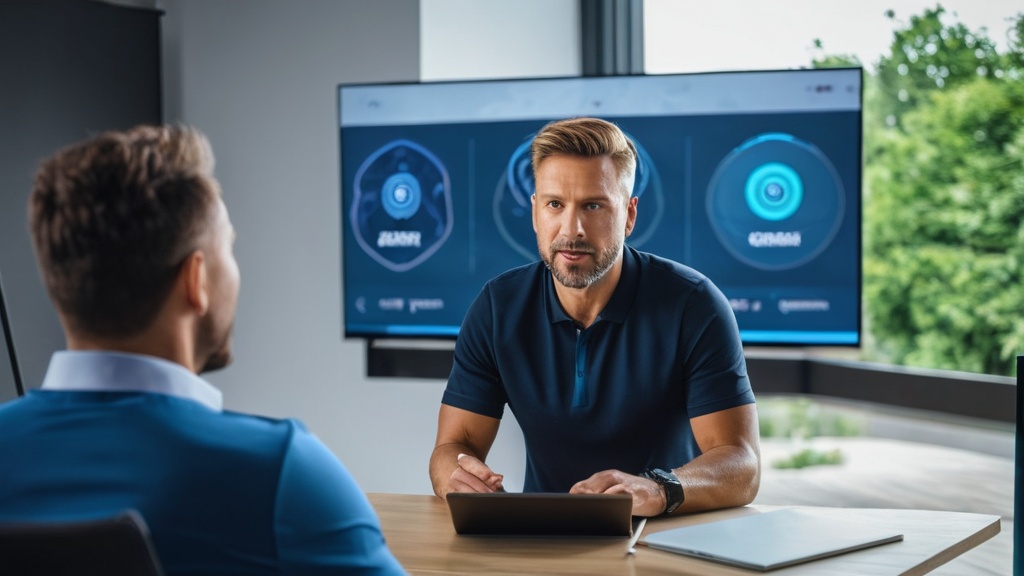


AI Coach For Performance With Intelligent Coaching
Introduction
Seventy percent or more of companies say they have a leadership gap, yet only a small slice can give real coaching to more than a few senior leaders. Budgets are tight, calendars are full, and human coaches can only meet with so many people. An AI coach changes that equation by making high‑quality coaching available to anyone, at any level, every single day, with platforms like BetterUp: Powering performance-ready workforces demonstrating how scalable coaching transforms organizational capability.
When we talk with HR leaders and executives, the pattern is clear. Everyone feels the pressure to modernize, build AI skills, and grow leaders faster, but traditional workshops and one‑off programs do not stick. People return from a training day, feel inspired for a week, and then fall back into old habits. The core question is simple yet tough: how can we give thousands of people personalized coaching without blowing up budgets or sacrificing quality?
This is where AI coaching steps in as more than a chatbot. A well‑designed AI coach combines neuroscience, positive psychology, and ICF coaching principles with advanced conversational AI. Instead of just giving answers, it asks focused questions, guides self‑reflection, nudges daily action, and connects personal growth to real business goals. It works in short, five‑minute bursts that fit into busy days, yet it builds deep, lasting habits over time.
“What got you here won’t get you there.” — Marshall Goldsmith
With iAvva AI, we built an AI coaching platform that does exactly this, across 19 languages and multiple devices, with real‑time analytics that connect behavior change to outcomes like OKRs, focus, and productivity. In this article, we share how an AI coach works, why it is different from generic AI tools, how to roll it out in an organization, and how to prove the return on investment. By the end, it will be clear how intelligent coaching can raise performance for every person, not just a chosen few.
Key Takeaways
An AI coach gives organizations a way to offer personalized coaching to thousands of people at a cost that can be as low as a few dollars per coaching cycle. Instead of paying for a handful of executive seats, leaders can support entire populations, turning coaching from a luxury into a standard part of work life.
Data from AI coaching programs show strong gains in confidence, readiness, and day‑to‑day performance, with Research: AI Can Provide career coaching but humans still matter demonstrating measurable improvements in professional development outcomes. Many users feel more prepared for new roles, more willing to take on stretch tasks, and more focused during the workday. Because every interaction is tracked, leaders see clear patterns in skill growth and engagement.
An AI coach is available at any time, across time zones, and on any device, which removes the usual scheduling hurdles that slow down coaching programs. Short, daily micro‑sessions build steady habits rather than one‑off insights that fade, which is especially valuable for global or remote teams.
The best results come from a hybrid model where an AI coach handles daily reflection, reminders, and practice while human coaches or mentors handle deep, complex topics. AI brings scale, consistency, and analytics. Humans bring empathy, context, and judgment. Together, they form a coaching system that is far stronger than either on its own, and iAvva AI is built around this idea.
What Is An AI Coach? Understanding The Foundation Of Intelligent Performance Development
When we say AI coach, we do not mean a generic chatbot that answers random questions. An AI coach is a purpose‑built coaching platform that combines conversational AI, machine learning, and proven coaching methods to guide people through real behavior change. It feels like a thoughtful partner that listens, asks powerful questions, and nudges the next small step.
Unlike general language tools, an AI coach is not focused on giving direct advice or long explanations. Its core job is to help people think for themselves by asking the right questions at the right moment. It prompts users to reflect on recent events, observe their own patterns, and commit to small actions they can take right away. Over time, this steady loop of reflection and action reshapes habits.
A strong AI coach is grounded in science. It draws from neuroscience to time prompts and structure micro‑learning, from positive psychology to spot and amplify strengths, and from solution‑focused coaching to keep attention on what can move forward now. It can follow the GROW model without calling it out by name, guiding users from their goal, through their current reality, into options, and then toward a clear way forward.
Personalization is at the heart of this type of platform. As people interact with the AI coach, the system learns their goals, context, role, and style. It adapts language, depth, and pace based on how someone responds, what they struggle with, and which habits they stick with. For global organizations, this also means speaking to people in their own language and in a way that fits their culture and neurotype.
Psychological safety matters as much as smart prompts. An AI coach offers a private, non‑judgmental space where people can be honest about fears, doubts, and mistakes without worrying about performance reviews. That sense of safety encourages deeper reflection than many formal meetings can reach. From there, the system turns insights into action by tracking goals, reminding users of commitments, and reinforcing small wins.
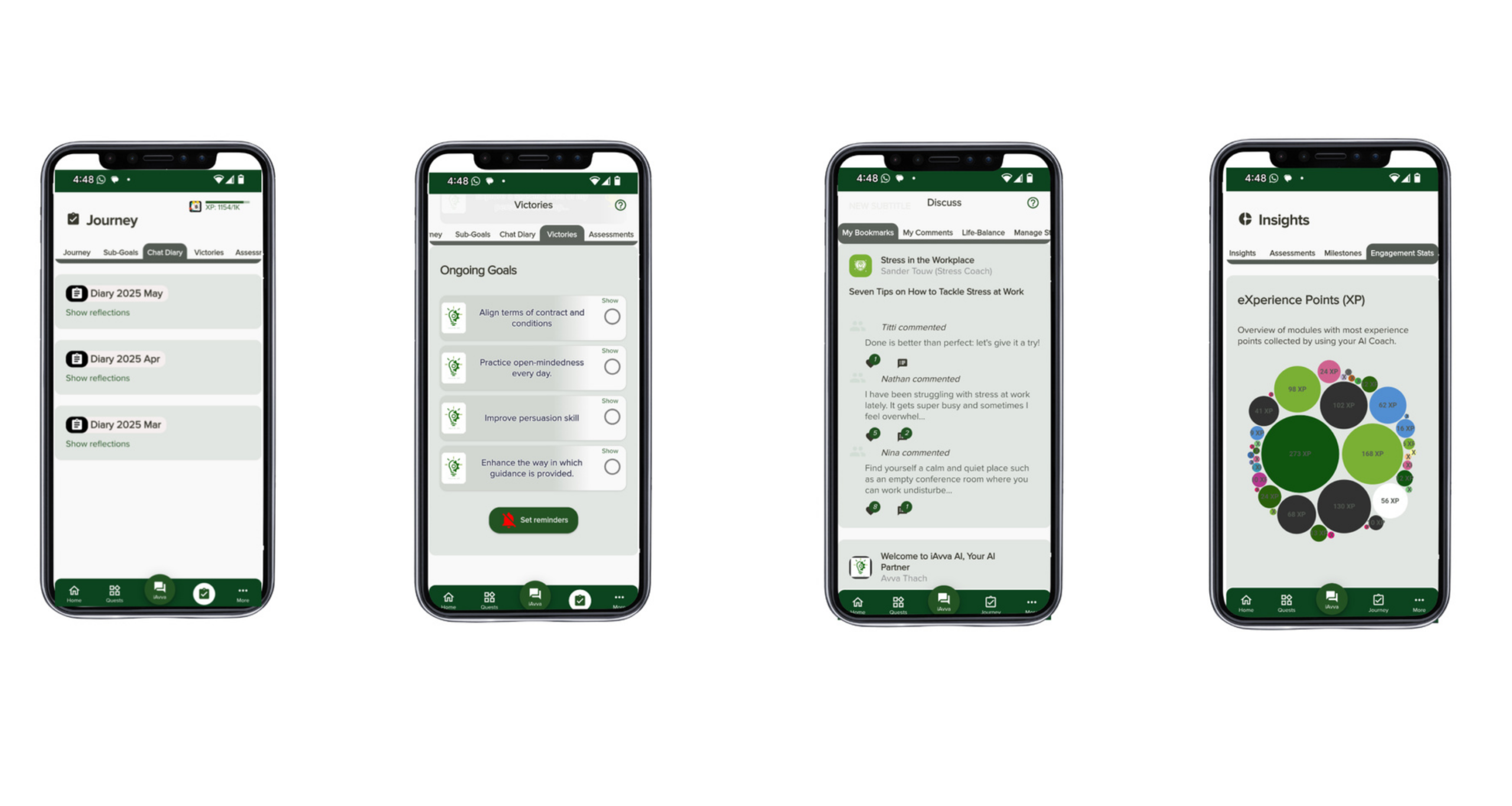
With iAvva AI, we built this always‑on growth companion for modern organizations, following principles outlined in Google’s AI coach overview that define how conversational AI supports meaningful performance development. Our AI coach runs on web, iOS, and Android, supports 19 languages, and includes audio and text modes that support neurodivergent users. It guides people toward daily leadership habits while feeding HR and L&D teams real‑time insight into how growth connects to business results.
How AI Coaching Works The Technology And Methodology Behind Growth
To understand how an AI coach changes behavior, it helps to look at the full coaching cycle. In iAvva AI, we use a simple loop: people start by looking at a recent event or question, reflect with guidance from the AI coach, choose a small action, and later come back to review the impact. This Analyze, Reflect, Enact, Impact cycle repeats in short, five‑minute sessions that fit easily into a busy day.
Conversational AI sits at the center of this process. The system uses natural language processing to understand what users say in either text or voice. It picks up on intent, emotion, and context so that follow‑up questions feel relevant instead of scripted. When someone writes about a conflict with a team member, for example, the AI coach does not reply with a generic tip but with questions tuned to that specific dynamic.
Machine learning powers personalization over time. The AI coach tracks which prompts land well, which topics recur, and which actions people actually complete. With each interaction, it adapts the level of challenge, the tone of language, and the types of resources it suggests. Someone who prefers direct, concise prompts receives a different style than someone who needs more context or reassurance.
Behind the scenes, human experts still play a key role. At iAvva AI, experienced coaches, psychologists, and leadership experts design and review the question sets, micro‑lessons, and reflection paths. The AI coach draws from this curated knowledge rather than roaming the entire internet. This mix of expert content and adaptive technology keeps guidance safe, practical, and aligned with coaching best practices and ICF principles.
Another important difference between an AI coach and simple bots is flexibility. Scripted chatbots follow fixed trees, so conversations feel narrow and repeatable. An AI coach responds based on meaning, not on exact keywords. It can loop back, pick up old goals, or link a new situation to a past reflection in a way that feels more like a thoughtful human partner than a menu.
Accessibility and inclusivity are built in. iAvva AI supports both text and voice reflection, slow or fast pacing, and clear, simple language. That matters for users who think better by speaking, for people with reading challenges, and for anyone working in a second language. All conversations are encrypted in transit and at rest, and the full system follows privacy‑by‑design and GDPR standards so that leaders can roll it out with confidence.
On the enterprise side, the same AI engine feeds an analytics layer. Aggregated data shows engagement patterns, skill focus areas, and progress toward goals and OKRs across teams or regions. Through APIs, widgets, and single sign‑on, iAvva AI connects with HRIS, LMS, and performance systems so that coaching does not sit on an island. It becomes part of the way work and growth happen every day.
The Core Benefits Of AI Coaching Why Organizations And Individuals Are Making The Switch
When we speak with HR directors, CLOs, CIOs, and business leaders, the reasons for moving to an AI coach fall into clear themes.
Scale: Traditional coaching is often reserved for a small executive circle. With AI coaching, that same style of guided reflection and accountability can reach thousands of people, from new managers to senior leaders, across regions and time zones.
Cost: A single in‑person coaching cycle can cost well over a thousand dollars per person, especially at senior levels. An AI coaching platform can offer hundreds of contact hours across a large group for a fraction of that spend.
Accessibility: Because an AI coach is always available, there is no need to wait for the next session or find a slot on a busy coach’s calendar. A manager can reflect right after a hard meeting, and a new hire can prepare for a one‑on‑one late at night.
Consistency in quality also improves. Human coaches vary in style, background, and skill. While variety has value, it can also mean uneven experiences. An AI coach delivers a common standard that still adapts to each person. It follows the same science‑backed frameworks and reflects the same organizational values everywhere, which keeps leadership messages aligned.
At an individual level, the benefit people feel most is personalization. The AI coach speaks to current goals, role, and context instead of pushing generic content. It adjusts difficulty and pacing, nudges people when they slow down, and celebrates their progress. Because iAvva AI links personal goals with business OKRs, people can see how their own growth supports team and company targets.
Data is the piece that changes the game for L&D teams. Traditional workshops are hard to measure. Surveys help, but they are shallow. An AI coach, by design, tracks user engagement, themes, and goal progress. iAvva AI’s dashboards show which skills are growing, where people get stuck, and how often they return to the practice. This insight supports smarter spending and better program design.
Engagement rates tell their own story. Compared with standard LMS courses, AI coaching platforms tend to see much higher weekly usage because sessions are short, interactive, and relevant. Our five‑minute reflection model fits into morning coffee, a commute, or a break between meetings. Over weeks, this rhythm builds habits without cutting into productive hours.
AI coaching also supports human coaches rather than competing with them. The AI coach handles daily check‑ins, simple questions, and practice prompts. Human coaches then use session time for deeper, high‑stakes conversations. In many settings, this hybrid model lets one coach support far more people, sometimes sixty times more, without burning out.
The final benefit is direct, measurable outcome change. Programs that combine AI coaching, habit science, and clear goals often report that over 80 percent of users feel more confident and more prepared for key tasks. Early iAvva AI users share gains in focus, self‑awareness, and productivity that show up in performance reviews and business metrics.
AI Coaching For Leadership Development Building The Next Generation Of Visionary Leaders
Leadership development is where an AI coach shines most clearly. Many organizations admit that their future leadership bench is too thin. High‑potential employees are eager, but they do not always receive the support they need to grow into complex roles. Classic programs rely on long workshops, thick slide decks, and rare feedback, which do not match the speed or pressure of modern work.
An AI coach gives rising and current leaders a private, daily space to think about how they show up. It prompts them to reflect on hard conversations, important decisions, and team dynamics right after they happen. Instead of waiting for a quarterly course, leaders get ongoing practice with skills like listening, empathy, conflict handling, and setting clear direction.
Key leadership abilities map very well to AI coaching:
- Emotional intelligence: pausing each day to consider how they felt, how others might have felt, and what they might do differently.
- Decision‑making: slowing down, sorting facts from stories, weighing options, and committing to a clear choice.
- Communication: rehearsing key messages and reviewing how they landed.
The “leader as coach” idea also fits perfectly. Managers often want to coach their teams but do not know how. An AI coach can model good coaching questions, show how to move from advice to inquiry, and offer simple prompts leaders can use in their own one‑to‑ones. Over time, this shifts culture from managers giving instructions to managers helping people think for themselves.
Practice is vital for harder skills like delegation, tough feedback, and influencing. Here, AI coaching platforms can run role‑play scenarios where leaders type or speak what they would say to a team member. The AI coach responds as the other person might, then gives feedback and alternate phrasing. Because the setting is private and low risk, leaders feel safer trying new approaches.
Stress and resilience are another major focus. Many leaders carry constant pressure and feel they have no safe place to process it. Daily micro‑coaching around stress signals, boundaries, and recovery helps them notice early warning signs before burnout sets in. When this work is grounded in neuroscience, as it is in iAvva AI, it supports the brain’s natural way of building new, healthier patterns.
From an organizational view, this approach supports culture change and succession planning at the same time. When thousands of leaders practice the same core habits each day, culture stops being a poster on the wall and starts being a lived behavior set. L&D and HR teams can see which leaders show strong reflection habits and follow‑through, giving them a clearer picture of who is ready for bigger roles.
iAvva AI includes leadership‑specific prompts and OKR alignment tools that keep this work close to real business priorities. Leaders do not just think about “being better”; they focus on specific goals, like raising engagement scores or improving cross‑team projects, and link their daily reflections to those outcomes.
Advancing Career Development And Job Readiness With AI Coaching
Career growth is no longer a straight ladder. People change roles, managers, and even fields far more often than in the past. At the same time, career services teams and internal HR groups are stretched thin. Advisor‑to‑employee or advisor‑to‑student ratios make it hard to offer deep, personal guidance. An AI coach helps close this gap by giving every person a private career guide in their pocket.
The first step is understanding where someone might want to go. AI coaching platforms can walk users through values, strengths, and interests, then connect those to roles and paths in the market. Instead of scrolling endless job boards, people get a clearer view of options that match who they are and what they are good at.
Once a direction is clearer, the AI coach can support the job search itself. It can review resumes for clarity and impact, pointing out vague language or missing results. It can guide people to adapt cover letters and profiles to each opportunity. It can help make sense of job postings, highlighting the skills that matter most and suggesting ways to show evidence of them.
Interview preparation is another area where AI coaching stands out. Users can run mock interviews where the AI coach asks common or role‑specific questions. After each answer, it can give feedback on structure, depth, and clarity, often drawing on methods like the STAR pattern without heavy jargon. Practicing in this way reduces anxiety and builds the calm, steady presence that interviewers notice.
Career development is not just about landing a job. It is also about building everyday professional skills. An AI coach can guide users on networking, managing time, setting boundaries, communicating with managers, and even negotiating pay. When someone faces a tricky email or a tense meeting, they can rehearse with the AI coach first, then walk in with more confidence.
For people in transition or considering a change of field, an AI coach can help map skills from one area to another. It can suggest upskilling paths, break learning into small steps, and hold users accountable to those steps. Inside companies, the same tools can support internal mobility by helping employees see paths across functions and prepare for those shifts.
Career services teams and workforce programs gain a powerful data layer from this work. They can see which skills are in demand, which topics come up most often, and which users are active. This insight helps them adjust workshops, choose partner employers, and report clear results like higher placement rates or shorter time to employment.
iAvva AI supports these use cases across 19 languages, which is vital for global workforces and international student populations. In programs that mix AI coaching with human guidance, we often see that around nine in ten users feel more ready for the job market and more confident about applying for roles.
Specialized Applications AI Coaching Across Industries And Functions
AI coaching is flexible by design. While the core engine is the same, the questions, prompts, and practice scenarios can reflect the daily reality of very different fields. With the right customization, an AI coach becomes a digital twin of an organization’s best practices, language, and standards. Here are some of the ways we see this play out in real sectors.
Sales Training And Performance Optimization
Sales work is part skill, part mindset, and part stamina. Reps need constant practice, yet managers rarely have time to run live role‑plays every day. An AI coach can step into that gap by acting as a practice partner for pitches, discovery calls, and objection handling. Reps can test new messages, see how they land, and get feedback on clarity and structure.
Beyond role‑play, the AI coach can guide reps to set daily and weekly intentions linked to their pipeline. It can prompt reflection after wins and losses so that learning is captured while events are fresh. Over time, this steady practice raises confidence during high‑pressure negotiations and reduces the mental swings that can come with quota pressure.
For leaders, sales‑focused analytics show patterns in skill focus, such as where teams need more help with discovery versus closing. Because iAvva AI connects coaching activity to goals, managers can see how consistent reflection links to metrics like conversion rates or deal size.
Education And Instructional Coaching
Teachers and trainers are under constant pressure to improve outcomes while managing crowded days. Traditional professional development often means being pulled from the classroom for generic sessions. An AI coach built for education flips this by giving each educator on‑demand support tied to their own practice, while research on AI-Powered Personal Fitness Coach applications shows similar personalized guidance principles apply across professional development contexts.
Teachers can upload or reflect on recent lessons, guided by prompts about student engagement, questions asked, or feedback given. The AI coach can highlight core teaching practices, suggest focus areas like checking for understanding, or direct attention toward reading or math approaches. Because the space is confidential, teachers can be honest about where they struggle.
This approach also supports instructional coaches. Instead of running every reflection themselves, they can rely on the AI coach to handle early cycles. Then they can use in‑person time for deeper analysis and planning. Schools that use this model often see better teaching quality, higher retention, and more satisfied educators.
Healthcare And Clinical Development
Healthcare teams face high stakes, strong emotions, and heavy workloads. Good communication and teamwork save lives, yet staff often lack structured time to reflect. An AI coach designed for clinical settings can prompt doctors, nurses, and other staff to think through patient conversations, handoffs, and team moments in a private, non‑judgmental space.
The coach can support practice with difficult news, empathy for patients and families, and calm communication in tense moments. It can also guide users through stress management, boundaries, and recovery planning to reduce burnout risk. Because confidentiality is vital in healthcare, strict privacy standards and data rules are central to any deployment.
Team‑level insights, drawn from anonymized data, help leaders see where more support is needed, such as around interdisciplinary collaboration or decision‑making in gray areas. With iAvva AI, we can tune prompts to match ethical frameworks and clinical guidelines that matter in each setting.
Technology And Engineering Teams
Technical teams often live in complex problem spaces and fast release cycles. Many engineers move into leadership without formal support on people skills. An AI coach helps them blend strong technical judgment with better communication and cross‑functional work. It prompts them to reflect on design decisions, trade‑off discussions, and feedback moments.
For example, during a sprint, a tech lead might use the AI coach to think through how they explained priorities or handled technical debt debates. The coach can suggest alternative ways to frame trade‑offs, align stakeholders, or break large tasks into steps. Over time, this raises both delivery quality and team cohesion.
Because engineers often prefer concise, direct language, the AI coach can match that style. iAvva AI also supports project‑level goals, so coaching sessions can connect directly to OKRs around reliability, throughput, or customer value.
Customer Success And Support
Customer‑facing roles ask people to balance empathy, product knowledge, and clear boundaries. When a client is frustrated or confused, the person on the front line needs both skill and emotional regulation. An AI coach can let reps rehearse hard calls, practice de‑escalation, and reflect on past conversations without fear of judgment.
The coach can help them notice patterns that trigger stress, such as certain phrases or tones from customers, and build scripts or habits that keep them calm. It can also support deeper understanding of the customer path, prompting reps to think about root causes and proactive steps, not just quick fixes.
For customer success leaders, aggregated coaching data highlights common pain points in the customer experience. This insight feeds product and process improvements, while individual growth shows up in metrics like satisfaction scores and retention. With iAvva AI’s customization features, all of this coaching can use the organization’s own terminology and case examples.
Across all these sectors, the ability to create a digital twin of organizational knowledge is key. We train the AI coach on each company’s best practices, frameworks, and language so that it feels familiar from day one. When combined with integrations into existing tools, AI coaching becomes part of daily work rather than another separate platform to check.
The Science Behind AI Coaching Neuroscience Psychology And Proven Methodologies
The power of an AI coach does not come only from smart algorithms. It also comes from the science behind how people learn, change habits, and grow. At iAvva AI, we ground our platform in neuroscience, positive psychology, solution‑focused coaching, and standards from the International Coach Federation.
From neuroscience, we know that the brain changes through repetition and focused attention, with studies on The Role of Artificial Intelligence in performance optimization demonstrating how AI-guided practice reinforces neural pathways for skill development. Short, regular coaching sessions are more effective than long, rare ones because they keep new patterns active in the brain. Each time someone reflects and then acts in a new way, they strengthen the neural pathways that support that behavior. This is why five‑minute daily micro‑coaching can have such a strong effect over months.
“Neurons that fire together wire together.” — Donald Hebb
Positive psychology adds another key piece. Instead of focusing only on gaps and problems, it encourages people to notice strengths, sources of meaning, and moments of progress. Models like PERMA‑V talk about positive emotion, engagement, relationships, meaning, accomplishment, and vitality as parts of a full life. An AI coach that asks about wins, values, and energy helps people build a stronger base, not just fix what feels difficult.
Solution‑focused coaching shifts attention from long problem stories to small, concrete steps forward. Rather than asking “Why is this so hard,” a solution‑focused AI coach asks “What has worked even a little, and how can we do more of that.” This keeps sessions practical and hopeful, which in turn supports action. It also respects the user as the expert in their own life and work.
Frameworks like the GROW model give structure to coaching conversations. Even when the AI coach does not label it out loud, it can move a session from Goal, to Reality, to Options, to Way forward. This keeps the user from getting stuck in vague talk and guides them toward clear actions and timelines. When repeated, this approach teaches people how to coach themselves.
Deeper coaching ideas sit one layer beyond behavior. These focus on beliefs and identity, not just actions. An AI coach can gently question limiting stories like “I am not a strategic person” by pointing to real examples where the user has already used strategic thinking. Over time, this helps people see themselves in a new light, which makes larger shifts possible.
Behavioral science research backs the idea of micro‑learning. Small chunks of information spaced over time are remembered far better than long lectures. When those chunks are tied to real situations the user cares about, retention and application rise even more. Our five‑minute design in iAvva AI is built around this finding.
Accountability and motivation rest on self‑determination theory, which says people are more driven when they feel autonomy, competence, and connection. An AI coach supports autonomy by letting users choose focus areas, supports competence by reflecting progress and building skills, and supports connection by speaking in a warm, human tone rather than a cold system voice.
Human oversight completes the picture. Our coaching experts curate and review the content and question flows that the AI coach uses. That way, we keep the system aligned with ICF ethics and coaching standards. This blend of science, human wisdom, and technology is what drives the high engagement and improvement numbers we see with iAvva AI users.
Personalization At Scale How AI Coaches Adapt To Individual Needs
One of the biggest questions leaders ask is how an AI coach can feel personal while serving thousands of people. The answer sits in how the system listens, learns, and adapts over time. Rather than pushing the same content to everyone, a good AI coach shapes each session based on what it already knows about the user.
When a new user joins iAvva AI, we start with simple prompts about goals, role, and current challenges. The AI coach then uses this input to shape the first wave of reflections. If someone names “leading remote teams” as a priority, for example, early sessions will focus on clarity, trust, and communication across distance. As the user adds more detail, the coaching path shifts with them.
Goal alignment is central. People can link their personal goals to team and organizational OKRs. The AI coach then nudges them to reflect not just on how they feel, but on how their actions support those shared targets. This helps employees see the line between their growth and business results, which often increases both commitment and clarity.
Different people learn in different ways. Some prefer to speak; others prefer to write. Some like direct, concise prompts; others appreciate more context and examples. iAvva AI supports both audio and text modes and adapts language style based on user responses. We also use clear, simple wording that supports users who think or process information differently, including many neurodivergent people.
Culture and language matter as well. Our platform works in 19 languages, and we continue to expand. This is not only about translation, but also about choosing examples and phrasing that feel natural in each setting. The aim is for the AI coach to sound like a thoughtful partner from the same world as the user, not like an outsider reading from a manual.
The resource engine behind the AI coach also personalizes what it shares. Instead of sending long articles at random, it selects short, relevant pieces that match the person’s current growth path and time budget. For someone working on feedback skills, that might mean a two‑minute tip that appears right after a reflection about a hard one‑to‑one.
Progress tracking closes the loop. The AI coach keeps a quiet record of themes, actions, and outcomes. When it notices that a user has met a goal or repeated a habit many times, it can raise the level of challenge or suggest new focus areas. At the same time, the user can always choose to shift direction, keeping a balance between guidance and control.
Behind the scenes, we map coaching content to clear competencies such as communication, decision‑making, or resilience. This allows organizations to see how individual sessions roll up into broader skill growth. It also means the AI coach can suggest prompts that support a specific competency plan for a role or level.
Because personalization makes AI coaching feel relevant, it drives engagement and completion rates far above those of static LMS courses. People return when they feel seen, heard, and helped in their exact context. That is the standard we design for at iAvva AI.
AI Coach vs Human Coach The Power Of The Hybrid Model
Many leaders ask whether an AI coach will replace human coaches. Our answer is clear: it should not, and it cannot. The best results come when AI and human coaching work together in a thoughtful system. Each brings strengths that the other cannot match.
AI coaching excels at scale, speed, and consistency. It is always present, never tired, and able to handle unlimited daily check‑ins. Human coaches excel at deep empathy, complex sense‑making, and advanced pattern spotting. When we pair them, AI handles volume and routine while humans focus on depth and nuance.
Here is a simple view of how they compare:
| Aspect | AI Coach Strengths | Human Coach Strengths |
|---|---|---|
| Availability | Always on, supports many people at once | Limited hours, supports fewer people at deep level |
| Consistency | Delivers the same high standard across users and regions | Style varies, can flex in creative ways |
| Data And Tracking | Logs every interaction and progress point automatically | Adds rich context and meaning to selected data |
| Practice And Repetition | Guides daily micro‑sessions and habit building | Focuses on key moments and breakthroughs |
| Emotional Depth | Offers warm tone and basic empathy patterns | Holds space for grief, trauma, complex identity topics |
| Cost And Access | Very low marginal cost per user at scale | Higher cost per person, better for targeted groups |
In a hybrid model, the AI coach handles the parts of coaching that need frequency. It nudges daily reflection, reminds users of their commitments, and offers practice scenarios for common challenges. Human coaches then use their time for the big issues, such as career inflection points, team crises, or major identity shifts.
This pairing also changes how coaching sessions start. Instead of spending half the time catching up, human coaches can review high‑level insights from the AI coach, with the user’s consent, and begin with a shared picture of themes and goals. That makes sessions sharper, more focused, and more rewarding for both sides.
From a business view, the hybrid model stretches budgets without cutting quality. A company can give every manager access to an AI coach while reserving human coaching time for high‑potential leaders or complex cases. Thanks to the AI layer, each human coach can serve far more people, sometimes up to sixty times more, while still doing meaningful work.
At iAvva AI, we design with human coaches in mind. Our tools help them see patterns, assign reflection prompts between sessions, and follow progress at a glance. Many coaches who partner with us say that they feel more effective and less drained because the AI coach shares the load.
Implementation And Integration Getting Started With AI Coaching In Your Organization
Rolling out an AI coach across an organization can feel like a big step, but with a clear plan it becomes a smooth, structured project. We usually see five main phases, from early planning through to scaling and continuous improvement.
Planning And Preparation Phase
The first task is to decide what success looks like. We work with leaders to define concrete goals, such as raising manager effectiveness scores, improving promotion readiness, or supporting a large change program. Clear success metrics make it easier to pick the right focus areas and to show impact later.
Next comes choosing who will start. Some organizations begin with a pilot group of managers, others with a function under high pressure such as sales or customer service. During this phase, we also map stakeholders across HR, L&D, IT, and business units, then agree on roles and communication lines. A realistic timeline for pilot and full roll‑out rounds out the plan.
Technical Integration
Once goals are set, we move into the technical side. iAvva AI can run as a standalone web and mobile app, but many clients prefer to connect it with their HRIS, LMS, and performance tools. This might mean using an API, adding an embedded widget, or linking through single sign‑on so that users can move in with their existing credentials.
Data security and privacy questions are also addressed here. Our team works with IT and security leaders to align on encryption standards, data flow diagrams, and access controls. Because iAvva AI is built with GDPR and enterprise security in mind, this step is usually about mapping to existing policies and documenting how the system fits into them.
Customization And Configuration
With the technical base in place, attention shifts to making the AI coach feel like part of the organization. This often starts with branding, such as logos, colors, and language tone, so that the experience matches other internal tools. We then work with internal experts to create a digital twin of key frameworks, values, and leadership models.
This may include loading specific content, such as leadership principles, competency models, and learning resources, into the platform. Admin dashboards and analytics views are set up so that HR and L&D teams can see the metrics that matter most to them. User permissions and data access levels are defined to protect privacy while still giving leaders useful insight.
Launch And Onboarding
A thoughtful launch makes a huge difference in adoption. We train administrators and internal champions first so that they feel confident answering questions and reading the analytics. For users, we provide simple in‑app tutorials, welcome sequences, and communication templates that explain what the AI coach is, why the company is offering it, and how to get started.
Many organizations choose a soft launch with a smaller group to gather quick feedback, followed by a broader roll‑out once any tweaks are made. Early adopters often become powerful advocates, sharing their own stories about how five‑minute reflections helped them handle real challenges. This kind of peer voice often matters more than any formal campaign.
Optimization And Scaling
After launch, the focus moves to learning and refinement. Engagement data shows which teams or regions are most active and where more support is needed. Surveys and focus groups add color, revealing what users love most and what they would like to see changed. Together, we adjust prompts, content, and communication strategies based on this input.
As confidence grows, organizations often extend AI coaching to new groups, new locations, or new use cases such as onboarding or change support. Regular content refresh cycles keep the experience fresh, while our product team continues to add features based on research and client feedback. Throughout, iAvva AI’s customer success team stays involved as a partner, not just a vendor.
Measuring Success Analytics ROI And Demonstrating Impact
For any AI coach project, data is not a nice‑to‑have; it is central. HR and L&D leaders need to show that coaching changes behavior and supports business results. That is why we built iAvva AI with a strong analytics engine that turns everyday coaching activity into clear, usable insight.
“If you can’t measure it, you can’t manage it.” — often attributed to Peter Drucker
Engagement Metrics The Foundation
We start with simple but vital questions. How many people are using the AI coach, how often, and for how long? Dashboards show daily and weekly active users, average session length, and the number of reflections completed. We also look at patterns across locations, teams, and roles to see where engagement is strongest.
Drop‑off analysis helps us understand where people might lose interest. If we see a slide after the second week, for example, we might adjust prompts, send targeted nudges, or add fresh content at that point. These metrics form the base of any ROI story because there is no impact without use.
Skill Development And Behavioral Change
Next, we track what people are actually working on and how their skills grow. Because each coaching session is linked to themes and competencies, we can see which areas, such as feedback, prioritization, or resilience, receive the most focus. Over time, we can show progression in self‑ratings and in the completion of related goals.
Users often report clear shifts in self‑awareness, calm under pressure, and focus. Some organizations also collect manager or peer feedback, which can be linked to coaching participation. When people who use the AI coach regularly receive better behavior scores, it builds a strong case for continued investment.
Business Impact Metrics
The most compelling stories connect AI coaching to core business indicators. These may differ by company, but common measures include productivity, quality, customer satisfaction, and retention. For example, teams with high AI coaching engagement might show faster project delivery, higher sales, or fewer support escalations.
Retention is especially important. Replacing skilled employees is expensive and disruptive. When groups that use the AI coach show lower turnover than those that do not, leaders can estimate the cost avoided. In some cases, we also see faster promotion of high‑potential employees who are active users of the platform.
Financial ROI Calculation
With these data points in place, we can build a clear financial picture. We often start by comparing the cost of AI coaching to traditional coaching. Where a classic coaching cycle might cost more than a thousand dollars per person, an AI coaching cycle through iAvva AI comes in far lower, especially at scale.
We then look at cost per outcome, such as cost per promotion made ready sooner, or cost per case of burnout prevented, based on retention and health data. Productivity gains can be translated into revenue or cost savings by working with finance teams. Time savings are another factor, as people spend less time in long training events while still gaining skills.
Dashboard And Reporting Capabilities
All of this rests on clear, flexible dashboards. L&D teams can see real‑time engagement across the organization, drill into specific groups, and export data for deeper analysis. Reports can be tailored for different audiences, such as executives, line managers, or coaches, each with the level of detail they need.
Privacy stays protected throughout. Data used for reporting is aggregated and de‑identified so that individual reflections remain confidential. Users control what, if anything, is shared from their personal space with managers or coaches. With this balance, iAvva AI gives organizations the proof of impact they need without sacrificing trust.
Data Security Privacy And Ethical AI Building Trust In Intelligent Coaching
Trust is the foundation of any coaching relationship. If people fear that their reflections will be used against them, they will not be honest, and the process will fail. For an AI coach, this means data security and ethical design must sit at the core, not as an afterthought. At iAvva AI, we treat this as a first‑order design rule.
Our platform follows a privacy‑by‑design approach. By default, individual coaching conversations are private to the user. Leaders and administrators see only aggregated trends, such as how many people are working on feedback skills or stress management. Personal notes, stories, and feelings are not exposed unless a user chooses to share them.
All data is encrypted both when it travels and when it is stored. We align with GDPR for data rights and with standards like SOC 2 for security controls. In education settings, we respect rules like FERPA around student‑related data and keep the focus firmly on the adult user. Our architecture and processes are reviewed on a regular basis to stay current with best practices.
We also do not use user data to train external AI models. The reflections and interactions that happen inside iAvva AI stay there. They are used to improve the user’s own experience and, in aggregated form, to inform better prompts and content inside the platform. They are not fed into public models or shared with third parties for unrelated purposes.
Ethical AI design goes beyond data rules. Our content is reviewed by human experts to avoid bias, unfair framing, or harmful advice. We aim for gender‑neutral, inclusive language that respects a wide range of identities and backgrounds. Where we see patterns that could reflect bias, we adjust the system and review the content.
Accessibility is part of ethics, too. iAvva AI is built to align with WCAG 2.2 AA guidelines, supporting screen readers, keyboard navigation, text‑to‑speech, and speech‑to‑text features. This means people with visual, motor, or processing differences can still gain full value from the AI coach.
We are also clear about data retention and user rights. Organizations and users know how long data is kept, how they can request deletion, and what controls admins hold. This transparency, along with our security certifications and monitoring, helps leaders feel safe bringing AI coaching into sensitive areas of talent development.
Overcoming Common Challenges And Objections To AI Coaching Adoption
Even when the case for an AI coach is strong, natural questions and concerns arise. We hear the same themes from many organizations, and we have shaped iAvva AI to address them directly. Here are the most common worries and how we work through them.
AI Cannot Replace The Human Touch
We agree with this concern. AI should not replace human coaches, mentors, or managers. It does not have lived experience, deep intuition, or the full emotional presence that a skilled human can bring. What it does have is capacity, consistency, and patience for daily practice.
In many programs, the best results come when AI handles everyday reflection and habit support while human coaches focus on deep, complex issues. Coaches often tell us they feel more effective because their clients arrive with clearer goals and richer self‑reflection gathered through the AI coach. In this way, AI extends human reach instead of competing with it.
Our Employees Will Not Engage With A Bot
The word “bot” often brings to mind clumsy chat windows that give canned answers. A well‑designed AI coach feels very different. It listens, adapts, and asks questions that feel relevant to the user’s real life. In our experience, once people try a few sessions, most of that early resistance fades.
Engagement data supports this. Short, five‑minute sessions fit into real workdays far more easily than long classes. Game‑like elements such as streaks, gentle reminders, and visible progress add motivation without feeling childish. We also encourage organizations to share early success stories from peers to make the experience feel normal and valuable.
We Do Not Have Time For Another Initiative
Time pressure is real, especially for managers and frontline staff. This is why we built iAvva AI around five‑minute daily reflections instead of long modules. Many users add coaching into routines they already have, such as morning coffee or the last minutes of the workday.
Because the AI coach works in the flow of daily events, it often saves time in the long run. Leaders spend less time re‑hashing the same issues in meetings because they have processed them in advance. Teams resolve conflicts faster because managers have practiced hard conversations. When leaders see this time trade, they are more open to trying the tool.
How Do We Know It Actually Works
Skepticism is healthy. Rather than asking leaders to take our word for it, we focus on data and pilots. iAvva AI tracks engagement, goal completion, and self‑reported gains in confidence and readiness. Programs often see around 85 percent of users report higher confidence and close to 90 percent report feeling more ready for key tasks.
We also encourage small pilot programs with clear success measures before broad roll‑out. This gives each organization its own evidence, tied to its own context and metrics. When an internal pilot shows better performance reviews, higher engagement, or stronger retention in the coached group, it becomes much easier to win broad support.
We Have Budget Constraints
Budgets are tight everywhere, and leadership development is often among the first targets for cuts. This is where the cost profile of an AI coach becomes powerful. Instead of spending heavily on a few senior leaders, companies can spread development access across large groups at a much lower cost per person.
We help clients compare the cost of AI coaching to the cost of classic workshops, courses, and in‑person coaching. When leaders see that they can serve many more people for the same budget, the choice becomes clearer. For public sector and education clients, we also explore funding sources that can support this type of development.
Data Security And Privacy Concerns
Given the sensitive nature of coaching conversations, security questions are not only fair but necessary. We address them by walking IT and security leaders through our encryption, access controls, compliance standards, and privacy policy. Our privacy‑by‑design stance means personal reflections stay private unless users choose to share them.
We also show exactly what managers and admins can and cannot see. Dashboards reveal trends, not names or quotes. This clarity helps employees feel safe using the AI coach in an honest way. Regular audits and transparent communication further reduce fears and build long‑term trust.
Our Culture Is Not Ready For This
Some leaders worry that staff will see AI coaching as strange, cold, or forced. Culture is built by stories and actions, so we handle this concern by starting small and human. We invite respected leaders to model use of the AI coach, share their own learning, and treat it as a normal part of growth.
We also fit AI coaching into existing rhythms instead of adding a separate layer. For example, reflection prompts can link to current change programs, leadership models, or performance cycles. As people see how the AI coach supports work they already care about, it feels less like a new gadget and more like a helpful partner.
The Future Of AI Coaching Emerging Trends And What Is Next
The field of AI coach technology is moving fast, and we see several trends that will shape the next few years. Organizations that understand these shifts will be better placed to use AI coaching as a real strategic asset, not just a short‑term tool.
One major development is predictive coaching. As analytics mature, AI coaches will be able to spot patterns that signal a need for support before a problem becomes serious. For example, a drop in engagement and a shift in topics could suggest rising stress in a team. The AI coach could then offer timely prompts or suggest that a manager speak with a human coach.
Another trend is deeper emotional sensing. Advances in sentiment analysis and voice tone reading can help AI pick up on subtle signals about how someone feels. Used carefully and ethically, this can support more attuned questions and better guidance. At iAvva AI, we are careful to combine such features with clear consent and privacy boundaries.
Multimodal input is also on the rise. Future AI coaches may review short video clips, whiteboard sketches, or other rich inputs, not just text and audio. In learning settings, this could support analysis of presentations, lessons, or team meetings, with feedback targeted to specific moments.
We also expect more team and group coaching features. Right now, most AI coaching is one‑to‑one. The next wave will help teams reflect together, set shared norms, and track progress on group goals. An AI coach might guide a team through a retrospective or a planning session, then follow up with individuals based on their roles.
Integration with performance and talent systems will deepen further. Rather than sitting as a separate app, AI coaching will be woven into review cycles, promotion planning, and even onboarding. When this is done with care, coaching stops being an event and becomes a steady thread through the entire work life.
Personalization will grow more fine‑grained, with AI coaches adapting not just to goals and language but to cognitive styles and preferred mental models. At the same time, ethical standards will become more strict and more visible. Users and regulators will expect clear, simple explanations of what AI is doing and why.
At iAvva AI, we are committed to moving with these trends while keeping our core anchor in science and human dignity. We will continue to invest in features that make coaching more accessible, more effective, and more closely linked to business results, without crossing lines on privacy or fairness.
iAvva AI Your Partner In Raising Performance Through Intelligent Coaching
Many tools can call themselves an AI coach, but few combine strategy, science, technology, and human support the way we do at iAvva AI. We see ourselves not just as a software provider but as a partner in building daily leadership habits that change how work gets done.
Our Comprehensive Approach
Our work with clients often starts before anyone logs into the platform. We begin with strategy conversations about leadership, culture, and AI adoption. Together, we clarify what kind of performance shift the organization wants to see and how coaching can support that aim. From there, we design a program that links AI coaching with existing talent and learning plans.
The iAvva AI Coach App is built on neuroscience, positive psychology, and ICF coaching principles. We also draw on methods like Lean Six Sigma where process improvement matters. Our prompts are designed by coaches for coaches, then tuned for digital delivery. This keeps the experience human, even though it is powered by AI.
Distinct Platform Capabilities
At the center of our platform is the five‑minute self‑reflection flow. In that short time, users review a moment, answer structured questions from the AI coach, and leave with one clear action. This small rhythm, repeated over days and weeks, creates powerful change without heavy time cost.
Global access is built in. iAvva AI works in 19 languages and runs on web, iOS, and Android. Users can choose audio or text modes from session to session, which supports different learning styles and neurotypes. Daily prompts focus strongly on decisive leadership, ethical choices, and alignment with OKRs.
For organizations, real‑time analytics dashboards show engagement, skill focus, and progress toward goals. Leaders can slice data by region, function, or level and see how AI coaching activity connects with other metrics. Strategic OKR alignment features tie personal goals directly to business outcomes, which helps everyone see the point of the work.
What Sets iAvva AI Apart
Several elements make our platform stand out:
- Scientific rigor: every feature and prompt is grounded in research on habit formation, learning, and coaching.
- Proof of impact: early users report strong gains in focus, self‑awareness, and productivity that show up in both surveys and performance data.
- Inclusion: our design supports neurodivergent users, multi‑language populations, and a wide range of cultural contexts.
Security sits alongside this. We follow GDPR, encrypt data, and use privacy‑by‑design so that leaders feel safe bringing our AI coach into sensitive areas of development.
Integration depth and customization also matter. We can create a digital twin of your organization by training the AI coach on your frameworks, values, and cases. White‑label options let the platform carry your brand. Our team helps you connect the tool to HRIS, LMS, and performance systems so that it becomes a natural part of daily work.
The iAvva AI Difference In Practice
To make this concrete, consider a few common situations:
A global HR director needs to support five thousand managers through a major change. With iAvva AI, those managers receive daily leadership prompts aligned to the change goals, in their own language, on their own schedule. The HR team sees engagement and skill focus trends and can adjust support in real time.
An L&D leader wants to show the value of their programs. They pair iAvva AI with a leadership curriculum. As managers work through both, the AI coach tracks reflection frequency, themes, and goal progress. Over months, the L&D team shows higher performance ratings and lower turnover among active users compared with control groups.
An individual leader uses the AI coach each morning for five minutes. They focus on tough conversations, decision clarity, and stress triggers. After a few months, they notice they pause more before reacting, speak with more calm during conflict, and plan their days with sharper priorities.
Our Commitment To Your Success
We stay close to clients long after launch. Our customer success team offers onboarding, training, and regular check‑ins. We share best practices from other organizations, run webinars, and provide guides that help internal champions spread good habits. When new features roll out, we support you in making the most of them.
We also build a sense of community. Many clients enjoy hearing how peers in other sectors are using AI coaching. We help connect these dots, always within privacy limits, so that ideas and insights can spread. Our roadmap is guided heavily by this community and by ongoing research into effective coaching.
Getting Started With iAvva AI
Starting with iAvva AI is straightforward. We usually begin with a discovery call to understand your goals, current programs, and technology stack. From there, we suggest a pilot design that fits your size, culture, and needs. Pilots give you real data and stories in a low‑risk setting.
You can request a custom demo focused on your context, whether that is leadership development, career growth, sales performance, or change support. From there, we agree on timelines, integrations, and pricing that work for your organization. Our team walks with you through planning, launch, and scaling so that AI coaching becomes a lived part of your culture, not a passing experiment.
Conclusion
Leadership gaps, skill shortages, and pressure on learning budgets are not going away. Workshops and one‑time programs can help, but they do not reach enough people often enough. To raise performance in a lasting way, organizations need coaching that is personal, frequent, and linked directly to business goals. An AI coach like iAvva AI offers a clear way forward.
By bringing coaching into daily work in five‑minute sessions, AI coaching makes growth a habit instead of an event. It scales high‑quality support to thousands of people at a cost that fits real budgets. It runs at any time, in many languages, and in formats that support different minds and lives. And it gives L&D teams the analytics they need to show real, measurable impact on skills, behavior, and business results.
The strongest approach is not AI or human coaching but both together. AI handles rhythm, practice, and tracking. Human coaches and leaders handle deep insight, complex stories, and big decisions. When this hybrid system is grounded in neuroscience, positive psychology, and solid coaching frameworks, the effect on confidence, readiness, and performance is hard to ignore.
Organizations that act now will build a workforce that is more reflective, more adaptable, and more prepared for AI‑driven change. Those that wait risk falling behind in the competition for talent and in the pace of improvement. iAvva AI stands ready as a partner in this work, offering an AI coach platform plus strategic support that ties development to real outcomes.
If it is time to raise leadership and performance in a way that fits your reality, we would be glad to show what is possible. Schedule a personalized demo, explore a pilot for a key group, or meet with our team to map AI coaching to your goals. Together, we can make daily, intelligent coaching a normal part of work for everyone in your organization.
FAQs
Question 1 How Much Does AI Coaching Cost Compared To Traditional Coaching
The cost gap between AI coaching and classic coaching is wide. A traditional one‑to‑one coaching cycle for a senior leader can cost more than a thousand dollars per person once fees and time are counted. An AI coaching cycle through a platform like iAvva AI can come in close to ten dollars per person at scale. Because the platform serves many users at once, the cost per person drops as more people join. Most AI coaching platforms use subscription models, either per user or per tier, which makes spending predictable. For schools and public entities, funds tied to teacher development or workforce support can sometimes apply, easing the budget load.
Question 2 Will AI Coaching Replace Human Coaches And L And D Professionals
No. A well‑designed AI coach is built to assist human experts, not to push them aside. AI coaching shines at frequent, light‑touch support, such as daily reflection, practice, and reminders. Human coaches and L&D professionals shine at designing programs, holding complex conversations, and shaping culture. When AI handles routine work, experts gain time for deeper tasks like strategy, live sessions, and high‑stakes coaching. Some coaches find they can serve many more clients at the same quality level by pairing with AI. At iAvva AI, we see AI coaching as a force multiplier that raises the value of human insight instead of trying to copy it.
Question 3 How Do You Ensure Data Privacy And Security With AI Coaching
Data privacy and security sit at the center of our design. In iAvva AI, personal coaching reflections are private by default. Managers and administrators see only aggregated trends, not named notes or quotes. All data is encrypted when it is stored and when it moves between systems. We align with GDPR for data rights and follow standards like SOC 2 for security controls. In education settings, we also respect rules such as FERPA and avoid holding student‑identifying data. User data is not used to train external AI models. Regular security reviews, clear access rules, and transparent policies help organizations trust that their people and their information are safe.
Question 4 What Measurable Outcomes Can We Expect From Implementing AI Coaching
Outcomes vary by context, but several patterns appear again and again. Users who engage with an AI coach often report strong gains in confidence, focus, and readiness for new tasks. In many programs, around 85 percent of users say they feel more confident after consistent use, and about 90 percent feel more ready for key steps like new roles or major projects. On the business side, organizations see better performance reviews, higher engagement scores, and lower turnover among active users. Skill progression shows up in competency ratings and in real behaviors, such as clearer feedback or calmer decisions under pressure. With iAvva AI, dashboards let you track these changes in real time and link them to your own key metrics.
Question 5 How Long Does It Take To Implement AI Coaching In Our Organization
Implementation time depends on size, integration needs, and customization depth, but it is often faster than leaders expect. A focused pilot can start in as little as two to four weeks once goals are clear. During that time, we finalize planning, connect to core systems where needed, configure branding and content, and train administrators. A broader roll‑out across many teams or regions may take two to three months, especially when deeper integration with HRIS or LMS tools is involved. For organizations that choose a simple, standalone setup, launch can be even quicker. Throughout the process, iAvva AI’s customer success team guides each phase to keep work smooth and disruption low.
Question 6 Can AI Coaching Be Customized To Our Company’s Culture And Methodologies
Yes. Customization is one of the strongest advantages of an AI coach like iAvva AI. We can create a digital twin of your expertise by training the platform on your leadership models, values, process frameworks, and case examples. Brand elements such as logos, colors, and tone of voice make the experience feel like part of your own tool set. Company‑specific resources, such as playbooks, internal courses, and reference documents, can be linked into coaching flows. We also align coaching prompts with your competency models and OKRs so that sessions support the skills and outcomes that matter most. All of this happens while your intellectual property stays under your control.
Question 7 What Kind Of Support And Training Do You Provide For Administrators And Users
We partner closely with clients to make sure the AI coach delivers real value. For administrators, we offer live onboarding sessions, detailed guides, and coaching on how to read and act on analytics. Users receive clear in‑app tours, welcome messages, and quick‑start tips that help them feel comfortable from the first session. Our customer success team stays available for questions, best practice sharing, and regular review meetings. We also provide communication templates, webinar options, and train‑the‑trainer programs so that internal champions can support adoption. As the platform grows with new features, we keep you updated and help you bring those improvements into your own programs.











Leave a Reply